


Prenuptial Agreement in the Philippines: The Complete Guide for Engaged Couples

A prenuptial agreement lets you and your partner decide how you'll own, manage, and split property once you marry. Philippine law calls it a marriage settlement. You sign it before the wedding, and it sets the financial ground rules for your marriage from the moment you exchange vows.
Most Filipino couples skip it. They marry, the Family Code assigns them a default property arrangement, and they meet the consequences years later when they buy a house, grow a business, or settle an estate. A prenup hands that decision to you instead of leaving it to a provision written as a one-size default.
The job a prenuptial agreement does
Say "prenup" at a family gathering and someone assumes one partner expects the marriage to collapse. Parents raise it with caution. Relatives trade opinions. The conversation stalls before the couple works out what the document covers.
A marriage settlement covers something narrow and practical. It names who owns what, who manages what, and where property goes if the marriage ends through death, annulment, or a court declaration of nullity. The Philippines does not recognize divorce, so the arrangement you pick can bind you for life. That permanence raises the stakes on a choice many couples make by accident. If the idea still feels off-limits in your family, the prenuptial agreement myths many Filipino couples still believe explain where the discomfort comes from and why it misreads the document.
Skip the prenup and the law chooses for you
Marry without a settlement and the Family Code places you under Absolute Community of Property. Under that regime, you share your savings, your partner's savings, and the condo you bought while single, along with most of what either of you earns or buys during the marriage.
For some couples that suits the life they want to build. For others it creates problems they never saw coming, like a creditor going after property one partner brought into the marriage to cover the other's business debt. The difference between signing a prenup and relying on the default regime shapes who can sell the family land, who answers for a loan, and who keeps what if the marriage dissolves.

Your four property regime options
The Family Code gives you four routes, and a marriage settlement lets you pick one.
Absolute Community of Property pools most of what you own into shared ownership. Conjugal Partnership of Gains keeps each partner's existing property separate while sharing the income and gains you build during the marriage. Complete Separation of Property leaves each of you in full control of your own assets, income, and debts. The fourth route lets you design a custom arrangement, as long as it breaks no law.
Each regime changes how you handle a house, a salary, a business, and an inheritance. The full breakdown of the four property regimes under the Family Code walks through how each one treats those assets.
Couples who gain the most from a prenup
A prenup earns its cost when one of you owns a business, holds property, or expects an inheritance you want kept within your side of the family. It protects a company from getting pulled into a marital dispute. It clarifies debt so one partner's obligations stay theirs.
If you run a business or stand to inherit land, protecting your inheritance and family business through a prenup keeps those assets where your family intends them to stay. Filipinos earning abroad face a different set of questions, and prenups for OFWs and remote-working couples address income and assets spread across countries. Marrying a foreign national adds cross-border rules many couples miss, which prenuptial agreements for Filipino-foreigner couples lay out in detail. Still weighing whether you need one? Run through the signs a prenuptial agreement makes sense for your situation.

Making your prenup enforceable
A marriage settlement holds up when you get the formalities right. You put it in writing. You sign it before the wedding, since a settlement signed after the ceremony carries no legal effect. You have it notarized, and you sign with witnesses.
Then you register it. Recording the agreement at the Local Civil Registry and, for real property, the Registry of Deeds, makes it binding against third parties like banks and creditors. Skip that step and the agreement still binds you and your spouse, but a creditor can act as if it never existed. The legal requirements for a valid prenuptial agreement cover each formality, and why your prenup must be registered shows what you risk by leaving it unrecorded.
Marriage locks the choice in. Once you marry, you cannot change the regime at will, and courts allow changes in narrow situations only, which is why whether a prenup can be changed or cancelled after the wedding matters before you sign.
Cost, steps, and timing
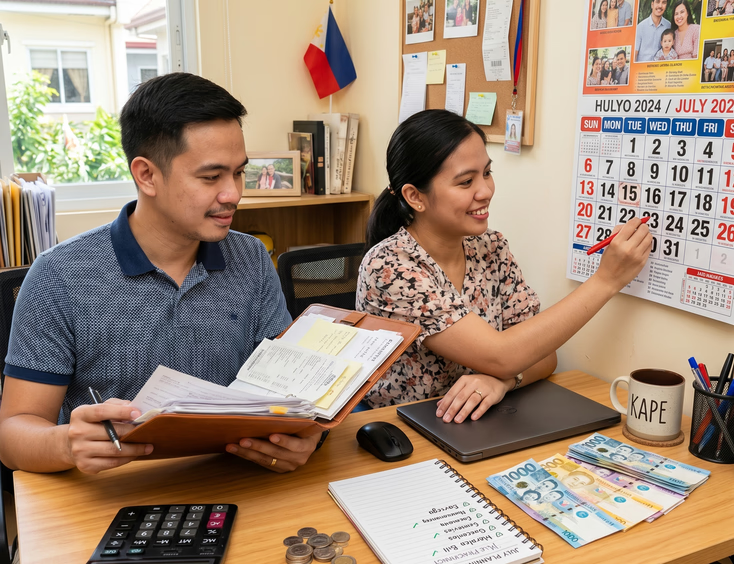
Drafting a prenup costs less than most couples fear. A simple agreement with few assets runs into a low five-figure peso amount, a standard one with real estate sits higher, and a complex agreement involving multiple properties, a business, or a foreign spouse costs more. Notarization and registration add modest fees on top. The cost of a prenuptial agreement in the Philippines breaks down each line so you can budget with real numbers.
The process moves through a clear sequence: talk it through, draft the clauses with a lawyer, sign with witnesses, notarize, and register. The step-by-step guide to getting a prenuptial agreement covers each stage. Because you have to sign before the wedding, timing matters, and the right point to start your prenup within your wedding timeline keeps you from rushing it in the final weeks. Picking the right counsel makes the difference between a document that protects you and one a court can set aside, so choosing the right lawyer for your prenuptial agreement deserves your time.
Talking it through with your partner and your family
The paperwork is the straightforward part. Couples stall on the conversation instead. Bring it up the wrong way and your partner hears an accusation. Bring it up with honesty about your shared goals and you turn it into a planning session about the life you're building. The approach in how to talk to your partner about a prenup keeps the discussion from turning into a fight.
Your family matters here too. The pamamanhikan, where both families meet to settle wedding plans, has long been the moment Filipino families discuss money, contributions, and expectations. That setting can hold a prenup conversation with grace, and raising the prenup during the pamamanhikan shows how to blend the tradition with the practical step.
A prenuptial agreement gives you control over a decision the law would otherwise make for you. You decide how you own property, how you share what you build, and how you protect what each of you brings. This guide gives you the overview. The linked articles take each piece further so you walk into your marriage with the financial side settled.
This article gives general information, not legal advice. Talk with a licensed Philippine family lawyer before drafting or signing any agreement.
Still Searching for a Right Match?
Find Your Perfect Wedding Supplier Today!
Discover trusted wedding suppliers across the Philippines in our complete directory. Compare services and connect with the ones that fit your dream celebration.
Browse Wedding SuppliersFeatured Blog Posts





Filipino Wedding Entourage - Roles, Order of March, and Modern Etiquette
6 mins readCivil Weddings in the Philippines - Requirements, Costs, and Step-by-Step Process
9 mins readCivil Wedding Requirements in the Philippines - Complete Checklist
6 mins readCost of Wedding in the Philippines - 5 Essential Things You Need to Know
7 mins readPrincipal Sponsors (Ninong/Ninang) - How Many, How to Ask, What They Really Do
4 mins readVeil, Cord, Candle & Coins - Roles, Options, and When They Happen
4 mins readEntourage for a Traditional Pinoy Wedding - Complete Roles and Guide
6 mins readComplete List of Civil Wedding Requirements in the Philippines
8 mins readHow to Choose Wedding Ninongs and Ninangs - Ask Yourself These 3 Important Questions
5 mins read