


Prenuptial Agreements for Filipino-Foreigner Couples: What's Different
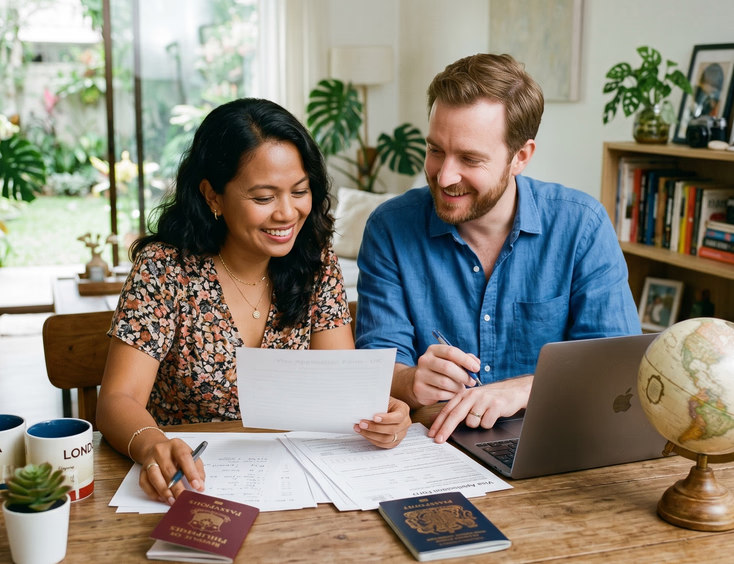
A Filipino marrying a foreign national faces questions a Filipino-Filipino couple never has to ask. Which country's law governs your property? What happens to assets held abroad? Does the foreign partner's idea of "community property" match the Family Code, or clash with it? Skip the prenup and these questions get answered by default rules that may not fit either of you. A marriage settlement lets you set the terms before the gaps open.
Here's what changes when one partner isn't a Filipino citizen, and why a prenup carries extra weight for these couples.
Which law governs your property
The first complication is jurisdiction. A Filipino-Filipino couple lives clearly under the Family Code. A mixed-nationality couple has to figure out which country's law applies to their property, and the answer isn't always obvious.
Philippine law generally governs the property relations of spouses, with certain exceptions, even when the marriage happens abroad or the couple lives overseas. That general rule has limits, and the interaction with the foreign partner's home law can get tangled. A prenup lets you state clearly which arrangement applies, removing the guesswork that otherwise surfaces only when you buy property or the marriage ends.
The foreign-spouse assumption trap
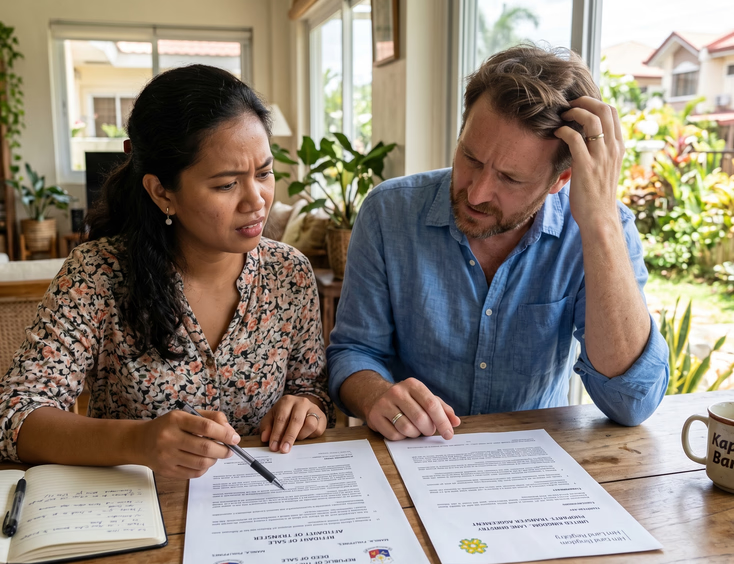
Many foreign partners arrive with assumptions built on their home country's marriage laws. They expect a familiar version of community property, or assume assets split a certain way, or believe a verbal understanding holds.
Those assumptions can collide with the Family Code. The default Absolute Community of Property regime may treat assets differently than the foreign partner expects, and relying on foreign concepts instead of Philippine rules sets up a costly surprise. A prenup replaces assumptions with written terms both partners understand. This is one reason mixed couples often lean toward Complete Separation of Property, which keeps each partner's assets clearly their own, and the breakdown of the four property regimes shows why that regime fits many cross-border situations.
Assets held in two countries
Cross-border couples often hold property in more than one country, a condo in Manila, savings abroad, investments split across borders. Each asset may fall under different rules depending on where it sits and which law applies.
A prenup lets you address foreign-held assets explicitly rather than leaving them to a default that may not reach them cleanly or may treat them in ways you didn't intend. Couples building income across borders, including Filipinos working overseas, face overlapping versions of this, which prenups for OFWs and remote-working couples cover. Mapping every asset and where it sits becomes a core part of the drafting.
Property ownership limits for foreigners
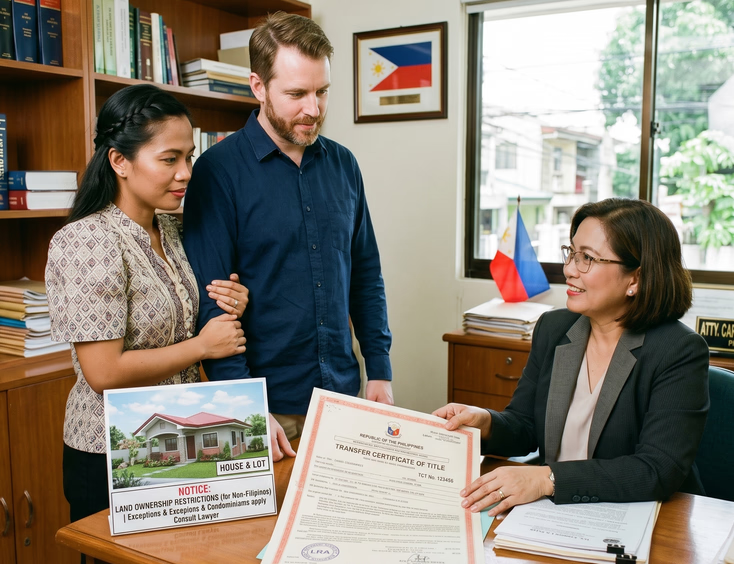
The foreign partner faces a constraint a Filipino spouse doesn't: restrictions on owning land in the Philippines. Foreign nationals generally cannot own Philippine land outright, which shapes how a couple structures property they buy or hold here.
A prenup interacts with these ownership rules, and getting the structure right matters for any real property the couple owns or plans to acquire. This is technical ground where a misstep carries real consequences, which raises the value of a lawyer who handles cross-border cases. The guide to choosing the right lawyer for your prenuptial agreement covers finding counsel with that specific experience.
Extra documents in the marriage process
Mixed-nationality marriages carry paperwork a domestic marriage doesn't. The foreign partner typically needs a certificate of legal capacity to contract marriage, issued by their embassy or consulate, with special rules for stateless persons and refugees.
This requirement isn't part of the prenup itself, and it surfaces in the same planning window, so couples handle both alongside each other. Folding the prenup into the broader marriage-preparation timeline keeps the documents from piling up at the last minute, which the timeline for fitting a prenup into your wedding planning helps you map.
Why the prenup matters more here
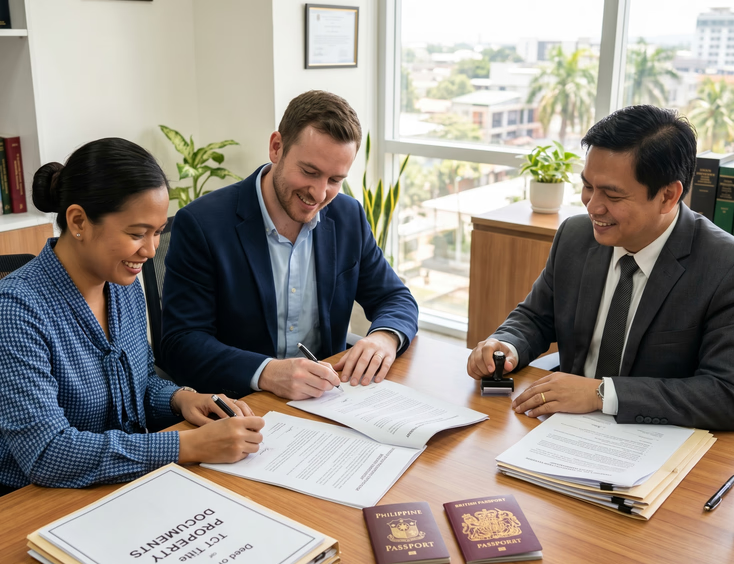
For a Filipino-Filipino couple, skipping the prenup means accepting a default they at least both understand. For a mixed-nationality couple, skipping it means leaving genuinely uncertain questions, which law governs, how foreign assets are treated, how ownership limits apply, to default rules and clashing assumptions.
A prenup converts that uncertainty into clear written terms. It protects both partners, prevents disputes rooted in mismatched expectations, and settles the cross-border questions while you can still choose the answers. The difference between signing a prenup and relying on the default regime carries sharper stakes when borders are involved, and the signs a prenuptial agreement makes sense for your situation confirm how strongly a mixed marriage points toward one.
For how a marriage settlement works start to finish, who it serves, and how to set one up, the complete guide to prenuptial agreements in the Philippines brings the full picture together.
This article gives general information, not legal advice. Talk with a licensed Philippine family lawyer before drafting or signing any agreement.
Still Searching for a Right Match?
Find Your Perfect Wedding Supplier Today!
Discover trusted wedding suppliers across the Philippines in our complete directory. Compare services and connect with the ones that fit your dream celebration.
Browse Wedding SuppliersFeatured Blog Posts


Filipino Wedding Entourage - Roles, Order of March, and Modern Etiquette
6 mins readCivil Weddings in the Philippines - Requirements, Costs, and Step-by-Step Process
9 mins readCivil Wedding Requirements in the Philippines - Complete Checklist
6 mins readCost of Wedding in the Philippines - 5 Essential Things You Need to Know
7 mins readPrincipal Sponsors (Ninong/Ninang) - How Many, How to Ask, What They Really Do
4 mins readVeil, Cord, Candle & Coins - Roles, Options, and When They Happen
4 mins readEntourage for a Traditional Pinoy Wedding - Complete Roles and Guide
6 mins readComplete List of Civil Wedding Requirements in the Philippines
8 mins readHow to Choose Wedding Ninongs and Ninangs - Ask Yourself These 3 Important Questions
5 mins read