


Prenup, Inheritance, and the Family Business: Keeping Assets Where They Belong
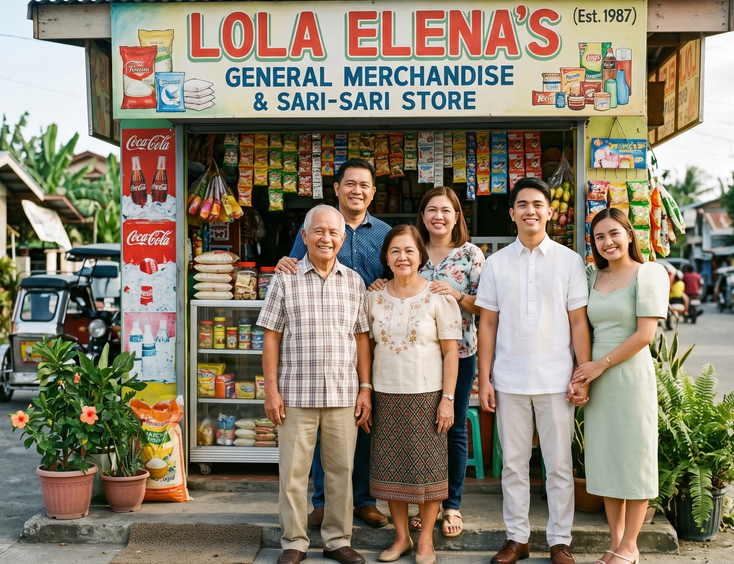
Your grandparents built the business. Your parents grew it. They mean for it to pass to you and your children, staying in the family across generations. Marry without a prenup and the Family Code can pull pieces of that legacy into shared marital property, exposing it to a split or a creditor it was never meant to touch. A marriage settlement draws a line around inherited assets and the family business, keeping them where your family intends.
Here's how a prenup protects what your family built, and why couples with a legacy at stake have the most reason to sign one.
What the default regime does to inherited assets
Marry without a settlement and you fall under Absolute Community of Property, which pools most of what each spouse owns. Inheritance sits in a more protected spot than most assets, and the protection isn't airtight.
Property one spouse receives by inheritance or donation during the marriage counts among the exclusions even under the default regime, so it generally stays separate. The income that asset generates, though, the rent from inherited land, the profit from an inherited business, can flow into the shared pool depending on the regime. And keeping the line clean between what's inherited and what's marital gets harder over years of mingled finances. A prenup spells out the boundary clearly, so the protection doesn't rest on tracing assets back through a decade of joint accounts.

The family business problem
A family business carries risk the default regime handles poorly. If your stake in the company gets treated as marital property, a marriage that ends can force a sale, hand your spouse a share, or pull the business into a dispute that has nothing to do with how the family runs it.
That outcome threatens not just you but everyone tied to the business, parents, siblings, the next generation counting on it. A prenup keeps your stake as separate property, shielding the company from a marital split and from creditors chasing a marital debt. The regime you choose drives this, and Complete Separation of Property or a carefully drawn custom arrangement often fits best, which the breakdown of the four property regimes lays out.
Keeping property within the bloodline
Many Filipino families care deeply about keeping land and property within the family line, passing it down rather than letting it drift to an in-law through a marriage that later dissolves. The default regime, with its wide pooling, sits uneasily against that goal.
A prenup lets your family keep ancestral land, a family home, or generational property on your side of the family. This is the argument that often wins over parents who first hear "prenup" as distrust, because it serves exactly what they want, which makes it a natural point to raise during the pamamanhikan, covered in bringing up the prenup at the pamamanhikan.
Protecting future inheritance, not just current assets
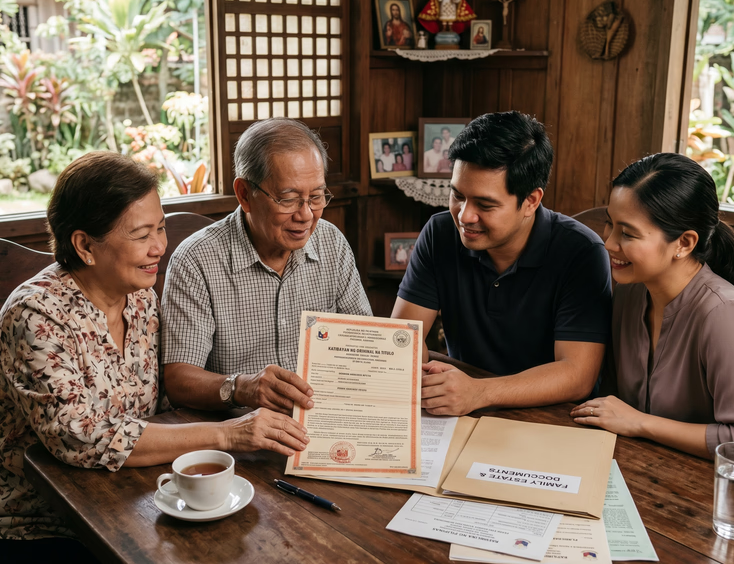
The protection reaches forward as well as covering what you hold now. You may expect to inherit land, a business stake, or property your parents still hold, assets that haven't come to you yet.
A prenup can account for inheritance you anticipate, setting the terms before those assets arrive so they enter your hands already protected. This matters for couples whose families plan to pass down significant property over time, and it's one of the clearest signals that a prenup fits your situation, which the signs a prenuptial agreement makes sense for your situation cover.
Why the drafting demands real care
Protecting a business and generational property is where a prenup gets technical, and where weak drafting does the most damage. A clause meant to shield the business that crosses a legal limit can void part of the agreement, and a poorly drawn line between inherited and marital assets can collapse under a later challenge.
This is not the place for a generic template. You want a family law specialist who has protected businesses and inheritances before and knows how to draft terms that hold, which the guide to choosing the right lawyer for your prenuptial agreement covers. The formalities matter just as much, since an agreement that misses a requirement can fail when you need it, laid out in the legal requirements for a valid prenuptial agreement.
Registration protects the business from outsiders
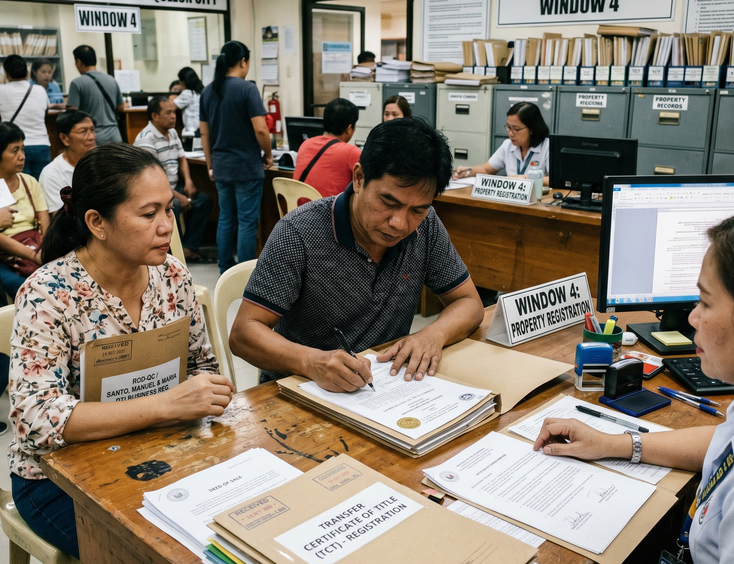
A prenup that names your business but never reaches the registry leaves it exposed to the people most likely to threaten it. Registration is what binds creditors, banks, and buyers to your arrangement.
Record the agreement at the Local Civil Registry, and for real property tied to the business or inheritance, at the Registry of Deeds. Skip this and a creditor can act as if your protection never existed, going after assets you meant to shield, which why your prenup must be registered explains in full.
Securing the legacy
A family business and generational property carry more than financial value, they carry the work of the people who came before you and the future of those who come after. A prenup lets you protect that legacy on purpose, drawing clear lines the default regime leaves blurred. For couples with a family business or an inheritance at stake, the agreement isn't about distrust between partners, it's about honoring what the family built.
For how a marriage settlement works start to finish, who it serves, and how to set one up, the complete guide to prenuptial agreements in the Philippines brings the full picture together.
This article gives general information, not legal advice. Talk with a licensed Philippine family lawyer before drafting or signing any agreement.
Still Searching for a Right Match?
Find Your Perfect Wedding Supplier Today!
Discover trusted wedding suppliers across the Philippines in our complete directory. Compare services and connect with the ones that fit your dream celebration.
Browse Wedding SuppliersFeatured Blog Posts






Filipino Wedding Entourage - Roles, Order of March, and Modern Etiquette
6 mins readCivil Weddings in the Philippines - Requirements, Costs, and Step-by-Step Process
9 mins readCivil Wedding Requirements in the Philippines - Complete Checklist
6 mins readCost of Wedding in the Philippines - 5 Essential Things You Need to Know
7 mins readPrincipal Sponsors (Ninong/Ninang) - How Many, How to Ask, What They Really Do
4 mins readVeil, Cord, Candle & Coins - Roles, Options, and When They Happen
4 mins readEntourage for a Traditional Pinoy Wedding - Complete Roles and Guide
6 mins readComplete List of Civil Wedding Requirements in the Philippines
8 mins readHow to Choose Wedding Ninongs and Ninangs - Ask Yourself These 3 Important Questions
5 mins read