


Why Your Prenup Must Be Registered (and What Happens If You Skip It)

You drafted the prenup. You signed it before the wedding. You had it notarized. You think you're protected. Then a creditor comes after property your agreement was supposed to shield, and you learn that one missing step left a hole in your protection.
That step is registration. A notarized prenup protects you against your spouse. Registration protects you against everyone else. Skip it and the gap stays invisible until an outsider exploits it.
What registration actually does
A prenup works on two levels, and registration controls the second one.
Between you and your spouse, a valid notarized agreement binds both of you. You agreed on the terms, you signed, and the document governs how the two of you own and manage property. Registration adds nothing to that private effect.
Against third parties, the picture changes. Banks, creditors, and buyers have no way to know your private arrangement exists. The law treats your agreement as binding on them only once you put it on the public record. Registration is how an outsider gets notice that your property follows rules different from the default. Without that notice, the law lets them act as if the agreement never existed.
Where you register it
Registration happens in two places, depending on what your agreement covers.
Record the marriage settlement in the Local Civil Registry where your marriage is registered. This is the baseline step for any prenup, and it ties the agreement to your marriage record.
If your agreement covers real property, record it in the Registry of Deeds where that property sits. This second step matters for couples protecting land, a house, or a condo, because real property disputes turn on what the Registry of Deeds shows. A prenup that names your house but never reaches the Registry of Deeds leaves that house exposed to claims you meant to block.
What happens when you skip it
The consequences stay hidden until an outsider acts, and then they hit hard.
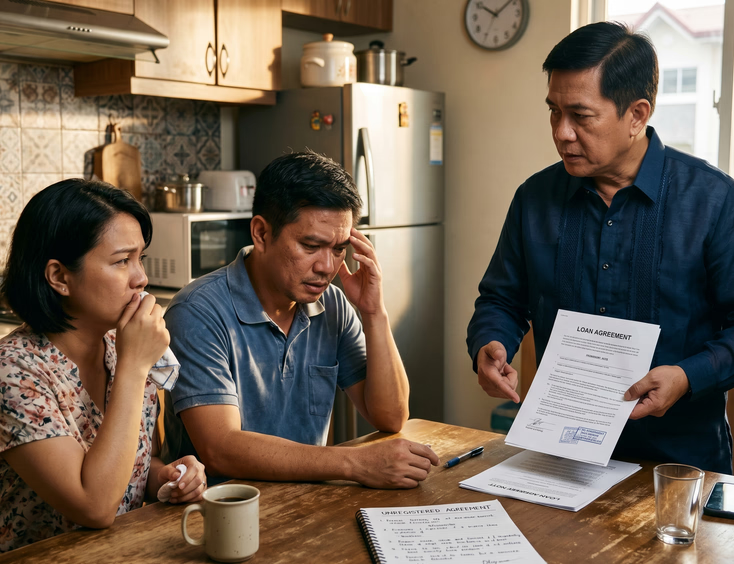
A creditor pursues a debt. You signed a separation regime so your partner's business loan stays theirs alone. You never registered the agreement. The creditor, with no public notice of your arrangement, can go after property the law would otherwise treat as reachable, and your unregistered prenup gives you little to stand on against them.
A buyer or a bank enters a transaction. Someone deals with your spouse over property, relying on the default regime the public record shows. Your private agreement, however clear between the two of you, does not bind that outsider. The transaction can proceed on terms your prenup was meant to prevent.
The agreement still governs you and your spouse. If the marriage ends, the unregistered prenup can still settle matters between the two of you. The damage falls on the third-party front, exactly where many couples most need the protection, since that's where creditors and buyers operate.

Why couples miss this step
The drop-off usually comes from assuming notarization finishes the job. You sign, a notary stamps it, the document looks official, and you file it away. The notary's seal feels like the finish line.
It isn't. Notarization makes the document valid and eligible for registration, but registration is the separate act that gives it public effect. The two steps get treated as one, and the gap opens. This is one reason the legal requirements for a valid prenuptial agreement treat registration as its own distinct requirement, not a footnote to notarization.

Getting registration right
Build registration into your plan from the start rather than treating it as an afterthought. Once your agreement is notarized, take it to the Local Civil Registry, and for any real property covered, to the Registry of Deeds. The step-by-step guide to getting a prenuptial agreement places registration in the full sequence so it doesn't get lost.
Your lawyer should handle or guide this step, which is another reason the choice of counsel matters. A lawyer who drafts a clean agreement but leaves you to register it on your own does half the job, and the guide to choosing the right lawyer for your prenuptial agreement covers what to expect from good representation. Couples protecting significant real estate, an inheritance, or a family business carry the most at stake here, which protecting your inheritance and family business through a prenup addresses.
The point worth remembering
A prenup you never register is a private promise between you and your spouse. A prenup you register is a shield against the outside world. The difference shows up the day a creditor, a bank, or a buyer enters the picture, and by then you cannot fix it retroactively. Register the agreement when you sign it, and the protection you designed actually works when you need it.
For how a marriage settlement works start to finish, who it serves, and how to set one up, the complete guide to prenuptial agreements in the Philippines brings the full picture together.
This article gives general information, not legal advice. Talk with a licensed Philippine family lawyer before drafting or signing any agreement.
Still Searching for a Right Match?
Find Your Perfect Wedding Supplier Today!
Discover trusted wedding suppliers across the Philippines in our complete directory. Compare services and connect with the ones that fit your dream celebration.
Browse Wedding SuppliersFeatured Blog Posts







Filipino Wedding Entourage - Roles, Order of March, and Modern Etiquette
6 mins readCivil Weddings in the Philippines - Requirements, Costs, and Step-by-Step Process
9 mins readCivil Wedding Requirements in the Philippines - Complete Checklist
6 mins readCost of Wedding in the Philippines - 5 Essential Things You Need to Know
7 mins readPrincipal Sponsors (Ninong/Ninang) - How Many, How to Ask, What They Really Do
4 mins readVeil, Cord, Candle & Coins - Roles, Options, and When They Happen
4 mins readEntourage for a Traditional Pinoy Wedding - Complete Roles and Guide
6 mins readComplete List of Civil Wedding Requirements in the Philippines
8 mins readHow to Choose Wedding Ninongs and Ninangs - Ask Yourself These 3 Important Questions
5 mins read