


Can a Prenuptial Agreement Be Changed or Cancelled After the Wedding?
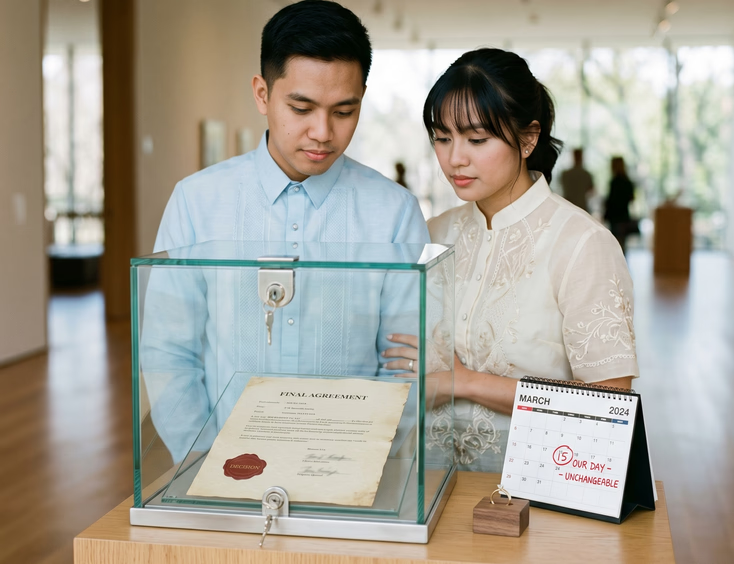
Short answer: almost never. Once you marry, the property regime you chose, or the default the law assigned you, locks in. The Family Code treats that arrangement as fixed, and it allows changes in narrow situations only, usually through a court. The freedom you had before the wedding closes the moment you exchange vows.
This rule catches couples who treat the prenup like a will, something they can update as life shifts. It works the opposite way. Here's what the law allows, what it forbids, and why the timing matters so much.
The principle of invariability
The Family Code builds the property regime on a principle lawyers call invariability. Once the marriage begins, the regime cannot be changed at will by either spouse or even by both spouses agreeing together.
You and your partner could sit down a year into the marriage, both want a different arrangement, and write up a new agreement. The law disregards it. A private agreement to switch regimes after the wedding carries no effect. The arrangement you entered the marriage with governs you, regardless of how both of you feel about it later.
This is why a prenup signed after the ceremony holds no legal weight at all, a rule the legal requirements for a valid prenuptial agreement spell out. The window for choosing your regime sits entirely before the wedding.

The narrow exceptions
The law leaves a few doors open, and they run through a court rather than a private agreement.
A court can order a judicial separation of property in specific situations the Family Code defines, like when one spouse abandons the other, when a spouse's mismanagement puts marital property at risk, or when other grounds the Code recognizes apply. This is not a casual switch. It requires going to court, proving the grounds, and getting a judge to order the change.
The regime also ends, rather than changes, in certain events: the death of a spouse, a decree of legal separation, an annulment, or a declaration of nullity. These dissolve the existing arrangement and trigger the division of property, but they don't let you swap one regime for another while the marriage continues.
The thread running through every exception is court involvement. You cannot reshape your property regime through mutual agreement after the wedding. You can only ask a court to act on grounds the law recognizes.
What you can still adjust
The regime itself is locked, and that doesn't freeze every financial decision in the marriage.
You and your partner can still manage property within the rules of your regime, buy and sell assets, run a business, and make day-to-day financial choices. Under some regimes, certain transactions need both spouses' consent, and others don't. The regime sets the framework, and you operate inside it.
You can also do separate estate planning, like wills, which work alongside the property regime rather than altering it. These tools shape what happens to your property without changing the marital regime that governs it.

Why this makes the pre-wedding decision so heavy
The invariability rule turns your prenup choice into one of the more permanent financial decisions you'll make. You're not picking an arrangement you can revisit. You're picking one you'll likely live under for the length of the marriage.
That weight cuts in two directions. It means skipping the prenup and accepting the default Absolute Community of Property regime commits you to that arrangement with limited exits, which the difference between signing a prenup and relying on the default lays out. It also means choosing a regime through a prenup deserves real thought, because you won't get an easy redo. The breakdown of the four property regimes helps you weigh the options while you still can.

Making the choice while the window is open
Since you can't fix the regime later, the time to get it right is before the wedding, with enough room to think rather than rushing it in the final weeks. Start the conversation early, which how to talk to your partner about a prenup helps you handle, and build the drafting into your planning, which the timeline for fitting a prenup into your wedding planning maps out.
Good counsel matters more here because of the permanence. A lawyer who helps you pick the right regime the first time saves you from a choice you can't easily undo, and the guide to choosing the right lawyer for your prenuptial agreement covers what to look for.
The takeaway
Treat the prenup as a one-time decision, not a draft you'll revise. After the wedding, the regime holds, mutual agreement can't change it, and only a court can intervene on narrow grounds. Decide carefully before the vows, because that's the only moment the choice is fully yours.
For how a marriage settlement works start to finish, who it serves, and how to set one up, the complete guide to prenuptial agreements in the Philippines brings the full picture together.
This article gives general information, not legal advice. Talk with a licensed Philippine family lawyer before drafting or signing any agreement.
Still Searching for a Right Match?
Find Your Perfect Wedding Supplier Today!
Discover trusted wedding suppliers across the Philippines in our complete directory. Compare services and connect with the ones that fit your dream celebration.
Browse Wedding SuppliersFeatured Blog Posts





Filipino Wedding Entourage - Roles, Order of March, and Modern Etiquette
6 mins readCivil Weddings in the Philippines - Requirements, Costs, and Step-by-Step Process
9 mins readCivil Wedding Requirements in the Philippines - Complete Checklist
6 mins readCost of Wedding in the Philippines - 5 Essential Things You Need to Know
7 mins readPrincipal Sponsors (Ninong/Ninang) - How Many, How to Ask, What They Really Do
4 mins readVeil, Cord, Candle & Coins - Roles, Options, and When They Happen
4 mins readEntourage for a Traditional Pinoy Wedding - Complete Roles and Guide
6 mins readComplete List of Civil Wedding Requirements in the Philippines
8 mins readHow to Choose Wedding Ninongs and Ninangs - Ask Yourself These 3 Important Questions
5 mins read