


Prenup vs No Prenup: What Happens to Your Property Under Philippine Law
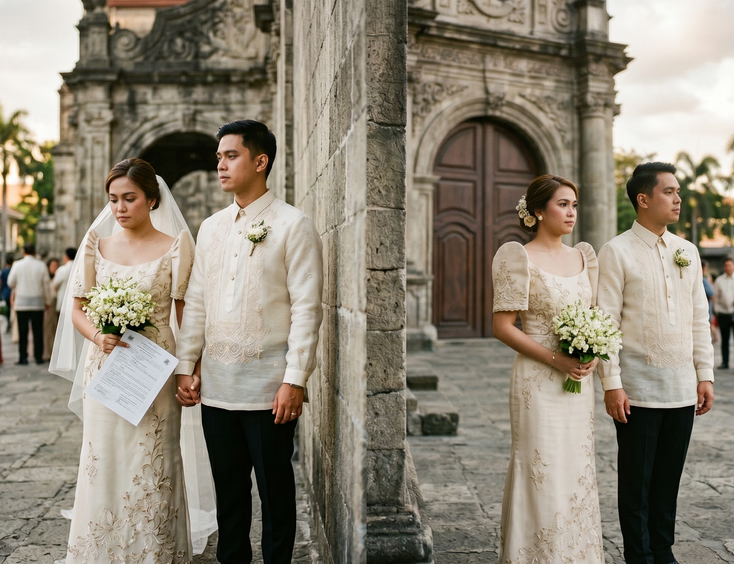
Two couples marry on the same day. One signs a prenuptial agreement first. The other signs nothing. Years later, when they buy property, take on debt, or face the end of the marriage, those two couples live under different rules. The difference traces back to that single document, or its absence.
Skipping the prenup is itself a choice. The Family Code fills the gap with a default arrangement, and you live under whatever it assigns. Here's what each path means for your property.
What "no prenup" actually means
Marry without a marriage settlement and the Family Code places you under Absolute Community of Property. The law assumes this regime unless you agreed otherwise in writing before the wedding.
Under Absolute Community of Property, most of what each of you owns becomes shared the moment you marry. The savings you built while single, the condo you bought before you met, the car under your name, all of it generally folds into one common pool that you both own. Property either of you acquires during the marriage joins that pool too. A handful of exclusions exist, like property received by one spouse through inheritance or donation, but the default pulls a wide range of assets into shared ownership.
This regime runs deep and lasts. Once it applies, you cannot dissolve it at will. It ends only in specific situations: the death of a spouse, a court decree of legal separation, an annulment or declaration of nullity, or a court-ordered judicial separation of property. The permanence raises the stakes on a choice many couples never realize they made.

What "with prenup" gives you
Sign a marriage settlement before the wedding and you pick the arrangement yourself. The Family Code offers four routes, and your prenup names the one you want.
You might keep Absolute Community of Property but add clauses that clarify how you'll administer assets. You might choose Conjugal Partnership of Gains, which keeps each partner's existing property separate while sharing the income and gains built during the marriage. You might choose Complete Separation of Property, where each of you owns, manages, and answers for your own assets and debts. You might design a custom arrangement that breaks no law. The breakdown of the four property regimes under the Family Code walks through how each one treats a house, a salary, and a business.
A prenup hands you control over a decision the law would otherwise make on your behalf.

How the two paths play out
The contrast shows up in real moments, not abstract rules.
A creditor comes after a business loan one partner guaranteed. Under the default community regime, marital property can answer for certain debts, so assets the other partner brought into the marriage may be exposed. Under a separation regime set by prenup, that debt stays with the partner who took it on, and the other partner's property sits beyond reach.
One partner inherits land mid-marriage. Inheritance counts among the exclusions even under the default regime, so it stays separate, though proving and keeping that line clean gets easier when a prenup spells it out. The income that land generates, though, can flow into the shared pool under some arrangements and stay separate under others, depending on the regime you picked.
The marriage ends through annulment. Under the default regime, you split the common property, often down the middle, regardless of who brought what in. Under a separation or partnership regime, each partner walks away with what the agreement assigned them, which can mean keeping the business, the savings, or the property you entered with.
Why "doing nothing" carries weight
Couples assume that skipping the prenup keeps things simple and neutral. It doesn't. It picks the most sharing-heavy regime the Family Code offers and locks you into it with limited exits.
For some couples, that suits the life they want. They plan to pool everything, build together, and share without dividing lines. The default matches their intent, and a prenup buys them little. The signs a prenuptial agreement makes sense for your situation help you judge whether you fall in this group.
For couples with a business, an inheritance to protect, mismatched finances, or significant debt, the default can create exposure they never chose. A creditor reaching property one partner brought in, an inherited asset's income flowing into shared ownership, a business getting tangled in a split, these follow from a regime the couple accepted by signing nothing.

Matching the path to your life
Start by picturing the moments above against your own finances. If you both enter with similar assets, no business, no large debt, and no inheritance riding on the outcome, the default may reflect what you'd choose anyway. If any of those factors weigh on your situation, a prenup lets you set terms that fit.
Whichever path fits, the formalities decide whether your choice holds, so the legal requirements for a valid prenuptial agreement matter the moment you lean toward signing one. And because the default regime is hard to undo once you marry, the timing in whether a prenup can be changed or cancelled after the wedding shows why the decision belongs before the vows, not after.
For how a marriage settlement works start to finish, who it serves, and how to set one up, the complete guide to prenuptial agreements in the Philippines brings the full picture together.
This article gives general information, not legal advice. Talk with a licensed Philippine family lawyer before drafting or signing any agreement.
Still Searching for a Right Match?
Find Your Perfect Wedding Supplier Today!
Discover trusted wedding suppliers across the Philippines in our complete directory. Compare services and connect with the ones that fit your dream celebration.
Browse Wedding SuppliersFeatured Blog Posts




Filipino Wedding Entourage - Roles, Order of March, and Modern Etiquette
6 mins readCivil Weddings in the Philippines - Requirements, Costs, and Step-by-Step Process
9 mins readCivil Wedding Requirements in the Philippines - Complete Checklist
6 mins readCost of Wedding in the Philippines - 5 Essential Things You Need to Know
7 mins readPrincipal Sponsors (Ninong/Ninang) - How Many, How to Ask, What They Really Do
4 mins readVeil, Cord, Candle & Coins - Roles, Options, and When They Happen
4 mins readEntourage for a Traditional Pinoy Wedding - Complete Roles and Guide
6 mins readComplete List of Civil Wedding Requirements in the Philippines
8 mins readHow to Choose Wedding Ninongs and Ninangs - Ask Yourself These 3 Important Questions
5 mins read