


When Should You Start Your Prenup? Fitting It Into Your Wedding Timeline

Start your prenup early, and you give the conversation, the drafting, and the registration room to breathe. Leave it to the final weeks, and you're rushing a permanent legal decision while you're also chasing a caterer and finalizing the guest list. The deadline is fixed: the agreement has to be signed before the wedding. How much runway you give yourself decides whether the process feels calm or frantic.
Here's when to start each stage so the prenup fits your wedding timeline instead of fighting it.
The one deadline that can't move
Every other wedding task has some flexibility. This one doesn't. A marriage settlement signed after the ceremony carries no legal effect, which means the entire process, from first conversation to final registration, has to finish before you marry.
Miss that window and you don't get a second chance. You fall under the default Absolute Community of Property regime, locked in with limited exits, which the rules on changing a prenup after the wedding explain. Treat the signing deadline as immovable and plan backward from it.
Why early beats late
The prenup involves more than paperwork. It involves a sensitive conversation, an honest look at your finances, a legal decision you can't undo, and several procedural steps. Each one takes time, and compressing them creates problems.
Rush the conversation and your partner feels cornered. Rush the drafting and the lawyer has less room to get the terms right. Rush the decision and you pick a regime you haven't thought through, one you'll live under for the marriage. Early timing removes that pressure and gives you space to decide well.

Begin the conversation first
The earliest stage is the talk with your partner, ideally near the start of the engagement. This is the part couples most want to delay, and delaying it compresses everything downstream.
Raising it early gives both of you room to react, ask questions, and reach genuine agreement without a deadline bearing down. The approach in how to talk to your partner about a prenup helps, and starting early also matters legally, since an agreement reached under last-minute pressure invites a later claim that one partner didn't consent freely.
Leave time for drafting and review
Once you both agree, the legal work begins, and it doesn't happen overnight. You take stock of your assets, choose a regime, engage a lawyer, and let them draft the agreement. Then you review it, raise questions, and revise.
This stage stretches longer for complex situations, multiple properties, a business, a foreign spouse, so the more you're protecting, the earlier you should start. The full sequence appears in the step-by-step guide to getting a prenuptial agreement. If you're using separate lawyers for independent advice, build in extra time for both to review. Booking your lawyer well ahead of the wedding keeps this stage unhurried, and the guide to choosing the right lawyer for your prenuptial agreement covers that choice.
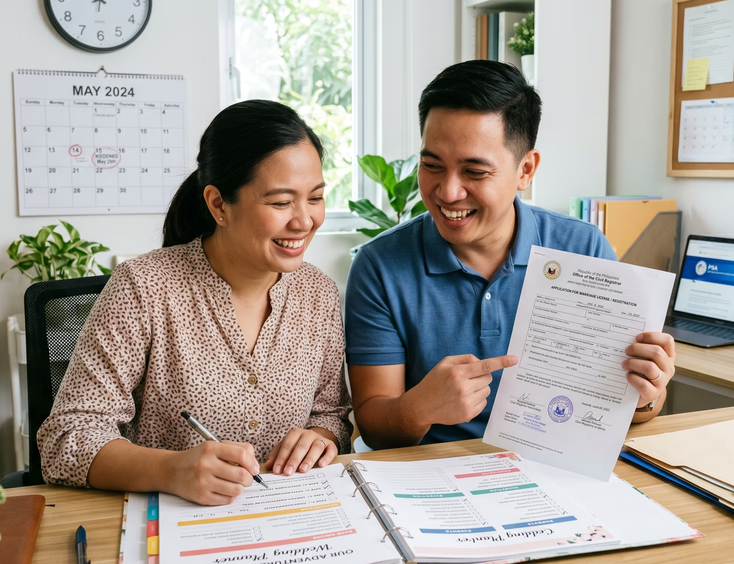
Don't forget time to register
Signing isn't the finish line. After notarization, you register the agreement at the Local Civil Registry, and for any real property, at the Registry of Deeds. Couples who plan only up to the signing get caught here.
Build registration into your timeline before the wedding, since it's the step that protects you against creditors and buyers, which why your prenup must be registered lays out. Leaving registration to handle later, amid the wedding rush or the honeymoon, is how the step gets dropped.
Working the pamamanhikan into the plan
Filipino weddings bring families into the planning, and the pamamanhikan, where both families meet to settle wedding details, gives you a natural point to raise the prenup with parents. Fitting that conversation into your timeline lets families weigh in early rather than reacting to a signed document weeks before the wedding, which bringing up the prenup during the pamamanhikan covers.

A simple way to plan it backward
Fix your wedding date, then work backward. Registration and notarization sit close to the signing, the signing sits before the wedding, drafting and review come before that, the asset inventory and regime choice come before drafting, and the conversation with your partner comes first of all.
The more complex your finances, the more cushion each stage needs, and the cost planning matters here too, which the cost of a prenuptial agreement in the Philippines helps you budget. Give yourself a wide margin and the prenup becomes one settled task among many rather than a crisis in the final stretch.
For how a marriage settlement works start to finish, who it serves, and how to set one up, the complete guide to prenuptial agreements in the Philippines brings the full picture together.
This article gives general information, not legal advice. Talk with a licensed Philippine family lawyer before drafting or signing any agreement.
Still Searching for a Right Match?
Find Your Perfect Wedding Supplier Today!
Discover trusted wedding suppliers across the Philippines in our complete directory. Compare services and connect with the ones that fit your dream celebration.
Browse Wedding SuppliersFeatured Blog Posts



Filipino Wedding Entourage - Roles, Order of March, and Modern Etiquette
6 mins readCivil Weddings in the Philippines - Requirements, Costs, and Step-by-Step Process
9 mins readCivil Wedding Requirements in the Philippines - Complete Checklist
6 mins readCost of Wedding in the Philippines - 5 Essential Things You Need to Know
7 mins readPrincipal Sponsors (Ninong/Ninang) - How Many, How to Ask, What They Really Do
4 mins readVeil, Cord, Candle & Coins - Roles, Options, and When They Happen
4 mins readEntourage for a Traditional Pinoy Wedding - Complete Roles and Guide
6 mins readComplete List of Civil Wedding Requirements in the Philippines
8 mins readHow to Choose Wedding Ninongs and Ninangs - Ask Yourself These 3 Important Questions
5 mins read