


Prenups for OFWs and Remote-Working Couples: Protecting Income Earned Abroad
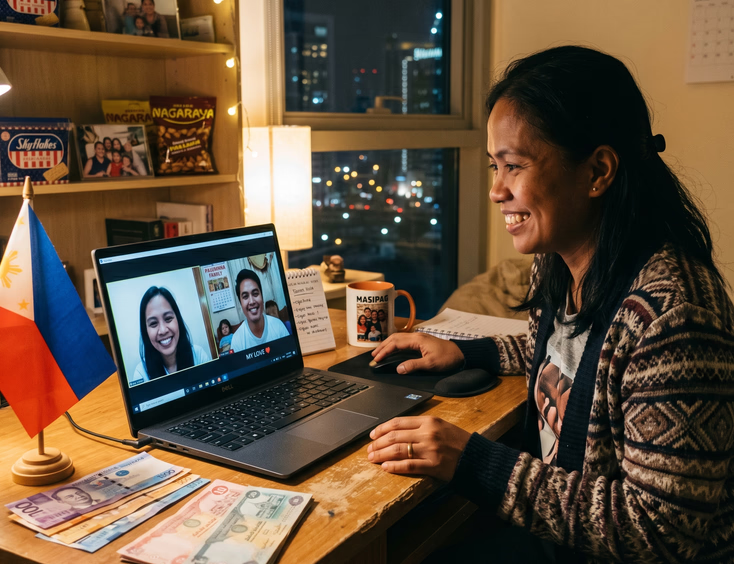
You spent years working abroad, sending money home, building savings from a salary earned far from the Philippines. Or you run an online business with clients in three countries and income landing in foreign accounts. Marry without a prenup and the Family Code can fold much of what you built into shared property, regardless of where you earned it or who earned it. A marriage settlement lets you decide how cross-border income and assets get treated before the default decides for you.
Here's what OFWs and remote-working couples need to weigh, and why income earned abroad raises questions a single-income, single-country couple never faces.
How the default regime treats your foreign income
Marry without a settlement and you fall under Absolute Community of Property, which pools most of what each of you owns and earns. That pool generally doesn't care where the money came from.
The salary you earn on an overseas contract, the savings you built before marriage from years abroad, the income from your online business, much of it can flow into shared property under the default. For a couple where one partner earns abroad and the other doesn't, this can mean the working partner's foreign income becomes joint property the moment it's earned. The difference between signing a prenup and relying on the default regime shows what the law assigns when you do nothing.
Income earned across borders
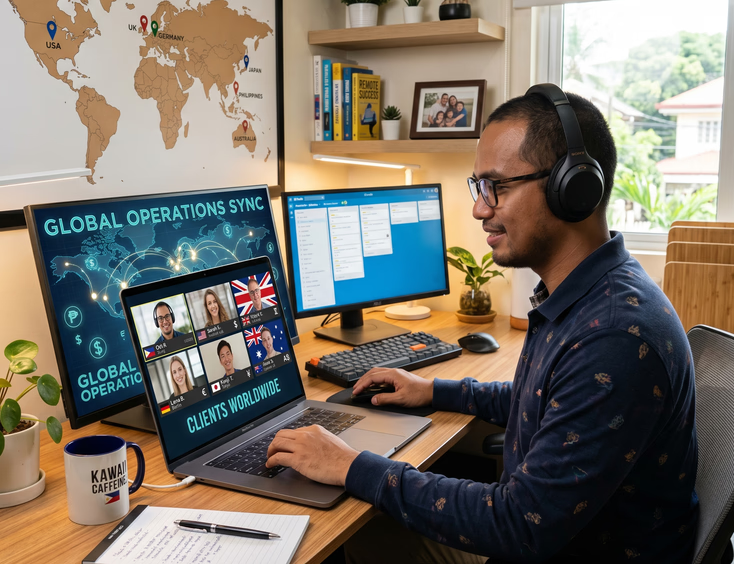
Remote workers and digital entrepreneurs face a tangle the traditional OFW doesn't always hit. Your income may come from clients in different countries, paid into accounts in different currencies, tied to a business you built and run yourself.
A prenup lets you define how that income and the business behind it get treated, keeping what you built separate or sharing it on terms you both choose. Without one, the default pulls cross-border earnings into the shared pool with no regard for the structure you built. The online business itself, your client relationships, your intellectual property, can get drawn into marital property and exposed in a dispute. A prenup draws clear lines around it, and choosing the right regime is central, which the breakdown of the four property regimes lays out.
Assets that live in two places
Working abroad often means holding assets in two countries, a bank account overseas, property bought with foreign earnings, investments split across borders alongside a house back home.
These assets may fall under different rules depending on where they sit and which law applies. A prenup lets you address foreign-held assets directly rather than leaving them to a default that may not handle them the way you intend. The cross-border legal questions sharpen further if your partner is a foreign national, which prenuptial agreements for Filipino-foreigner couples covers in detail.
The distance problem in drafting
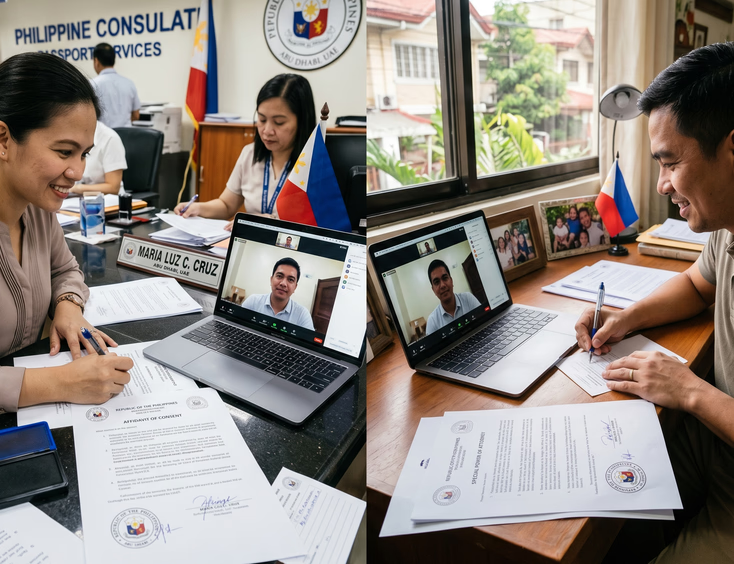
OFWs face a practical hurdle: drafting and signing a prenup while one partner is abroad. The agreement has to be signed before the wedding, and getting both signatures, notarization, and registration done across distance takes planning.
You may need to handle documents through a Philippine consulate, arrange notarization that holds up under Philippine law, and coordinate timing around a partner who can't easily fly home. None of this is impossible, and it does demand a lawyer who has handled cross-border cases and an early start. The guide to choosing the right lawyer for your prenuptial agreement covers finding that counsel, and the timeline for fitting a prenup into your wedding planning helps you plan around the distance.
Protecting what you sacrificed for
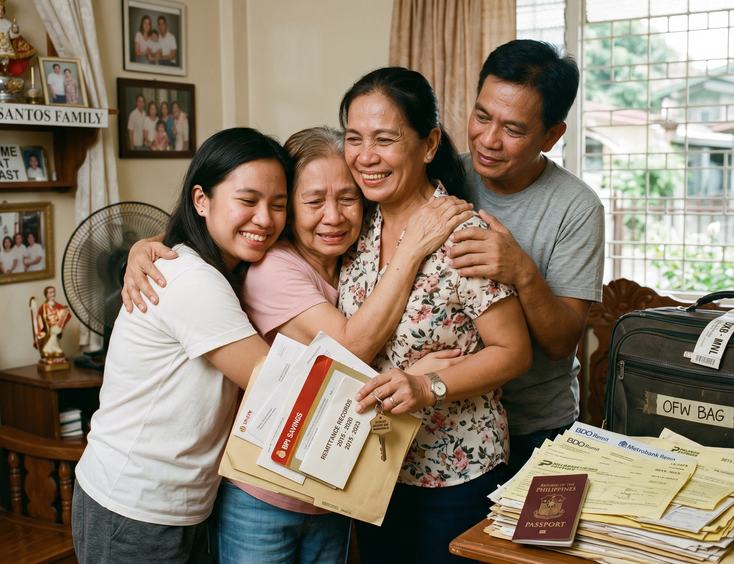
OFW income carries weight beyond its peso value. You earned it away from family, through years of distance and hard work, often to support people back home. Letting it fall into a default arrangement you never examined sits poorly against that sacrifice.
A prenup lets you protect what you built on your own terms, whether that means keeping pre-marriage savings separate, shielding a business, or making sure money meant for your parents or children stays directed where you intend. The signs a prenuptial agreement makes sense for your situation confirm how strongly an overseas income points toward one, and protecting your inheritance and family business through a prenup covers the assets many OFWs most want to safeguard.
Setting it up from a distance
Start early, because the cross-border logistics need more runway than a domestic prenup. Have the money conversation with your partner well ahead, which how to talk to your partner about a prenup helps you approach, then move through drafting, signing, notarization, and registration with the distance built into the schedule. The full sequence appears in the step-by-step guide to getting a prenuptial agreement.
For how a marriage settlement works start to finish, who it serves, and how to set one up, the complete guide to prenuptial agreements in the Philippines brings the full picture together.
This article gives general information, not legal advice. Talk with a licensed Philippine family lawyer before drafting or signing any agreement.
Still Searching for a Right Match?
Find Your Perfect Wedding Supplier Today!
Discover trusted wedding suppliers across the Philippines in our complete directory. Compare services and connect with the ones that fit your dream celebration.
Browse Wedding SuppliersFeatured Blog Posts




Filipino Wedding Entourage - Roles, Order of March, and Modern Etiquette
6 mins readCivil Weddings in the Philippines - Requirements, Costs, and Step-by-Step Process
9 mins readCivil Wedding Requirements in the Philippines - Complete Checklist
6 mins readCost of Wedding in the Philippines - 5 Essential Things You Need to Know
7 mins readPrincipal Sponsors (Ninong/Ninang) - How Many, How to Ask, What They Really Do
4 mins readVeil, Cord, Candle & Coins - Roles, Options, and When They Happen
4 mins readEntourage for a Traditional Pinoy Wedding - Complete Roles and Guide
6 mins readComplete List of Civil Wedding Requirements in the Philippines
8 mins readHow to Choose Wedding Ninongs and Ninangs - Ask Yourself These 3 Important Questions
5 mins read