

The Complete Filipino Couple's Guide to Wedding Rings & Bands in the Philippines: Traditions, Styles, Budgets & Where to Buy
You've said yes. The date is set. Now comes the ring.
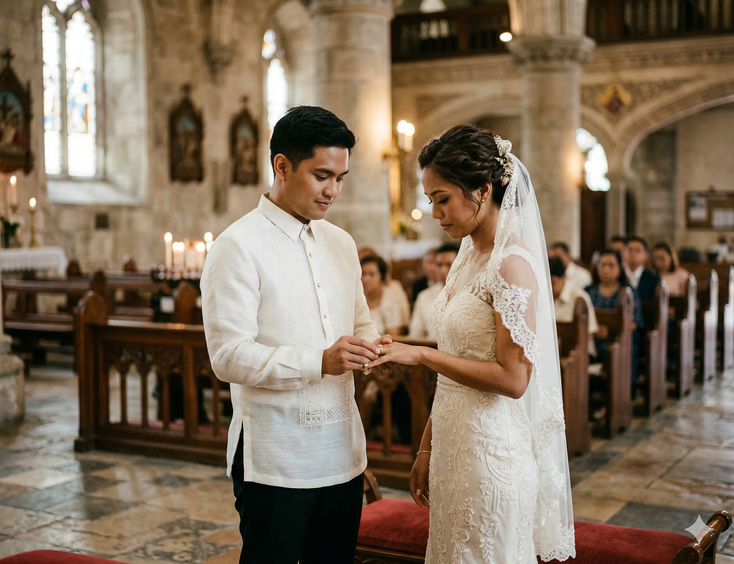
For most Filipino couples, the wedding ring sits at the center of everything — the ceremony, the budget conversations, the Instagram posts, and the quiet moment when the priest places it in your palm before you slip it onto your partner's finger. No other purchase in your wedding carries that weight.
This guide covers everything you need to make a confident decision: what the ring means in a Filipino wedding, which styles are trending right now, how much to budget, and exactly where to shop — from Meycauayan to Shopee to the jeweler your lola has trusted for decades.
The Role of Wedding Rings in Filipino Weddings
In a Filipino Catholic wedding, the ring is not a formality. The priest blesses it. You exchange it at the altar during the Rite of Marriage, immediately after your vows. The ring you place on your partner's finger has been held by your sponsors, prayed over, and witnessed by everyone in the church.
That moment carries meaning beyond jewelry. The ring becomes a physical record of your vow.
Filipino couples tend to treat wedding ring shopping with the same seriousness they give to venue booking and catering. Families weigh in. Budgets stretch. Grandmothers share opinions. If you shop early and shop smart, the whole process becomes manageable rather than stressful.
To understand what wedding rings mean in Filipino Catholic weddings and how the blessing ceremony works, read our full guide on ring symbolism and ceremony.
The Arras and the Ring: Two Different Things
Many couples confuse these two, especially those planning their first wedding.
The arras are 13 gold coins exchanged between bride and groom during the ceremony. They represent the groom's pledge to provide for the household. The wedding ring is exchanged separately, as the sign of your covenant. Both appear in a traditional Filipino Catholic Mass, but they serve different purposes and sit in different trays on the altar.
You need both. The arras coins usually come as a set, often mounted on a decorative pillow or tray. Your jeweler can help you source them, or your wedding coordinator will point you to an arras supplier. The rings are a separate purchase entirely.
For a full breakdown of the arras tradition and how it differs from the ring exchange, we've covered both customs in detail.
Filipino Wedding Ring Traditions Worth Knowing
Heirloom rings. Some Filipino families pass down wedding rings across generations. If your family offers you an heirloom ring, the decision involves more than aesthetics. Some couples resize and wear the original. Others have it melted down and recast into a new design. A few decline and receive the ring as a separate keepsake. There's no single right answer, but talk to your family before you assume the offer means you skip the jeweler.
Superstitions. Filipino wedding culture carries a set of ring-related beliefs that vary by region and family. Some say you should never try on someone else's wedding ring before your own wedding. Others say dropping the ring during the ceremony predicts bad luck for the marriage. Most priests will tell you these are folklore, but knowing them in advance saves you from a stressful moment at the altar.
Who pays. Traditionally, the groom's family covers the wedding ring. Modern couples split the cost or each buys the other's ring as a personal gift. Neither approach is wrong. Decide together before you start shopping so the budget conversation doesn't become a negotiation mid-purchase.
Wearing the ring before the wedding. Some couples receive their rings from the jeweler weeks before the wedding. Filipino superstition says the bride should not wear the ring before the ceremony. If you've ordered custom rings and want to check the fit, try it on once in the shop, confirm the size, and leave it with the jeweler or in its box until your wedding day.
Wedding Ring Styles Filipino Couples Are Choosing Today
Tastes among Filipino couples have shifted over the past several years. The heavily ornate, diamond-encrusted bands that dominated the early 2000s have given way to cleaner, more personal designs.
Minimalist bands lead the trend. Plain gold or white gold bands with no stone, or a single flush-set diamond, suit couples who want elegance without bulk. These work for everyday wear and age well regardless of fashion cycles. Gen Z and millennial couples drive this preference.
Solitaire engagement rings paired with a simple wedding band remain the most popular combination for brides. The solitaire sits on the left ring finger from the engagement. A slim wedding band joins it at the ceremony. Filipino brides often stack both rings after the wedding.
Matching couple sets (called pairing rings or couple bands) are growing. Both partners wear coordinating bands with a shared design element — a matching engraving, a mirrored texture, or a complementary stone placement. Jewelers in the Philippines now market these sets as their primary wedding product.
K-drama-influenced styles appear in social media mood boards across Filipino wedding groups on Facebook. Thin bands with pear-shaped or oval stones, vine-style side settings, and East Asian craftsmanship details have found a Filipino audience through Netflix and social media.
Stackable rings attract brides who want to build their bridal set over time. You start with the wedding band, then add an anniversary band, a birthstone ring, or a gift ring over the years. Filipino jewelry brands have responded with modular designs that layer cleanly.
For photos and a deeper look at each style, read our guide on top wedding ring styles Filipino couples are choosing right now.
Gold, White Gold, or Platinum: Picking Your Metal
The metal you choose affects durability, maintenance, cost, and how the ring looks against your skin tone.
Yellow gold is the traditional Filipino choice. Gold carries cultural weight in the Philippines — it appears in weddings, baptisms, and funerals as a marker of permanence. Filipino jewelers stock yellow gold in 18K (the standard for wedding rings) and 14K (more affordable, slightly less rich in color). Most Filipinos prefer 18K for wedding rings.
White gold has grown in popularity over the past decade, particularly among couples who prefer a contemporary look. White gold is yellow gold alloyed with white metals and coated with rhodium. The rhodium plating gives it a bright, silvery finish. Over time, usually two to five years, the rhodium wears off and the ring takes on a warmer tone. A jeweler can re-plate it for a few hundred pesos.
Rose gold attracts couples drawn to its warm pinkish tone. It photographs beautifully and suits medium to deep skin tones. Filipino couples who choose rose gold tend to do so for aesthetic reasons rather than tradition.
Platinum is the most durable and the most expensive. A platinum band holds its finish longer than gold, resists scratching better, and never needs replating. Platinum wedding rings in the Philippines typically start at ₱30,000 and can exceed ₱100,000 depending on weight and craftsmanship. Couples who wear their rings through physically demanding work often choose platinum for its longevity.
Palladium offers a white metal look close to platinum at a lower price point. Filipino jewelers stock it less frequently, but custom jewelers can work with it on request.
If you and your partner have different preferences, a dual-metal ring solves both. Several Manila jewelers offer bands that combine yellow and white gold in a single design.
Diamond Alternatives Worth Considering
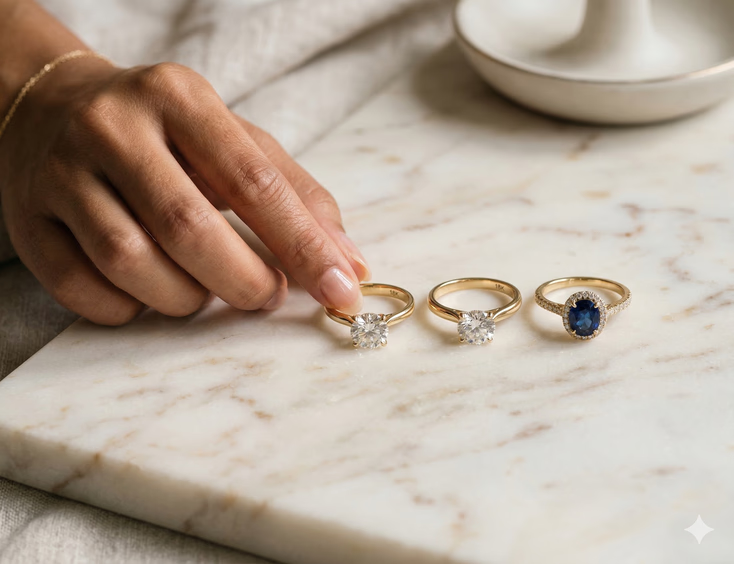
Filipino couples have increasingly warmed to diamond alternatives in recent years. Rising diamond prices, greater awareness of mining ethics, and the visual quality of newer gemstone technologies have all contributed.
Moissanite leads the alternatives. Originally discovered in a meteorite crater, moissanite is now lab-created and ranks just below diamond on the hardness scale. Its fire and brilliance often exceed diamond in bright light. A one-carat moissanite in the Philippines costs roughly ₱8,000 to ₱20,000, compared to ₱80,000 to ₱300,000 for a comparable natural diamond. Filipino couples who prioritize a large, brilliant stone on a tight budget choose moissanite in high numbers.
For a detailed comparison of costs, quality, and what Filipino jewelers say, read our guide on whether moissanite is worth it for Filipino couples.
Lab-grown diamonds are chemically and physically identical to mined diamonds. A gemologist cannot distinguish them without specialized equipment. They cost 60 to 80 percent less than natural diamonds of the same grade. Filipino jewelers now stock them, and the Philippine market for lab-grown stones has grown steadily in recent years.
For a side-by-side comparison of lab-grown versus natural diamonds for Filipino wedding rings, we break down the differences in cost, ethics, and long-term value.
Colored gemstones — sapphires, rubies, emeralds — suit couples who want a ring that stands apart from the standard solitaire. Sapphires are the most popular choice. Blue sapphires photograph well and carry royal associations that resonate with Filipino couples who follow British and European royal fashion.
How Much Wedding Rings Cost in the Philippines
Prices range from ₱3,000 to well above ₱500,000 depending on metal, stone, craftsmanship, and brand. Here's a realistic breakdown for Filipino couples at current market rates.
Budget tier (₱3,000 to ₱15,000 per ring) Plain gold bands from Meycauayan suppliers, silver bands, or simple designs from Shopee and Lazada shops. These suit civil weddings, elopements, or couples who plan to upgrade on an anniversary.
Mid-range tier (₱15,000 to ₱60,000 per ring) 18K gold bands, white gold solitaires with moissanite or small natural diamonds, and custom designs from local jewelers. This range covers most Filipino couples' wedding rings.
Premium tier (₱60,000 to ₱200,000 per ring) Natural diamond solitaires in 18K gold or platinum, designer brands like Michael Trio or Fragments, and bespoke pieces from established Manila jewelers. Filipino couples with higher budgets or those receiving family contributions often shop here.
Luxury tier (₱200,000 and above) International brands, significant diamond weights (one carat and above in natural stones), platinum settings with pavé or halo designs. This tier represents a small segment of the Philippine wedding market.
For a full breakdown of current prices, what you get at each tier, and tips from Filipino couples who've already bought, read our realistic wedding ring budget guide for the Philippines.
Filipino couples often overspend on rings because they shop without a number in mind. Set your ceiling before you walk into any jewelry store. Rings are designed to be aspirational. You will always find something beautiful above your budget. Know your number and hold it.
For strategies that stretch your ring budget without cutting quality, read how to save on wedding rings in the Philippines without sacrificing quality.
Where to Buy Wedding Rings in the Philippines
Meycauayan, Bulacan
Meycauayan is the jewelry manufacturing capital of the Philippines. The city produces a significant share of the gold jewelry sold across the country, including rings bought in Manila malls. Couples who buy directly from Meycauayan suppliers cut out the retail markup.
A plain 18K gold band that costs ₱8,000 in a mall store often sells for ₱4,000 to ₱5,000 in Meycauayan. Custom orders are also standard practice here. You can bring a design photo, discuss your specifications with a goldsmith, and receive a finished ring within one to three weeks.
For a complete buyer's guide, including which streets to visit, how to negotiate, and what to watch for, read our Meycauayan wedding ring buyer's guide.
Manila: BGC, Makati, and Divisoria
Manila offers the widest range of retail options in the country.
BGC and Makati house designer jewelers, international brands, and high-end local names. If you want a polished retail experience, gemological certificates, and after-sales service, shop here. Michael Trio, Fragments, Karat World, and several independent ateliers operate in these areas.
Divisoria serves bargain hunters. Gold content and craftsmanship quality vary more here than in mall stores, so verify any purchase with a hallmark check and ask for receipts. Some couples buy their arras coins and simpler bands in Divisoria while reserving their primary rings for a certified jeweler.
For neighborhood-by-neighborhood guidance, read our Manila wedding ring shopping guide from BGC to Divisoria.
Cebu
Cebu City has a strong jewelry retail scene concentrated in SM Cebu, Ayala Center Cebu, and the Carbon Market area. Several Cebuano jewelry brands have earned loyal followings among Visayan couples for their craftsmanship and competitive pricing relative to Manila.
Read our Cebu wedding ring shopping guide for Visayan couples.
Davao
Davao City's jewelry retail strip along Magsaysay Avenue and inside SM Lanang Premier and Abreeza Mall gives Mindanao couples solid options without traveling to Manila. Local jewelers in Davao also offer custom work at competitive rates.
Read our Davao City wedding ring shopping guide.
Online: Shopee, Lazada, and Independent Jewelry Shops
Online jewelry shopping has normalized in the Philippines. Shopee and Lazada carry thousands of wedding ring listings. The challenge is verification — you cannot assess metal purity or craftsmanship from a product photo.
Buy online only from sellers with verified ratings above 4.8 stars, a documented returns policy, and product descriptions that state karat, metal type, and stone grade. Ask for a certificate of authenticity or assay report when buying gold above ₱10,000.
Several Manila-based jewelers now operate Instagram and Facebook shops alongside their physical stores. These hybrid sellers often offer video consultations, custom quotes via chat, and delivery across the Philippines. For a curated list of reliable online jewelry shops for wedding rings in the Philippines, read our full guide.
Jewelry Supplier Directory
For couples who want to compare multiple jewelers in one place, browse our Jewelry & Accessories supplier listings on this directory. You'll find verified suppliers across the Philippines, with direct contact options for each.
Custom vs. Ready-Made: Which Works for You
Ready-made rings are available immediately, require no waiting period, and let you try before you buy. If your wedding is within two months or you've found a design you love in-store, ready-made is the faster, lower-risk option.
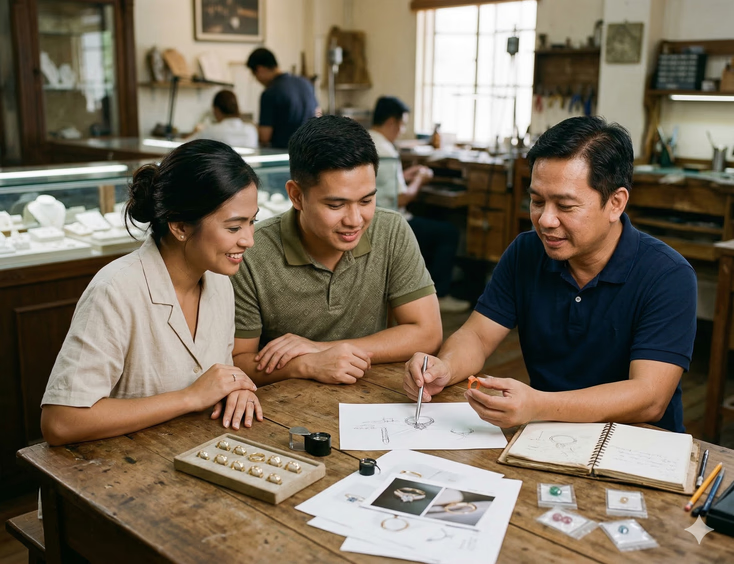
Custom rings take three to eight weeks depending on the jeweler's schedule and design complexity. You bring a concept, the jeweler produces a wax model or 3D render for your approval, and the finished ring arrives after casting, polishing, and setting. Custom rings cost more than comparable ready-made pieces, but you end up with exactly the ring you want rather than the closest approximation on the display case.
For a step-by-step guide on how to order custom wedding rings in the Philippines, including questions to ask your jeweler and realistic timelines, read our dedicated guide.
Filipino couples who book their wedding more than six months out have enough lead time for custom rings without pressure. Couples working with a shorter timeline should shop ready-made or semi-custom (where a jeweler modifies an existing design rather than building from scratch).
How to Choose the Right Ring as a Couple
Ring shopping as a couple surfaces disagreements you didn't know you had. One of you wants yellow gold. The other wants white gold. One wants a stone. The other wants a plain band. These conversations are worth having before you walk into a store.
Start with your lifestyle. If your partner works with their hands — nursing, construction, cooking, athletics — a low-profile setting protects the stone and reduces the chance of losing it. A high-set solitaire catches on gloves, equipment, and fabric throughout the day.
Think about long-term wear. A wedding ring stays on your finger for decades. The design you choose at 28 should still feel right at 45. Trendy settings age faster than classic ones. Many Filipino couples who bought elaborate designs in the early 2000s have since had their rings redesigned into simpler forms.
Match metals to your skin tone. Yellow gold warms against medium and deep skin tones, which describes most Filipino skin. White gold and platinum contrast more sharply, which some couples prefer for photographs. Rose gold flatters a broad range of Filipino complexions.
Set a shared budget ceiling before you shop. See Section 7 for price ranges. A jeweler's job is to show you beautiful rings. Your job is to decide what you're spending.
Shop together. Some couples maintain the tradition of the groom choosing the engagement ring as a surprise. For the wedding band, shop together. You're both wearing it.
For a full step-by-step process, read how to choose the perfect wedding ring as a Filipino couple.
Getting Your Ring Size Right
Ring sizing is the most overlooked step in the buying process. Fingers change size throughout the day — they swell in heat and shrink in the cold. The Philippines' humidity means your fingers at noon during a Boracay beach wedding run larger than your fingers at 7am on an air-conditioned jeweler visit.
Get sized in the afternoon, when your fingers are at their typical daytime size. Get sized on a day when the weather is close to your wedding venue's conditions. If you're getting married outdoors in April, size your ring in the afternoon heat, not inside an SM mall.
Standard ring sizing in the Philippines follows US sizing conventions, with most Filipino women wearing sizes 5 to 7 and most Filipino men wearing sizes 8 to 11. These are averages, not rules. Get professionally sized at a jewelry counter rather than using a printed paper gauge.
Most jewelers include one free resizing within six months of purchase. Confirm this before you pay.
For a complete guide to wedding ring sizing in the Philippines, including how to size yourself at home as a backup, read our dedicated guide.
What to Engrave Inside Your Ring
Engraving adds a private layer of meaning to a ring that the world never sees. Filipino couples engrave names, wedding dates, Bible verses, nicknames, and personal messages. Most jewelers include basic engraving in the ring price, though character limits apply.
Popular choices among Filipino couples:
- Wedding date only — clean, timeless, and easy to read when the ring is old
- Initials of both partners — "M & J" or a simple monogram
- A short Bible verse — Filipinos often choose Ruth 1:16 or 1 Corinthians 13:4
- A private phrase or nickname — something meaningful to the two of you that means nothing to anyone else
Avoid engraving anything you'd be uncomfortable explaining to a future jeweler when the ring needs resizing. Resizing sometimes requires cutting through or stretching the band, which can damage or remove an engraving. Ask your jeweler about this before you choose a placement.
For more engraving ideas tailored to Filipino couples, including Tagalog and Filipino phrases, read our guide on wedding ring engraving ideas Filipino couples will love.
Red Flags to Watch When Shopping
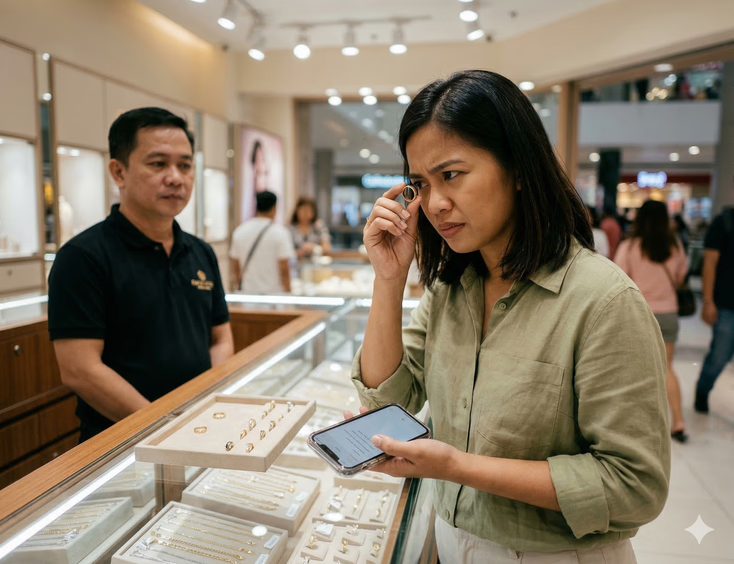
Filipino couples lose money on wedding rings in predictable ways. Knowing the patterns protects you.
No hallmark on the band. Philippine law requires jewelry sold as gold to bear a hallmark indicating karat purity (e.g., 750 for 18K, 585 for 14K). If a ring carries no hallmark, the metal content is unverified. Walk away.
Verbal guarantees only. Any promise about karat, stone grade, or certification should appear on a written receipt. A jeweler who says "trust me" when asked for documentation is telling you something useful about how they operate.
Prices that feel too low for gold. An 18K gold ring weighing 4 grams costs a certain floor price based on the prevailing gold market rate. If someone sells you one for dramatically less, either the karat is lower than claimed or the weight is lighter than it appears. Both matter when you're spending your wedding budget.
High-pressure upselling at the altar. Some mall jewelry stores schedule romantic lighting and anniversary music to soften your budget ceiling. Decide your number before you enter. Atmospheric manipulation works on couples who haven't agreed on a ceiling.
No return or resize policy. A reputable jeweler offers written policies for returns, exchanges, and resizing. Get it in writing before you pay.
Online sellers with no physical address. If a social media jeweler cannot give you a verifiable address and phone number, your purchase is unprotected if the ring arrives wrong.
For a full breakdown of how to spot fake gold, unreliable sellers, and common wedding ring scams in the Philippines, read our guide.
A Timeline for Ring Shopping
Filipino couples who start early have more options, less stress, and better prices. Couples who start late settle.
12 months before the wedding Agree on your combined ring budget as a couple. Begin browsing styles online (Pinterest, Instagram, Filipino wedding Facebook groups). Note what you like and what you don't.
9 to 10 months before Visit two to three jewelers together for a consultation. Bring your style references. Ask for quotes on both ready-made and custom options. No commitment yet.
6 to 8 months before Place your order, whether custom or ready-made. Custom rings need six to eight weeks at minimum, but most couples allow three to four months as buffer for adjustments and resizing.
3 months before Confirm your order status with the jeweler. Try on the finished rings if they're ready. Request any adjustments.
1 month before Pick up the finished rings. Check hallmarks, confirm engravings, verify sizing. Store them somewhere secure.
Wedding week Give the rings to your ring bearer, best man, or maid of honor, depending on your ceremony plan. Confirm who carries them to the altar.
For a detailed month-by-month ring shopping calendar, read our guide on when Filipino couples should start shopping for wedding rings.
Special Situations
Civil weddings. A courthouse wedding in the Philippines requires the same legal documents as a church wedding but carries no religious ring blessing ceremony. Whether you exchange rings at a civil wedding is entirely your choice. Many couples who marry civilly choose to have a separate ring ceremony at their reception or at a blessing ceremony held afterward. Read more about rings and civil weddings in the Philippines.
Muslim Filipino couples. Islamic guidelines on jewelry differ from Catholic norms. Gold rings for men are generally not permitted in Islamic tradition, though scholars differ on interpretations. Muslim Filipina brides typically wear gold. Many Muslim Filipino couples choose silver or white metal bands for the groom. For a full discussion of permissible ring choices for Muslim Filipino couples and what Mindanao jewelers recommend, read our dedicated guide.
Minimalist couples. If neither of you wants an elaborate ring, a plain band serves the ceremony as completely as a diamond solitaire. Minimalist rings are not budget compromises — they are a deliberate aesthetic choice that thousands of Filipino couples make. For a look at why minimalist wedding rings are trending among Filipino Gen Z and millennial couples, read our style guide.
Finding Your Jeweler
The right jeweler for your wedding ring combines three things: verified craftsmanship, transparent pricing, and a communication style that makes you feel informed rather than pressured.
Ask every jeweler you consider these four questions:
- Can I see a hallmark or assay certificate for the metal?
- Do you provide a written receipt that specifies karat, stone grade, and weight?
- What is your policy for resizing and repairs after purchase?
- Can I see examples of previous custom work similar to what I want?
A jeweler who answers all four clearly and confidently earns a second appointment.
Browse verified jewelry and accessories suppliers across the Philippines on our Jewelry & Accessories supplier directory page. Every listing includes contact details, location, and service descriptions so you can shortlist and compare before you visit.
For a curated list of the best jewelry shops for wedding rings in the Philippines, organized by reputation, service, and price range, read our full roundup.
The Ring You Actually Want
Filipino weddings carry enormous social weight. Families have opinions. Friends share posts. Trends cycle through Pinterest boards and Facebook groups. Somewhere in all of that, the ring you actually want can get buried under what you think you're supposed to want.
Two plain gold bands from a Meycauayan goldsmith, blessed by your priest and exchanged at the altar, carry the same meaning as a platinum solitaire from a BGC atelier. The ring marks your commitment. Your commitment isn't measured in carats.
Buy what fits your life, your budget, and your taste. Then get on with being married.
Still Searching for a Right Match?
Find Your Perfect Wedding Supplier Today!
Discover trusted wedding suppliers across the Philippines in our complete directory. Compare services and connect with the ones that fit your dream celebration.
Browse Wedding SuppliersFeatured Posts

Wedding Reception Ideas that Honor Tradition and Wow Your Guests
4 mins readFilipino Wedding Dress Guide for Style Traditions and Smart Shopping
6 mins readFilipino Wedding Cost Guide - Realistic Budgets, Percentages, and Price Drivers by Region
9 mins readPhilippines Honeymoon Guide - Best Islands, Resorts, Costs & 7–14 Day Itineraries
9 mins readFilipino Wedding Games - Traditions, Modern Twists, and Crowd-Pleasers for Every Reception
8 mins read