

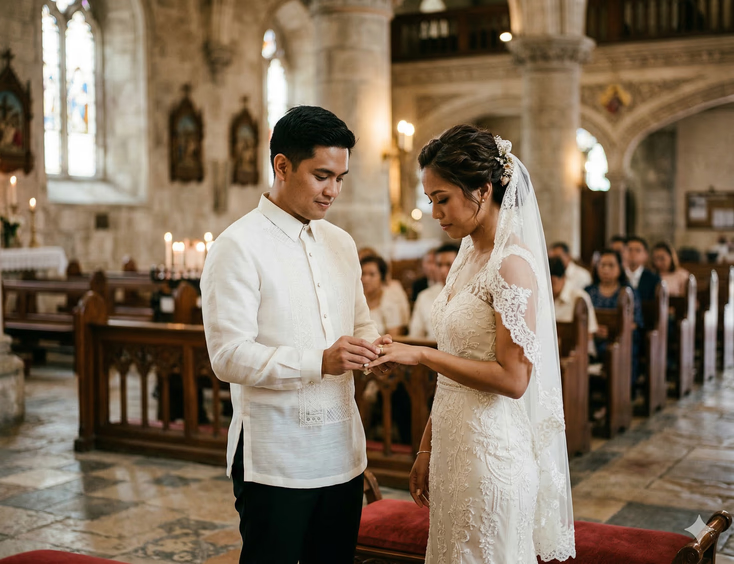
The Arras and the Ring: Understanding the Difference Between Wedding Coins and Wedding Bands in the Philippines
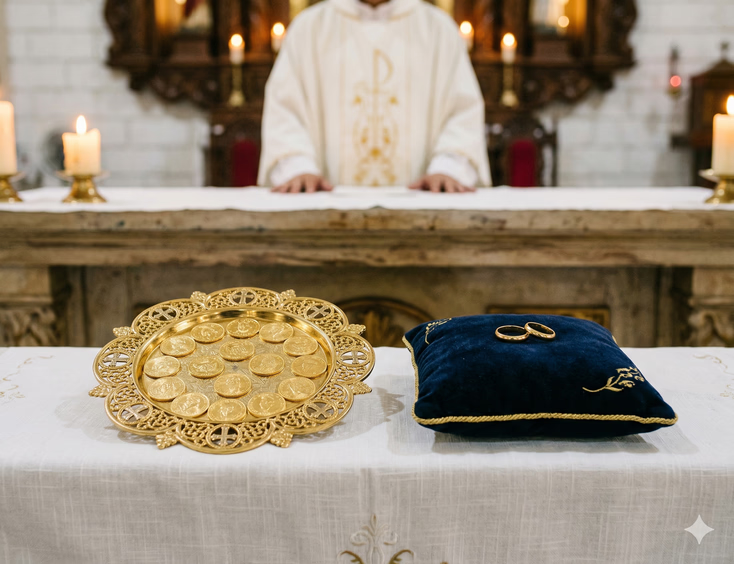
If you've attended a Filipino Catholic wedding, you've seen both — the small tray of coins passed between the couple at the altar, and the rings slipped onto their fingers moments later. Most guests watch both moments with equal reverence without ever fully understanding what separates them.
Even many couples planning their own weddings treat the arras as a footnote. They spend weeks choosing their rings — the metal, the setting, the engraving — and then, sometime in the final month of planning, someone asks: "Sino na ang mag-aalaga ng arras?" and they realize they haven't thought about it at all.
This matters. The arras and the ring are not the same symbol performing the same function with different props. They say completely different things. They come from different traditions. They ask different things of the couple. And understanding that difference — really understanding it — changes how you experience both moments on your wedding day.
This guide unpacks everything: where each tradition comes from, what each one means theologically and culturally, how each is used in the ceremony, and the practical questions Filipino couples actually ask when planning both.
Where Did the Arras Come From? A Brief History
The word arras comes from Spanish, and its presence in the Filipino Catholic wedding is one of the most direct living inheritances of over three hundred years of Spanish colonial rule and Catholic evangelization in the Philippines.
In Spanish tradition, the arras matrimoniales — matrimonial coins — were a legal and symbolic custom rooted in ancient Roman and later Visigothic law. The groom presented thirteen coins to the bride as a pledge: a formal declaration that he accepted the responsibility of providing for her and for the household they were about to create together. The coins were not a purchase price — that framing is both legally incorrect and culturally unfair. They were a pledge of stewardship. A groom saying, in material terms: "Everything I have and everything I will earn, I commit to our family."
Spain brought this tradition to the Philippines in the sixteenth century, and it took root here so completely that it outlasted Spanish rule by centuries. Today the arras is standard in Filipino Catholic weddings across all regions, incorporated formally into the Rite of Marriage as celebrated by the CBCP, and considered by most Filipino families to be as essential as the vows themselves.
Thirteen coins is the traditional number. There is no single universally agreed-upon explanation for why thirteen, but the most widely cited interpretation in Filipino Catholic practice is that the coins represent Christ and his twelve apostles — with the groom symbolically aligning his role as provider with Christ's example of selfless, sacrificial love for his Church.
Where Did the Wedding Ring Come From? A Different History Entirely
The wedding ring's history is older than Christianity itself.
Ancient Egyptians exchanged rings made of braided reeds or leather as symbols of eternal union — the circle representing eternity, with no beginning and no end. Ancient Romans adopted the practice, using iron rings (anulus pronubus) as a sign of betrothal and later marriage. As Christianity spread through the Roman Empire and eventually through Europe, the Church incorporated the ring exchange into the marriage rite, investing it with sacramental meaning.
By the time Spain colonized the Philippines, the ring was already a firmly established element of Catholic matrimonial practice — not a Spanish cultural custom grafted onto a religious ceremony, but an intrinsic part of the sacrament itself.
This distinction is important: the arras is a cultural tradition incorporated into the Filipino Catholic wedding rite. The ring is a sacramental sign that belongs to the Rite of Marriage across the universal Catholic Church. One is particular to certain cultures and regions; the other is universal.
What the Arras Means: A Symbol of Shared Prosperity and Stewardship
At its theological and symbolic core, the arras is about economics and covenant — specifically, the solemn commitment to share material life completely and to steward the resources of the family together.
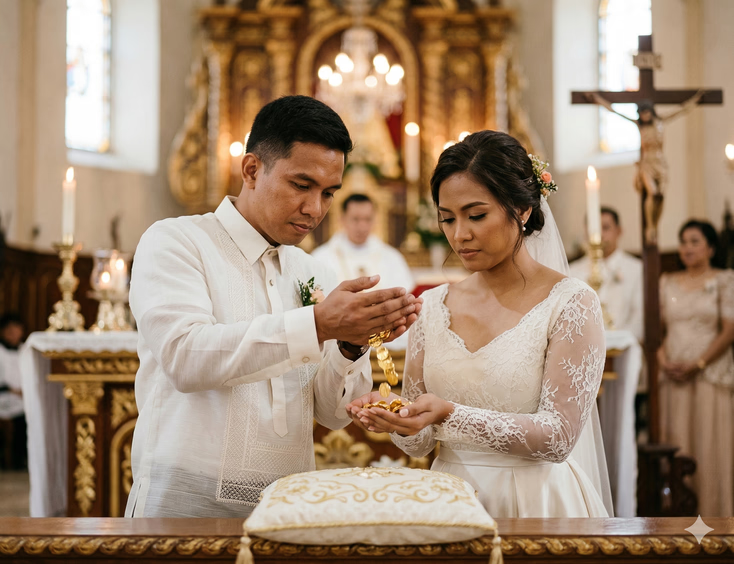
When the groom pours the thirteen coins into the bride's cupped hands, and she returns them to his, the gesture enacts something specific:
"What is mine is yours. What is ours, we hold together. I will provide. We will steward. Neither of us holds back."
The back-and-forth movement of the coins in the ceremony is significant. The groom does not simply hand the bride money. She receives them and returns them. This exchange is mutual — a visual representation of the shared financial life the couple is entering. It is not about male provision alone; it is about shared pamamahala (stewardship) of the family's material wellbeing.
In modern Filipino Catholic weddings, the arras coins are typically:
- Made of gold-plated metal, silver, or sometimes actual precious metal for more elaborate sets
- Housed in a decorative pillow, tray, or ceremonial box
- Carried by the padrino and madrina de arras — the principal sponsors assigned specifically to this element of the ceremony
- Often kept by the couple after the wedding as a keepsake, displayed in the home or stored with other wedding mementos
The arras is not worn. It is not carried daily. Its work is done in the ceremony — it makes a public declaration and then becomes a memento of that declaration.
What the Ring Means: A Symbol of Eternal Love and Sacramental Fidelity
The wedding ring operates in an entirely different symbolic register from the arras.
Where the arras speaks to material life and shared provision, the ring speaks to the interior life of the marriage — love, fidelity, and the permanent, unbreakable nature of the covenant itself.
As we explored in detail in our guide on the meaning of the wedding ring in Filipino Catholic weddings, the ring is a sacramental symbol: an outward, visible sign of an inward, spiritual grace. Its circular shape represents eternity — a love with no beginning and no end, mirroring God's own infinite love. The blessing of the rings by the priest, the specific words of the exchange ("Take this ring as a sign of my love and fidelity, in the name of the Father, and of the Son, and of the Holy Spirit"), and the Trinitarian formula all locate the ring exchange within the sacrament itself.
The ring is also unique among all the Filipino Catholic wedding symbols in one critical way: it stays.
The arras goes into a box. The veil is removed. The cord is untied. The ring remains on the finger from the moment of exchange through every ordinary and extraordinary day of the marriage that follows. It is a living, daily, wearable vow.
Side by Side: The Key Differences Between the Arras and the Ring
| The Arras (Wedding Coins) | The Ring (Wedding Band) | |
|---|---|---|
| Origin | Spanish colonial tradition, rooted in Roman and Visigothic law | Ancient Egyptian/Roman tradition, incorporated into universal Catholic sacramental rite |
| Type of Symbol | Cultural tradition within the Filipino Catholic rite | Sacramental sign of the universal Rite of Marriage |
| What It Represents | Shared prosperity, mutual provision, financial stewardship | Eternal love, fidelity, the permanent marriage covenant |
| Number | Thirteen coins | Two rings — one for each spouse |
| Who Handles It | Padrino and madrina de arras present it; the couple exchanges it | Ring bearer presents it; the priest blesses it; the couple exchanges it |
| Words Spoken | No specific formula — the exchange is gestural | "Take this ring as a sign of my love and fidelity, in the name of the Father, and of the Son, and of the Holy Spirit" |
| Blessed by Priest? | Sometimes included in the general blessing; practice varies by diocese | Yes — always, as part of the formal Rite of Marriage |
| After the Ceremony | Kept as a keepsake, displayed or stored | Worn daily for the rest of the marriage |
| Speaks To | The material and practical life of the family | The spiritual and emotional life of the marriage |
| Universal or Local? | Particular to Filipino (and some Hispanic) Catholic weddings | Universal Catholic practice across all cultures |
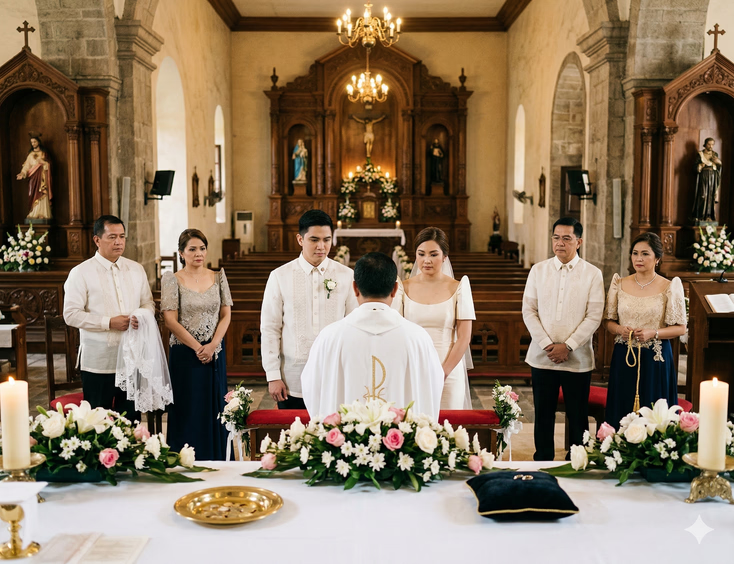
How Each Symbol Is Used in the Ceremony: A Step-by-Step Comparison
Understanding the sequence helps. In a standard Filipino Catholic wedding Mass, the unity symbols appear in this order:
The Arras — During the Liturgy of the Word or After the Vows
The exact placement of the arras in the ceremony can vary by diocese and parish. In many Filipino Catholic weddings, the arras exchange happens after the exchange of vows and before or alongside the ring exchange. The padrino and madrina de arras approach the altar with the ceremonial coin tray or pillow. The priest may offer a brief blessing over the coins. The groom takes the coins and pours them into the bride's hands; she returns them to his. The gesture is completed, and the coins return to their tray or box, which the sponsors or a family member then holds for the remainder of the ceremony.
The Ring Exchange — After the Vows
The ring exchange follows the vows and, in many parishes, comes immediately after or alongside the arras. The ring bearer presents the rings (having carried them, sometimes nervously, up the aisle at the appropriate moment). The priest takes the rings and blesses them with holy water. He then leads the couple through the ring exchange formula. Both the groom and the bride place rings on each other's left ring fingers. The rings remain there.
The Veil and Cord — After the Ring Exchange
After both the arras and the ring exchange, the ceremony moves to the veiling and the yugal (cord). The veil is draped over the bride's head and the groom's shoulder by the padrino and madrina de velo. The cord — a decorative figure-eight loop — is then placed around both their shoulders by the padrino and madrina de yugal. These symbols of unity and covering remain in place through a period of prayer before being removed.
The sequence matters: the arras (material provision), the rings (eternal fidelity), the veil and cord (unity and protection). Together, they tell a complete story of what the couple is committing to.
The Padrinos and Madrinas: Who Sponsors What
One source of confusion for Filipino couples planning their ceremony is the role of sponsors in relation to these symbols. A brief clarification:
Filipino Catholic weddings have principal sponsors (ninong and ninang) and secondary sponsors assigned to specific symbolic elements. The secondary sponsors for the unity symbols are:
- Padrino/Madrina de Arras — presents the arras coins at the appropriate moment in the ceremony
- Padrino/Madrina de Velo — drapes the wedding veil over the couple
- Padrino/Madrina de Yugal — places the cord over the couple's shoulders
The ring bearer — almost always a young child — carries the rings to the altar. The rings themselves are not "sponsored" by a padrino in the same way the other symbols are; their presentation is the ring bearer's honored task.
This distinction matters when you are building your entourage list. The arras sponsors, the veil sponsors, and the cord sponsors are separate roles, and Filipino families take these assignments seriously. Each padrino and madrina is witnessing a specific dimension of the couple's covenant.
Practical Questions Filipino Couples Ask About the Arras
Do we need real coins, or can we use ceremonial ones?
You do not need to use currency with monetary value. The vast majority of Filipino couples use decorative ceremonial arras sets — gold-plated or silver-plated coins sold specifically for weddings, often in matching sets with a decorative pillow or tray. These are widely available at jewelry shops, Catholic goods stores, and online. Some couples who want a more meaningful set commission custom arras coins from a jeweler, sometimes engraved with their wedding date or initials.
Can we use actual gold or silver coins?
Yes, and some couples do. There is no prohibition on using real precious metal coins — in fact, for couples who want their arras to be a genuine material statement, using actual gold coins adds weight (both literal and symbolic) to the gesture. This is more expensive but not uncommon, particularly in families where the arras is taken very seriously as a tradition.
What happens to the arras after the wedding?
Most Filipino couples keep the arras in the ceremonial box or display them in the home — sometimes in a shadow box alongside their wedding photo and other mementos. Some families pass arras coins down through generations, though this is less common than heirloom ring traditions. There is no prescribed rule for what to do with them after the ceremony; they are yours.
Is the arras required for a valid Catholic marriage?
No. The arras is a cultural element incorporated into the Filipino Catholic wedding rite, not a requirement for the validity of the sacrament itself. A marriage is valid without the arras exchange. However, most Filipino Catholic parishes include it as a standard part of the ceremony, and most Filipino families expect it. Choosing to omit it is a decision worth discussing with your parish priest.
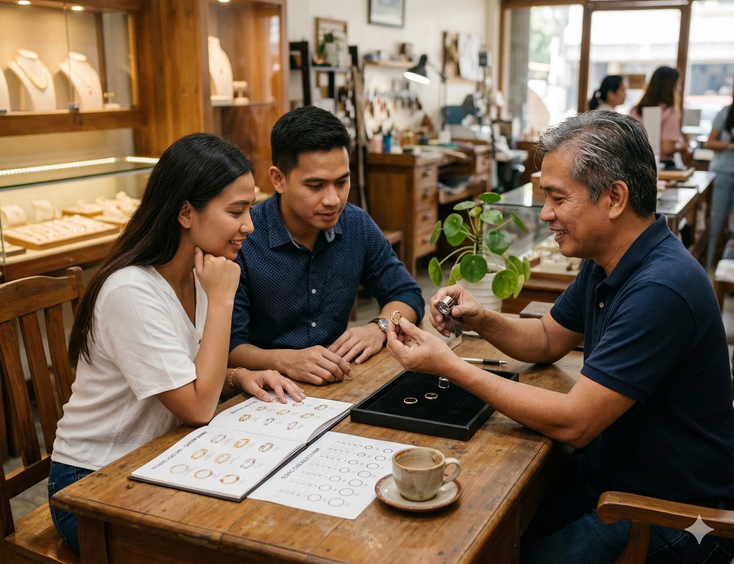
Practical Questions Filipino Couples Ask About the Rings
Does the Catholic Church require both partners to wear a ring?
The Church requires the ring exchange as part of the Rite of Marriage — the act of giving and receiving the ring. Whether both spouses then wear rings daily is a personal and cultural choice, not a canonical requirement. In modern Filipino Catholic practice, it is essentially universal for both spouses to wear rings, and the mutual exchange during the ceremony is standard. But the spiritual validity of the sacrament rests on the exchange, not on the subsequent daily wearing.
What if we want to use a family heirloom ring?
This is a beautiful choice and fully acceptable within Catholic practice. If you plan to use a family heirloom ring — a grandparent's band, for example — inform your parish priest in advance. The ring will still be blessed during the ceremony. The only practical consideration is sizing and condition; have it professionally inspected and resized if needed before the wedding day.
Can the ring be any material, or does it need to be gold?
The Catholic Church does not prescribe a specific material for the wedding ring. Gold is traditional and culturally dominant in the Philippines, but couples today choose white gold, platinum, titanium, silver, and other materials. What matters is the meaning of the exchange, not the composition of the metal.
For guidance on choosing the right metal for your rings — including practical considerations for the Philippine climate and lifestyle — our complete guide to wedding rings for Filipino couples covers this in full.
Why Understanding Both Symbols Makes Your Wedding Day Richer
Here is the thing about symbols: they only do their full work when you understand what they are saying.
A couple who stands at the altar knowing that the arras represents their shared commitment to steward their material life together — that neither of them enters this marriage holding their finances back from the other — will experience that moment of pouring coins from hand to hand completely differently from a couple for whom it is just a nice tradition they vaguely understand.
A couple who knows that the ring's circular shape is a deliberate theological statement about the permanence and eternity of their covenant — that putting it on their partner's finger is a sacramental act witnessed by God — will feel the weight of that moment in a way that transforms it from choreography into something sacred.
This is not about being overly serious on what should also be a joyful day. It is about being fully present. Understanding what you are doing, and why, is what turns a ceremony into an experience you carry with you for the rest of your life.
Where to Find Your Arras Set and Wedding Rings in the Philippines
Whether you're shopping for a matched arras and ring set from the same jeweler, or sourcing them separately, the Philippines has excellent options at every price point.
For your arras set, Catholic goods stores near major parishes, jewelry shops in mall and independent settings, and dedicated wedding suppliers all carry a range of ceremonial coin sets. Prices typically range from ₱500 for basic decorative sets to several thousand pesos for premium metal or custom-engraved pieces.
For your wedding rings, the considerations are more involved — metal choice, karat, stone preferences, sizing, customization, and finding a jeweler you genuinely trust all come into play.
Browse verified jewelry and accessories suppliers in the Philippines to find trusted jewelers who work with Filipino couples and understand both the cultural and sacramental weight of what they are crafting.
Two Symbols, One Ceremony, One Complete Promise
The arras and the ring are not rivals for the same symbolic territory. They are partners — each saying something the other cannot.
The arras says: "I will provide for you. We will build and steward a life together. What is mine is ours."
The ring says: "I will be faithful to you. Forever. No beginning, no end. Before God and everyone who loves us."
Together, they cover the full scope of what a marriage is: a material partnership and a spiritual covenant, a practical commitment and an eternal promise. Filipino Catholic tradition, in preserving both, has kept something genuinely wise about what it takes to build a life together.
On your wedding day, when the coins move from his hands to hers and back again, and when the ring slides onto your finger and stays — you will understand, in your body before your mind catches up, exactly what both of them mean.
For the complete picture on Filipino wedding rings — from symbolism to styles to where to buy — start with our pillar guide: The Complete Filipino Couple's Guide to Wedding Rings & Bands in the Philippines.
Still Searching for a Right Match?
Find Your Perfect Wedding Supplier Today!
Discover trusted wedding suppliers across the Philippines in our complete directory. Compare services and connect with the ones that fit your dream celebration.
Browse Wedding SuppliersFeatured Posts




Wedding Reception Ideas that Honor Tradition and Wow Your Guests
4 mins readFilipino Wedding Dress Guide for Style Traditions and Smart Shopping
6 mins readFilipino Wedding Cost Guide - Realistic Budgets, Percentages, and Price Drivers by Region
9 mins readPhilippines Honeymoon Guide - Best Islands, Resorts, Costs & 7–14 Day Itineraries
9 mins readFilipino Wedding Games - Traditions, Modern Twists, and Crowd-Pleasers for Every Reception
8 mins read