

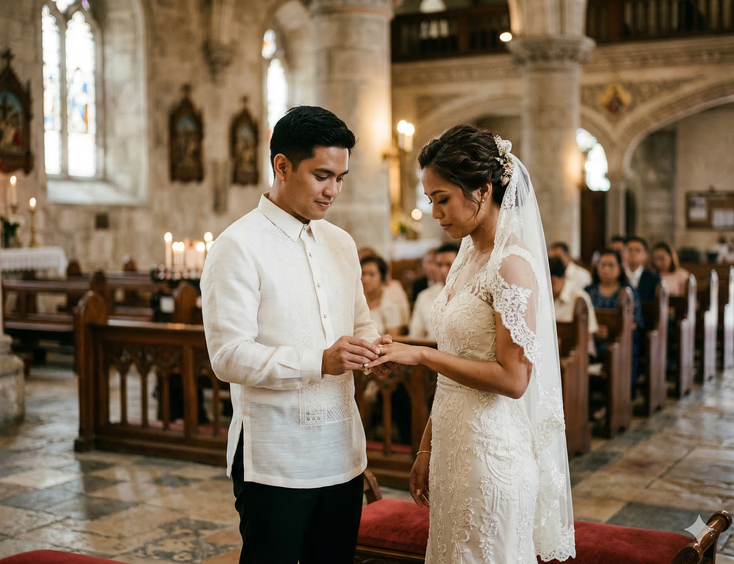
How to Save on Wedding Rings Without Sacrificing Quality (Tips from Filipino Jewelry Experts)
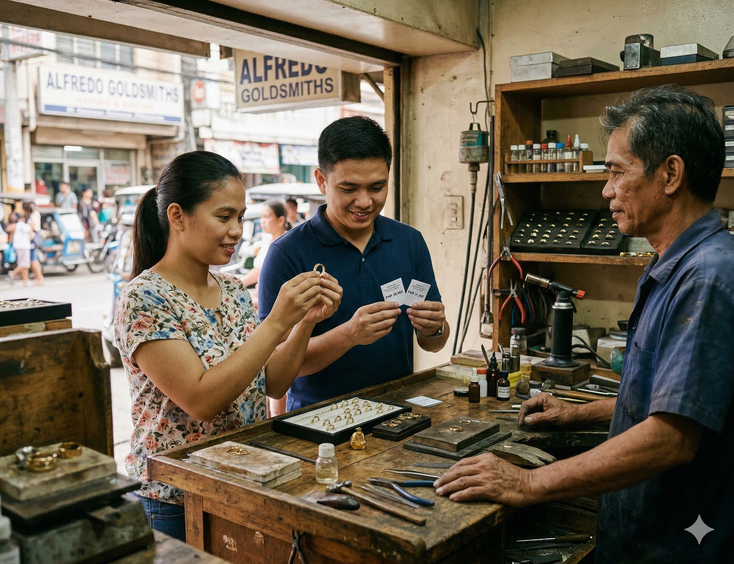
Filipino couples overpay for wedding rings in five predictable ways. Each one is avoidable with the right information before you shop.
This guide covers every saving strategy that Philippine jewelry professionals recommend to couples who want 18K gold, quality craftsmanship, and a ring they'll wear for decades — without paying mall retail prices for any of it.
Buy Closer to the Source
Every ring sold in a Philippine mall jewelry store carries four cost layers: the goldsmith's labor, the materials, the wholesale distributor's margin, and the retailer's markup. Mall retailers in high-foot-traffic locations add lease costs on top of all that. You pay every layer when you buy at retail.
Buying closer to the production source removes those layers.
Meycauayan, Bulacan is the single most effective savings move available to Filipino couples buying gold rings. The city produces a significant share of Philippine gold jewelry. Goldsmiths there sell finished rings and custom work at prices that reflect material cost plus labor — with no distributor, no mall lease, and no brand overhead sitting between you and the finished product.
A plain 18K gold band that costs ₱8,000 to ₱12,000 in a Metro Manila mall costs ₱4,000 to ₱6,000 from a Meycauayan goldsmith. A custom solitaire that runs ₱45,000 at a BGC jeweler costs ₱25,000 to ₱32,000 in Meycauayan for comparable craftsmanship. The gap is consistent across ring types and sizes.
The trade-off is effort. Meycauayan requires a trip, a jeweler visit, a follow-up for the finished piece, and your own due diligence on the goldsmith's quality. Filipino couples who make that trip consistently report the saving justifies the time.
For a complete guide to navigating Meycauayan as a ring buyer, including which areas to visit and how to verify quality, read our Meycauayan wedding ring buyer's guide.
Independent Manila jewelers sit between Meycauayan and mall pricing. An atelier in Quezon City or a workshop jeweler in Pasig carries lower overhead than a Glorietta store. Many produce work of equal or superior quality to mall brands at 20 to 35 percent lower prices. Ask for referrals from recently married couples in Filipino wedding Facebook groups — word-of-mouth points you to the jewelers who deliver quality without the retail premium.
Choose Your Stone Strategically
The stone selection determines more of your ring's final cost than any other single decision. Three strategies here save Filipino couples significant money without reducing visual quality.
Choose lab-grown over natural diamond. A one-carat lab-grown diamond in G color, SI1 clarity costs ₱25,000 to ₱70,000 from a Philippine jeweler. The same natural diamond costs ₱150,000 to ₱350,000. Both are real diamonds. A jeweler examining both with a standard loupe cannot distinguish them. Filipino couples who prioritize visual quality over stone origin save ₱100,000 to ₱280,000 on a single stone purchase.
For a full comparison of both diamond types, read our guide on lab-grown versus natural diamonds for Filipino weddings.
Choose moissanite if diamond origin matters less than brilliance and budget. Moissanite costs 80 to 90 percent less than a natural diamond of the same carat weight. It scores 9.25 on the Mohs hardness scale, produces more white light than diamond, and performs durably through decades of daily Filipino wear. A one-carat colorless moissanite in an 18K gold setting costs ₱20,000 to ₱35,000 from a Philippine jeweler. The same visual impact in natural diamond costs ₱150,000 to ₱350,000.
For the full moissanite assessment, read our guide on moissanite for Filipino couples.
Choose a smaller carat weight in a higher quality grade. Filipino couples often prioritize carat size over cut quality. A 0.7-carat diamond with an excellent cut, G color, and VS2 clarity looks significantly better than a 1.0-carat diamond with a poor cut, J color, and SI2 clarity — and costs less. Cut quality determines how much light a diamond returns. A poorly cut large diamond looks smaller and duller than a well-cut smaller stone. Spend on grade rather than weight.
Choose near-colorless over colorless. Diamonds in the G-H-I color range look white to the naked eye in all standard lighting conditions. D-E-F colorless diamonds cost 20 to 40 percent more than G-H stones of the same carat and clarity. The difference is visible only under gemological lighting at 10x magnification. In your ring, under church candles and reception lighting, nobody sees that color grade — including you.
Choose SI1 or SI2 clarity over VS1 or VVS. Inclusions in SI1 and SI2 diamonds are not visible to the naked eye in most cases. They are visible under a loupe at 10x magnification. You wear your ring, not a loupe report. A SI1 diamond of the same cut and color as a VVS2 diamond costs 25 to 40 percent less. Spend the difference on carat weight or metal quality instead.
Rethink the Setting
Setting style drives labor cost. Filipino couples who choose simpler settings without reducing stone quality or metal purity save ₱5,000 to ₱20,000 depending on the original design.
Four-prong solitaire. The least expensive setting to produce. A jeweler sets one stone in four prongs. Labor is minimal. The stone sits high and catches light from all angles. This design has outlasted every jewelry trend of the past century. Filipino brides who wear their ring for thirty years rarely regret choosing a solitaire.
Bezel setting. A continuous rim of metal encircles the stone rather than four exposed prongs. Bezel settings cost slightly more than prong settings but protect the stone better for active-lifestyle wearers. Filipino nurses, teachers, and cooks who wear their rings through physical workdays often prefer bezel settings for stone security.
Skip the halo. Halo settings surround the center stone with a ring of smaller pavé diamonds. They add visual size to the center stone and create a more elaborate look. They also add ₱8,000 to ₱25,000 to the setting cost, require more maintenance as small pavé stones work loose over time, and make resizing more complicated. A well-cut center stone in a clean solitaire setting often looks better than a smaller center stone padded by a halo.
Skip pavé bands. A full pavé wedding band — where small diamonds or moissanite stones line the band's surface — costs significantly more than a plain band and requires more maintenance. Small pavé stones loosen and fall out through regular wear. A plain 18K gold band costs less, requires no stone maintenance, and ages better over decades of daily Filipino life.
Shop the Metal Market Timing
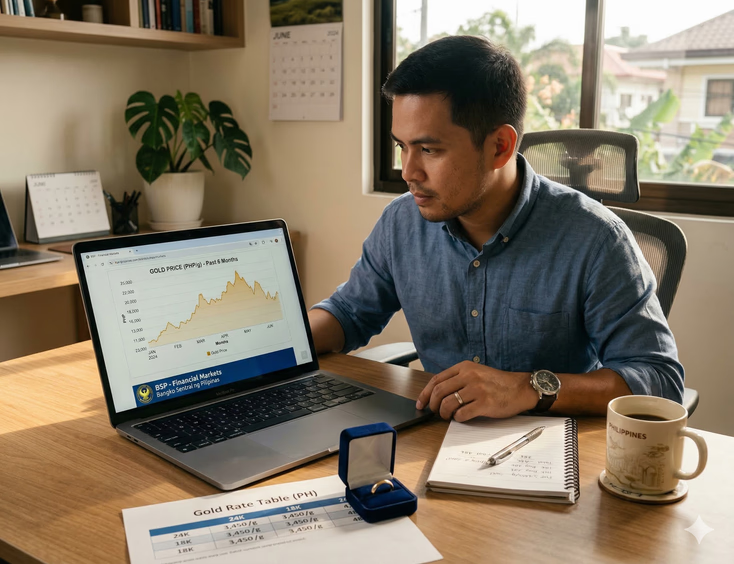
Gold prices fluctuate with international commodity markets. The Philippine gold spot rate on any given day determines the floor price of every gold ring sold in the country. Shopping when gold prices drop saves money on every gold ring you buy.
Gold prices in the Philippines track international gold markets, quoted in US dollars per troy ounce and converted at the prevailing peso-dollar rate. Price per gram of 18K gold shifts meaningfully over the course of any year, and a 5-gram ring at the high end of that range can cost several thousand pesos more than the same ring bought during a dip.
Filipino couples who monitor gold prices for two to three months before purchasing identify the lower end of their shopping period. Several financial news apps and the BSP website publish daily gold rates accessible to anyone.
Buying during gold price dips requires flexibility on timing. Couples with twelve months or more before their wedding have enough lead time to choose their moment. Couples shopping within three months of their wedding take the current rate and focus savings elsewhere.
Go Custom at the Right Place
Custom rings cost more than ready-made rings at mall retailers. Custom rings at Meycauayan or through independent Manila jewelers cost less than ready-made rings at mall retailers — with more personal design input.
Filipino couples who skip the custom option to save money sometimes save nothing. A ready-made ring from a mall store at ₱35,000 and a custom ring from a Meycauayan goldsmith at ₱22,000 are not the same trade-off. The custom ring costs less and reflects your design preferences.
The saving requires three things from you: a clear design brief (a photo reference works), enough lead time (four to eight weeks minimum), and the willingness to manage the goldsmith relationship directly rather than relying on a sales staff to handle everything.
Filipino couples who invest that effort consistently report higher satisfaction with their rings and lower total spend than couples who buy ready-made from mall retailers.
For a full guide to ordering custom rings in the Philippines, read our guide on custom-made wedding rings in the Philippines.
Negotiate the Right Way
Philippine jewelry stores — particularly independent jewelers and Meycauayan goldsmiths — negotiate on price more readily than mall retailers, whose prices are set by corporate pricing policy.
Filipino couples who negotiate effectively follow three practices.
Quote competitors. If a jeweler in BGC quotes ₱40,000 for a design and a Meycauayan goldsmith quotes ₱26,000 for the same specification, tell the BGC jeweler what you've been quoted. Some will move. Others won't. Either outcome gives you useful information.
Buy both rings together. Purchasing the bride's and groom's rings from the same jeweler as a set creates leverage for a combined discount. Most Philippine jewelers offer 5 to 15 percent off when couples buy both rings together. Ask for this explicitly rather than waiting for it to be offered.
Pay in cash. Some Philippine jewelers — particularly in Meycauayan and among independent ateliers — offer small discounts (3 to 8 percent) for cash payment. This reflects their preference to avoid card processing fees. Ask before you assume. Never pay in cash without receiving a written receipt.
Ask about upcoming promotions. Philippine jewelry stores run promotions around Valentine's Day, Christmas, and major mall sale events. If your purchase timeline overlaps with a promotional period, the discount applies to your order. Ask your jeweler directly whether any promotion applies to your purchase date.
Skip the Brand Premium
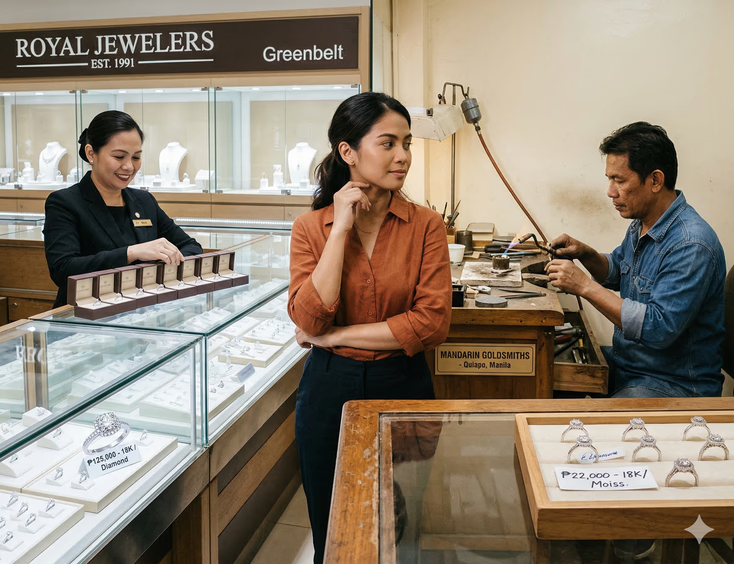
Brand recognition in Philippine jewelry retail carries a price premium that reflects marketing spend, flagship store leases, and brand positioning — not superior gemstones or superior craftsmanship.
An 18K gold ring from a recognizable Philippine jewelry brand costs 30 to 60 percent more than a ring of identical metal content and comparable craftsmanship from a reputable independent jeweler. The brand name on the box does not change what sits on your finger.
Filipino couples who base jeweler selection on verified craftsmanship samples, certified metal and stone documentation, and customer reviews from people they trust access equal or better quality at lower prices than brand-name retail delivers.
Ask any jeweler you consider: "Can I see examples of custom work you've completed for past clients?" A confident jeweler with genuine craftsmanship shows you their portfolio without hesitation. A jeweler who deflects or redirects you to display cases is showing you something useful about how they operate.
Time Your Purchase Correctly
Filipino couples who start ring shopping early consistently spend less than couples who shop under time pressure.
Two dynamics explain this.
Rush premiums. Custom rings ordered within four weeks of the wedding carry rush surcharges from most Philippine goldsmiths. These run ₱1,000 to ₱5,000 above standard pricing. Start early enough to eliminate this cost entirely.
Pressure-driven decisions. Couples shopping with a deadline accept the first ring within their budget rather than comparing three or four options. Comparison shopping across multiple jewelers over several months consistently produces better value than single-visit purchasing under time pressure.
Filipino couples with twelve months before their wedding start ring shopping at nine to ten months out. This allows three to four jeweler visits, comparison quotes, custom order time, and adjustment time before the ring needs to be in hand.
For the full ring shopping timeline, read our guide on when Filipino couples should start shopping for wedding rings.
Separate the Ring from the Ceremony Budget
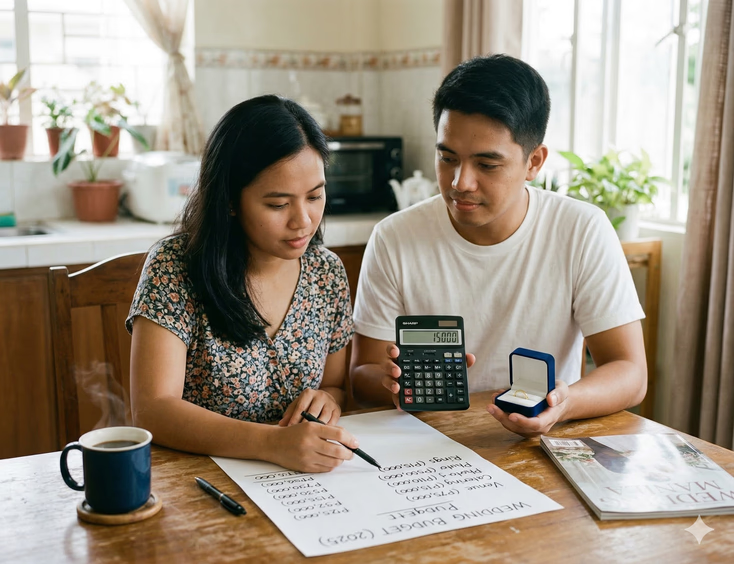
Filipino weddings carry enormous social expectations around visible markers of financial commitment — the venue, the reception, the gown, the rings. Couples sometimes overspend on rings because they feel the ring's cost signals something to family and guests.
Two facts counter this pressure.
First, wedding guests at the ceremony see a ring on your finger at the altar from a distance of ten meters or more. Nobody in the pews distinguishes a ₱20,000 ring from a ₱120,000 ring. Both catch light. Both sit in a gold setting. Both carry the same weight at the moment of exchange.
Second, the ring is one item in a wedding budget that competes with your photography, your venue, your food, your honeymoon, and the financial foundation you build together after the wedding. Filipino financial planners consistently advise couples to allocate 3 to 5 percent of the total wedding budget to both rings combined and redirect the rest to higher-priority expenses.
A couple spending ₱800,000 on their wedding allocates ₱24,000 to ₱40,000 to both rings at that rate. That range covers quality 18K gold rings from Meycauayan or a mid-range moissanite solitaire set from an independent Manila jeweler — rings that look excellent, wear durably, and don't compress the budget allocated to everything else.
For a full price breakdown across every ring tier, read our realistic wedding ring cost guide for the Philippines.
The Savings You Should Never Make
Saving strategies have limits. Filipino couples who cut costs past these points trade quality for a problem they'll deal with for decades.
Never compromise on metal karat below 14K for a daily-wear ring. Rings sold as gold below 14K (585 hallmark) contain more alloy than gold. They tarnish faster, discolor skin more frequently, and require more maintenance than 14K or 18K gold. The price saving between 10K and 18K gold is modest. The long-term performance difference is significant.
Never buy unhallmarked gold. Philippine law requires gold jewelry to carry a hallmark indicating karat purity. A ring with no hallmark has unverified metal content. You cannot confirm what you're buying. No saving justifies unverified metal in a ring you wear every day.
Never skip documentation on stones above 0.30 carats. An uncertified diamond at a lower price may carry a lower grade than claimed. A verbal assurance from a seller is not verification. For any stone above 0.30 carats, an IGI or GIA grading report protects your purchase.
Never rush a custom order past a goldsmith's stated timeline. A goldsmith who quotes four weeks and you pressure to deliver in ten days either declines or delivers a rushed piece. Rushing goldsmith work produces rings with uneven settings, inadequate polishing, and structural weaknesses that surface within a year of daily wear. Give your goldsmith the time they quote.
Never purchase from a seller with no physical address and no returns policy. Online jewelry fraud in the Philippines follows a consistent pattern: no address, no policy, no recourse. Any seller who cannot provide a verifiable location and a written return policy removes your protection if the ring arrives wrong or doesn't arrive at all.
For a full list of warning signs when shopping, read our guide on red flags when buying wedding rings in the Philippines.
Your Saving Strategy at Each Budget Level
Combined ring budget: ₱15,000 to ₱30,000
Buy plain 18K gold bands from a Meycauayan goldsmith. Allocate ₱6,000 to ₱10,000 to the bride's band and ₱5,000 to ₱8,000 to the groom's band. Have them engraved. Verify hallmarks. Keep both rings simple and durable.
If the bride wants a stone, a moissanite solitaire in sterling silver or 14K gold from a verified Shopee seller with a 4.9-star rating and a written returns policy fits this budget. Confirm metal content and stone grade before purchasing.
Combined ring budget: ₱30,000 to ₱80,000
Source both rings from Meycauayan or an independent Manila jeweler. A one-carat near-colorless moissanite in an 18K gold solitaire for the bride runs ₱20,000 to ₱30,000 from this channel. A plain 18K gold band for the groom runs ₱6,000 to ₱15,000.
Alternatively, a 0.5-carat lab-grown diamond in G color and SI1 clarity in an 18K gold solitaire fits the upper end of this budget from a Meycauayan or independent Manila jeweler.
Combined ring budget: ₱80,000 to ₱150,000
A one-carat lab-grown diamond in D-F color and VS1 clarity from a reputable Manila independent jeweler or a Meycauayan goldsmith with a custom setting fits the mid-point of this range. Allocate ₱60,000 to ₱90,000 to the bride's ring and ₱15,000 to ₱30,000 to the groom's band in 18K gold or platinum.
Alternatively, a natural diamond in the 0.4 to 0.6-carat range with a GIA or IGI certificate in G-H color and SI1 clarity fits this budget from an independent Manila jeweler.
Combined ring budget: ₱150,000 and above
At this level, the saving strategies shift from cost reduction to value optimization. Buy from an independent Manila atelier over a mall brand. Choose a certified natural diamond from a jeweler who sources directly from importers. Consider a platinum setting for the bride's ring. Spend on cut quality — an excellent-cut 0.8-carat natural diamond at this budget looks better than a poorly cut 1.2-carat stone at the same price point.
Start With Your Number
Every strategy in this guide works better when you walk in with a ceiling already set. Jewelers present rings starting from your expressed budget and moving upward. Your ceiling keeps you in control of that conversation.
Set the number with your partner before your first jeweler visit. Then apply the strategies that fit your specific situation: buy in Meycauayan, choose lab-grown or moissanite, simplify the setting, or shop early enough to compare multiple quotes.
Browse verified jewelry suppliers across the Philippines on our Jewelry & Accessories supplier directory. Every listing includes contact details and service descriptions so you compare before you visit.
For more on where to find quality rings at every price point, read our guide to the best jewelry shops for wedding rings in the Philippines.
For a full picture of where your ring budget sits within your overall wedding spend, return to our complete guide to wedding rings in the Philippines.
Still Searching for a Right Match?
Find Your Perfect Wedding Supplier Today!
Discover trusted wedding suppliers across the Philippines in our complete directory. Compare services and connect with the ones that fit your dream celebration.
Browse Wedding SuppliersFeatured Posts

Wedding Reception Ideas that Honor Tradition and Wow Your Guests
4 mins readFilipino Wedding Dress Guide for Style Traditions and Smart Shopping
6 mins readFilipino Wedding Cost Guide - Realistic Budgets, Percentages, and Price Drivers by Region
9 mins readPhilippines Honeymoon Guide - Best Islands, Resorts, Costs & 7–14 Day Itineraries
9 mins readFilipino Wedding Games - Traditions, Modern Twists, and Crowd-Pleasers for Every Reception
8 mins read