


Wedding Seminars in the Philippines (Everything Couples Need to Know Before Saying 'I Do'
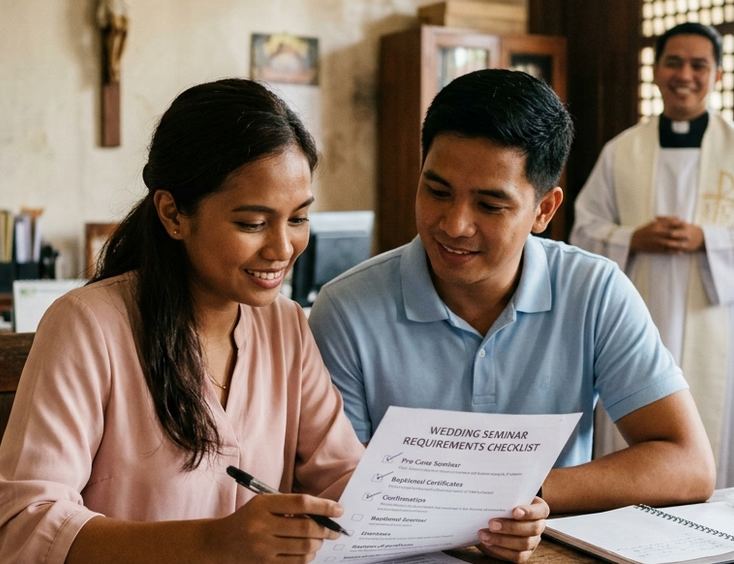
You picked the date. You booked the venue. You sent the save-the-dates. Then your parish coordinator hands you a list of seminars, and your civil registrar asks for another certificate you've never heard of.
Wedding seminars in the Philippines aren't optional paperwork. They're legal and church requirements that gatekeep your marriage license and your church wedding date. Skip one, and your file sits on a desk while your supplier deposits burn.
This guide walks you through every seminar Filipino couples encounter, what each one covers, who runs them, and how to schedule them around a wedding timeline that already feels too tight.
If you want to shortcut the research and book accredited providers in one place, browse our pre-wedding seminar suppliers directory for parish-recognized and LGU-accredited options near you.
The Two Tracks: Civil Requirements and Church Requirements
Filipino couples deal with two separate systems running on parallel tracks.
The civil track runs through your Local Civil Registrar (LCR) and the city or municipal government. The state requires this for your marriage license, regardless of religion.
The church track runs through your parish or denomination. Catholic, Christian, Iglesia ni Cristo, and Muslim weddings each have their own preparation requirements.
You complete both tracks for a Catholic wedding. You complete only the civil track for a judge-officiated civil wedding. Mixed-religion couples and Filipinos marrying foreigners follow modified versions of both.
Get the sequencing wrong and you'll redo seminars because certificates expired. Most have a 120-day validity window from issuance to wedding date.
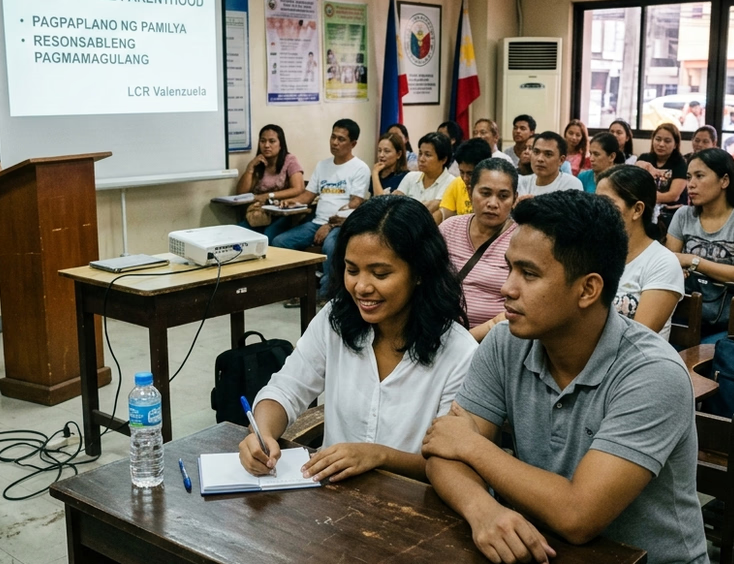
Civil Track Seminars (Required for Marriage License)
Your marriage license application at the LCR requires proof that you attended two government-mandated seminars. The LGU runs these, usually free, often on the same day.
Pre-Marriage Counseling (PMC)
The Pre-Marriage Counseling session covers communication, conflict resolution, finances, and shared decision-making. A licensed counselor or social worker from the City Social Welfare and Development Office (CSWDO) facilitates the session.
Sessions run two to four hours. Some LGUs split it across two days.
Family Planning and Responsible Parenthood Seminar
The second mandatory civil seminar covers reproductive health, family planning methods, and responsible parenthood under Republic Act 10354. Public health nurses or accredited providers facilitate this one.
Read the full breakdown in our guide on Responsible Parenthood Seminar in the Philippines before you book your slot.
Putting It Together: The Marriage License Process
The seminars are one piece of a larger checklist. Birth certificates, CENOMAR, valid IDs, application forms, and the 10-day posting period all stack on top.
Our step-by-step walkthrough on how to get a marriage license in the Philippines sequences every document and seminar so you don't waste a trip to City Hall.
Church Track Seminars (Required for Catholic Weddings)
A Catholic wedding requires more than the civil seminars. Your parish priest will hand you a separate checklist the day you reserve your wedding date.
Pre-Cana Seminar
The Pre-Cana is the central marriage preparation seminar of the Catholic Church in the Philippines. Couples spend a full day, sometimes a weekend, with married mentors, priests, and lay speakers covering theology of marriage, sacramentality, sexuality, communication, and family life.
Most parishes require Pre-Cana within six months of the wedding. The certificate of attendance goes into your canonical file.
For the full picture on what happens during the seminar and why the Church considers it non-negotiable, read our deep guide on what a Pre-Cana seminar is and why the Catholic Church requires it.
Registering for Pre-Cana at Your Parish
Pre-Cana slots fill fast in Metro Manila parishes, especially during peak wedding months from December to May. You'll need to register weeks ahead, submit baptismal and confirmation certificates, and pay a seminar fee that ranges from ₱500 to ₱3,000 depending on the parish.
Our practical guide on how to register and attend a Pre-Cana seminar at your parish covers the documents, fees, and scheduling tactics that save couples weeks of back-and-forth.
Online Pre-Cana: When Distance or Schedule Forces Your Hand
OFW couples, long-distance partners, and busy professionals ask the same question: does the parish accept an online Pre-Cana?
The answer depends on the diocese and the accrediting body. Some parishes accept CBCP-recognized online programs. Others require in-person attendance regardless of circumstances.
Before you sign up for a Zoom-based seminar, check our breakdown of whether online Pre-Cana is accepted by the Catholic Church in the Philippines and verify with your specific parish first.
The Canonical Interview
The canonical interview catches most couples off-guard. Many assume Pre-Cana is the final church step. It isn't.
The parish priest sits down with each partner separately, asks questions about freedom to marry, intent, fidelity, and openness to children. The priest documents the answers as part of the canonical investigation.
Our guide on the Catholic canonical interview and how it differs from Pre-Cana explains what to expect and how to prepare.
Natural Family Planning Seminar
Many Catholic dioceses in the Philippines require a Natural Family Planning (NFP) seminar on top of Pre-Cana. The NFP seminar teaches fertility awareness methods consistent with Catholic teaching: Billings Ovulation Method, Sympto-Thermal, and Standard Days.
Some parishes accept the LGU's family planning seminar in place of NFP. Others require both. Don't assume.
For couples confused about whether they need both, our article on the Natural Family Planning seminar in the Philippines clarifies which dioceses require it and how to find an accredited NFP provider.
Marriage Preparation Programs (MPP)
Some Catholic communities and movements run extended Marriage Preparation Programs that go beyond the standard Pre-Cana. Couples for Christ, Discovery Weekend, and parish-based MPPs run multi-week formats with deeper formation content.
Some parishes accept MPP in lieu of Pre-Cana. Others require Pre-Cana even if you completed an MPP.
Our explainer on Marriage Preparation Programs in the Philippines and who needs to attend breaks down which programs satisfy which dioceses.
Special Cases: When the Standard Track Doesn't Apply
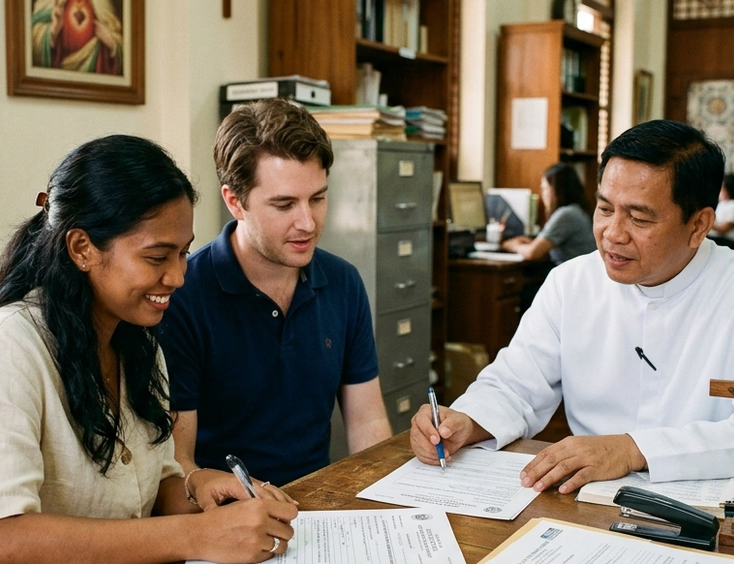
The standard checklist assumes a Filipino Catholic couple marrying in the Philippines. Most couples fit that profile. Many don't.
Mixed-Religion Couples
A Catholic marrying a non-Catholic faces extra paperwork. The Catholic partner needs a dispensation from the bishop. The non-Catholic partner signs a declaration respecting the Catholic upbringing of children. Pre-Cana attendance rules shift depending on the non-Catholic partner's faith.
Our guide on Pre-Cana seminar requirements for mixed-religion couples walks through the dispensation process and seminar adjustments.
Filipinos Marrying Abroad
You're a Filipino getting married in Dubai, Singapore, the US, or anywhere outside the Philippines. The Philippine consulate, the foreign country's civil authorities, and your home parish each have requirements that overlap and contradict.
Read our guide on wedding seminar requirements for Filipinos getting married abroad to map the consulate paperwork against parish expectations.
Foreigners Marrying a Filipino in the Philippines
Foreign nationals marrying Filipinos in the Philippines need a Certificate of Legal Capacity to Marry from their embassy, on top of the standard seminars. Some embassies issue it in days. Others take weeks.
Our breakdown of wedding seminar requirements for foreigners marrying a Filipino sequences the embassy paperwork with the LGU and parish requirements.
Can You Skip the Seminars?
Couples ask this every week. Some hear from a friend who married without attending. Others want to know what happens if they fake the certificate.
The honest answer involves legal risk, church validity, and the practical reality of what LCR clerks check. Read our straight take on whether you can get married without attending a seminar in the Philippines before you consider any shortcut.
Timeline: When to Book Each Seminar
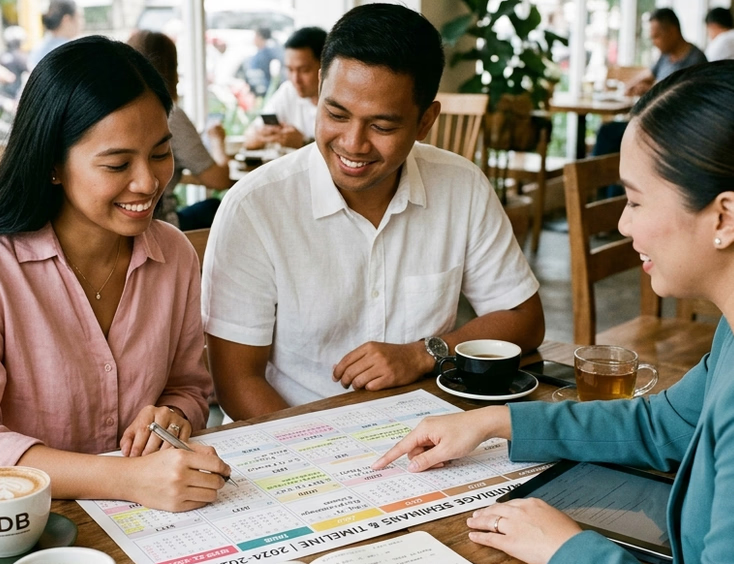
Here's a working timeline for couples planning a Catholic wedding 12 months out.
12 to 9 months before: Reserve your wedding date with the parish. Get the parish checklist. Book your Pre-Cana slot.
9 to 6 months before: Attend Pre-Cana. Submit baptismal and confirmation certificates to the parish. Schedule the canonical interview.
6 to 4 months before: Attend the NFP seminar if your diocese requires it. Gather LCR documents: birth certificates, CENOMAR, valid IDs.
4 to 3 months before: Attend the LGU's Pre-Marriage Counseling and Family Planning seminars. Apply for the marriage license. The 10-day posting period starts after application.
3 to 1 months before: Pick up the marriage license. Submit the license and seminar certificates to the parish. Confirm the wedding rehearsal date.
Two weeks before: Final canonical interview if the parish requires a follow-up.
The 120-day validity rule on most certificates means you can't attend a seminar a year early and reuse the certificate. Time the seminars within four months of the wedding.
Costs: What Couples Spend on Seminars
LGU seminars cost nothing to ₱200 in most cities. Some require a small materials fee.
Parish Pre-Cana fees range from ₱500 in provincial parishes to ₱3,000 in Metro Manila parishes like Sanctuario de San Antonio, Christ the King, or San Agustin. The fee usually covers materials, meals, and honoraria for speakers.
NFP seminars run ₱500 to ₱1,500 depending on the provider. Online Pre-Cana programs charge ₱2,000 to ₱5,000 for the digital format.
Budget ₱5,000 to ₱10,000 for the full seminar slate if you're going through Metro Manila parishes.
Finding Accredited Providers
Not every seminar provider counts. The parish accepts certificates only from accredited Pre-Cana facilitators. The LCR accepts only LGU-issued seminar certificates or those from accredited NGO partners.
Bringing the wrong certificate means redoing the seminar. We've seen couples lose two weekends because they trusted a provider that wasn't on their parish's list.
Our pre-wedding seminar suppliers directory lists vetted providers by parish, diocese, and LGU. Filter by location, format (in-person or online), and language to find a provider that matches your wedding venue and timeline.
What to Bring on Seminar Day
Pack these for any seminar:
Two valid government-issued IDs each. Photocopies of your birth certificates. Pen and notebook. Cash for the seminar fee plus a buffer for meals.
For Pre-Cana specifically, bring your baptismal and confirmation certificates if the parish requested them upfront.
Wear smart casual. Some parishes turn away couples in shorts or sleeveless tops.
After the Seminars: What Comes Next
You finished Pre-Cana, the canonical interview, NFP, PMC, and the family planning seminar. The certificates are in hand.
Submit the LGU certificates with your marriage license application at the LCR. Submit the parish certificates to your wedding coordinator at the parish office. The parish issues the wedding banns, posts them for three Sundays, and clears your file for the wedding date.
Then you're back to the supplier list, the dress fittings, and the seating chart.
Start with the Right Provider
The seminars feel like bureaucracy until you sit through one with a facilitator who actually engages the room. The right provider turns a four-hour requirement into a conversation that changes how you and your partner approach the marriage itself.
Browse accredited pre-wedding seminar suppliers in the Philippines to find facilitators, parishes, and programs that match your wedding date, location, and tradition. Filter by Pre-Cana, NFP, MPP, online options, and parish accreditation to lock in your seminars before the peak season fills every slot.
Still Searching for a Right Match?
Find Your Perfect Wedding Supplier Today!
Discover trusted wedding suppliers across the Philippines in our complete directory. Compare services and connect with the ones that fit your dream celebration.
Browse Wedding SuppliersFeatured Blog Posts

Filipino Wedding Entourage - Roles, Order of March, and Modern Etiquette
6 mins readCivil Weddings in the Philippines - Requirements, Costs, and Step-by-Step Process
9 mins readCivil Wedding Requirements in the Philippines - Complete Checklist
6 mins readCost of Wedding in the Philippines - 5 Essential Things You Need to Know
7 mins readPrincipal Sponsors (Ninong/Ninang) - How Many, How to Ask, What They Really Do
4 mins readVeil, Cord, Candle & Coins - Roles, Options, and When They Happen
4 mins readEntourage for a Traditional Pinoy Wedding - Complete Roles and Guide
6 mins readComplete List of Civil Wedding Requirements in the Philippines
8 mins readHow to Choose Wedding Ninongs and Ninangs - Ask Yourself These 3 Important Questions
5 mins read