

Natural Family Planning Seminar in the Philippines: A Requirement You Should Not Overlook
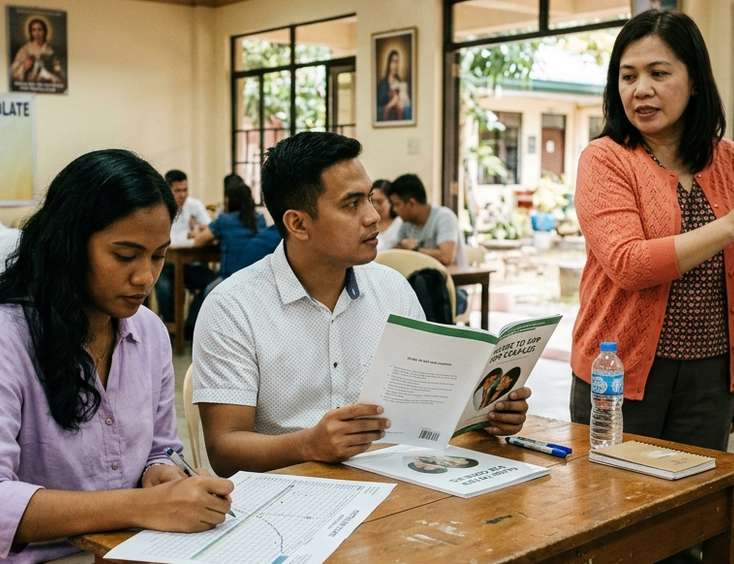
You finished Pre-Cana three weeks ago. You're at the parish dropping off the certificate when the coordinator looks up from your file.
"You also need the Natural Family Planning seminar. Have you scheduled it?"
You haven't. Nobody mentioned it during Pre-Cana registration. The parish website doesn't list it. The canonical interview didn't bring it up. Now you're four months from the wedding and adding another seminar to a calendar that's already tight.
Natural Family Planning seminars catch Filipino couples late because the requirement varies by diocese, and many parishes treat it as an unspoken add-on rather than a clearly listed step. Some dioceses require it. Others fold it into Pre-Cana. A few don't require it at all.
This guide explains what the NFP seminar covers, which dioceses require it, where to find accredited providers, and how to schedule it without losing weeks. If you'd rather skip the research and book through a verified provider, browse our pre-wedding seminar suppliers directory for accredited NFP facilitators by location.
What Natural Family Planning Means
Natural Family Planning is a set of fertility awareness methods used to identify the fertile and infertile phases of a woman's cycle. The Catholic Church teaches NFP as the only method of family planning compatible with Catholic moral theology on conjugal love and procreation.
The Church distinguishes NFP from contraception. Contraception blocks or alters the procreative dimension of sex. NFP works with the natural cycle and asks couples to abstain during fertile phases when they want to delay pregnancy.
Three main methods get taught in Philippine NFP seminars.
Billings Ovulation Method. Tracks cervical mucus to identify fertile and infertile days. Developed by Drs. John and Evelyn Billings in Australia, widely used in Philippine dioceses through the Billings Ovulation Method Association.
Sympto-Thermal Method. Combines basal body temperature, cervical mucus, and other physical signs for cross-checked accuracy. Taught by Couple to Couple League and other Catholic NFP organizations.
Standard Days Method. A simpler calendar-based method developed by Georgetown University, suitable for women with regular cycles between 26 and 32 days.
The seminar teaches the science of fertility awareness, the practical application of one or more methods, and the theological grounding from Catholic teaching, especially Humanae Vitae.
Why Some Dioceses Require an NFP Seminar
The CBCP recognizes NFP as central to Catholic married life but doesn't mandate a separate seminar nationwide. Each bishop sets the diocesan policy.
Three reasons drive dioceses that do require it.
Catholic moral theology. The Church teaches that married couples should regulate births responsibly using methods consistent with the natural law. NFP delivers that practice. A standalone seminar gives couples more depth than a 60-minute Pre-Cana session can cover.
Reproductive health context in the Philippines. RA 10354, the Responsible Parenthood and Reproductive Health Act, requires LGUs to offer family planning education that includes both natural and artificial methods. Catholic dioceses respond by ensuring their couples receive thorough NFP formation before the LGU's broader seminar.
Practical preparation for marriage. NFP requires daily observation, mutual communication, and shared decision-making about intimacy. The skills carry over into the rest of married life. Bishops who require NFP seminars see them as practical formation, not just doctrinal compliance.
The Archdiocese of Manila, the Archdiocese of Cebu, and several provincial dioceses require NFP seminars on top of Pre-Cana. Other dioceses fold NFP into the Pre-Cana program and don't ask for a separate certificate. A few accept the LGU's family planning seminar in place of NFP. Verify with your wedding parish before you assume.
Is NFP the Same as the LGU Family Planning Seminar
No. The two seminars cover different content from different sources.
The LGU family planning seminar runs under RA 10354 and is required for the marriage license. The seminar covers all family planning methods, both natural and artificial, and is led by public health nurses or accredited LGU partners. Your marriage license application requires this certificate.
The NFP seminar is a parish or diocesan requirement and covers natural methods only, grounded in Catholic teaching. The seminar is led by NFP-certified couples or trained instructors from Catholic NFP organizations. The certificate goes into your parish wedding file alongside Pre-Cana.
You may need both, depending on your diocese. The LGU seminar feeds into your marriage license. The NFP seminar feeds into your church wedding paperwork. Don't confuse them, and don't submit one in place of the other.
For the LGU side, read our guide on the Responsible Parenthood Seminar in the Philippines.
What Happens During an NFP Seminar
A typical NFP seminar in the Philippines runs four to eight hours, usually spread across one Saturday or two evening sessions on weeknights.
Opening and Theology
A priest or trained lay speaker opens with the Catholic teaching on married love, sexuality, and openness to children. The session usually references Humanae Vitae, the Theology of the Body, and Catechism passages on conjugal love.
The block runs 45 to 60 minutes. Couples come away with the doctrinal framework that grounds the rest of the seminar.
Fertility Science
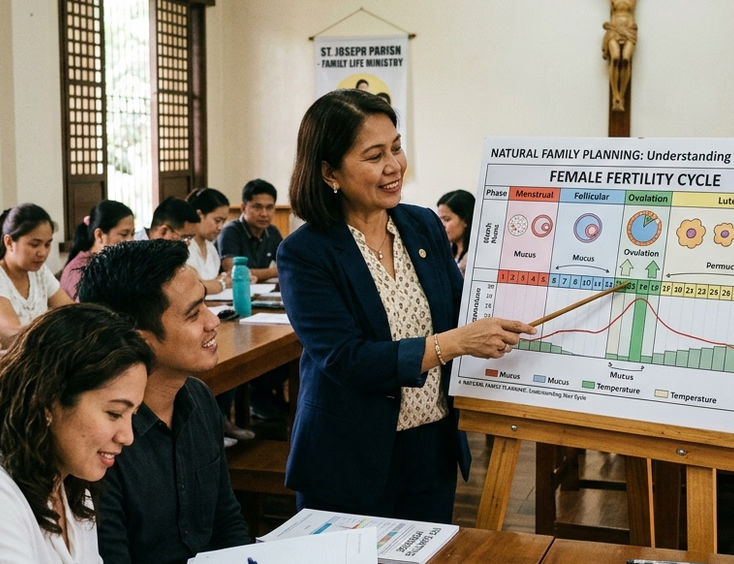
A trained instructor walks through the female reproductive cycle, hormonal patterns, and the biological signs of fertility. The session covers basal body temperature, cervical mucus, ovulation, the luteal phase, and cycle variations.
The science block runs 60 to 90 minutes. Many couples encounter this material for the first time. Female partners often share that they've never been taught fertility signs at this depth before.
Method Instruction
The instructor teaches the specific NFP method: Billings, Sympto-Thermal, or Standard Days. Couples learn how to chart, what to record, and how to interpret the data.
This is the practical core of the seminar. Couples practice charting on sample data. Some seminars hand out charting workbooks for couples to take home and continue learning.
Communication and Decision-Making
NFP requires daily communication and joint decision-making about intimacy. The seminar dedicates time to how couples discuss fertility goals, manage abstinence during fertile phases, and align on family size.
This block runs 30 to 60 minutes. Many couples report that this section surfaces conversations they hadn't yet had.
Q&A and Closing
The seminar closes with a question session, distribution of charting materials, and the certificate of attendance. Some seminars include a follow-up commitment: couples agree to chart for three to six cycles after the seminar with check-ins from the NFP instructor.
Who Facilitates NFP Seminars in the Philippines
Several Catholic organizations run NFP seminars across the country.
Billings Ovulation Method Association of the Philippines (BOMA). Operates in most major dioceses. Trained Filipina instructors teach the Billings method through parish partnerships and standalone workshops.
Couple to Couple League Philippines (CCL). Teaches the Sympto-Thermal Method through trained married couples. Programs run in Metro Manila and select provincial cities.
Pro-Life Philippines. Offers NFP seminars alongside broader pro-life formation. Operates in coordination with several dioceses.
Diocese-run NFP programs. Some dioceses train their own NFP instructors and run in-house seminars. The Archdiocese of Manila operates the Manila Archdiocesan NFP Office, which coordinates seminars across Manila parishes.
Parish-level NFP teams. Larger parishes train married couples as NFP mentors and run seminars on parish grounds for engaged couples.
Verify the provider's accreditation with your wedding parish before you register. A parish-recognized NFP certificate goes into your wedding file. A non-recognized certificate may force you to redo the seminar.
Our pre-wedding seminar suppliers directory lists accredited NFP providers with their parish recognition status by diocese.
When to Schedule the NFP Seminar
Most parishes accept NFP certificates issued within 6 to 12 months of the wedding date. Some enforce a stricter validity window. Confirm with your wedding parish before booking.
Schedule the NFP seminar in the same window as Pre-Cana, three to six months before the wedding. The two certificates submit together, and the timeline keeps both within the validity window.
Don't wait until the wedding month. NFP seminars run on monthly or bimonthly schedules in most dioceses. Missing one slot means waiting four to eight weeks for the next session, and peak wedding months from December to May fill quickly.
For the full timeline that sequences NFP, Pre-Cana, the canonical interview, and LGU seminars across a 12-month wedding plan, read our pillar guide on wedding seminars in the Philippines.
NFP Seminar Costs
NFP seminar fees range widely depending on the provider and the format.
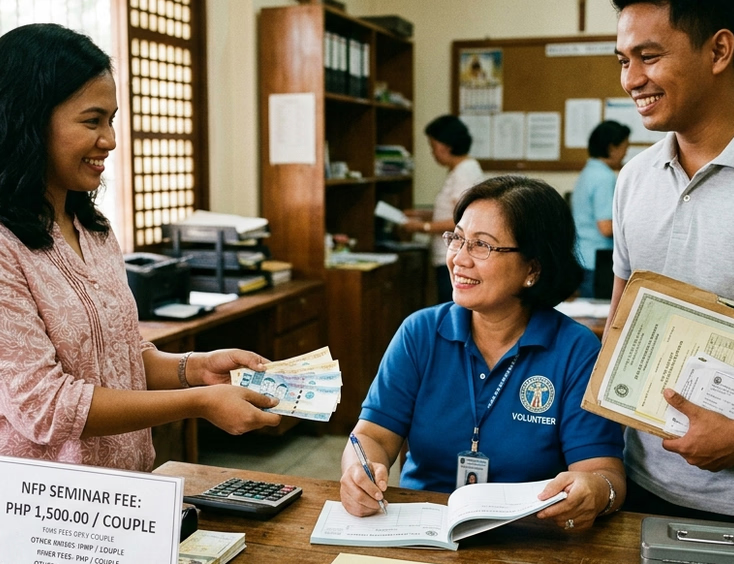
Parish-run NFP seminars charge ₱500 to ₱1,500. The fee covers materials, charting workbooks, and instructor honoraria.
BOMA, CCL, and Pro-Life Philippines seminars charge ₱1,000 to ₱2,500 for the standard format. Premium programs with extended follow-up coaching charge ₱3,000 to ₱5,000.
Online NFP seminars run ₱1,500 to ₱3,000. The format saves on travel but charges similar fees because instructor time and materials don't change.
Some dioceses subsidize NFP seminars to keep them accessible. Provincial parishes sometimes run NFP seminars free for engaged couples in the diocese.
Online vs In-Person NFP Seminars
The pandemic moved NFP seminars to Zoom and many providers kept the digital format.
Live online NFP seminars work well because the content is heavy on instruction and Q&A. The charting practice translates to screen-share, and couples can ask questions in real time.
Self-paced online NFP courses exist but most parishes prefer live formats for NFP because of the daily charting follow-up. A self-paced video course can teach the science but rarely matches the accountability of live instruction with check-ins.
If you're considering an online format, verify acceptance with your wedding parish first. Some parishes accept any CBCP-recognized online NFP. Others require in-person attendance regardless of distance.
For OFW couples and long-distance partners, online NFP solves real scheduling problems. Just confirm the parish accepts it before you pay.
What to Bring to an NFP Seminar
Pack these the night before.
Two valid government-issued IDs each. A pen and notebook for charting practice. Cash for the seminar fee plus a buffer for materials. A printed Pre-Cana certificate if the NFP provider requires proof of Pre-Cana attendance.
Female partners may want to bring any existing cycle data: notes on cycle length, period dates, or signs they've already tracked. The instructor uses this data during the practical charting exercises.
Wear smart casual. Some seminars include a closing prayer or short Mass, and the dress code follows Sunday Mass standards.
Receiving and Submitting the NFP Certificate
The NFP provider issues the certificate on the seminar day or within one week after.
Some certificates come as printed originals signed by the instructor. Others come as digital PDFs. Verify the format with your wedding parish before the seminar so you know what to expect.
Make two photocopies the day you receive the certificate. Submit one to the wedding parish at least 60 days before the wedding. Keep the original and the second copy in your wedding documents folder.
For the full process on submitting parish documents alongside Pre-Cana and the canonical interview paperwork, read our guide on the Catholic canonical interview and how it differs from Pre-Cana.
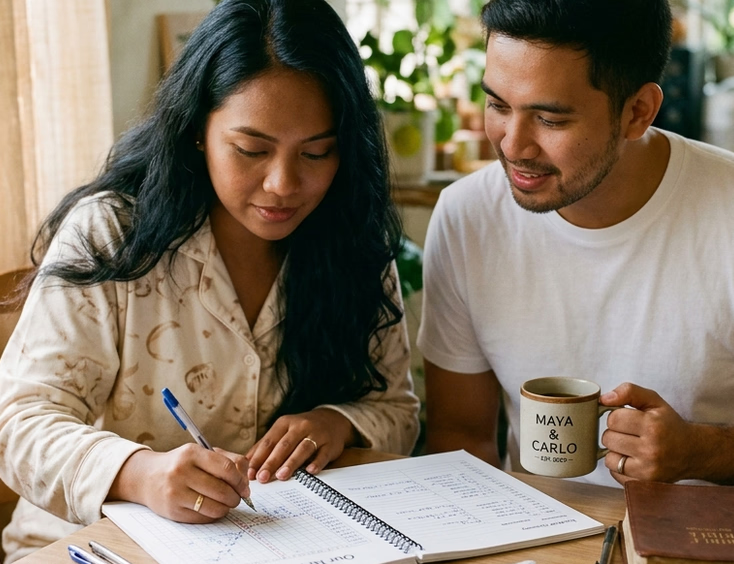
NFP After the Wedding
The NFP seminar isn't a checkbox. It's the start of a practice many Filipino couples continue after the wedding.
Couples who chart for three to six cycles after the seminar build the rhythm of daily observation and joint decision-making. Couples who skip the practice and rely on memory of the seminar usually default to other family planning methods within months.
Most NFP providers offer follow-up support: monthly check-ins, charting reviews, or parish-based NFP groups for newly married couples. Take advantage of the follow-up if your provider offers it. The first six months after the wedding shape how couples manage fertility for the rest of the marriage.
Mixed-Religion Couples and NFP
A Catholic marrying a non-Catholic faces the same NFP requirement if the wedding parish requires it. The non-Catholic partner usually attends the seminar with the Catholic partner.
Some non-Catholic partners come into the seminar skeptical of NFP. The science is universal. The theology is Catholic. Many non-Catholic partners walk out with respect for the method even if they don't share the theology.
For the dispensation process and modified Pre-Cana requirements for mixed-religion couples, read our guide on Pre-Cana seminar requirements for mixed-religion couples.
Common Mistakes with NFP Seminars
Couples lose time and money to a few repeated errors.
Assuming Pre-Cana covers NFP. Pre-Cana usually includes a 30 to 60-minute NFP block. That doesn't substitute for a standalone NFP seminar in dioceses that require one. Confirm with the parish.
Submitting the LGU family planning certificate in place of NFP. The LGU certificate goes to the marriage license. The NFP certificate goes to the parish file. They're not interchangeable in dioceses that require both.
Booking the cheapest online program without verifying accreditation. A non-accredited NFP certificate gets rejected at the parish. Verify the provider against the parish's accredited list before paying.
Skipping the practical charting practice. Some couples attend the seminar for the certificate and skip the charting exercises. The certificate satisfies the parish. The lack of practice means NFP doesn't work after the wedding.
Waiting too long to schedule. NFP seminars run on monthly cycles in most dioceses. Booking eight weeks before the wedding leaves no buffer if the slot fills or you need to reschedule.
NFP Seminar Sits Inside a Bigger Process
The NFP seminar is one piece of the parish's wedding paperwork. You'll also complete Pre-Cana, the canonical interview, and the LGU's civil seminars.
Our pillar guide on wedding seminars in the Philippines sequences every requirement and shows where NFP fits in the full timeline.
For the LGU side of family planning, read our guide on the Responsible Parenthood Seminar in the Philippines to understand how the civil seminar differs from NFP.
If your diocese also requires a Marriage Preparation Program on top of Pre-Cana and NFP, read our guide on Marriage Preparation Programs in the Philippines and who needs to attend.
Find an Accredited NFP Provider
The NFP seminar gets overlooked until the parish brings it up, and by then the calendar is tight. Booking early with an accredited provider keeps the wedding paperwork on track.
Browse our pre-wedding seminar suppliers directory for CBCP-recognized NFP facilitators across the Philippines. Filter by diocese, method, format, and language to find a seminar that matches your wedding parish's requirements before peak season closes the calendar.
Still Searching for a Right Match?
Find Your Perfect Wedding Supplier Today!
Discover trusted wedding suppliers across the Philippines in our complete directory. Compare services and connect with the ones that fit your dream celebration.
Browse Wedding SuppliersFeatured Blog Posts
Filipino Wedding Entourage - Roles, Order of March, and Modern Etiquette
6 mins readCivil Weddings in the Philippines - Requirements, Costs, and Step-by-Step Process
9 mins readCivil Wedding Requirements in the Philippines - Complete Checklist
6 mins readCost of Wedding in the Philippines - 5 Essential Things You Need to Know
7 mins readPrincipal Sponsors (Ninong/Ninang) - How Many, How to Ask, What They Really Do
4 mins readVeil, Cord, Candle & Coins - Roles, Options, and When They Happen
4 mins readEntourage for a Traditional Pinoy Wedding - Complete Roles and Guide
6 mins readComplete List of Civil Wedding Requirements in the Philippines
8 mins readHow to Choose Wedding Ninongs and Ninangs - Ask Yourself These 3 Important Questions
5 mins read