


Wedding Seminar Requirements for Filipinos Getting Married Abroad
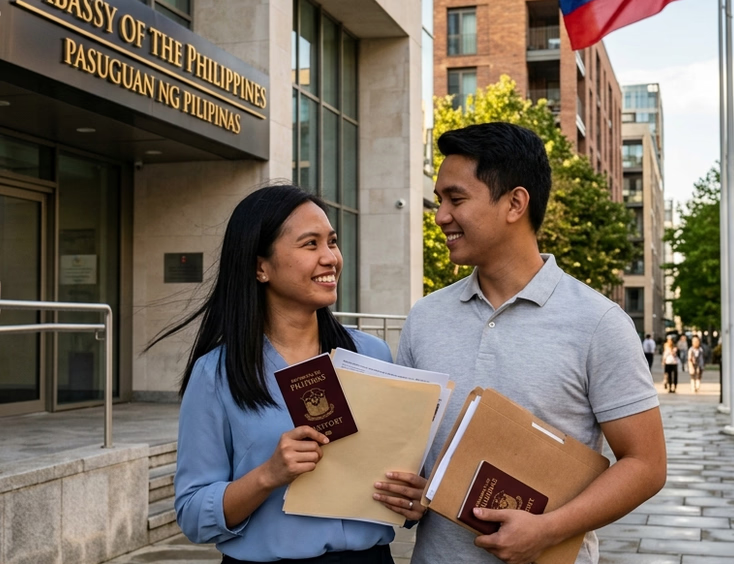
Filipinos marrying abroad do not always need to attend the Philippine LCR-mandated seminars, since the marriage takes place under the laws of the host country. The seminar requirements depend on three things: where the wedding happens, whether the couple plans a Catholic ceremony, and whether they want the marriage recognized by the Philippine Statistics Authority (PSA) afterward.
Catholic couples still attend a Pre-Cana Seminar, usually arranged through the local parish abroad or coordinated with a Philippine parish. Civil couples follow the host country's rules. The PSA registration process kicks in after the wedding, regardless of the seminar route taken.
Why the Rules Differ for Filipinos Abroad
The Family Code of the Philippines applies to Filipinos wherever they marry, but Article 26 recognizes marriages celebrated abroad as valid in the Philippines if they are valid under the laws of the host country. This means a Filipino couple in Dubai, Singapore, Tokyo, or Los Angeles follows the local marriage rules of that country, not the Philippine LCR seminar requirements.
The Philippine Embassy or Consulate handles the documentation that ties the marriage back to Philippine records. The seminars tied to the Philippine marriage license, such as the Responsible Parenthood Seminar and the Pre-Marriage Counseling Orientation, do not apply when the marriage license itself is issued by a foreign government.
Couples planning to return to the Philippines for the wedding fall under the regular rules covered in our guide on how to get a marriage license in the Philippines.
The Catholic Pre-Cana Requirement Abroad
Catholic couples marrying in a Catholic ceremony abroad still need a Pre-Cana Seminar. The Catholic Church operates under universal canon law, so the Pre-Cana applies in any country where a Catholic wedding takes place.
Three options usually exist:
Pre-Cana at the host country parish. Most Catholic parishes worldwide run their own version of marriage preparation. The format and length vary, but the core content matches the Philippine Pre-Cana. Couples in the United States attend programs called Engaged Encounter, Pre-Cana Conferences, or FOCCUS sessions. Couples in Italy, Spain, or France attend "corso prematrimoniale" or local equivalents. Couples in the Middle East or Asia attend Pre-Cana through Filipino chaplaincies or local diocesan programs.
Pre-Cana in the Philippines before traveling. Couples planning to fly home for the wedding sometimes complete Pre-Cana at the Philippine parish hosting the ceremony. The certificate stays valid as long as the wedding happens within the parish's accepted timeframe, usually six months to one year.
Online Pre-Cana through accredited Philippine providers. A growing number of dioceses and accredited providers run online Pre-Cana sessions for Filipinos abroad. The certificates get accepted by most Philippine parishes, though always confirm with the parish first. Read our guide on online Pre-Cana seminars and whether they get accepted by the Catholic Church for the current rules.
For a refresher on what the Pre-Cana covers, our guide on what a Pre-Cana Seminar is and why the Catholic Church requires it walks through the basics.
The Canonical Interview for Couples Marrying Abroad
The canonical interview applies in the same way for Filipinos marrying abroad in a Catholic ceremony. The interview happens with the priest who will officiate the wedding, whether that priest is in the host country or in the Philippines.
Couples sometimes complete the canonical interview at their Philippine parish, then transfer the records to the host country parish. Others do the interview at the host country parish directly. The records travel through diocesan channels, so couples plan four to six months ahead to give the paperwork time to arrive.
Our guide on the Catholic canonical interview explains the process in full.
Civil Marriage Requirements in the Host Country
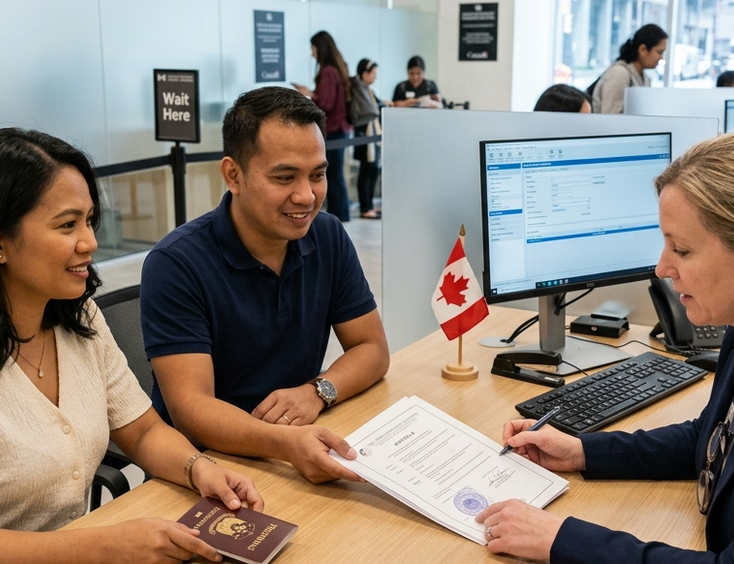
Civil marriage rules vary by country. The host country's marriage office sets the requirements, and Filipinos follow those rules the same way local citizens do. The Philippine Embassy or Consulate plays a supporting role through documents the foreign government asks for.
A few common documents Philippine consulates issue for Filipinos marrying abroad:
- Certificate of Legal Capacity to Contract Marriage (CLCCM). Some countries require this document from the Philippine Embassy as proof that the Filipino partner is free to marry under Philippine law. Couples request it from the embassy with their PSA birth certificate, CENOMAR, valid passport, and other supporting papers.
- Affidavit in Lieu of Legal Capacity. Countries like the United States accept this notarized affidavit instead of the CLCCM. The Filipino partner signs the affidavit at the Philippine Embassy or Consulate.
- Authenticated PSA documents. Some host countries require the PSA birth certificate and CENOMAR to be apostilled by the Department of Foreign Affairs (DFA) before submission.
The host country may also require its own pre-marriage counseling, premarital health screening, or waiting period. Singapore, for example, requires couples to lodge a Notice of Marriage at least 21 days before the wedding. Japan requires translated and certified documents submitted to the local ward office. The United Arab Emirates handles Catholic weddings through accredited churches and civil weddings through its own family courts.
Couples confirm with the host country's marriage authority and the Philippine Embassy in that country to get the current checklist.
Registering the Marriage With the PSA After the Wedding
The wedding abroad does not automatically appear in PSA records. Couples report the marriage to the Philippine Embassy or Consulate, which forwards the documents to the PSA in Manila. The PSA then issues an authenticated marriage certificate that recognizes the union under Philippine law.
The Report of Marriage (ROM) process usually requires:
- Marriage certificate issued by the host country's authority (original and authenticated copies)
- Translated marriage certificate, if not in English
- PSA birth certificates of both spouses
- Valid passports
- CENOMAR of the Filipino spouse, dated before the marriage
- Application form for the Report of Marriage
- Embassy processing fee
Couples file the ROM within one year of the wedding. Filing late carries additional fees and sometimes requires explanation letters. The PSA registers the marriage three to six months after the embassy submits the documents.
Without the ROM, the marriage is still legally valid abroad, but the PSA does not have a record of it. This causes problems later when filing for spousal visas, applying for joint property, claiming benefits, or processing inheritance.
Mixed-Nationality Marriages
Filipinos marrying foreign nationals abroad fall under a slightly different process. The host country issues the marriage license under its own rules, and the foreign spouse provides documents from their country of citizenship. The Filipino spouse provides Philippine documents through the embassy.
Couples wondering whether the seminar rules apply when a foreign national marries a Filipino in the Philippines should read our guide on wedding seminar requirements for foreigners marrying a Filipino.
For couples with religious differences, the dispensation rules still apply if a Catholic ceremony is involved abroad. Read our guide on Pre-Cana seminar requirements for mixed-religion couples for the full breakdown.
Common Destinations for Filipino Couples Marrying Abroad
The patterns repeat across popular destinations:
United States. Catholic couples attend Pre-Cana through their local diocese. Civil couples follow the state's marriage license process, which varies. Some states require a waiting period, others do not. The Filipino spouse signs an Affidavit in Lieu of Legal Capacity at the Philippine Embassy or Consulate.
United Arab Emirates and other Gulf countries. Catholic Filipinos marry through accredited churches like St. Mary's in Dubai or St. Joseph's in Abu Dhabi. The parish runs its own Pre-Cana program. Civil weddings go through local family courts, which often require additional documentation for non-Muslims.
Singapore. Couples lodge a Notice of Marriage with the Registry of Marriages (ROM Singapore) at least 21 days before the wedding. The Philippine Embassy issues the supporting documents. Catholic ceremonies require Pre-Cana through a local parish.
Japan. Couples submit documents to the local ward office (kuyakusho) and complete the marriage registration (kon-in todoke). The Philippine Embassy in Tokyo issues the CLCCM. Catholic weddings happen in approved chapels with parish-led marriage preparation.
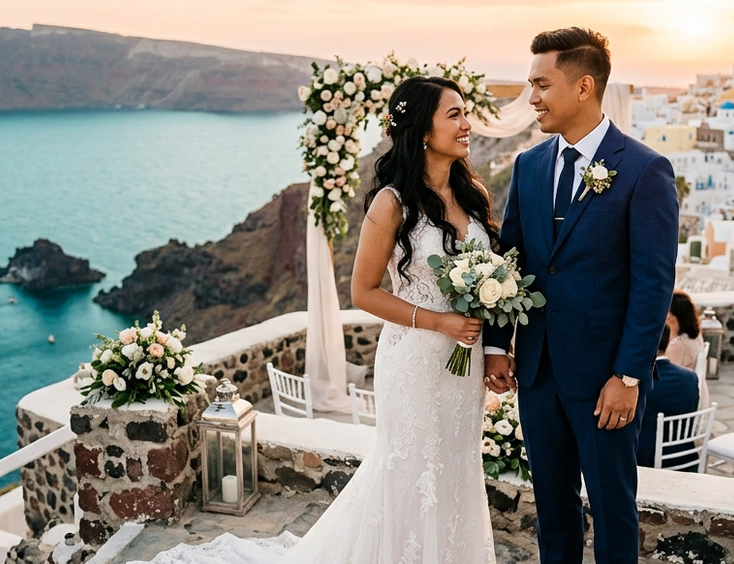
Italy, Spain, and other European countries. Catholic Filipino couples often marry in tourist destinations like Tuscany, Santorini, or Barcelona. The local parish handles Pre-Cana, but couples sometimes complete the seminar in the Philippines first and transfer records.
Australia and New Zealand. Couples lodge a Notice of Intended Marriage at least one month before the wedding. The Filipino spouse provides PSA documents authenticated by the DFA. Catholic ceremonies follow the local diocese's marriage preparation program.
Online Pre-Cana for Filipinos Abroad
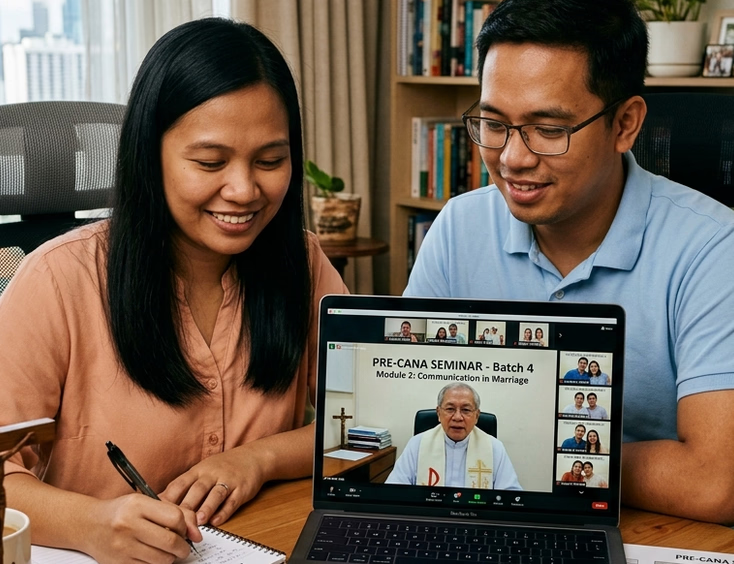
Filipinos working overseas often find weekday seminars hard to attend. Accredited online Pre-Cana providers solve part of this problem by offering live Zoom sessions on weekends or self-paced modules with scheduled discussion calls.
The certificate gets accepted by most Philippine parishes and diocesan offices, but acceptance abroad varies. Couples planning a Catholic wedding outside the Philippines confirm with the host country parish first. Some host country parishes prefer locally-run Pre-Cana programs that match their cultural context.
For the full picture on online seminar acceptance, read our guide on online Pre-Cana seminars and whether they get accepted.
Common Mistakes Couples Make
Filipinos marrying abroad lose time over predictable errors:
- Assuming Philippine LCR seminars apply. The LCR seminars apply only when the marriage license itself is issued in the Philippines. Marriages abroad follow the host country's rules.
- Skipping the Report of Marriage. Couples assume the host country's marriage certificate is enough. The PSA needs its own copy through the ROM process.
- Letting the CENOMAR expire. PSA documents older than six months get rejected by most embassies and host country offices. Order fresh copies close to the application date.
- Forgetting the apostille. The DFA apostille replaced the old red ribbon authentication in 2019. Documents without the apostille get rejected by host countries that signed the Apostille Convention.
- Booking Pre-Cana too late. Some parishes abroad have waitlists of two to three months. Book as soon as the wedding date is set.
- Mismatched names across documents. A nickname on a passport and a full legal name on a PSA birth certificate causes problems. Update IDs first.
Where to Find Accredited Pre-Cana Providers for Filipinos Abroad
A growing list of Philippine-based providers run online Pre-Cana sessions designed for Filipinos working overseas. Browse verified options in our Pre-Wedding Seminars Suppliers Directory to compare schedules, formats, and pricing across time zones.
Booking through a verified provider helps couples confirm the certificate format and make sure both the host country parish and the Philippine parish accept it.
The Big Picture for Filipinos Marrying Abroad
The seminar rules feel lighter abroad because the Philippine LCR-mandated seminars do not follow the marriage license out of the country. The Catholic Pre-Cana follows the couple wherever the wedding happens, since canon law is universal. The civil rules belong to the host country, and the Report of Marriage ties everything back to PSA records.
For couples wondering whether they can skip seminars altogether, our direct answer appears in Can you get married without attending a seminar in the Philippines. For the full map of how every seminar fits into Filipino weddings, read our pillar guide on wedding seminars in the Philippines.
Plan four to six months ahead, get the documents apostilled early, and confirm requirements with both the host country and the Philippine Embassy. The wedding abroad runs smoothly when the paperwork starts early.
Still Searching for a Right Match?
Find Your Perfect Wedding Supplier Today!
Discover trusted wedding suppliers across the Philippines in our complete directory. Compare services and connect with the ones that fit your dream celebration.
Browse Wedding SuppliersFeatured Blog Posts

Filipino Wedding Entourage - Roles, Order of March, and Modern Etiquette
6 mins readCivil Weddings in the Philippines - Requirements, Costs, and Step-by-Step Process
9 mins readCivil Wedding Requirements in the Philippines - Complete Checklist
6 mins readCost of Wedding in the Philippines - 5 Essential Things You Need to Know
7 mins readPrincipal Sponsors (Ninong/Ninang) - How Many, How to Ask, What They Really Do
4 mins readVeil, Cord, Candle & Coins - Roles, Options, and When They Happen
4 mins readEntourage for a Traditional Pinoy Wedding - Complete Roles and Guide
6 mins readComplete List of Civil Wedding Requirements in the Philippines
8 mins readHow to Choose Wedding Ninongs and Ninangs - Ask Yourself These 3 Important Questions
5 mins read