


How to Get a Marriage License in the Philippines: The Step-by-Step Process Including Required Seminars
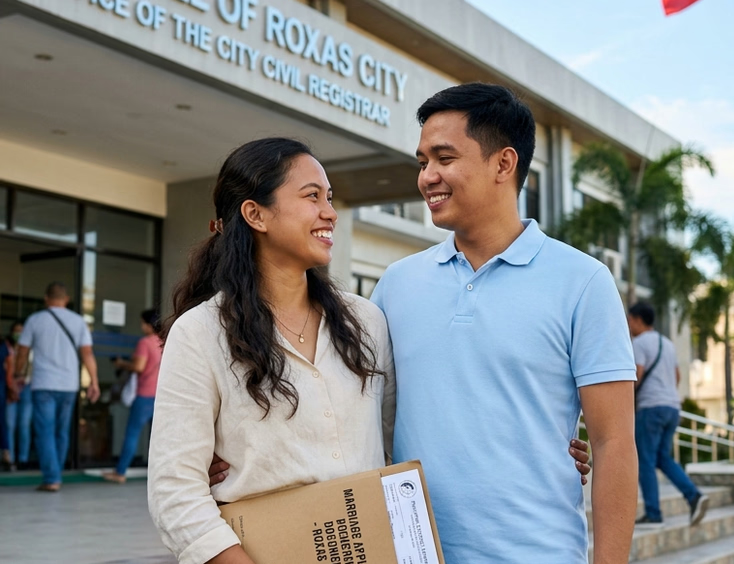
You need a marriage license before you can legally wed in the Philippines. Apply at the Local Civil Registrar (LCR) of the city or municipality where either you or your partner lives. Bring your PSA birth certificates, valid IDs, CENOMAR, and proof of seminar attendance. Wait 10 consecutive days for the posting period. Claim your license. It stays valid for 120 days across the country.
That is the short version. The full process has details that trip up couples who skip ahead, so read on before you head to city hall.
Who Needs a Marriage License in the Philippines
Every couple planning a civil or church wedding needs one. The marriage license is the legal document that authorizes a solemnizing officer, whether a judge, priest, pastor, or imam, to officiate your wedding under Philippine law.
Article 3 of the Family Code lists the marriage license as a formal requirement. Without it, your marriage gets declared void from the start. Two exceptions exist: marriages of exceptional character under Articles 27 to 34 (such as marriages in articulo mortis or among Muslims and members of ethnic cultural communities following their customs). For the rest, you apply.
Foreigners marrying Filipinos follow a slightly different document checklist, which we cover in a separate guide on wedding seminar requirements for foreigners marrying a Filipino in the Philippines.
Step 1: Confirm Where to Apply
You apply at the Local Civil Registrar of the city or municipality where you or your partner has lived for at least six months. If neither of you lives in the wedding venue's city, that does not matter. The license works nationwide once issued.
Couples often pick the LCR closest to their home for convenience. Others choose based on shorter queues or faster processing. Call ahead. Some LCRs in Metro Manila process applications within hours, while smaller towns finish faster but operate on limited schedules.
Step 2: Gather Your Documents
Walk into the LCR with the wrong paperwork and you walk out empty-handed. The standard checklist for both Filipino applicants includes:
- PSA-issued Birth Certificate (original and photocopy)
- PSA-issued Certificate of No Marriage (CENOMAR), valid within six months
- Valid government-issued ID (passport, driver's license, UMID, PhilID)
- Community Tax Certificate (cedula) from the current year
- Barangay Certificate of Residency
- 1x1 or 2x2 ID photos (number varies per LCR)
- Certificate of Attendance from required seminars
Applicants aged 18 to 25 face extra steps. Those aged 18 to 21 need parental consent. Applicants aged 22 to 25 need parental advice. Skip these and the LCR delays your application by three months for those without consent or advice.
Widows, widowers, and annulled applicants bring the death certificate of the previous spouse or the certified true copy of the annulment decree with the certificate of finality.
Step 3: Attend the Required Pre-Marriage Seminars
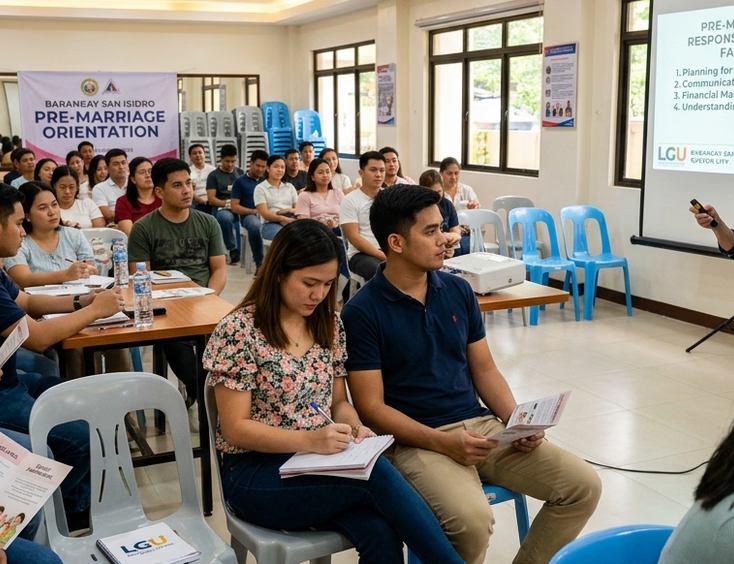
This step catches couples off guard. The LCR will not accept your application without proof of seminar attendance. Republic Act 10354 and local government ordinances require couples to attend a pre-marriage counseling and orientation program before getting a license.
The seminars usually cover:
- Family Planning (Responsible Parenthood)
- Marriage Counseling
- Personal Health and Hygiene
- Family Solidarity and Responsibilities
Most LCRs run these seminars for free on scheduled days each month. Some accept certificates from accredited NGOs, the Department of Health, or the Population Commission. Confirm with your LCR which providers they recognize before signing up.
For a deeper look at one of the required modules, read our guide on the Responsible Parenthood Seminar in the Philippines and the Natural Family Planning Seminar requirement many couples overlook.
Catholic couples carry an extra layer. The parish requires a Pre-Cana Seminar separate from the LCR's seminars. The civil seminar covers your government license. The Pre-Cana covers your church wedding. You attend both.
If you want a one-stop view of all the seminars Filipino couples need, our pillar guide on wedding seminars in the Philippines lays out the full picture.
Step 4: File the Application at the LCR
Both you and your partner appear in person. The LCR officer will not accept a representative or a notarized authorization letter for the initial filing. Bring your documents, pay the application fee (usually between PHP 100 to PHP 500 depending on the city), and fill out the application form.
The officer reviews your papers, checks your IDs, and accepts your seminar certificates. Some cities issue a claim stub. Others give you a date to return.
If one of you lives abroad, you may execute a Special Power of Attorney or appear via the Philippine Consulate for related documents, but the actual license filing still requires both parties at the LCR. Couples in this situation should also check our guide on wedding seminar requirements for Filipinos getting married abroad.
Step 5: Survive the 10-Day Posting Period
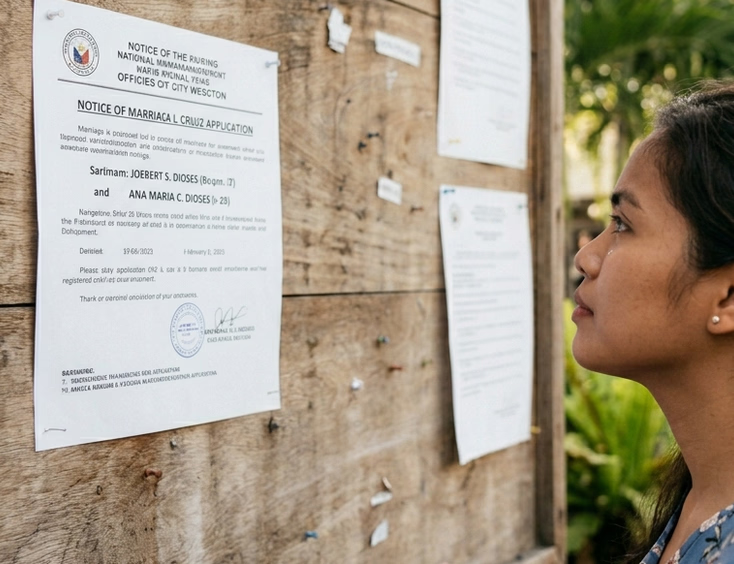
Article 17 of the Family Code requires the LCR to post a notice of your application on the city hall bulletin board for 10 consecutive days. This gives anyone with a legal objection (a prior spouse, for instance) the chance to file a complaint.
You cannot shorten this period. You cannot pay to skip it. Plan your timeline around it.
Couples often forget the 10 days fall on consecutive calendar days, including weekends and holidays. File on a Monday and your earliest claim date lands on a Thursday of the second week, assuming no holidays push it back.
Step 6: Claim the Marriage License
Return to the LCR after the posting period ends. Bring your claim stub and a valid ID. The officer hands over the marriage license, which now carries an official LCR seal and signature.
Check the spelling of your names, birthdates, and parents' names before leaving the counter. Errors here mean delays at the wedding ceremony or, worse, problems registering the marriage afterward.
Step 7: Use the License Within 120 Days
The marriage license expires 120 days from the date of issuance. After that, the document loses legal force regardless of where you are in the Philippines. Couples who postpone the wedding beyond 120 days reapply from scratch, including the seminars, posting period, and fees.
Hand the license to your solemnizing officer on or before the wedding day. The officer attaches it to the marriage certificate after the ceremony and submits the documents back to the LCR for registration.
Common Reasons Marriage License Applications Get Delayed
Couples lose weeks because of preventable mistakes. The usual culprits:
- Expired CENOMAR. PSA documents older than six months get rejected. Order a fresh copy before applying.
- Wrong birth certificate version. LCRs require the PSA copy, not the local civil registry copy.
- Missing seminar certificate. Couples assume the church seminar covers the civil requirement. It does not.
- Underage applicants without parental documents. Parental consent and advice forms must be notarized and attached at filing.
- Name mismatches. A nickname on your ID and a full legal name on your birth certificate creates problems. Update your IDs first.
Couples who want to know whether they can skip seminars altogether often ask the same question. We answer it directly in Can You Get Married Without Attending a Seminar in the Philippines.
Estimated Timeline From Start to License
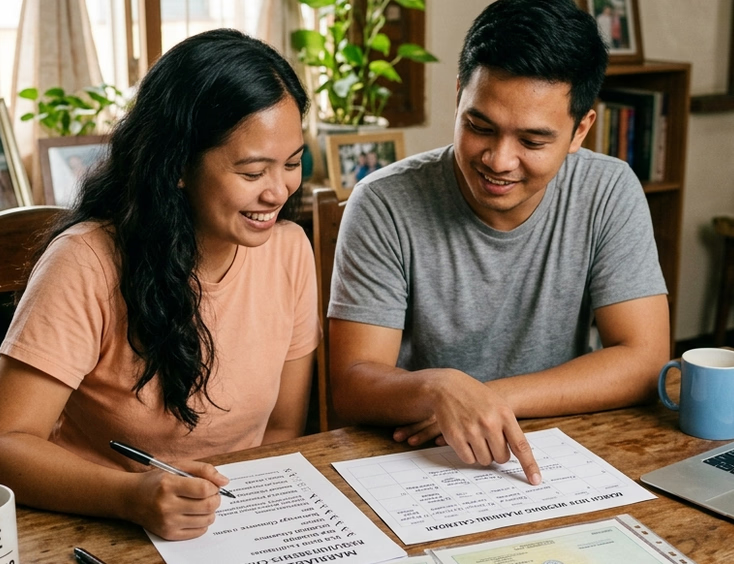
Plan for three to six weeks total:
- Week 1: Order PSA documents, schedule seminars
- Week 2: Attend seminars, gather IDs and barangay papers
- Week 3: File application at the LCR
- Weeks 4 to 5: 10-day posting period
- Week 5 or 6: Claim license
Couples in Metro Manila with complete documents finish in three weeks. Provincial applicants or those waiting for delayed PSA copies take longer.
Estimated Costs
Budget between PHP 1,500 and PHP 4,000 for the entire process, depending on your city:
- PSA Birth Certificate: PHP 155 each
- PSA CENOMAR: PHP 210 each
- Marriage license fee: PHP 100 to PHP 500
- Cedula: PHP 30 to PHP 100
- Seminar fees (if private provider): PHP 300 to PHP 1,500
- Photocopies, photos, transport: PHP 200 to PHP 500
Government LCR seminars cost nothing, so couples on a tight budget should use those instead of private providers.
Where to Find Accredited Pre-Marriage Seminar Providers
Some couples prefer private seminar providers for flexible schedules, online attendance, or English-language sessions. Browse our Pre-Wedding Seminars Suppliers Directory to compare accredited providers across Metro Manila, Cebu, Davao, and other regions. Each listing shows pricing, schedule, format (in-person or online), and contact details.
Booking through a verified supplier saves you from accepting certificates the LCR later rejects.
Final Reminders Before You File
Photocopy every document twice. LCRs sometimes ask for extra copies on the spot. Keep digital scans on your phone as backup.
Bring cash. Most LCRs do not accept GCash, credit cards, or checks for the application fee.
Dress decently. Some city halls turn away applicants in shorts, slippers, or sleeveless shirts.
Arrive early. Lines build up by 9 AM, and some LCRs stop accepting new applications by 3 PM to finish processing before closing.
Your marriage license is the legal foundation of your wedding. The process feels bureaucratic because it is, but couples who follow the steps in order finish without drama and walk into their wedding day with one less thing to worry about.
Still Searching for a Right Match?
Find Your Perfect Wedding Supplier Today!
Discover trusted wedding suppliers across the Philippines in our complete directory. Compare services and connect with the ones that fit your dream celebration.
Browse Wedding SuppliersFeatured Blog Posts

Filipino Wedding Entourage - Roles, Order of March, and Modern Etiquette
6 mins readCivil Weddings in the Philippines - Requirements, Costs, and Step-by-Step Process
9 mins readCivil Wedding Requirements in the Philippines - Complete Checklist
6 mins readCost of Wedding in the Philippines - 5 Essential Things You Need to Know
7 mins readPrincipal Sponsors (Ninong/Ninang) - How Many, How to Ask, What They Really Do
4 mins readVeil, Cord, Candle & Coins - Roles, Options, and When They Happen
4 mins readEntourage for a Traditional Pinoy Wedding - Complete Roles and Guide
6 mins readComplete List of Civil Wedding Requirements in the Philippines
8 mins readHow to Choose Wedding Ninongs and Ninangs - Ask Yourself These 3 Important Questions
5 mins read