


Pre-Cana Seminar Requirements for Mixed-Religion Couples Getting Married in the Philippines
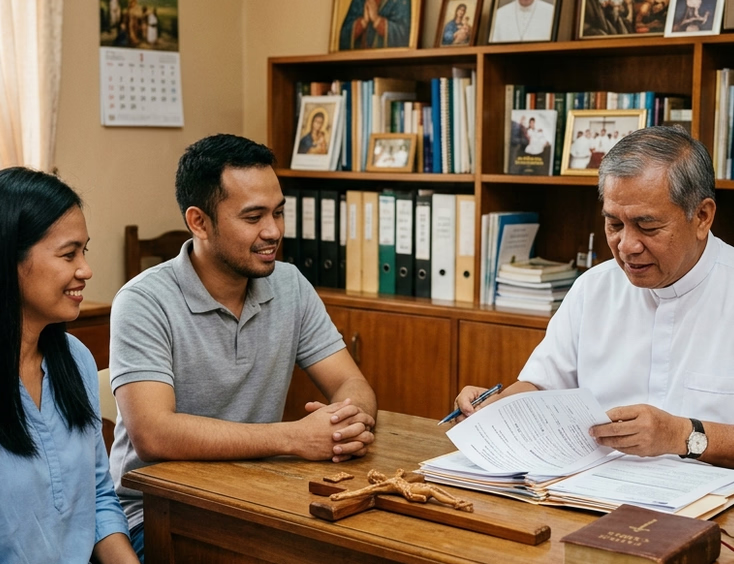
Yes, mixed-religion couples can marry in the Catholic Church in the Philippines. The Catholic partner attends the standard Pre-Cana Seminar, and the non-Catholic partner attends alongside in most parishes. Both partners also sit through a canonical interview with the priest, and the couple secures a dispensation from the local bishop before the wedding date.
The process adds a few steps on top of the usual Catholic wedding requirements, but it does not block the marriage. Plan four to six months ahead and the paperwork sorts itself out.
What Counts as a Mixed-Religion Marriage
The Catholic Church uses two terms for marriages involving a Catholic and a non-Catholic partner.
Mixed marriage (matrimonia mixta). A marriage between a Catholic and a baptized non-Catholic Christian, such as a Protestant, Iglesia ni Cristo member, Born Again Christian, or Eastern Orthodox Christian. Canon 1124 of the Code of Canon Law covers this category.
Disparity of cult (disparitas cultus). A marriage between a Catholic and a non-baptized person, such as a Muslim, Buddhist, Hindu, atheist, or someone from any non-Christian faith. Canon 1086 covers this category, and the requirements run slightly stricter.
Both categories require the same Pre-Cana attendance and canonical interview, but the dispensation paperwork differs. The parish priest identifies which category applies based on the non-Catholic partner's baptismal status.
For a refresher on the Pre-Cana Seminar itself, our guide on what a Pre-Cana Seminar is and why the Catholic Church requires it covers the basics.
The Pre-Cana Seminar for Mixed-Religion Couples
Most Philippine parishes welcome non-Catholic partners at the Pre-Cana Seminar. The facilitators understand that mixed-religion couples make up a growing share of attendees, and the program adjusts where needed.
The standard topics still apply:
- Theology and meaning of Christian marriage
- Communication and conflict resolution
- Family planning according to Catholic teaching
- Financial preparation
- Faith and the role of God in married life
- Sexuality and intimacy
Facilitators acknowledge that the non-Catholic partner may not share every belief presented. The sessions still proceed with both partners in the room, since the goal is to prepare the couple for marriage as a unit, not to convert anyone.
A few parishes run separate tracks for mixed-religion couples, with modules that address interfaith communication, raising children with two religious traditions, and respecting both partners' beliefs. Ask your parish whether this option exists.
The Catholic Partner's Promises
Canon 1125 requires the Catholic partner to make two declarations before the diocese grants permission for the marriage:
- A promise to remove dangers to the Catholic partner's faith. The Catholic spouse commits to continuing their practice of the faith.
- A sincere promise to do all in their power to baptize and raise the children as Catholic.
The non-Catholic partner does not make these promises. The Catholic partner makes them, and the non-Catholic partner is informed of them. The Church does not require the non-Catholic partner to agree, only to be aware.
Couples sign a written declaration during the canonical interview. The parish priest forwards the document to the diocese as part of the dispensation request.
The Canonical Interview
Both partners attend the canonical interview, a one-on-one meeting with the parish priest. The priest verifies that both partners enter the marriage freely, understand its permanent and exclusive nature, and accept the openness to children that Catholic teaching requires.
For mixed-religion couples, the interview adds a few questions:
- The non-Catholic partner's religious background and current practice
- Both partners' understanding of how they will handle religious differences
- Plans for raising children in the Catholic faith
- Any prior marriages, annulments, or civil unions on either side
The interview runs 30 to 60 minutes per couple. The priest documents the answers, attaches them to the marriage file, and includes them in the dispensation request.
For the full breakdown of the canonical interview process and how it differs from Pre-Cana, read our guide on the Catholic canonical interview.
The Dispensation From the Diocese
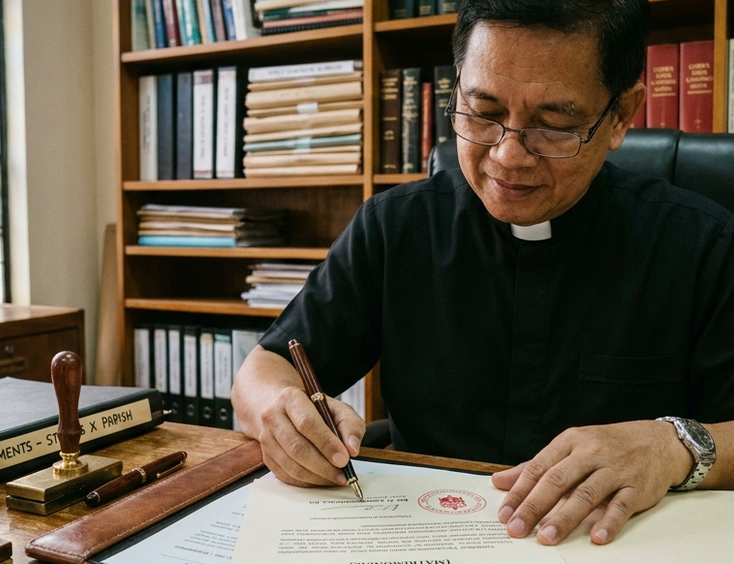
The bishop or his delegate grants a dispensation, a formal permission that allows the mixed-religion marriage to proceed within the Catholic Church.
For mixed marriages (Catholic and baptized non-Catholic Christian), the parish requests a "permission for mixed religion." The diocese typically grants this within two to four weeks once the documents are complete.
For disparity of cult marriages (Catholic and non-baptized partner), the parish requests a "dispensation from disparity of cult." This carries a stricter review, and the diocese sometimes asks for additional documentation. Processing runs three to six weeks.
The parish priest handles the application. Couples do not file directly with the diocese. The priest gathers the canonical interview record, the Pre-Cana certificate, the Catholic partner's declarations, and supporting documents, then submits the package.
Couples pay a small administrative fee for the dispensation, usually between PHP 500 and PHP 2,000 depending on the diocese.
Documents the Non-Catholic Partner Submits
The non-Catholic partner provides a smaller set of documents than the Catholic partner. The standard list:
- Valid government-issued ID
- PSA birth certificate
- PSA Certificate of No Marriage (CENOMAR)
- Baptismal certificate (for baptized non-Catholic Christians)
- Affidavit of religious affiliation (for non-baptized partners, in some dioceses)
- Death certificate of previous spouse or annulment decree, if applicable
The Catholic partner submits the full list of standard parish documents, including a recent baptismal certificate with the "for marriage purposes" annotation, confirmation certificate, and Pre-Cana certificate.
Both partners also complete the LCR-mandated requirements for the civil marriage license, which we cover in detail in our guide on how to get a marriage license in the Philippines.
Common Mixed-Religion Pairings in the Philippines
Filipino couples encounter the same handful of combinations:
Catholic and Iglesia ni Cristo. INC discourages members from marrying outside the faith, but mixed marriages still happen. The non-INC partner sometimes converts, and others proceed without conversion. The Catholic Church grants the mixed-religion permission once the standard requirements are met.
Catholic and Born Again or Evangelical Christian. Both partners are baptized Christians, so the dispensation falls under "permission for mixed religion." Couples often agree on a single ceremony in one church, with the other denomination's pastor sometimes invited to attend or co-officiate where the parish allows.
Catholic and Muslim. This pairing falls under disparity of cult since Muslims are not baptized in the Christian sense. The dispensation process runs longer, and some couples opt for a civil ceremony followed by separate religious blessings.
Catholic and atheist or no religion. This also falls under disparity of cult. The non-religious partner typically signs the awareness statement about the Catholic partner's promises, and the marriage proceeds.
Catholic and Buddhist, Hindu, or other non-Christian faiths. Same disparity of cult process. The diocese reviews each case based on the couple's specific circumstances.
What Happens If the Couple Marries in the Non-Catholic Partner's Church
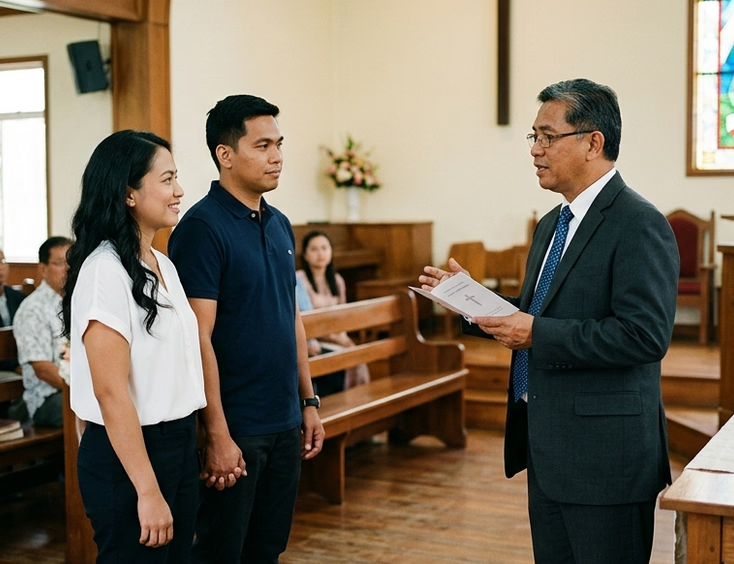
The Catholic Church recognizes the marriage only if proper canonical form is followed. By default, a Catholic marries within the Catholic Church before a Catholic priest or deacon and two witnesses. Marriages outside this form, without dispensation, are not recognized as valid by the Church.
Couples who want to marry in a Protestant church, INC chapel, or other non-Catholic venue request a "dispensation from canonical form" from the diocese. The bishop grants this in specific circumstances, such as significant family pressure on the non-Catholic side or strong pastoral reasons. Processing runs longer, and approval is not guaranteed.
Without the dispensation from canonical form, a Catholic who marries outside the Church is considered not validly married in the eyes of the Church, even if the civil marriage is legally registered with the Philippine Statistics Authority.
The Civil Marriage Side
The civil marriage license process applies the same way to mixed-religion couples as it does to all Filipino couples. Both partners attend the LCR-mandated seminars, including the Responsible Parenthood Seminar covered in our guide on the Responsible Parenthood Seminar in the Philippines.
The LCR does not care about religious differences. The clerk processes the application based on the standard checklist: PSA documents, IDs, CENOMAR, seminar certificates, and proof of residency. Couples wondering whether they can skip the LCR seminars should read our direct answer in Can you get married without attending a seminar in the Philippines.
Timeline for Mixed-Religion Couples
Plan six to nine months ahead. The added dispensation step requires extra weeks the parish cannot rush.
A typical timeline:
- Months 6 to 8 before wedding. Visit the parish, submit documents, schedule Pre-Cana.
- Months 5 to 6. Attend Pre-Cana Seminar and canonical interview. Parish files the dispensation request with the diocese.
- Months 3 to 5. Wait for the diocese to grant the dispensation. Continue planning the wedding details.
- Months 2 to 3. Attend LCR seminars, file the civil marriage license application, complete the 10-day posting period.
- Month 1. Final parish meeting, rehearsal, last-minute coordination.
- Wedding day. Ceremony, signing of the marriage certificate, registration.
Couples who start late sometimes face postponed wedding dates because the dispensation has not arrived in time.
Practical Tips for Smoother Processing
A few habits save mixed-religion couples weeks of back-and-forth:
- Pick the parish early. Some parishes process mixed-religion weddings smoothly, while others ask the couple to transfer to a parish more familiar with the dispensation process. Visit two or three parishes before committing.
- Bring the non-Catholic partner to the first parish meeting. The priest evaluates both partners during the initial conversation, and the meeting moves faster when both are present.
- Ask about online Pre-Cana options. Some dioceses now accept online seminars for mixed-religion couples with one partner abroad. Read our guide on online Pre-Cana seminars and whether they get accepted for the latest rules.
- Keep digital copies of every document. Diocesan offices sometimes lose physical copies, and a digital backup speeds up the second submission.
- Stay patient with the dispensation timeline. The bishop's office processes hundreds of requests at a time. Following up every two weeks is fine. Following up every two days slows things down.
Where to Find Pre-Cana Providers for Mixed-Religion Couples
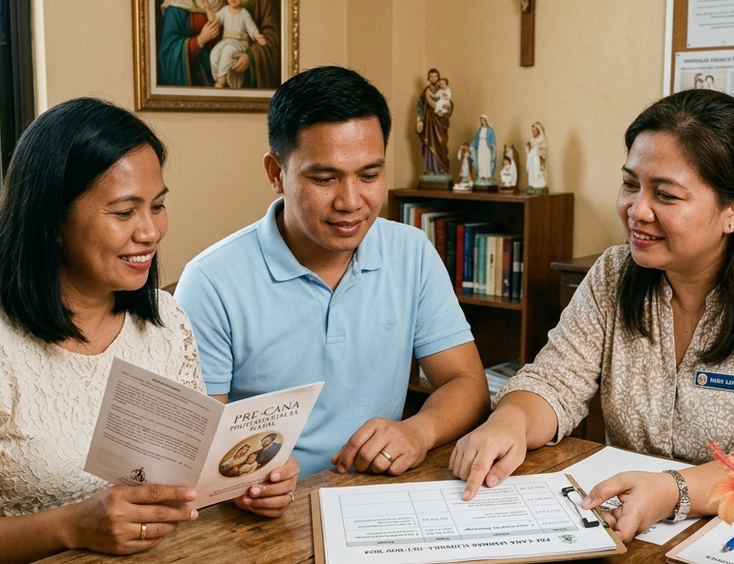
Some parishes run dedicated Pre-Cana sessions for mixed-religion couples, while others rely on accredited diocesan retreat houses or family ministry centers. Browse verified providers in our Pre-Wedding Seminars Suppliers Directory to compare schedules, formats, and pricing.
Booking through a verified provider helps couples confirm that the certificate gets accepted by both the parish and the LCR.
The Big Picture
Mixed-religion marriages happen across the Philippines every day. The Catholic Church accommodates them through a clear set of rules, and the steps look longer on paper than they feel in practice. Couples who attend the Pre-Cana, complete the canonical interview, and secure the dispensation finish the religious side without major issues.
The civil side runs in parallel and follows the standard marriage license process. For the full map of how every seminar fits together, including the religious and civil tracks, read our pillar guide on wedding seminars in the Philippines.
Foreign partners marrying Filipinos sometimes fall into the mixed-religion category as well, with a separate set of consular requirements layered on top. Our guide on wedding seminar requirements for foreigners marrying a Filipino walks through that scenario.
Different faiths and different traditions do not block a Catholic wedding in the Philippines. The dispensation system exists for exactly this reason. Plan early, work with a parish that knows the process, and the marriage gets celebrated the way the couple wants it.
Still Searching for a Right Match?
Find Your Perfect Wedding Supplier Today!
Discover trusted wedding suppliers across the Philippines in our complete directory. Compare services and connect with the ones that fit your dream celebration.
Browse Wedding SuppliersFeatured Blog Posts

Filipino Wedding Entourage - Roles, Order of March, and Modern Etiquette
6 mins readCivil Weddings in the Philippines - Requirements, Costs, and Step-by-Step Process
9 mins readCivil Wedding Requirements in the Philippines - Complete Checklist
6 mins readCost of Wedding in the Philippines - 5 Essential Things You Need to Know
7 mins readPrincipal Sponsors (Ninong/Ninang) - How Many, How to Ask, What They Really Do
4 mins readVeil, Cord, Candle & Coins - Roles, Options, and When They Happen
4 mins readEntourage for a Traditional Pinoy Wedding - Complete Roles and Guide
6 mins readComplete List of Civil Wedding Requirements in the Philippines
8 mins readHow to Choose Wedding Ninongs and Ninangs - Ask Yourself These 3 Important Questions
5 mins read