


The Catholic Canonical Interview: What It Is and How It Differs from Pre-Cana
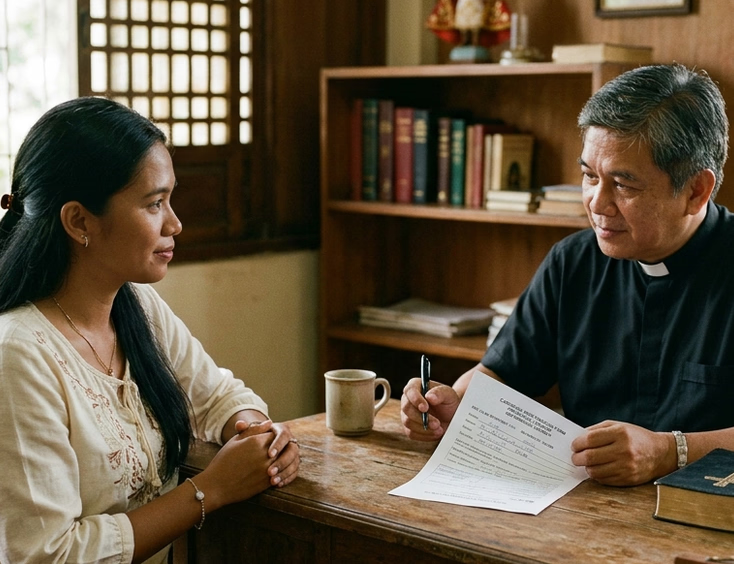
You finished Pre-Cana. The certificate is in hand. You walk into the parish office expecting to drop off the paperwork and lock in the wedding date.
The coordinator pulls up your file and says the parish priest will see each of you separately for the canonical interview. You ask what that is. The coordinator slides another form across the desk.
The canonical interview catches couples off-guard because nobody mentions it until the parish brings it up. Pre-Cana gets all the attention. The canonical interview gets none, until the day you sit across from a priest answering questions about your freedom to marry.
This guide explains what the canonical interview covers, how it differs from Pre-Cana, what questions to expect, and how to prepare without panicking. If you're still mapping out which seminars and steps you need before the wedding, browse our pre-wedding seminar suppliers directory for accredited Pre-Cana facilitators and parish-recognized providers.
What the Canonical Interview Is
The canonical interview is a one-on-one meeting between the parish priest and each engaged partner separately. The priest asks specific questions about your background, your relationship, your understanding of marriage, and your readiness for the sacrament.
Canon law requires it. Specifically, the 1983 Code of Canon Law mandates that the parish priest verify the couple's freedom to marry, the absence of impediments, and the validity of consent before celebrating the wedding. The interview documents that verification.
The priest writes your answers on a canonical investigation form, signs it, and files it in your wedding paperwork. The form goes to the parish chancery for review. Without it, the wedding cannot proceed.
The interview is not a test. It's not a counseling session. It's a legal investigation under canon law, conducted in a pastoral tone.
How the Canonical Interview Differs from Pre-Cana
Couples confuse the two because both happen at the parish and both involve a priest. The differences matter.
Format. Pre-Cana is a group seminar with multiple couples in a hall. The canonical interview is a private conversation between the priest and one partner at a time.
Purpose. Pre-Cana is formation. The seminar teaches you about marriage theology, communication, finances, and family life. The canonical interview is investigation. The priest verifies that you meet canon law requirements for valid marriage.
Duration. Pre-Cana runs a full day or weekend. The canonical interview runs 30 to 60 minutes per partner.
Outcome. Pre-Cana ends with a certificate of attendance. The canonical interview ends with a signed canonical investigation form filed in your parish wedding paperwork.
Who conducts it. Pre-Cana involves a team of priests, lay mentors, and specialized speakers. The canonical interview is conducted by the parish priest who'll officiate the wedding, or his assigned delegate.
You complete both. One doesn't replace the other. For the full breakdown of what Pre-Cana covers, read our guide on what a Pre-Cana seminar is and why the Catholic Church requires it.
Why Canon Law Requires the Interview
Three legal concerns drive the canonical interview.
Freedom to marry. Canon law requires both partners to enter marriage freely, without coercion, fraud, or pressure. The priest asks direct questions to confirm consent is voluntary.
Absence of impediments. Canon law lists specific impediments that block valid marriage: prior bond from a previous marriage, age below canonical minimums, blood relationships within prohibited degrees, holy orders, perpetual vows, and others. The priest screens for each impediment.
Validity of consent. Canon law requires that both partners understand and accept the essential properties of Catholic marriage: unity, fidelity, indissolubility, and openness to children. The priest confirms each partner understands what they're consenting to.
Skip the interview, and the marriage may be canonically invalid. The Church takes that seriously. The interview protects the couple, the parish, and the sacramental record.
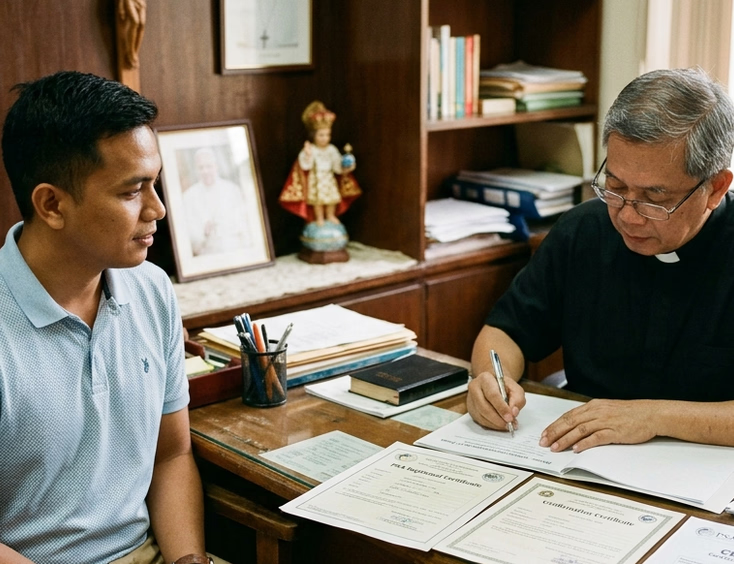
What Questions the Priest Asks
The questions follow a standard canonical investigation form. Wording varies by diocese and language, but the substance stays consistent.
Personal Background
Full name, birth date, birthplace. Parents' names. Current address and parish of residence. Baptismal information including the parish and date of baptism. Confirmation information.
The priest verifies the answers against your baptismal and confirmation certificates. Bring the originals if the parish hasn't already received them.
Relationship History
How long have you known your fiancé? How did you meet? Have you lived together? Are you currently living together?
Some priests ask about prior relationships, prior engagements, and prior marriages. Answer honestly. The priest is not judging. He's confirming there's no prior bond that affects validity.
Freedom to Marry
Are you entering this marriage freely? Has anyone pressured you to marry? Are you aware of any reason this marriage cannot proceed?
Pregnancy is not an impediment. Family pressure can be. The priest asks specifically to surface coercion, not to embarrass you.
Understanding of Marriage
Do you understand that Catholic marriage is permanent and indissoluble? Do you accept fidelity as a lifelong commitment? Are you open to children? Will you raise children in the Catholic faith?
The priest may ask follow-up questions on each point. Answer in your own words. Don't memorize a script.
Impediments
Have you been married before, civilly or in any church? Are you related to your fiancé by blood or marriage? Have you taken religious vows or received holy orders?
A "yes" on any impediment doesn't automatically end the process. Some impediments can be dispensed by the bishop. The priest will explain the next steps if a dispensation is needed.
Mixed Marriages and Disparity of Cult
If your fiancé is non-Catholic, the priest asks additional questions about respecting the Catholic partner's faith and the upbringing of children. The dispensation process kicks in here.
For the full breakdown of mixed-religion requirements, read our guide on Pre-Cana seminar requirements for mixed-religion couples.
How to Schedule the Canonical Interview
The parish coordinator schedules the canonical interview after Pre-Cana, usually three to four months before the wedding date.
Some parishes book the interview during regular office hours on weekdays. Others schedule weekend slots for working couples. Manila parishes with high wedding volume run interview blocks on Saturdays.
You and your fiancé attend on the same day, usually back-to-back. The priest sees one partner first, then the other. Plan for two hours total at the parish, including waiting time.
Bring two valid government-issued IDs each. Bring originals of your baptismal certificate, confirmation certificate, and CENOMAR. Bring the Pre-Cana certificate. Bring any dispensation paperwork if mixed-religion or other impediments apply.
How to Prepare Without Panicking
The canonical interview isn't a quiz. The priest isn't trying to trip you up. Most couples finish in 30 minutes and walk out wondering why they were nervous.
Three steps make the difference.
Talk to your fiancé first. Run through the question categories together. If you've never discussed children, faith upbringing, or extended family expectations, talk before the interview. The priest will surface these topics, and you'll answer better if you've already aligned.
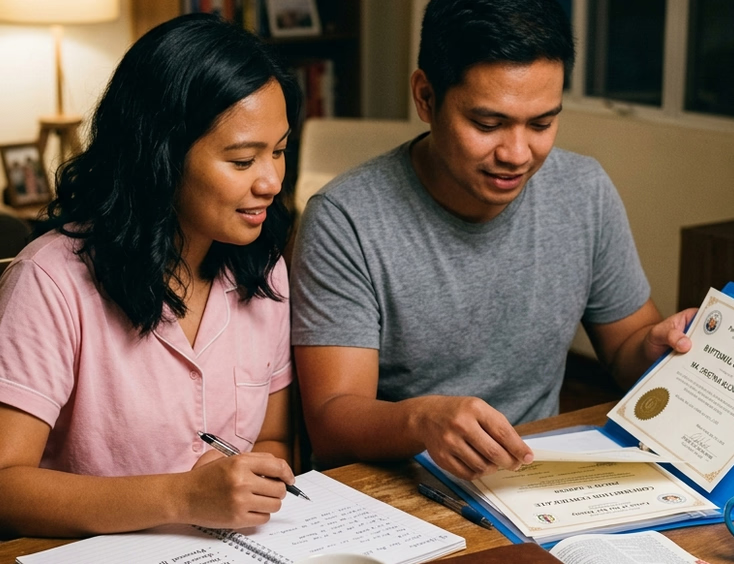
Review your documents. Pull out your baptismal and confirmation certificates the night before. Confirm dates, parishes, and spelling. The priest will check these against your answers.
Answer honestly. Don't perform. Don't say what you think the priest wants to hear. The interview is meant to surface real concerns, not produce textbook answers. A priest who hears doubt will help you address it. A priest who hears a script will keep digging.
The pastoral tone of the interview catches some couples off-guard. Filipino parish priests usually open with small talk, ask about the wedding plans, and ease into the canonical questions. The conversational style is intentional. It's still a legal investigation underneath.
What Happens If a Concern Surfaces
The priest may flag an issue during the interview. Common concerns and how parishes handle them:
Prior civil marriage. A previous civil marriage may require an annulment or a declaration of nullity before a Catholic wedding can proceed. The parish refers you to the diocesan tribunal.
Prior religious marriage. A previous Catholic marriage requires a declaration of nullity. The process can take months or years. Don't book a wedding date until the tribunal rules.
Pregnancy. Pregnancy is not an impediment. The priest may ask additional questions about freedom to marry, since family pressure sometimes accompanies pregnancy. Honest answers move the process forward.
Mixed religion. A Catholic-Protestant marriage requires a dispensation from the bishop. A Catholic-Muslim or Catholic-non-baptized marriage requires a different dispensation. The priest initiates the request after the interview.
Cohabitation. Living together before the wedding is not a canonical impediment. Some priests ask about it pastorally. They want to know you've thought about marriage as a sacramental commitment, not just a continuation of cohabitation.
Family pressure or coercion. A priest who detects pressure will pause the process. He may ask one or both partners to return for a separate meeting. The pause protects you. Real consent has to be free.
The interview ends with the priest signing the canonical investigation form. If a concern needs follow-up, the priest schedules a second interview or refers you to the tribunal.
After the Canonical Interview
The signed canonical investigation form goes into your parish wedding file with your other documents.
The parish then issues the wedding banns and posts them at the parish for three consecutive Sundays. The banns publicly announce the upcoming wedding and invite anyone with knowledge of an impediment to come forward.
If you're getting married at a parish different from your home parish, your home parish issues the banns and forwards a clearance letter to the wedding parish. Coordinate this six to eight weeks before the wedding date.
The parish chancery may review your file before final approval. For most couples, this is a paperwork check. For couples with dispensations or impediments, the chancery reviews the documentation before clearing the wedding.
When the Canonical Interview Happens for Mixed-Religion Couples
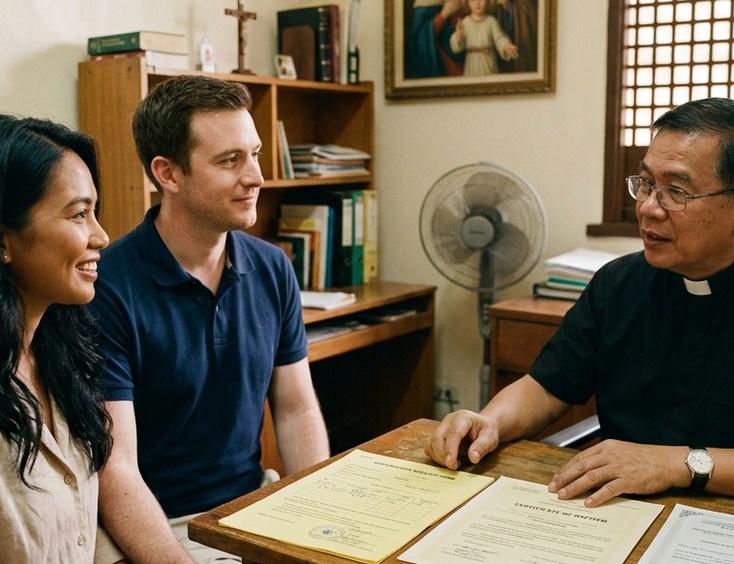
A Catholic marrying a non-Catholic faces a modified canonical interview process.
The Catholic partner sits for the standard canonical interview. The non-Catholic partner sits for a shorter interview focused on understanding and respecting the Catholic partner's faith, agreeing to the Catholic upbringing of children, and confirming freedom to marry.
The priest also initiates the dispensation request after the interview. Disparity of cult applies when one partner is not baptized. Mixed religion applies when both are baptized but in different Christian traditions. Each dispensation has its own form and processing time.
For the full breakdown, read our guide on Pre-Cana seminar requirements for mixed-religion couples.
When the Interview Happens for Filipinos Marrying Abroad
If you're a Filipino getting married outside the Philippines, the canonical interview still happens, but the location depends on where the wedding takes place.
Some couples sit for the canonical interview at a Philippine parish before traveling. The parish forwards the canonical paperwork to the foreign parish where the wedding takes place. The foreign parish accepts the Philippine canonical file as part of the wedding paperwork.
Other couples complete the interview at the foreign parish if the wedding happens there. The foreign parish runs its own canonical investigation under the same canon law standards.
Coordinate early. Both the Philippine parish and the foreign parish need to communicate before the wedding. Read our guide on wedding seminar requirements for Filipinos getting married abroad for the consulate paperwork and parish coordination.
When the Interview Happens for Foreigners Marrying a Filipino
A foreign national marrying a Filipino in the Philippines also sits for the canonical interview. The format is the same. The questions are the same.
The priest may ask additional questions about residency, intent to settle, and where the couple plans to live after the wedding. The foreign partner brings their baptismal certificate, confirmation certificate, and Certificate of Legal Capacity to Marry from their embassy.
For the full breakdown, read our guide on wedding seminar requirements for foreigners marrying a Filipino in the Philippines.
Common Misconceptions About the Canonical Interview
Couples walk in with assumptions the interview quickly corrects.
"It's just a formality." It's a legal investigation under canon law. The priest takes it seriously, and the parish chancery reviews the file. A flagged concern can delay or cancel the wedding.
"Pre-Cana replaces the canonical interview." No. The two are separate. Both are required.
"The priest will fail us if we say the wrong thing." The priest isn't grading. He's documenting. Honest answers move the process forward. Inconsistent or evasive answers slow it down.
"We can do it together." Most parishes interview each partner separately. The priest wants to confirm each partner answers freely, without the other partner present.
"It's just paperwork, so we'll skip the prep." The interview goes faster and smoother when you've talked through the question categories with your fiancé. Skipping prep is how an interview turns into a longer conversation.
The Canonical Interview Sits Inside a Bigger Process
The canonical interview is one piece of the parish's wedding paperwork. You'll also complete Pre-Cana, possibly an NFP seminar, and the LGU's civil seminars for the marriage license.
Our pillar guide on wedding seminars in the Philippines sequences every requirement across a 12-month wedding timeline.
If your diocese requires Natural Family Planning, schedule the NFP seminar in the same window as Pre-Cana. Our guide on the Natural Family Planning seminar in the Philippines lists accredited providers.
The LGU's Pre-Marriage Counseling and family planning seminars feed into your marriage license, not the canonical file. Our guide on how to get a marriage license in the Philippines walks through the civil track.
Find an Accredited Pre-Cana Provider Before Your Interview
Most couples sit for the canonical interview after completing Pre-Cana. The Pre-Cana certificate goes into the same parish file as the canonical investigation form. The two documents work together to clear your wedding date.
Browse our pre-wedding seminar suppliers directory to find CBCP-accredited Pre-Cana facilitators and parish-recognized providers across the Philippines. Filter by location, format, and language to lock in your seminar before the canonical interview, so the parish can move your wedding paperwork forward without delay.
Still Searching for a Right Match?
Find Your Perfect Wedding Supplier Today!
Discover trusted wedding suppliers across the Philippines in our complete directory. Compare services and connect with the ones that fit your dream celebration.
Browse Wedding SuppliersFeatured Blog Posts

Filipino Wedding Entourage - Roles, Order of March, and Modern Etiquette
6 mins readCivil Weddings in the Philippines - Requirements, Costs, and Step-by-Step Process
9 mins readCivil Wedding Requirements in the Philippines - Complete Checklist
6 mins readCost of Wedding in the Philippines - 5 Essential Things You Need to Know
7 mins readPrincipal Sponsors (Ninong/Ninang) - How Many, How to Ask, What They Really Do
4 mins readVeil, Cord, Candle & Coins - Roles, Options, and When They Happen
4 mins readEntourage for a Traditional Pinoy Wedding - Complete Roles and Guide
6 mins readComplete List of Civil Wedding Requirements in the Philippines
8 mins readHow to Choose Wedding Ninongs and Ninangs - Ask Yourself These 3 Important Questions
5 mins read