


Can You Get Married Without Attending a Seminar in the Philippines? Here Is the Honest Answer
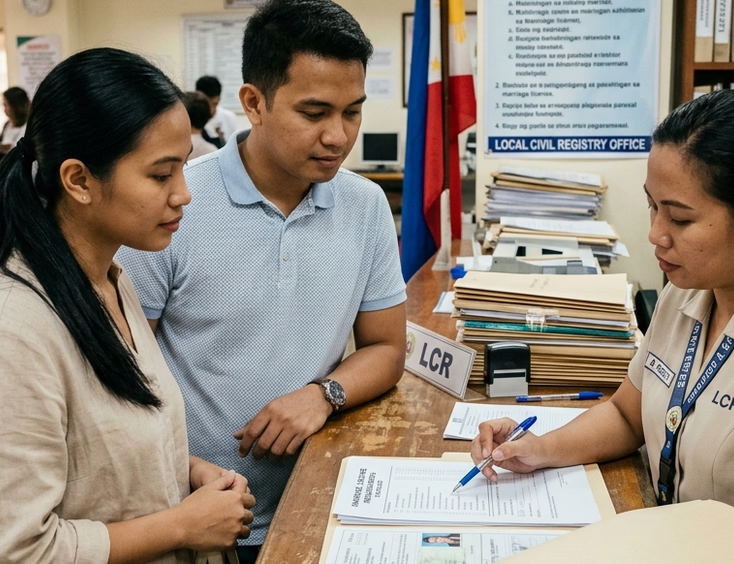
No. You cannot get legally married in the Philippines without attending the required pre-marriage seminars. The Local Civil Registrar (LCR) will not release your marriage license without the certificates of attendance, and without a marriage license, no judge, priest, pastor, or imam can legally officiate your wedding.
A few narrow exceptions exist under the Family Code, and we cover those below. For the rest of the population, the seminars are part of the package. Skip them and the wedding does not happen on the date you planned.
Why the Seminars Are Mandatory
Two laws drive the requirement. The Family Code of the Philippines (Executive Order 209) sets the legal framework for marriage. Republic Act 10354, also called the Responsible Parenthood and Reproductive Health Act of 2012, requires couples applying for a marriage license to receive instruction on family planning, reproductive health, and parental responsibility.
Local government units add their own ordinances on top. Most cities and municipalities require:
- Pre-Marriage Counseling and Orientation (PMC or PMOS)
- Responsible Parenthood Seminar
- Family Planning Seminar
Catholic couples add a Pre-Cana Seminar from their parish. Muslim couples follow the Code of Muslim Personal Laws. Couples married by judges in civil ceremonies still complete the LCR seminars.
The LCR clerk checks for the certificates before stamping your application. No certificate, no application accepted. Our complete walkthrough of the process appears in our guide on how to get a marriage license in the Philippines.
The Narrow Legal Exceptions
The Family Code lists a handful of marriages exempt from the marriage license requirement under Articles 27 to 34. Couples in these categories do not file for a license at all, which means they also skip the seminars tied to that license.
Marriages in articulo mortis. Article 27 covers marriages where one party faces imminent death. The solemnizing officer performs the ceremony without a license, then files a sworn statement explaining the circumstances within 30 days.
Marriages in remote places. Article 28 applies when the residence of either party is so remote that no means of transportation allows them to appear before the LCR. The solemnizing officer files a similar sworn statement.
Marriages among Muslims and members of ethnic cultural communities. Article 33 exempts couples married according to their customs, rites, or practices, provided the solemnizing officer follows the requirements under their own legal traditions. Muslim couples, for instance, follow Presidential Decree 1083 (Code of Muslim Personal Laws).
Marriages of couples who have lived together for at least five years. Article 34 exempts couples who have cohabited as husband and wife for at least five continuous years without any legal impediment to marry. The couple signs an affidavit, the solemnizing officer signs a separate affidavit, and the marriage proceeds without a license.
These exceptions cover specific circumstances. A regular couple planning a church or civil wedding does not qualify under any of them.
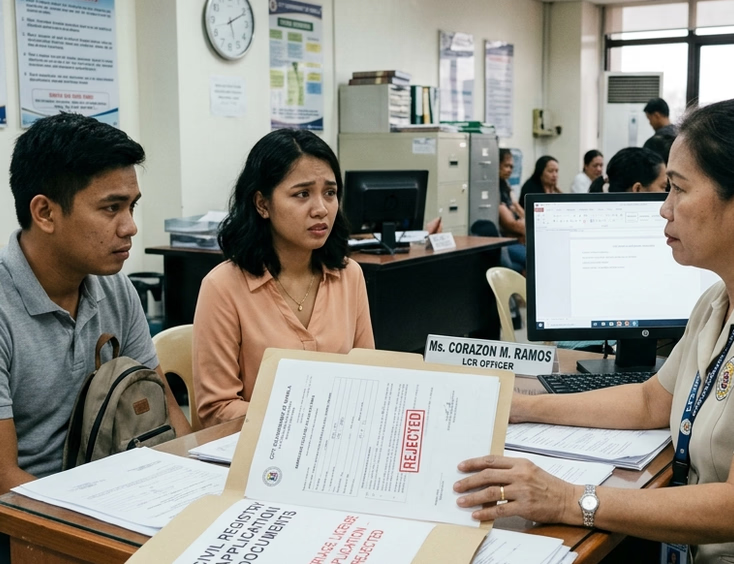
What Happens If You Try to Skip the Seminars
The LCR rejects your application on the spot. You walk back home with the same documents and one less day on your wedding countdown.
A few couples try workarounds that fail in predictable ways:
Submitting fake certificates. LCRs verify certificates against the issuing office's records. Forgery is a criminal offense under the Revised Penal Code, with penalties including imprisonment. The fake document also voids any marriage license issued on its basis.
Asking a friend to attend in your place. Facilitators check IDs at the start and end of every session. The certificate carries both partners' names, and substituting one partner invalidates the document.
Bribing an LCR clerk. Beyond the legal risks for both parties, the certificate still needs to exist in the city health office's records. The shortcut catches up with you when the marriage license registration gets flagged.
Marrying abroad to skip Philippine requirements. Filipinos marrying abroad still navigate consular requirements, and the marriage gets registered with the Philippine Statistics Authority through the local consulate. The seminar requirement may not apply abroad, but other documentation kicks in. Read our guide on wedding seminar requirements for Filipinos getting married abroad for the details.
The Religious Side: Pre-Cana and Canonical Interview
Catholic couples face a separate layer of requirements set by the parish, not the LGU. The Pre-Cana Seminar is mandatory before any Catholic wedding, and skipping it means the parish refuses to schedule your ceremony. The canonical interview, a one-on-one meeting with a priest, follows the seminar.
For Catholic couples wondering what Pre-Cana involves and why the Church requires it, our guide on what a Pre-Cana Seminar is and why the Catholic Church requires it covers the full picture. The differences between the Pre-Cana and the canonical interview appear in our breakdown of the Catholic canonical interview.
Couples in mixed-religion marriages have their own variation of the rules. Read our guide on Pre-Cana seminar requirements for mixed-religion couples for the specifics.
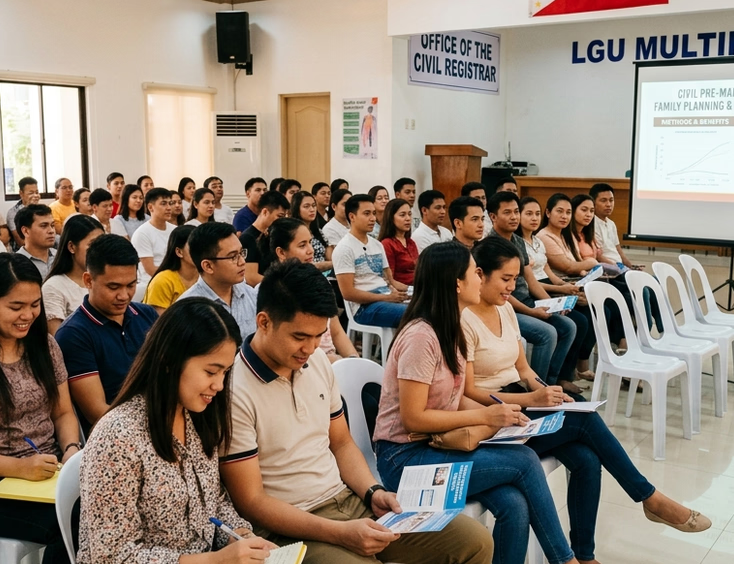
The Civil Side: LCR Seminars
Couples planning a civil wedding still attend the LGU-mandated seminars. The Responsible Parenthood Seminar covers family planning and reproductive health, and the LCR will not file your marriage license application without the certificate. Our complete guide on the Responsible Parenthood Seminar in the Philippines explains the content and registration process.
Some LGUs combine the seminar with a Family Planning module. Others separate them. The Natural Family Planning Seminar, often confused with the Responsible Parenthood Seminar, covers different content and gets treated as a separate requirement in some cities. Read our guide on the Natural Family Planning Seminar to see whether your LCR requires it.
What About Foreigners Marrying Filipinos
Foreign nationals marrying Filipinos in the Philippines complete a different document checklist, but the seminar requirement applies to the Filipino partner. The foreigner submits a Certificate of Legal Capacity to Contract Marriage from their embassy, alongside other papers. The Filipino spouse attends the LCR seminars, and both partners attend the Pre-Cana if marrying in a Catholic ceremony.
For the full breakdown, read our guide on wedding seminar requirements for foreigners marrying a Filipino.
The Marriage Preparation Program
A few dioceses and LGUs require a longer counseling track called the Marriage Preparation Program (MPP). This goes beyond the standard half-day seminars and covers communication, finances, conflict resolution, and shared values across multiple sessions.
The MPP is not always mandatory, but couples who skip it sometimes find their parish unwilling to schedule the wedding without it. Our guide on what a Marriage Preparation Program is and who needs to attend explains when this applies.
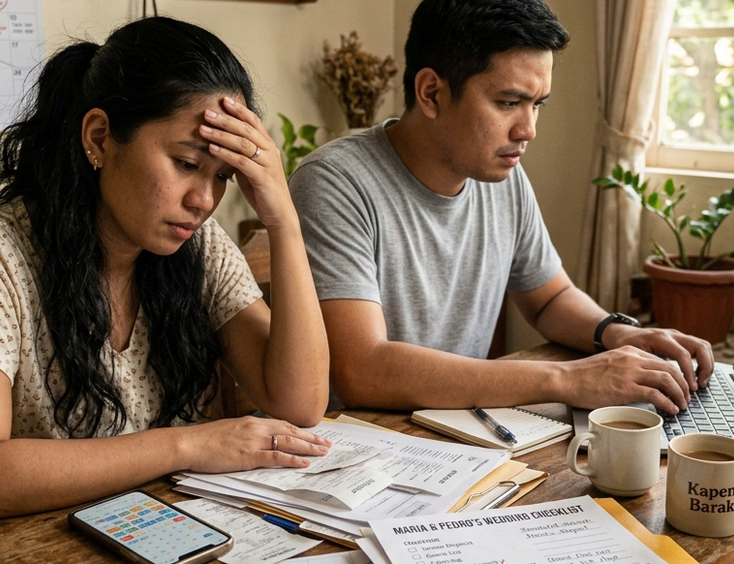
Why Couples Try to Skip the Seminars
The reasons usually fall into a short list:
- Time pressure. Couples plan weddings on tight timelines, and the seminars feel like extra work.
- Geographic limits. Couples in remote provinces or those based abroad assume the in-person sessions are not accessible to them.
- Repeat marriages. Annulled or widowed applicants sometimes assume the seminars no longer apply. They do.
- Cost concerns. Some couples assume the seminars cost a lot. Government-run sessions are free.
- Misinformation. Friends and family pass along incorrect rules, and couples follow advice that does not match the law.
Most of these objections dissolve once couples see the schedules and pricing. Online sessions, weekend slots, and accredited private providers exist for couples with limited weekday availability. Browse the options in our Pre-Wedding Seminars Suppliers Directory to find one that fits your timeline.
What Happens Without the Marriage License
A wedding ceremony without a marriage license is not a legal marriage in the Philippines. The Family Code declares it void from the beginning under Article 4. The couple gets no legal recognition as spouses, no community property regime, no inheritance rights, and no capacity to file joint government documents.
The solemnizing officer who performs a ceremony without a license also faces administrative and criminal penalties. Priests, pastors, judges, and imams refuse to officiate without the document for this reason.
Couples who go through with a "wedding" ceremony without a license sometimes call it a commitment ceremony or a symbolic union. The event has emotional and social meaning, but it carries no legal weight. To convert it into a legal marriage later, the couple still files for a license, attends the seminars, and goes through the full process.
The Honest Bottom Line
The seminars exist as part of a legal and pastoral framework that the Philippines built around marriage. Couples who attend them finish in a few half-days, walk away with the certificates, and move on with the rest of the planning. Couples who try to skip them face delays, rejected applications, or in worst cases, voided marriages.
The shortcut does not exist for the average couple. The seminars do.
Plan early, book the sessions four to six weeks before your target marriage license filing date, and treat the certificates as part of the same checklist as your PSA birth certificate, CENOMAR, and barangay clearance. The full picture of how every seminar fits together appears in our pillar guide on wedding seminars in the Philippines.
Sort the seminars out, claim your license, and use the rest of your energy on the wedding itself.
Still Searching for a Right Match?
Find Your Perfect Wedding Supplier Today!
Discover trusted wedding suppliers across the Philippines in our complete directory. Compare services and connect with the ones that fit your dream celebration.
Browse Wedding SuppliersFeatured Blog Posts

Filipino Wedding Entourage - Roles, Order of March, and Modern Etiquette
6 mins readCivil Weddings in the Philippines - Requirements, Costs, and Step-by-Step Process
9 mins readCivil Wedding Requirements in the Philippines - Complete Checklist
6 mins readCost of Wedding in the Philippines - 5 Essential Things You Need to Know
7 mins readPrincipal Sponsors (Ninong/Ninang) - How Many, How to Ask, What They Really Do
4 mins readVeil, Cord, Candle & Coins - Roles, Options, and When They Happen
4 mins readEntourage for a Traditional Pinoy Wedding - Complete Roles and Guide
6 mins readComplete List of Civil Wedding Requirements in the Philippines
8 mins readHow to Choose Wedding Ninongs and Ninangs - Ask Yourself These 3 Important Questions
5 mins read