


What Is a Marriage Preparation Program in the Philippines and Who Needs to Attend
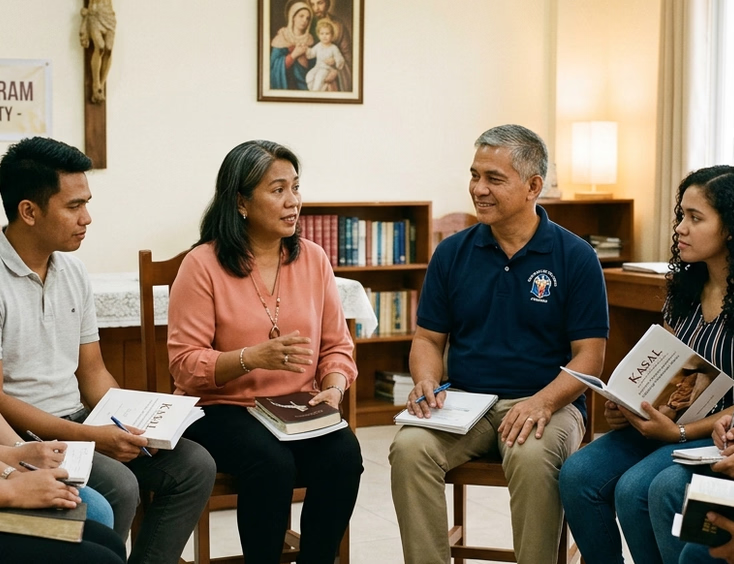
You're researching wedding seminars and the same term keeps appearing: Marriage Preparation Program, or MPP. Some parishes list it. Others don't. A few use the term interchangeably with Pre-Cana, which only adds to the confusion.
You ask your parish coordinator. The answer depends on the diocese, the parish, and sometimes the priest. Some couples need an MPP. Others don't. A few attend one and a Pre-Cana, doubling the seminar load.
Marriage Preparation Programs in the Philippines fill a specific gap. They go deeper than a one-day Pre-Cana, run longer, and target couples who want or need more formation before the wedding. The CBCP recognizes several MPPs, and certain dioceses require them in place of or alongside Pre-Cana.
This guide explains what an MPP covers, who runs them, which couples need to attend, and how MPPs differ from Pre-Cana. If you'd rather skip the research and book through an accredited provider, browse our pre-wedding seminar suppliers directory for verified MPP and Pre-Cana facilitators by location.
What a Marriage Preparation Program Is
A Marriage Preparation Program is a structured, multi-session formation program for engaged Catholic couples. The program covers marriage theology, communication, finances, sexuality, family life, and spirituality, similar in scope to Pre-Cana but spread across weeks rather than compressed into one day.
The CBCP defines marriage preparation in three stages.
Remote preparation. Begins in childhood and continues through adolescence. Family upbringing, parish catechism, and youth formation prepare future spouses for marriage long before engagement.
Proximate preparation. The engagement period. Pre-Cana, NFP seminars, and MPPs fall under proximate preparation. Couples receive direct formation on marriage in the months before the wedding.
Immediate preparation. The final weeks before the wedding. The canonical interview, wedding rehearsal, retreat days, and last-stage spiritual preparation belong here.
MPPs sit in the proximate preparation stage. The depth and duration distinguish them from a standard one-day Pre-Cana.
How MPPs Differ from Pre-Cana
Pre-Cana and MPP overlap in content but differ in format, depth, and time commitment.
Duration. Pre-Cana runs one full day or one weekend. MPPs run four to twelve weekly sessions, usually one evening or one Saturday morning per week.
Depth per topic. Pre-Cana gives 60 to 90 minutes per topic. MPPs give a full session per topic, often two to three hours each, with reading and reflection between sessions.
Group size. Pre-Cana usually runs with 20 to 50 couples in one hall. MPPs run with smaller groups, often 6 to 15 couples, allowing more discussion.
Mentorship. Pre-Cana involves rotating speakers. MPPs assign a married mentor couple who walks alongside the engaged couples for the full program duration.
Outcome. Pre-Cana ends with a certificate and a closing Mass. MPPs end with a certificate, a closing retreat or Mass, and often an ongoing connection to the community that ran the program.
Some dioceses accept an MPP certificate in place of Pre-Cana. Others require both. Verify with your wedding parish before assuming the substitution.
For the full breakdown of Pre-Cana, read our guide on what a Pre-Cana seminar is and why the Catholic Church requires it.
Who Runs MPPs in the Philippines
Several Catholic communities, movements, and parishes run MPPs across the country.
Couples for Christ (CFC) Marriage Preparation Course. CFC runs a multi-week program for engaged couples that includes weekly sessions, mentor couple assignments, and integration into the CFC community. The program is widely recognized by Catholic parishes in the Philippines.
Discovery Weekend. A weekend retreat-style MPP run by trained married couples and priests. The format compresses the program into an immersive Friday-to-Sunday experience, with follow-up sessions after the retreat.
Couples for Christ Foundation for Family and Life (CFC-FFL). A separate organization from CFC that also runs marriage preparation programs aligned with Catholic social teaching and pro-family advocacy.
Worldwide Marriage Encounter (WWME). Originally a program for married couples, WWME also runs Engaged Encounter weekends specifically designed as marriage preparation for engaged couples.
Diocese-run MPPs. Some dioceses operate their own multi-week marriage preparation programs through diocesan family ministries. The Archdiocese of Manila, the Archdiocese of Cebu, and several provincial dioceses have in-house MPPs.
Parish-level MPPs. Larger parishes train married couples as mentors and run MPPs on parish grounds. Programs vary in length and format.
Verify the provider's accreditation with your wedding parish. A parish-recognized MPP certificate counts toward the canonical wedding paperwork. A non-recognized certificate may force you to attend Pre-Cana on top of the MPP.
Our pre-wedding seminar suppliers directory lists accredited MPP providers with their parish recognition status by diocese.
Who Needs to Attend an MPP
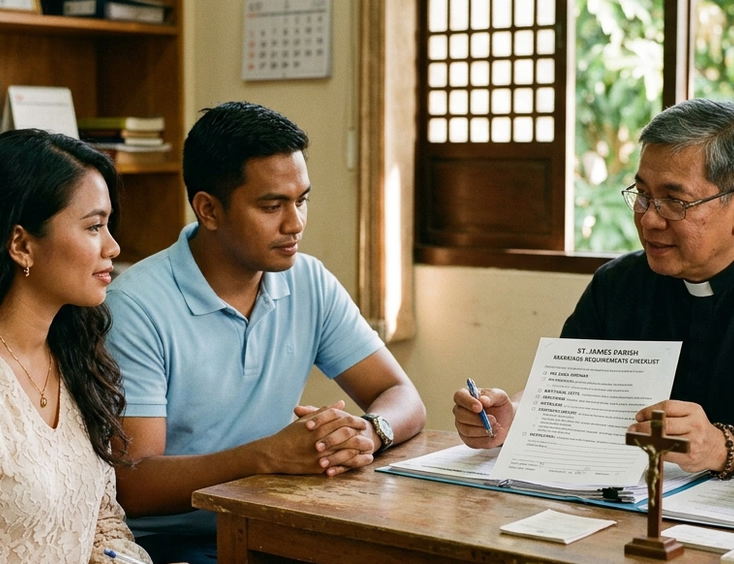
Most Filipino Catholic couples can satisfy parish requirements with Pre-Cana alone. MPPs are not universally required. Specific groups benefit more from or are required to attend an MPP.
Couples in dioceses that require it. A few dioceses require an MPP in place of or alongside Pre-Cana. Verify with the wedding parish.
Members of Catholic communities like CFC or WWME. Some communities require their engaged members to attend the community's MPP rather than a parish Pre-Cana. The community certificate satisfies the parish if the parish recognizes the community.
Couples who want deeper formation. Some engaged couples choose MPPs for the depth and the mentor relationship, even when Pre-Cana would satisfy the requirement. The longer program surfaces issues that a one-day seminar can't reach.
Couples with specific concerns. Couples dealing with prior relationships, family conflict, financial stress, or faith differences sometimes choose MPPs for the extended formation and mentor support.
Mixed-religion couples. Some dioceses recommend MPPs for mixed-religion couples because the longer format allows more space to address faith differences. Read our guide on Pre-Cana seminar requirements for mixed-religion couples for the dispensation process.
If your wedding parish accepts Pre-Cana and you don't fall into the categories above, an MPP is optional. Many couples skip it for time reasons. Others choose it specifically for the depth.
What an MPP Covers
The content overlaps with Pre-Cana but goes deeper. A typical MPP covers these blocks across multiple sessions.
Marriage Theology and Sacramentality
The first sessions ground the program in Catholic teaching on marriage as a sacrament. References to Genesis, Ephesians 5, the Theology of the Body, and the Catechism appear throughout. The depth varies by program but generally exceeds Pre-Cana's coverage.
Communication and Conflict Resolution
A multi-session block on how couples talk, listen, fight, and repair. MPPs use exercises, role-plays, and small-group discussions. The mentor couple shares their own experience, which Pre-Cana usually doesn't have time for.
Finances and Stewardship
Budgeting, joint accounts, debt disclosure, support for parents, and planning for major expenses get a full session in MPPs. The Filipino context of supporting extended family, managing balikbayan box expectations, and aligning on tithing or church giving comes up explicitly.
Sexuality and Conjugal Love
A dedicated session on the Catholic understanding of conjugal love, NFP, and the link between physical intimacy and the marriage covenant. MPPs that don't fold NFP into the main program usually require a separate NFP seminar in parallel.
For the breakdown of the standalone NFP seminar, read our guide on the Natural Family Planning seminar in the Philippines.
Family Life and Parenting
A session on raising children in the Catholic faith, navigating in-laws, and forming the domestic church. The session usually includes practical input from the mentor couple on the early years of marriage.
Spirituality as a Couple
Prayer life, Mass attendance, Confession, and how a couple grows spiritually together. MPPs often include a guided couple's prayer exercise and sometimes a directed retreat as part of the closing.
Community and Ongoing Support
The closing sessions often introduce the engaged couples to the community or movement that ran the MPP. Couples who continue with the community get ongoing support after the wedding through small groups, retreats, and family ministry events.
How Long an MPP Takes
Format varies by provider.
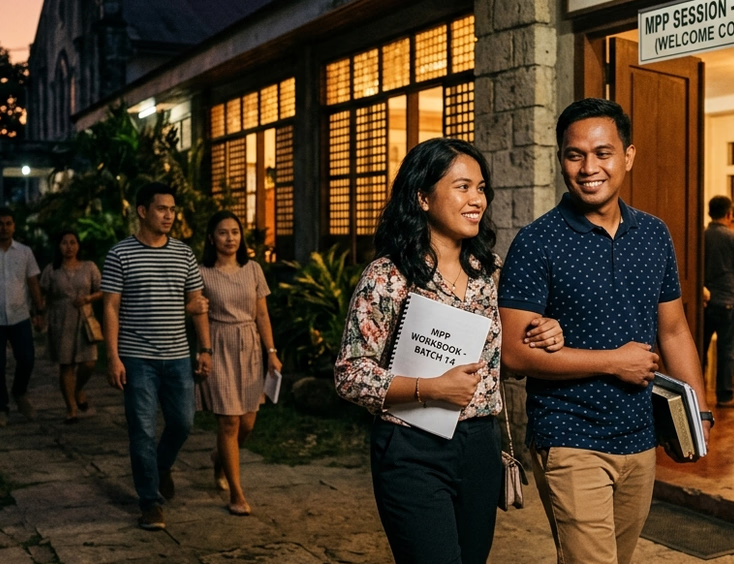
Weekly sessions. Most MPPs run six to twelve weekly sessions, usually two to three hours each. Total time commitment ranges from 18 to 36 hours, plus reading and reflection between sessions.
Weekend retreats. Discovery Weekend and Engaged Encounter use a Friday-to-Sunday immersive format. Follow-up sessions extend over the next few weeks.
Hybrid formats. Some MPPs combine a weekend retreat with weekly follow-up sessions. The weekend handles the intensive content. The weekly meetings handle integration and practice.
Plan for two to three months from start to finish for a weekly format MPP. Plan for one weekend plus follow-up for retreat-based MPPs.
When to Schedule an MPP
Most MPPs require the certificate to be issued within 6 to 12 months of the wedding. Some parishes accept older certificates if the couple maintained ongoing community involvement.
Schedule the MPP four to seven months before the wedding to allow for the program duration plus the parish submission window.
If you're attending an MPP and a separate NFP seminar, sequence them so both certificates land in the parish file together, three to four months before the wedding.
For the full timeline that sequences MPP, Pre-Cana, NFP, the canonical interview, and LGU seminars, read our pillar guide on wedding seminars in the Philippines.
MPP Costs
MPP fees range based on format and provider.
Parish-run MPPs charge ₱2,000 to ₱5,000 for the full program. The fee covers materials, mentor honoraria, and meals during weekend sessions.
Couples for Christ and CFC-FFL programs charge ₱3,000 to ₱6,000. The fee includes materials and integration into the community network.
Discovery Weekend and Worldwide Marriage Encounter charge ₱5,000 to ₱10,000 for the weekend retreat plus follow-up. Venue, accommodation, and meals account for most of the higher cost.
Diocese-run MPPs charge similar to parish programs, with some subsidized for couples in financial need.
Compare the total cost against the parish's required seminar slate. If the MPP replaces Pre-Cana and includes NFP, the higher fee may cover what would otherwise be three separate seminars.
What to Bring to MPP Sessions
Pack these for each session.
A pen and notebook for reflection exercises. The MPP workbook if the provider issued one. Cash for the session fee balance plus a buffer for any add-on materials.
For weekend retreats, bring overnight essentials: change of clothes, toiletries, sleepwear, prayer book, and a Bible. Discovery Weekend and Engaged Encounter usually provide accommodations and meals as part of the package, but couples bring personal items.
Wear smart casual for evening sessions. Wear comfortable retreat clothes for weekend formats.
Bring an open mind. Couples who treat the MPP as a checkbox finish the program with the certificate and little else. Couples who engage with the mentor couple and the small-group discussions walk into the wedding better aligned with their fiancé.
Receiving and Submitting the MPP Certificate
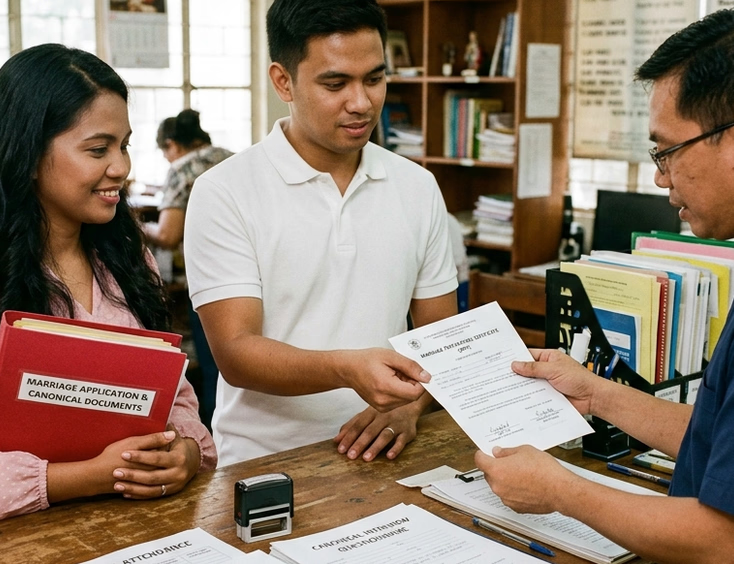
The MPP provider issues the certificate at the closing session or within one week after.
Verify the certificate format with your wedding parish before the program. Some parishes accept digital PDFs. Others require printed originals signed by the program director and a priest.
Make two photocopies the day you receive the certificate. Submit one to the wedding parish at least 60 days before the wedding. Keep the original and the second copy in your wedding documents folder.
For the full process on submitting parish documents alongside the canonical interview paperwork, read our guide on the Catholic canonical interview and how it differs from Pre-Cana.
MPP for Filipinos Marrying Abroad
If you're a Filipino getting married outside the Philippines, an MPP can satisfy marriage preparation requirements in many foreign parishes that recognize Philippine MPP certificates.
Coordinate with both the Philippine parish issuing the canonical paperwork and the foreign parish where the wedding takes place. Some foreign parishes accept Philippine MPPs without modification. Others require additional preparation through their own programs.
Read our guide on wedding seminar requirements for Filipinos getting married abroad for the consulate paperwork and parish coordination.
MPP for Foreigners Marrying a Filipino
A foreign national marrying a Filipino in the Philippines can attend an MPP alongside their Filipino fiancé. The longer format helps cross-cultural couples align on family expectations, faith practice, and life in the Philippines.
Some MPPs offer English-language tracks for foreign partners. Others run in Filipino with English support. Verify the language and format with the provider before registering.
For the full breakdown of seminar requirements for foreign partners, read our guide on wedding seminar requirements for foreigners marrying a Filipino in the Philippines.
MPP vs LGU Seminars
The MPP is a parish requirement. The LGU's Pre-Marriage Counseling and family planning seminars are civil requirements for the marriage license.
You may need both. The MPP feeds into the church wedding. The LGU seminars feed into the marriage license.
For the LGU side, read our guide on the Responsible Parenthood Seminar in the Philippines and our walkthrough on how to get a marriage license in the Philippines.
Common Misconceptions About MPPs
Couples walk in with assumptions the program quickly corrects.
"MPP and Pre-Cana are the same." They overlap in content but differ in depth, format, and duration. Some parishes accept either. Others require both.
"I have to attend an MPP for my wedding." Most Philippine parishes accept Pre-Cana alone. MPPs are required only in specific dioceses or for members of certain Catholic communities.
"MPP replaces all other seminars." Some MPPs include NFP. Others don't. The LGU seminars are always separate. Verify what the MPP covers and what the parish still requires.
"It's too long, so I'll skip it." If the parish requires it, you can't skip it. The MPP certificate is non-negotiable in dioceses that mandate it.
"It's just like a longer Pre-Cana." The mentor relationship distinguishes most MPPs. The depth comes from the time spent with one married couple over multiple weeks, not from extra seminar hours.
MPP Sits Inside a Bigger Process
The MPP is one piece of the parish's wedding paperwork. You'll also complete the canonical interview, possibly an NFP seminar if not included in the MPP, and the LGU's civil seminars.
Our pillar guide on wedding seminars in the Philippines sequences every requirement and shows where MPP fits in the full timeline.
For the registration sequence and what to expect on attendance, our guide on how to register and attend a Pre-Cana seminar at your parish in the Philippines covers the practical mechanics that apply to MPPs as well.
Find an Accredited MPP Provider
The Marriage Preparation Program suits couples who want or need deeper formation than a standard Pre-Cana. The longer time commitment pays off in alignment, mentorship, and ongoing support after the wedding.
Browse our pre-wedding seminar suppliers directory for CBCP-accredited MPP and Pre-Cana facilitators across the Philippines. Filter by diocese, format, language, and parish recognition to find a program that matches your wedding parish's requirements before peak season closes the calendar.
Still Searching for a Right Match?
Find Your Perfect Wedding Supplier Today!
Discover trusted wedding suppliers across the Philippines in our complete directory. Compare services and connect with the ones that fit your dream celebration.
Browse Wedding SuppliersFeatured Blog Posts

Filipino Wedding Entourage - Roles, Order of March, and Modern Etiquette
6 mins readCivil Weddings in the Philippines - Requirements, Costs, and Step-by-Step Process
9 mins readCivil Wedding Requirements in the Philippines - Complete Checklist
6 mins readCost of Wedding in the Philippines - 5 Essential Things You Need to Know
7 mins readPrincipal Sponsors (Ninong/Ninang) - How Many, How to Ask, What They Really Do
4 mins readVeil, Cord, Candle & Coins - Roles, Options, and When They Happen
4 mins readEntourage for a Traditional Pinoy Wedding - Complete Roles and Guide
6 mins readComplete List of Civil Wedding Requirements in the Philippines
8 mins readHow to Choose Wedding Ninongs and Ninangs - Ask Yourself These 3 Important Questions
5 mins read