


Filipino Baptism Traditions Every Parent Should Know
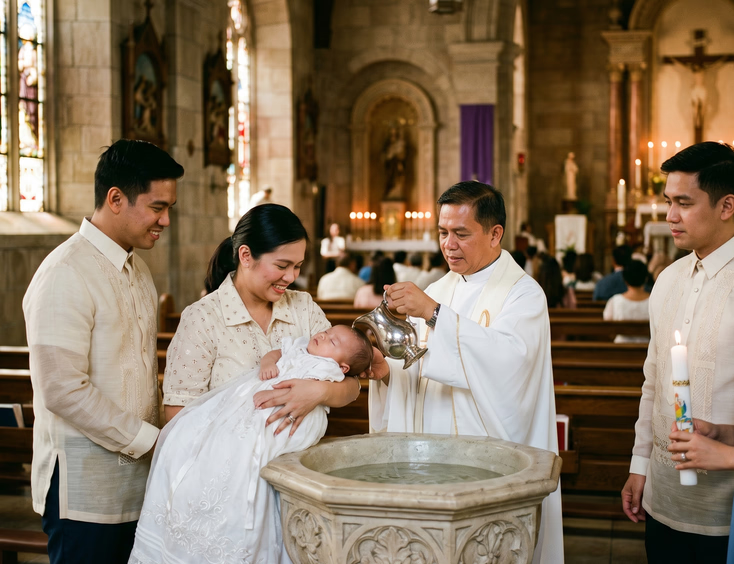
You sat at your in-laws' dinner table and your mother-in-law started listing the things you needed to do before the baptism. The forty-day count. The pakimkim envelopes. The cake cutting order. The way the godparents should be seated. You nodded along and made a mental list. Then you went home and realized you had no idea where these traditions came from, which ones still mattered, and which ones you could quietly skip.
Filipino baptism traditions blend Catholic ritual, Spanish colonial influence, indigenous Filipino practice, and the slow drift of modern family customs. Some are required by the Church. Some are family folklore passed down without explanation. Some are ceremonial habits that survive because nobody questions them. This guide walks you through the traditions that shape a Filipino baptism, where they come from, and how modern families decide which to keep, adapt, or set aside.
Why Filipino Baptisms Carry So Much Tradition
Filipino baptisms occupy a unique cultural space. The Catholic sacrament arrived through Spanish missionaries in the sixteenth century. The Filipino emphasis on family, gift-giving, and communal celebration shaped how the sacrament took root. Over four centuries, the two layers fused into a celebration that feels distinctly Filipino, even when the religious core stays Catholic.
A Filipino baptism is rarely a private event. The extended family gathers. The godparents take on lifelong roles. The reception turns into a multi-generational meal. The traditions surrounding the day carry meaning even when their origins are murky.
For the wider planning view that anchors all these traditions, read the complete Filipino baptism guide: everything parents need to know for a meaningful celebration.
The Forty-Day Tradition
Some Filipino families baptize their babies around forty days after birth. The tradition traces back to the biblical presentation of the infant Jesus at the temple, forty days after his birth.
In Catholic tradition, the forty-day period also references the time of postpartum recovery for the mother, after which she would present the child to the church. In Filipino practice, the forty-day count became a soft guideline for early baptism.
Few modern families follow this strictly. Most baptize between three and six months. The forty-day tradition now serves more as a cultural reference than a rule. If your grandmother brings it up, treat it as heritage worth knowing, not a deadline you missed.
For more on choosing the right baptism age, read baptism timeline: when is the best age to have your baby baptized.
The Naming Tradition
Filipino baptism names carry strong Catholic and family weight. Many parents pick a Christian name during the baptism, sometimes adding the name of a saint to the baby's existing name.
A few common naming conventions.
The patron saint of the baptism day. Some families pick a name based on the feast day the baptism falls on.
A saint the family holds devotion to. Often a saint a grandparent or great-grandparent prayed to throughout life.
A meaningful Catholic name. Maria, Jose, Juan, or other classic Catholic names often appear as middle names.
A family name. Carrying the name of a beloved grandparent or great-grandparent.
A name with personal meaning. Modern parents often pick names based on personal preference, with the baptism reinforcing the spiritual significance.
The Catholic Church does not strictly require a saint's name, though parishes often encourage one. The baptismal certificate lists whatever name the parents provide.
The Ninong and Ninang Tradition
The Filipino expansion of the canonical godparent role into a wider circle of ninongs and ninangs is one of the most distinct traditions in Filipino baptisms.
Catholic doctrine requires only one godfather and one godmother. Filipino tradition stretches this to anywhere from four to twenty pairs. Some families include extended family, close friends, and community figures.
The expansion has both religious and social roots. Spanish-era Catholic practice in the Philippines often included multiple sponsors as a sign of communal commitment. Filipino kinship culture, where family extends well beyond the nuclear unit, reinforced the practice. By the twentieth century, large godparent lists became the norm.
Modern parishes vary in how they handle large godparent lists. Some accept the canonical count of one godfather and one godmother and list the rest as Christian witnesses. Some cap the count. Some let the families decide.
For full direction on choosing godparents, read how to choose ninong and ninang: a Filipino parent's guide. For the lifelong role of godparents, read ninong and ninang duties: responsibilities beyond the baptism day.
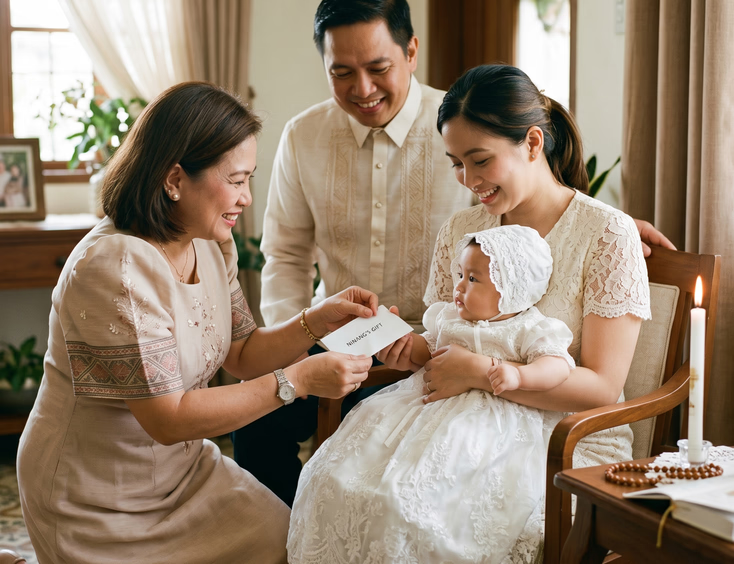
Pakimkim
Pakimkim is the godparent gift, usually cash, given to the baby on the day of the baptism. The tradition traces to the Tagalog kimkim, which describes something held tightly in a closed hand. The image fits. Most pakimkim arrives as a folded peso bill or a small envelope quietly slipped to the baby or the parent.
The tradition predates modern Catholic baptism customs in the Philippines. It carries spiritual symbolism. A first gift marking the start of the lifelong relationship between godparent and godchild.
Pakimkim amounts vary by closeness and finances. For a full breakdown, read pakimkim guide: how much should godparents give at a baptism.
The White Garment Tradition
The Catholic Church requires the baby to wear a white garment during the baptism ceremony. The white cloth symbolizes the new life the child enters at baptism. The priest sometimes blesses the garment as part of the rite.
In Filipino practice, the white garment expanded into a full white outfit. Christening gowns, barong tagalog sets, and white suits replaced the simple cloth. Many Filipino families spend considerable time and budget on the baptism outfit, especially for first-born children.
Heirloom outfits often pass through generations. A great-grandmother's christening gown, a grandfather's baptism barong, or a parent's outfit from their own baptism may serve as the baby's outfit decades later.
For outfit direction, read baptism outfit ideas for baby boys and baby girls in the Philippines. For sourcing options, read where to buy or rent baptism gowns and suits in the Philippines.
The Baptismal Candle
The priest hands a lit baptismal candle to a designated godparent during the ceremony. The candle symbolizes the light of Christ, which the godparent helps pass to the child.
In Filipino tradition, the candle often becomes a keepsake. Many families save the baptismal candle for years, lighting it during the child's first communion, confirmation, and sometimes even their wedding.
Some families coordinate the candle's design with the baptism theme. A custom candle with the baby's name, a ribbon in the family's chosen color, or a styled holder can elevate this small ritual into a stronger photo moment.
For coordination with theme and styling, read popular baptism themes for Filipino babies: boys and girls edition.
The Chrism Oil Anointing
The priest anoints the baby with chrism oil during the baptism. Chrism is a consecrated oil blessed by the bishop, used in baptism, confirmation, and the ordination of priests.
The anointing happens twice during a Filipino baptism. The first time uses the oil of catechumens, applied before the baptismal water. The second uses chrism oil, applied after the baptism to symbolize the child's role as a member of Christ's royal priesthood.
Many parents wonder whether to wipe the oil off after the ceremony. Tradition leans toward letting it absorb. The baby's white outfit will likely absorb some of the oil. Most outfits clean easily afterward.
The Welcoming Rite
The Filipino baptism ceremony begins at the church entrance with the welcoming rite. The priest greets the family and godparents at the doors. The priest asks the parents the baby's name and confirms their intent to raise the child in the Catholic faith.
The rite carries strong symbolism. The family stands at the threshold of the church, asking entry on behalf of the child. The priest's greeting marks the formal welcome of the baby into the Catholic community.
In Filipino practice, the welcoming rite is often a moment of family gathering. Grandparents, godparents, and immediate family stand close. Cameras capture the priest's greeting. The procession into the church becomes the first walk of the baby into the parish life.
For coordinating the photo coverage, read baptism photographer and videographer guide: what to book and what to ask.
The Procession to the Baptismal Font
After the welcoming rite, the priest leads the family and godparents to the baptismal font. The procession is short, often only a few meters, but carries ritual weight.
In Filipino parishes, the procession often becomes a small parade. The parents lead with the baby. The godparents follow. Extended family trails behind.
Some parishes hold the entire ceremony at the front of the church. Others use a separate baptismal chapel. The setup affects the procession's length and the photo coverage.
For coordinating logistics with the parish, read Catholic baptism requirements in the Philippines: documents, fees, and church policies.
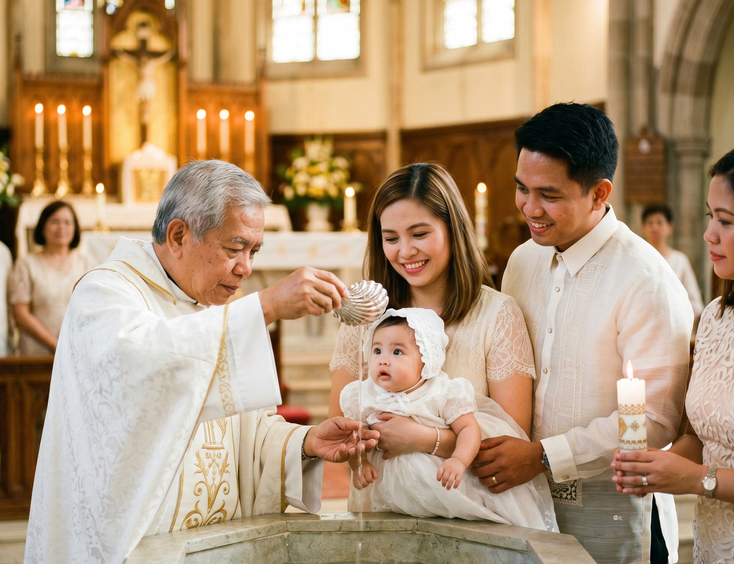
The Pouring of Water
The pouring of water is the moment that confers the sacrament. The priest pours water three times over the baby's forehead, saying the formula. The baby becomes a baptized Catholic at that exact moment.
This is the most photographed second of the entire ceremony. A good photographer captures it sharply. A great photographer captures the baby's reaction and the parents' faces at the same moment.
Filipino babies often cry at the cold water. Older relatives often see the cry as a small spiritual marker. Some traditions hold that the cry represents the baby renouncing the devil, though this is folk interpretation rather than Church doctrine.
For ensuring the moment is captured, read baptism photographer and videographer guide: what to book and what to ask.
The Reception as Communal Feast
Filipino baptism receptions are family feasts. The Spanish-era handog tradition of presenting the new Christian to the community shaped the modern reception. The communal meal honors the baby, thanks the godparents, and gathers the family in celebration.
A few practices anchor the reception.
Lechon as centerpiece. The whole roast pig appears at many Filipino milestone celebrations. The lechon's presence on the buffet often signals the importance of the event.
Cake cutting. The parents and baby cut the cake together. Godparents often surround the cake table for photos.
Toasts. The principal sponsors or close family members often give short toasts during the meal.
Pasalubong and pabaon. Guests leave with souvenirs and sometimes packed food from the buffet. Filipino hospitality assumes the host sends guests home with something.
For deeper context on the reception, read catering for Filipino baptism: menu ideas and package inclusions and baptism souvenirs and giveaways: trendy and meaningful ideas.
The Throwing of Coins or Sweets
In some Filipino provinces, a small tradition involves the godparents tossing coins or sweets into the air after the ceremony. Children scramble to catch them. The tradition symbolizes the godparents' generosity and the spreading of blessings.
This practice has faded in most Metro Manila baptisms but survives in provincial celebrations. Some families revive it as a small fun moment for the kids in the family.
If your family observes this tradition, brief the godparents in advance. A small bag of coins or wrapped candies, distributed after the ceremony, sets up the moment.
Family Photos as Ritual
The family photo session after the ceremony is its own Filipino baptism tradition. Most families take photos at the altar with the priest, the parents, the baby, the godparents, the grandparents, and the extended family.
The photo sessions can stretch fifteen to thirty minutes. The ritual matters. The photos become family keepsakes for decades.
Designate a family member to call out the group combinations. Pre-list the groups you want. Move quickly. Babies have short patience for the process.
For coordinating the family photo segment, read baptism photographer and videographer guide: what to book and what to ask.
The Signing of the Baptismal Record
After the ceremony, the parents and godparents sign the parish baptismal record. The record formally enters the child into the parish's books and confirms the sacrament.
The signing is often quick, handled at the parish office or sacristy. Some parishes hold a brief signing ceremony at a small table near the altar.
The baptismal certificate is issued from this record. The certificate becomes a permanent family document, used for school enrollment, first communion, confirmation, and eventually marriage.
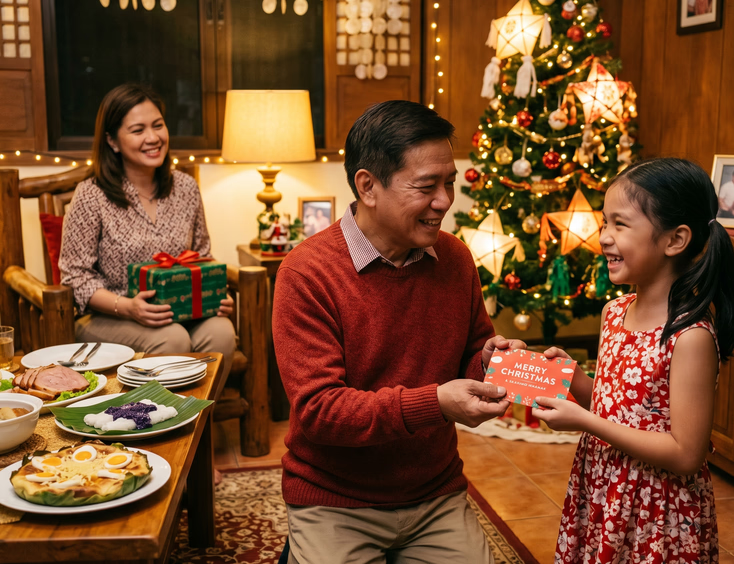
The Christmas Pamasko Continuation
Filipino godparents traditionally continue gift-giving to their godchildren each Christmas. The pamasko, usually cash, follows the same logic as the original pakimkim. A small material gift marking the relationship.
Pamasko amounts grow as the child grows. A toddler may receive two hundred pesos in a small envelope. A teenager may receive a thousand pesos or more.
The tradition reinforces the godparent's role beyond the baptism day. Many Filipino adults can list their godparents by name decades later because of the consistency of the pamasko ritual.
For the godparents' broader long-term role, read ninong and ninang duties: responsibilities beyond the baptism day.
The Mother's Recovery and Presentation
Older Filipino traditions held that the mother's recovery period after birth aligned with the baptism timing. The mother's first formal appearance in public, often at the church, would happen around the baptism.
This tradition has faded in modern practice. Most Filipino mothers return to public life within a few weeks after birth. The baptism timing now follows practical and spiritual considerations rather than postpartum recovery norms.
For more on choosing the right baptism age, read baptism timeline: when is the best age to have your baby baptized.
Heirloom Items and Family Continuity
Filipino baptism traditions often include passing down small heirloom items.
A christening gown worn by previous generations. A rosary held by a grandparent. A baptismal candle saved from a parent's own baptism. A small religious medal worn during the ceremony.
The heirloom items connect the baptism to the family's wider history. Even small objects carry significant emotional weight when they tie one generation to another.
If your family does not have heirloom items, consider starting the tradition. A simple white blanket, a small wooden cross, or a custom keepsake gift box used during the baptism can become an heirloom for your child to pass on someday.
Regional and Provincial Variations
Filipino baptism traditions vary by region. A few notable variations.
In Visayan provinces, godparents sometimes carry small bags of rice grains as a symbol of prosperity for the child.
In Northern Luzon, some families hold a small post-baptism community meal called a sigurado, sharing the celebration with neighbors and barrio members.
In some Mindanao Catholic communities, the baptismal celebration includes traditional indigenous Filipino prayers alongside the Catholic rite.
In Manila and other urban centers, modern Filipino baptisms tend to follow a standardized Catholic ceremony with Filipino reception customs layered on top.
For navigating regional differences, talk to your parish and your family elders. Both carry knowledge that often outweighs anything written in a guide.
Traditions Modern Families Adapt or Skip
Not every Filipino baptism tradition survives in every family. A few practices that modern families increasingly adapt or skip.
Long godparent lists. Many modern Filipino families keep the count to four to six pairs.
Elaborate gift expectations. Some families reduce pamasko traditions for godparents in difficult financial circumstances.
Strict forty-day timing. Modern families baptize when the family is ready, not on a specific cultural deadline.
Excessive feast spending. Some families opt for intimate baptisms over large communal feasts, choosing meaningful gatherings over big ones.
The right tradition to keep is the one that carries meaning for your family. Skip the ones that feel performative. Hold onto the ones that feel like home.
The Real Weight of Filipino Baptism Traditions
Filipino baptism traditions exist because each one once carried meaning to someone. The forty-day count meant something to a great-grandmother. The pakimkim meant something to a godparent. The lechon meant something to the extended family who came together to celebrate.
You do not have to honor every tradition. You do have to understand them before deciding which to keep. The traditions you preserve will become the small details your child grows up remembering.
For the wider planning picture, read the complete Filipino baptism guide: everything parents need to know for a meaningful celebration.
A Filipino baptism is a sacrament wrapped in heritage. The Catholic rite anchors the day. The Filipino traditions give it shape, warmth, and continuity. The combination, more than the individual parts, is what makes the celebration feel like home.
Still Searching for a Right Match?
Find Your Perfect Wedding Supplier Today!
Discover trusted wedding suppliers across the Philippines in our complete directory. Compare services and connect with the ones that fit your dream celebration.
Browse Wedding SuppliersFeatured Blog Posts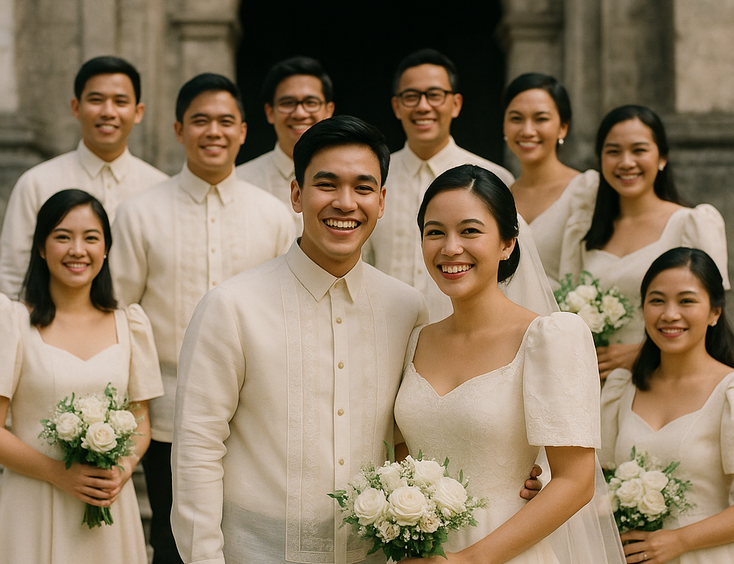


Filipino Wedding Entourage - Roles, Order of March, and Modern Etiquette
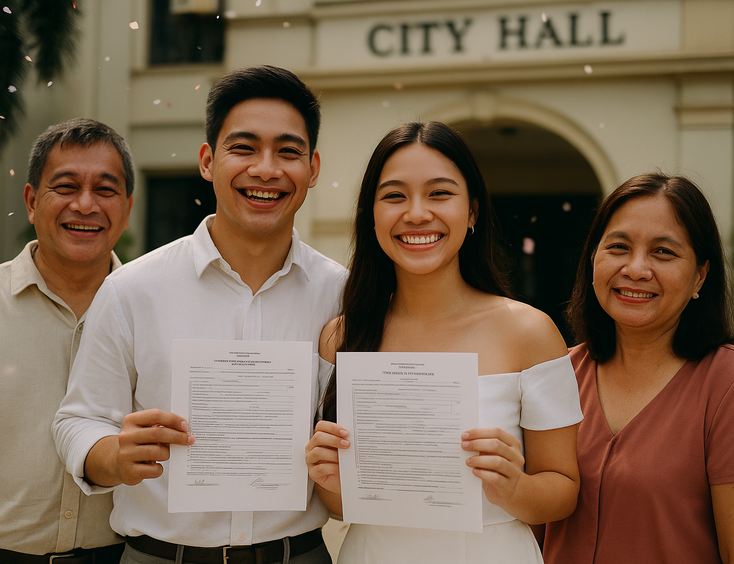
6 mins readCivil Weddings in the Philippines - Requirements, Costs, and Step-by-Step Process
9 mins readCivil Wedding Requirements in the Philippines - Complete Checklist
6 mins readCost of Wedding in the Philippines - 5 Essential Things You Need to Know
7 mins readPrincipal Sponsors (Ninong/Ninang) - How Many, How to Ask, What They Really Do
4 mins readVeil, Cord, Candle & Coins - Roles, Options, and When They Happen
4 mins readEntourage for a Traditional Pinoy Wedding - Complete Roles and Guide
6 mins readComplete List of Civil Wedding Requirements in the Philippines
8 mins readHow to Choose Wedding Ninongs and Ninangs - Ask Yourself These 3 Important Questions
5 mins read