


Pakimkim Guide: How Much Should Godparents Give at a Baptism
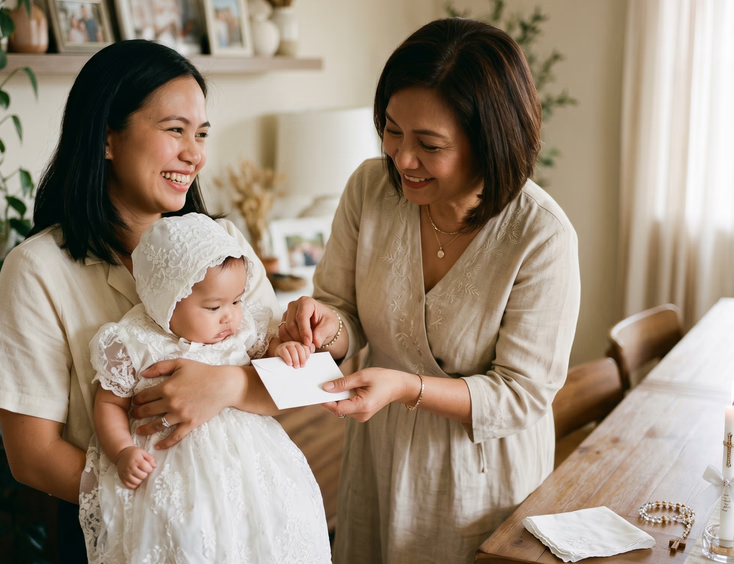
Your friend asked you to be a ninong for her baby. You said yes. Then you remembered pakimkim is a thing and realized you have no idea how much to put in the envelope. Asking the parents feels awkward. Asking other godparents feels worse.
Pakimkim is the Filipino tradition of godparents giving a gift, usually cash, to the baby on the day of the baptism. The amount is personal, but most godparents follow loose ranges shaped by closeness, finances, and family custom. This guide breaks down what most Filipino godparents actually give and how to decide what fits your situation.
What Pakimkim Actually Is
Pakimkim is the first material gift from a godparent to the godchild. The word traces back to the Tagalog kimkim, which describes something held tightly in a closed hand. The image fits. Most pakimkim arrives as a folded peso bill or a small envelope quietly slipped to the baby or the parent.
The tradition predates modern Catholic baptism customs in the Philippines. It carries spiritual symbolism. A first gift marking the start of the lifelong relationship between godparent and godchild.
For the wider context of where this tradition fits in the ceremony, read Filipino baptism traditions every parent should know.
How Much Filipino Godparents Typically Give
Pakimkim amounts vary widely based on closeness, finances, and regional custom. The ranges below cover what most Filipino godparents give today.
A casual or distant godparent usually gives five hundred to one thousand pesos. This range fits godparents who were added to the list for relational reasons but who are not closely involved with the family.
A standard close family friend or relative typically gives one thousand to three thousand pesos. This range covers the majority of Filipino godparents.
A close family member, a long-time best friend, or a senior relative usually gives three thousand to five thousand pesos. Some go higher depending on the family's tradition.
A principal sponsor, a wealthier godparent, or one who treats the role with strong personal significance often gives five thousand to ten thousand pesos. Some give more, especially for first-born children or for godchildren they share a particularly close bond with.
A few godparents skip cash entirely and give a larger one-time gift. Jewelry, a savings bond, a contribution to a trust account, or a high-value heirloom item. These gifts often carry more financial weight than typical cash amounts but follow the same symbolic logic.
For the wider budget picture from the parents' side, read how much does a baptism cost in the Philippines: a realistic budget breakdown.
What Shapes the Right Amount
A few practical questions help you settle on a number.
How close are you to the parents? Closeness matters more than family ties. A college best friend often gives more than a distant cousin.
How close will you be to the godchild? A ninong who plans to be deeply present often gives a meaningful first pakimkim as a sign of long-term commitment.
What is your current financial situation? Pakimkim is not a financial test. Give what you can without straining your budget.
What does the family expect? Some Filipino families set quiet norms among the godparent group. A short check-in with another godparent can give you a sense of the prevailing range without making the question awkward.
Are you a first-time godparent or a seasoned one? First-time godparents sometimes give more out of enthusiasm. Seasoned godparents tend to settle into consistent ranges across all their godchildren.
For a fuller look at the godparent role behind the gift, read ninong and ninang duties: responsibilities beyond the baptism day.
Cash, Check, or Something Else
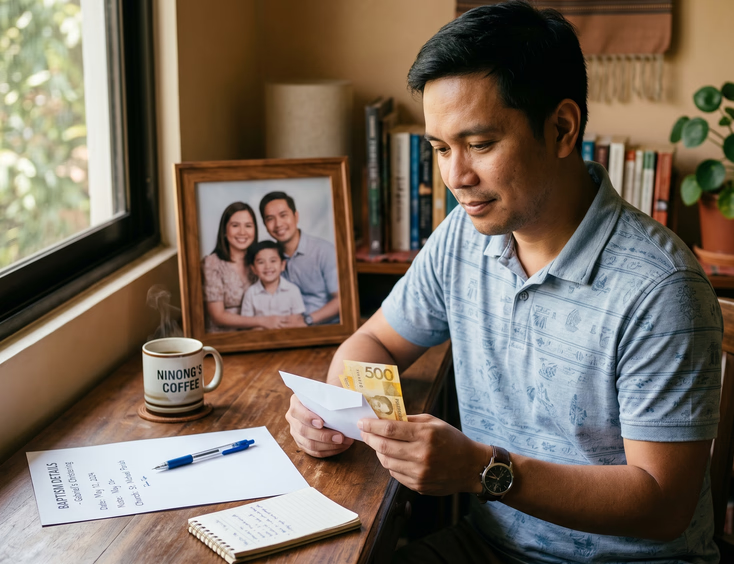
Most pakimkim arrives in peso bills. Cash is the cleanest format because the parents can use it immediately, often to offset baptism costs.
Some godparents prefer a check. A check works for larger amounts but feels more transactional than cash. Some families find checks impersonal for a tradition rooted in symbolic gestures.
A few godparents give cash equivalents:
Jewelry. A small gold piece is a common alternative, especially for godmothers giving to baby girls. The piece is often kept for the child until they grow into wearing it.
A savings account or investment contribution. Some godparents open a small bank account or trust fund and make their pakimkim the first deposit. This works for godparents who want their gift to grow with the child.
A high-value heirloom. Some godparents pass on a meaningful family item, like a religious medallion, a rosary, or a small framed icon. This works when the heirloom carries significance the family will recognize.
If you choose a non-cash gift, include a small handwritten note explaining the gift and your hopes for the child.
How to Hand Over Pakimkim
Pakimkim is given quietly. Filipino tradition treats the moment as intimate, not performative.
Most godparents slip a folded envelope to the parent during the reception. Some place the gift in the baby's hand and let the parent take it. A few give it during the photo session at the church, especially when the family expects a more formal handover.
A small detail makes the moment cleaner. Bring the envelope before the ceremony and set it aside in a pocket or small bag. Hand it over without ceremony. The parents will recognize the gesture.
Avoid handing pakimkim across a table while everyone is eating. Avoid announcing the amount. Avoid posting about it on social media. The whole tradition runs on quiet generosity.

When You Cannot Give What You Wanted
Pakimkim is symbolic, not a transaction. If your financial situation does not allow the amount you originally wanted to give, do not skip the role.
A modest cash gift paired with a meaningful note carries weight. A simple religious item paired with a written prayer for the child carries weight. A genuine promise to be present for the child's life carries weight that outlasts any peso amount.
Filipino families understand that godparents come from different financial circumstances. A godparent who shows up consistently with smaller gifts will always be remembered more warmly than one who gave a large pakimkim and then disappeared.
What Parents Should Know About Pakimkim
If you are the parent reading this, a few practical notes help you handle pakimkim gracefully.
Do not count or compare amounts. Open the envelopes privately. Thank every godparent equally.
Acknowledge each gift personally. A short thank-you message after the baptism works. Skip group thank-yous for cash gifts.
Track the gifts for your child. Some parents keep a small notebook listing each godparent and their pakimkim. The list becomes a sweet record for the child later in life.
Use pakimkim toward the baptism costs or save it for the baby. Either approach is acceptable. Filipino families do not assign a fixed purpose to the gift.
For the broader planning sequence, read how to plan a baptism in the Philippines: a step by step checklist for first time parents.
Pakimkim for Older Godchildren
Many Filipino godparents continue to give gifts well past the baptism day. Christmas pamasko, birthday gifts, graduation gifts, and milestone tokens all follow the same logic that started with pakimkim.
A common rhythm for Filipino godparents:
A birthday greeting each year, often with a small monetary gift starting when the child is older.
Christmas pamasko, with the amount growing as the child gets older. A toddler might receive two hundred pesos in a small envelope. A teenager might receive a thousand pesos or more.
Milestone gifts for first communion, confirmation, graduation, debut, and wedding. These often carry more weight, both financially and symbolically.
Pakimkim is the first installment in a lifelong gift-giving relationship. The amount at the baptism sets a quiet tone for the years that follow.
When You Are Asked About Pakimkim
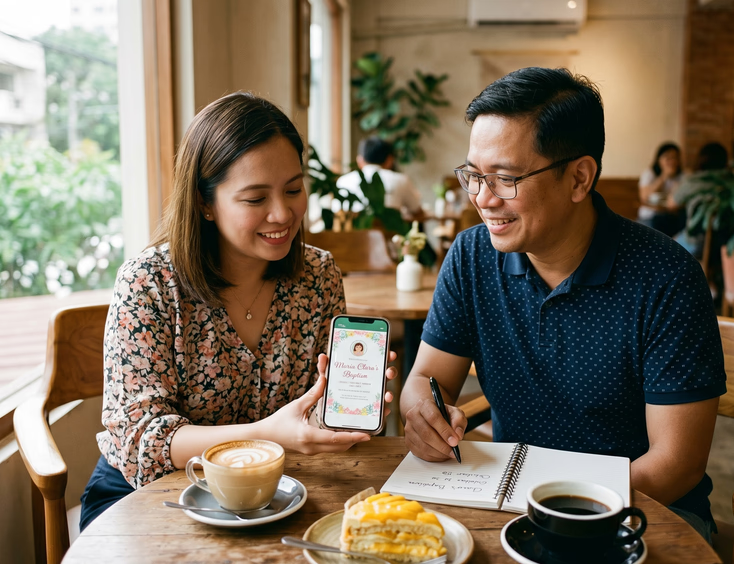
If a parent or another godparent asks how much you plan to give, you can answer in ranges without committing to a specific peso amount. A simple "I'll prepare something within the usual range" works for most casual conversations.
If you are a parent and a godparent asks for guidance, give them a clear range based on the godparent count and the family's norms. Most godparents prefer guidance over guessing. A simple "Most of our godparents give around two to three thousand, but anything within your comfort is appreciated" handles the question without pressure.
For the full guide on choosing godparents and aligning expectations, read how to choose ninong and ninang: a Filipino parent's guide.
The Real Meaning of the Gift
Pakimkim is small compared to the long-term role of a godparent. The cash in the envelope on the day of the baptism is not what defines the relationship. The decades that follow do.
Give what you can. Hand it over quietly. Then show up for the birthdays, the graduations, and the quiet moments your godchild will remember long after the peso bills are spent.
For the wider view of how pakimkim and the godparent role fit into Filipino baptism life, read the complete Filipino baptism guide: everything parents need to know for a meaningful celebration.
The amount matters less than your presence. The envelope is the start, not the substance.
Still Searching for a Right Match?
Find Your Perfect Wedding Supplier Today!
Discover trusted wedding suppliers across the Philippines in our complete directory. Compare services and connect with the ones that fit your dream celebration.
Browse Wedding SuppliersFeatured Blog Posts




Filipino Wedding Entourage - Roles, Order of March, and Modern Etiquette
6 mins readCivil Weddings in the Philippines - Requirements, Costs, and Step-by-Step Process
9 mins readCivil Wedding Requirements in the Philippines - Complete Checklist
6 mins readCost of Wedding in the Philippines - 5 Essential Things You Need to Know
7 mins readPrincipal Sponsors (Ninong/Ninang) - How Many, How to Ask, What They Really Do
4 mins readVeil, Cord, Candle & Coins - Roles, Options, and When They Happen
4 mins readEntourage for a Traditional Pinoy Wedding - Complete Roles and Guide
6 mins readComplete List of Civil Wedding Requirements in the Philippines
8 mins readHow to Choose Wedding Ninongs and Ninangs - Ask Yourself These 3 Important Questions
5 mins read