


Catholic Baptism Requirements in the Philippines: Documents, Fees, and Church Policies
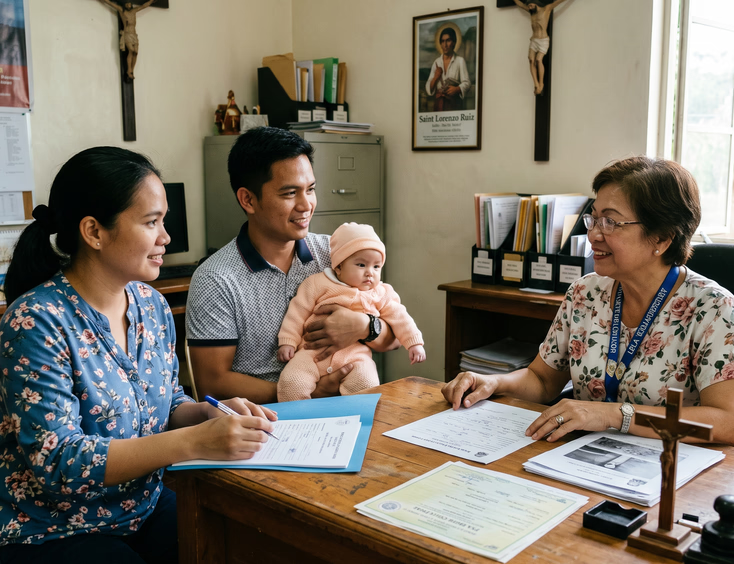
You called the parish office to ask about your baby's baptism and the secretary rattled off a list of documents, a seminar requirement, a donation amount, and three different schedule options before you could write anything down. You hung up more confused than when you called.
Catholic baptism in the Philippines follows a clear structure, but every parish handles the details differently. This guide covers what most parishes require so you walk into that office prepared.
What the Catholic Church Asks of You
Baptism is a sacrament. The Church treats it as the formal welcome of your child into the Catholic faith. That framing matters because it shapes every requirement.
The parish wants to confirm three things before scheduling your baby's baptism. Your child qualifies for the sacrament. The parents understand their role in raising the child Catholic. The chosen godparents meet the canonical requirements.
Most parishes handle this through a short interview, a pre-baptismal seminar, and a document check. Nothing is meant to be a hurdle. Each step protects the integrity of the sacrament and the spiritual responsibility tied to it.
The Core Document Checklist
Most parishes in the Philippines ask for the same core set of documents. Some add their own requirements depending on diocese policy and local custom.
The baby's birth certificate. A PSA-issued copy works for most parishes. Some accept the hospital-issued certificate of live birth if the PSA copy hasn't arrived yet. Call to confirm.
The parents' marriage certificate. Required if the parents are Catholic and married in the Church. Civil marriage certificates may be accepted but trigger additional questions. If the parents are not married, the parish proceeds with the baptism but may ask for a short pastoral conversation first.
The godparents' confirmation certificates. The Catholic Church requires godparents to be baptized, confirmed, and practicing Catholics. Most parishes ask for a photocopy of each godparent's confirmation certificate. Some accept a sworn certification from the godparent's home parish.
A pre-baptismal seminar attendance slip. Issued after both parents complete the parish's required seminar. Some parishes accept seminar slips from other dioceses. Some require the seminar to be done at the same parish where the baptism will happen.
A filled-out baptismal application form. Available at the parish office. Includes the baby's full name, the parents' details, the godparents' names, and the requested date.
Photocopies of valid IDs. Most parishes ask for ID copies of both parents.
If your baby was born outside the Philippines, bring a translated copy of the foreign birth certificate. If a godparent lives abroad, ask if a proxy is allowed and what additional documentation the parish needs.
For the full planning sequence around these documents, read how to plan a baptism in the Philippines: a step by step checklist for first time parents.
Who Can Be a Godparent
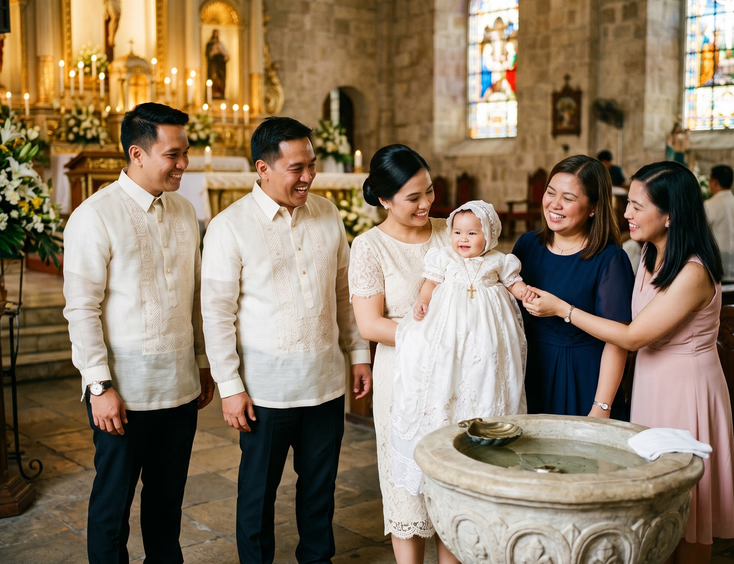
The Catholic Church sets clear conditions for godparents. The parish enforces them, not the family.
A godparent must be at least sixteen years old. Some parishes set the minimum at eighteen. A godparent must be a baptized and confirmed Catholic. A godparent must lead a life consistent with the Catholic faith. A godparent cannot be the child's biological mother or father. A godparent who has been married must be married in the Catholic Church.
The Code of Canon Law requires only one godfather and one godmother. Filipino tradition stretches this to anywhere from four to twenty. Some parishes accept the larger numbers and list the extras as Christian witnesses rather than canonical godparents. Some parishes cap the number outright. Confirm with your parish before sending invitations.
A non-Catholic Christian can serve only as a Christian witness, not as a canonical godparent. They must be alongside at least one valid Catholic godfather or godmother.
For help choosing godparents, read how to choose ninong and ninang: a Filipino parent's guide. For a full briefing to send your selected godparents, read ninong and ninang duties: responsibilities beyond the baptism day.
The Pre-Baptismal Seminar
The seminar runs anywhere from one hour to half a day, depending on the parish. Most last about two hours.
A parish priest, deacon, or lay catechist leads the session. Topics usually include the meaning of baptism as a sacrament, the responsibilities of Catholic parents in raising a child in the faith, the role of godparents, and the parish's specific baptismal liturgy.
Most parishes require both parents to attend. Some allow one parent if the other is overseas or working. Some require godparents to attend as well, especially in stricter parishes. A handful of parishes now offer online seminars, though most still hold them in person.
You receive a seminar slip at the end. Keep it. The parish office asks for it during your final document submission.
Book the seminar at least three weeks before your baptism date. Popular parishes hold seminars only on specific Saturdays each month.
Parish Fees and Church Donations
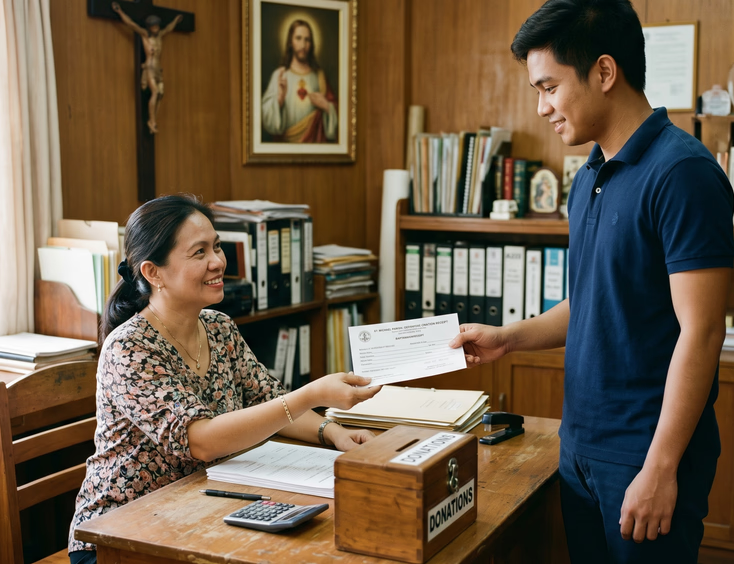
The Catholic Church does not charge for the sacrament of baptism. Parishes ask for a donation that covers administrative costs, the use of the church, the candle, the chrism oil, the certificate, and the priest's honorarium.
Donation amounts vary by parish.
Small provincial parishes often request three hundred to one thousand pesos. Mid-size parishes in cities typically ask for one thousand five hundred to four thousand pesos. Larger Metro Manila parishes like Manila Cathedral, EDSA Shrine, and Sto. Domingo Church usually set rates between three thousand five hundred and ten thousand pesos. Some private parishes and chapels charge more, especially for solo baptisms outside the regular batch schedule.
A batch or group baptism costs less and runs at scheduled times. A private or solo baptism costs more but gives your family a dedicated slot. Some parishes only offer batch baptisms on weekends and require booking the solo option weeks ahead.
For a full budget view that includes the church donation, read how much does a baptism cost in the Philippines: a realistic budget breakdown.
If you want lower-cost reception options to balance a higher church donation, read affordable baptism venues in the Philippines for budget conscious families.
Church Policies That Catch Parents Off Guard
A few parish rules surprise first-time parents.
Some parishes require the baptism to happen in the parents' home parish, meaning the parish covering the address where you live. To baptize at a different parish, you must secure a permit from your home parish. This usually involves a short letter and a small administrative fee.
Some parishes restrict baptism dates during Lent and Holy Week. A few do not perform baptisms during Advent without special permission.
Some parishes require both parents to be Catholic. If only one parent is Catholic, the parish may ask for a written commitment to raise the child Catholic.
Some parishes do not allow personal photographers or videographers inside the sanctuary during the ceremony. Others restrict where vendors can stand. Confirm with the parish before booking your coverage team.
For a guide on what to ask your photo and video team before they show up, read baptism photographer and videographer guide: what to book and what to ask.
Some parishes require the baby to wear a white garment during the ceremony. The white cloth symbolizes the new life the child enters at baptism. If you are unsure what counts, read baptism outfit ideas for baby boys and baby girls in the Philippines.
The Baptismal Interview
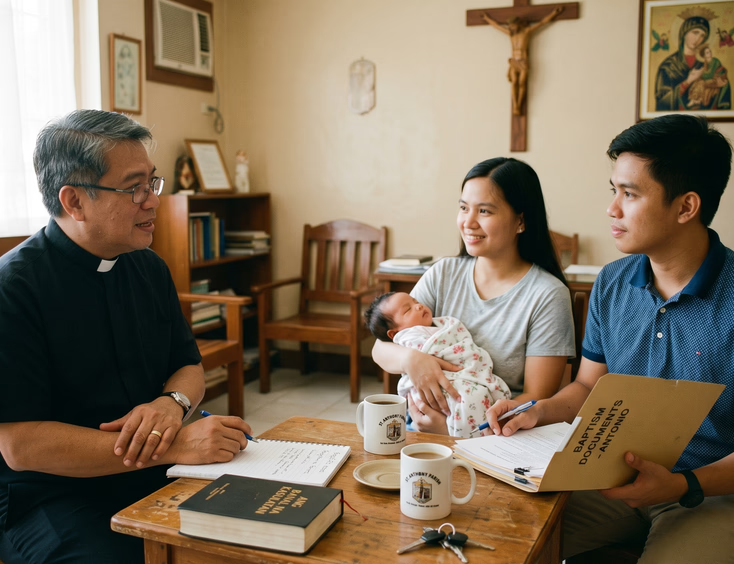
A few parishes still require a short baptismal interview before the date. A priest or lay coordinator sits with the parents to confirm the family's intent, review the documents, and answer any pastoral questions.
The interview takes fifteen to thirty minutes. It is not a test. Most parishes use it as a final check before the baptism date is officially confirmed.
Bring all your documents in one folder. Bring a working pen.
After the Baptism
The parish issues a baptismal certificate after the ceremony. Some hand it over on the day. Most ask you to return after one to two weeks.
You need this certificate for several future milestones. School enrollment in Catholic institutions. First Communion. Confirmation. Marriage in the Catholic Church. Religious documentation when traveling or migrating.
Store it with your child's birth certificate and other vital records. Make digital copies.
When Special Cases Apply
A few situations require additional steps.
Adopted children. The parish may ask for adoption papers and proceed with a regular baptism.
Children born outside the Philippines. Submit the foreign birth certificate, ideally translated to English if it isn't already.
Children of unmarried parents. The parish proceeds with the baptism. A pastoral conversation may be requested.
Children of interfaith couples. The non-Catholic parent signs a commitment to allow the Catholic upbringing of the child.
Older children. If the child is past the age of reason, usually seven, the parish requires catechesis before the baptism. This may involve weekly classes for several months.
In all cases, talk to the parish directly. Filipino parishes are pastoral about edge cases. They want to help your family complete the sacrament, not block it.
Walking Into the Parish Office Prepared
Bring a folder with your documents. Bring a list of questions. Ask about the seminar schedule, the donation, the godparent rules, the proxy policy, the photo and video rules, and the date options.
Take notes. Confirm everything in writing if possible. Parish staff often handle dozens of baptism inquiries each week. A clear paper trail protects you from miscommunication.
For the wider planning view, read the complete Filipino baptism guide: everything parents need to know for a meaningful celebration. For the cultural context behind every requirement, read Filipino baptism traditions every parent should know.
You handle the paperwork. The Church handles the sacrament. Your child gets welcomed into something bigger than the day itself.
Still Searching for a Right Match?
Find Your Perfect Wedding Supplier Today!
Discover trusted wedding suppliers across the Philippines in our complete directory. Compare services and connect with the ones that fit your dream celebration.
Browse Wedding SuppliersFeatured Blog Posts

Filipino Wedding Entourage - Roles, Order of March, and Modern Etiquette
6 mins readCivil Weddings in the Philippines - Requirements, Costs, and Step-by-Step Process
9 mins readCivil Wedding Requirements in the Philippines - Complete Checklist
6 mins readCost of Wedding in the Philippines - 5 Essential Things You Need to Know
7 mins readPrincipal Sponsors (Ninong/Ninang) - How Many, How to Ask, What They Really Do
4 mins readVeil, Cord, Candle & Coins - Roles, Options, and When They Happen
4 mins readEntourage for a Traditional Pinoy Wedding - Complete Roles and Guide
6 mins readComplete List of Civil Wedding Requirements in the Philippines
8 mins readHow to Choose Wedding Ninongs and Ninangs - Ask Yourself These 3 Important Questions
5 mins read