


How to Choose Ninong and Ninang: A Filipino Parent's Guide

You sat down with your partner to write the godparent list and within ten minutes the argument started. His tita expects to be ninang. Your best friend should be on the list. His boss casually mentioned wanting to sponsor. Your sister already assumed she was in.
Choosing ninong and ninang in the Philippines is part faith, part family politics, part long-term planning for your child. This guide helps you build a list you can defend, present, and live with.
What Godparents Are Actually For
The Catholic Church gives godparents a specific role. They assist the parents in raising the child in the Catholic faith. They serve as spiritual sponsors who guide the child's faith journey through life.
Filipino tradition stretches the role into something bigger. Ninongs and ninangs become extended family. They show up at birthdays, graduations, and weddings. They give pakimkim during the baptism and again on later milestones. They are the people who buy your child their first toy at three and their first watch at eighteen.
Both roles matter. The Catholic role anchors the choice. The Filipino role colors how it plays out in daily life.
For a full briefing on what godparents commit to, send your chosen ninongs and ninangs to ninong and ninang duties: responsibilities beyond the baptism day.
The Catholic Requirements for a Godparent
The Catholic Church sets clear conditions. The parish enforces them.
A godparent must be at least sixteen years old. Some parishes set the minimum at eighteen.
A godparent must be a baptized and confirmed Catholic. The parish asks for a copy of the confirmation certificate.
A godparent must lead a life consistent with the Catholic faith. This is the most discretionary point and is usually accepted at the parents' word.
A godparent cannot be the biological mother or father.
A godparent who has been married must be married in the Catholic Church. A godparent in a civil-only marriage often does not qualify under canonical rules.
A non-Catholic Christian can serve only as a Christian witness, not as a canonical godparent. They must stand alongside at least one valid Catholic godfather or godmother.
For the full requirements rundown, read Catholic baptism requirements in the Philippines: documents, fees, and church policies.
How Many Godparents Should You Pick
Canon law requires only one godfather and one godmother. Filipino practice often stretches this to anywhere between four and twenty.
Some parishes accept the larger numbers and list the extras as Christian witnesses. Some parishes cap the count strictly at one godfather and one godmother. Most fall somewhere in between, accepting four to six pairs without question.
Confirm your parish's limit before drawing up the list. A surprise cap on the day of the baptism creates a difficult family conversation.
A practical middle ground for most Filipino families sits between three and six pairs. Small enough to keep the ceremony focused. Big enough to honor close family and friends.

The Five Questions That Sort Your List
Most parents skip the criteria step and jump straight into name-collecting. Reverse the order. Build the filter first, then run names through it.
Ask these five questions of every potential godparent.
One. Are they a practicing Catholic? Not nominally Catholic, but someone who participates in the faith in a way you respect. The Catholic Church puts this first. So should you.
Two. Will they actually show up? A godparent who lives across the world and visits once every decade brings limited spiritual presence. Distance does not disqualify, but absence does. Pick people who will remember your child's birthday without a reminder.
Three. Do you trust them with your child? If something happened to you and your partner, would you trust this person to step in as a spiritual or emotional anchor for your child? The legal guardianship is a separate matter. The spiritual trust is not.
Four. Do they have the kind of life you want your child exposed to? Godparents become role models. The choice is less about wealth or career and more about character and values.
Five. Would they have asked you in return? If the answer is no, ask yourself why you are asking them.
Run every name on your list through these five questions. Cut anyone who fails more than one.
The Pity-Pick Problem
The hardest part of the list is the pressure to add people you do not actually want.
Your tita who never visits. Your husband's boss. The cousin you barely speak to. The friend who hinted hard at sponsoring. Each one comes with a soft expectation and a reason to feel guilty.
Resist the pity-pick. A godparent role is not a thank-you note. It is not a goodwill gift. It is a lifelong spiritual sponsorship of your child.
If you cannot defend a name based on the five questions above, leave it off. People recover from not being asked. Children remember the godparents who showed up.
Balancing the Two Sides of the Family
Most Filipino parents try to balance the list between the mother's and father's sides. A few unwritten rules help avoid drama.
Match the count. If three sponsors come from one side, three come from the other.
Honor the closest relationships first. Siblings before cousins. Closest cousins before distant ones. Closest friends before social connections.
Avoid one-sided power moves. If one set of in-laws picks all the close relatives and the other side gets distant ones, the imbalance will be noticed.
Talk it through with your partner before listing anyone. Lock the list before showing it to either set of parents.
Including Friends and Non-Relatives
Many Filipino families include close friends among the godparents. The tradition is well-accepted, and the Church does not differentiate between family and friend godparents.
A few practical points:
A close friend often makes a stronger godparent than a distant relative. A friend who has known you for fifteen years and lives nearby will likely be more present than a cousin who lives abroad.
Pick friends who have a relationship with both you and your partner. The godparent role connects the entire family, not just one parent.
Avoid picking friends as a status play. A high-earning godparent does not bring more spiritual value to your child.

When a Godparent Lives Abroad
OFW godparents are part of every Filipino family conversation. Many Filipinos work overseas and cannot fly home for a baptism.
A few options exist.
Schedule the baptism around the godparent's home leave. Many families plan their date around an OFW sponsor's vacation.
Use a proxy. Some parishes allow a family member to stand in for an absent godparent during the ceremony. The absent godparent still counts as canonical. Confirm proxy rules with your parish before counting on this.
Include them as a remote sponsor. Some families list an overseas godparent and skip the proxy entirely. The godparent participates in the child's life from a distance through messages, video calls, and visits during home leaves.
Pick the option your parish accepts and your family supports.
When to Stop Adding Names
A Filipino baptism guest list grows by gravity. Once you start, every conversation adds two more names.
Cap the list early. Set a number with your partner. Stick to it.
A useful guardrail: a clean baptism ceremony rarely needs more than six pairs of sponsors. More than that and the church procession starts looking like a wedding entourage.
If the pressure to add more names keeps building, blame the parish cap. Most families accept a parish rule more easily than a parental decision.
How to Ask Someone to Be a Godparent
The ask itself matters. Filipino tradition does not require a formal invitation, but the ask should still feel intentional.
A few approaches work.
A personal call or visit. Best for closest family and friends. Sit with them. Explain why you chose them. Give them time to accept.
A handwritten note or a small gift. Some parents include a small token, like a candle or a personalized item, when inviting godparents.
A digital message. Acceptable for friends and relatives you communicate with mostly online. Keep it personal. Skip the bulk-send group chat.
In every case, give the godparent room to decline. The role carries weight. Some may not feel ready.
If a chosen godparent declines, take it gracefully. They likely have a reason. Move on to your next choice without grudge.
Briefing Your Godparents
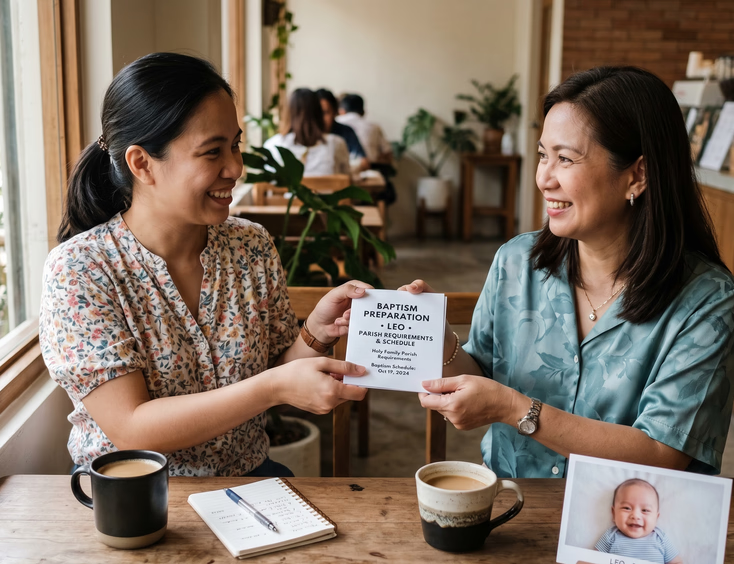
Once a godparent says yes, brief them.
Send them the baptism date, the church, the reception details, and the dress code. Send them the parish's document requirements. Most parishes ask for a copy of each godparent's confirmation certificate. Some require the godparent's attendance at the pre-baptismal seminar.
Brief them on pakimkim expectations only if they ask. Many first-time godparents have no idea what is customary. For a clear breakdown, point them to pakimkim guide: how much should godparents give at a baptism.
Send them the full duties brief so they know what they signed up for: ninong and ninang duties: responsibilities beyond the baptism day.
The Long View
The godparent choice will outlive the baptism day. The people you pick now will be in your child's life for graduations, weddings, and milestones you cannot yet imagine.
Pick people who will still be in your child's life in twenty years. Pick people who will pick up the phone when your child calls. Pick people who will show up.
For the wider planning view, read how to plan a baptism in the Philippines: a step by step checklist for first time parents.
For the full picture of where godparents fit in Filipino family life, read the complete Filipino baptism guide: everything parents need to know for a meaningful celebration.
Make the list. Cut the names that do not belong. Send the asks. The right godparents will say yes, and your child will gain a circle of people who chose to walk with them.
Still Searching for a Right Match?
Find Your Perfect Wedding Supplier Today!
Discover trusted wedding suppliers across the Philippines in our complete directory. Compare services and connect with the ones that fit your dream celebration.
Browse Wedding SuppliersFeatured Blog Posts




Filipino Wedding Entourage - Roles, Order of March, and Modern Etiquette
6 mins readCivil Weddings in the Philippines - Requirements, Costs, and Step-by-Step Process
9 mins readCivil Wedding Requirements in the Philippines - Complete Checklist
6 mins readCost of Wedding in the Philippines - 5 Essential Things You Need to Know
7 mins readPrincipal Sponsors (Ninong/Ninang) - How Many, How to Ask, What They Really Do
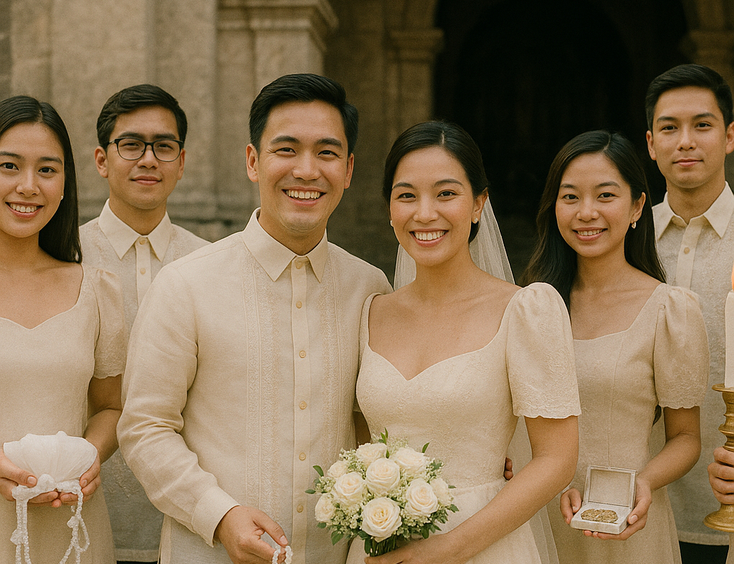
4 mins readVeil, Cord, Candle & Coins - Roles, Options, and When They Happen
4 mins readEntourage for a Traditional Pinoy Wedding - Complete Roles and Guide
6 mins readComplete List of Civil Wedding Requirements in the Philippines
8 mins readHow to Choose Wedding Ninongs and Ninangs - Ask Yourself These 3 Important Questions
5 mins read