


Can You Renew Vows in the Catholic Church in the Philippines? A Plain English Guide
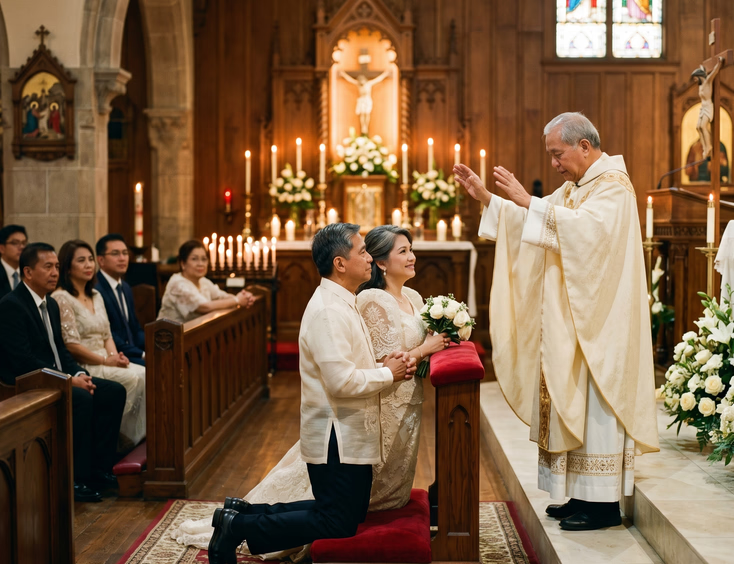
Yes, you can renew your vows in a Catholic Church in the Philippines. The longer answer is that the process depends on your parish, your priest, and whether your original marriage was actually celebrated in the Catholic Church.
Most Filipino couples assume the parish will say yes automatically because vow renewals look like weddings and the Church does weddings. The reality involves more nuance. Some parishes welcome renewals warmly. Others restrict them to specific schedules. A few decline entirely, depending on the priest's reading of canon law and pastoral judgment.
This guide walks you through what to expect when you approach your parish, what the Catholic Church considers a vow renewal to be, and how to plan around the rules without losing the meaning of the ceremony.
What the Catholic Church Considers a Vow Renewal
A Catholic vow renewal is a blessing of an existing sacramental marriage. The priest blesses your union. He does not remarry you because, in the Church's understanding, you are already married and the sacrament of matrimony cannot be repeated for the same couple.
This distinction matters. The ceremony is not a re-do of the wedding. It is a separate liturgical act called a blessing of married couples or a renewal of marriage commitment, depending on the parish's terminology.
The Church treats vow renewals as pastoral acts rather than sacramental ones. Sacraments include baptism, confirmation, communion, marriage, holy orders, anointing of the sick, and reconciliation. A vow renewal sits outside this list. It uses sacramental language and often happens within a Mass, but the act itself is a blessing rather than a sacrament.
If your original marriage was civil rather than Catholic, what you actually need is convalidation, which is a sacrament. For the difference between the two, see renewal of vows vs. convalidation in the Philippines.
When the Parish Will Generally Say Yes
Most Filipino parishes will agree to a vow renewal when the following conditions are met:
- Your original wedding took place in a Catholic Church with a Catholic priest officiating
- You can provide a copy of your Catholic marriage certificate
- The date you want fits the parish calendar
- You are willing to offer a donation, which varies by parish
- You agree to any pre-renewal preparation the parish requires
These are the standard conditions. Most parishes accommodate them without difficulty. The priest may ask a few questions about your reason for renewing, especially if you are not regular parishioners, but the conversation is usually pastoral rather than investigative.
Milestone anniversaries make the conversation easier. A 25th or 50th anniversary renewal request rarely gets pushback. The Church considers these celebrations meaningful, and parishes often have established processes for them. For couples planning a silver anniversary specifically, see how to plan a silver wedding anniversary vow renewal in the Philippines. For golden anniversaries, see golden wedding anniversary vow renewal ideas for Filipino couples.
When the Parish Might Hesitate
A few situations make parishes more cautious:
If your original marriage was civil and you want a Catholic ceremony now, the parish will redirect you to convalidation. They will not perform a vow renewal because there is no sacramental marriage to renew.
If you and your spouse are not active in the parish, some priests ask for proof of your current Church standing. This might mean a certificate of good standing from your home parish, especially if you want the renewal at a different church than the one you regularly attend.
If you want the renewal during a major liturgical season like Lent or Holy Week, the parish will likely ask you to move the date. The Church reserves these seasons for specific observances, and personal celebrations get scheduled around them.
If you want unusual customizations to the liturgy, such as non-Catholic readings, secular music during the ceremony, or significant departures from the standard order, the priest may decline some requests. Catholic liturgy follows specific rules, and renewals do not get more flexibility than weddings.
What Documents the Parish Will Ask For
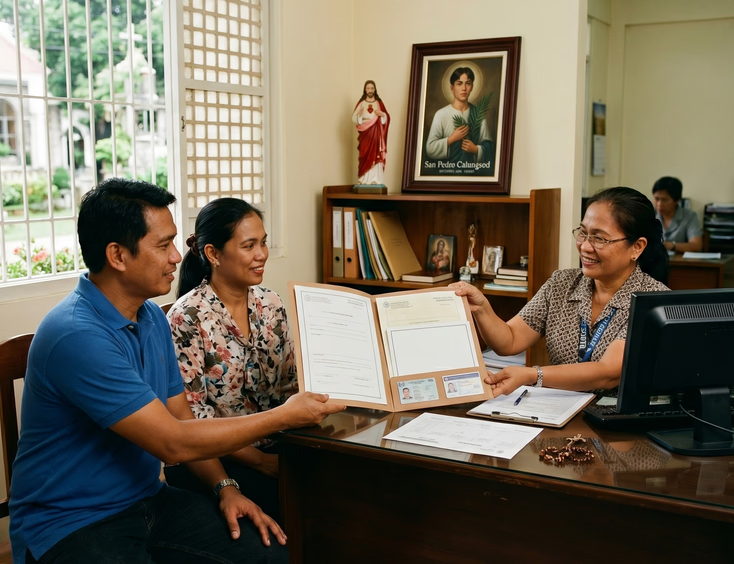
The document requirements for a Catholic vow renewal are minimal compared to a first wedding or a convalidation. Most parishes ask for:
- A copy of your original Catholic marriage certificate
- A valid ID for both spouses
- Sometimes a baptismal certificate, especially if you are not active parishioners
- A filled-out parish form requesting the renewal
You will not need a marriage license. You will not need a CENOMAR. You will not need a pre-cana certificate. None of the legal or canonical requirements of a first wedding apply because no new marriage is being created.
The parish may also ask you to attend a short recollection or counseling session before the renewal, especially in larger parishes that handle multiple renewals per year. This session is usually one or two hours and focuses on the meaning of the renewal rather than the logistics of the ceremony.
For the broader legal context of what a vow renewal does and does not do, see is a vow renewal legally binding in the Philippines.
Inside the Ceremony
A Catholic vow renewal usually takes one of two forms:
A renewal during a regular Mass, where the priest invites you to come forward at a specific point in the liturgy, blesses your marriage, and lets you exchange your renewed vows. This is the simpler format and works well for couples who want a meaningful but understated ceremony.
A full renewal Mass dedicated to your celebration, with readings, music, and family participation throughout. This format resembles a wedding Mass in structure and is what most milestone anniversary renewals use.
The renewal portion itself typically includes:
- A welcome from the priest acknowledging the couple and the occasion
- Readings chosen by the couple, often the same ones from their original wedding
- A homily addressing marriage, faithfulness, and the meaning of the renewal
- The renewal of vows, where the couple repeats or speaks new promises
- A blessing of the rings, if the couple chooses to bless them again
- The Lord's Prayer, sometimes prayed with the couple's hands joined
- A final blessing of the couple by the priest
Many Filipino couples also incorporate the cord, veil, and coins, which technically belong to the wedding ceremony but commonly appear in renewals as well. The guide on how to incorporate the cord, veil, and coins into your vow renewal covers how to adapt these traditions for a renewal.
For a complete sample program, see the Catholic vow renewal ceremony script for Filipino couples and the broader wedding vow renewal order of ceremony sample Filipino program.
Music, Readings, and Liturgical Limits
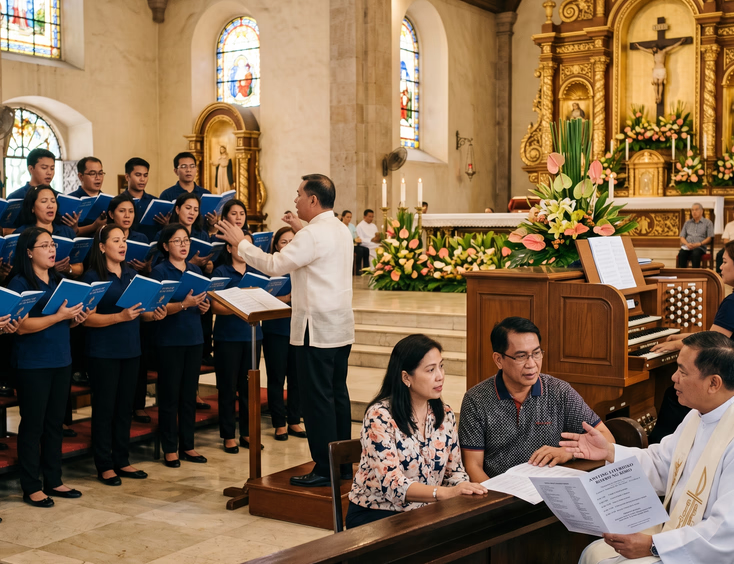
Catholic liturgy has rules about what music and readings can be used. These rules apply to vow renewals just as they apply to weddings.
For readings, most parishes require Scripture from the Old and New Testaments. The couple usually chooses from a list of approved wedding readings. Popular choices include:
- 1 Corinthians 13 on the nature of love
- Tobit 8 on the marriage of Tobias and Sarah
- John 2 on the wedding at Cana
- Ephesians 5 on mutual submission in marriage
Secular readings, poetry, song lyrics, and personal letters are generally not allowed during the liturgy itself. Some couples include these at the reception instead.
For music, the parish will usually require sacred music for the ceremony itself. Hymns, Mass parts, and traditional Catholic wedding music fit easily. Popular love songs, even religious-themed pop music, may be restricted depending on the parish's policies.
If you want music that the parish will not allow during the ceremony, save it for the reception. The liturgical restrictions end when the ceremony ends. For ideas on receptions that follow the renewal, see catering, cake, and salu-salo ideas for a Filipino vow renewal.
Who Can Stand With You
The Catholic Church does not require ninongs and ninangs for a vow renewal because the renewal is not a sacrament that needs witnesses in the canonical sense. Couples can choose to involve sponsors as a cultural and symbolic gesture, but no Church rule demands it.
Many Filipino couples invite their original ninongs and ninangs if they are still alive and willing. Others invite new sponsors who have supported the marriage through the years. Some couples skip sponsors entirely and have their grown children stand in the symbolic roles.
For the broader question of whether to include sponsors at all, see do you need ninongs and ninangs for a vow renewal: sponsor etiquette explained. For involving children in ceremonial roles, see involving your children and family in your vow renewal ceremony.
What the Parish Will Charge
Parish fees for vow renewals vary widely. Most Filipino parishes charge a donation that ranges from ₱3,000 to ₱20,000, depending on:
- The size of the parish
- Whether the renewal is during a regular Mass or a dedicated Mass
- The use of the church facilities, including air conditioning, microphone, and lighting
- Choir, organist, or other music ministry support
- Cleaning and other operational costs
Larger and more prominent parishes in Metro Manila, Cebu, and other major cities tend to charge on the higher end. Smaller provincial parishes often charge less or accept whatever the couple can offer.
The donation usually covers the parish's costs and contributes to the parish's general fund. It does not include the priest's stipend, which is typically given separately as a personal thank-you. The priest's stipend ranges from ₱1,000 to ₱5,000, depending on the relationship and the scale of the ceremony.
For the broader budget picture, see how much does a vow renewal cost in the Philippines: a realistic budget breakdown.
When You Should Approach the Parish
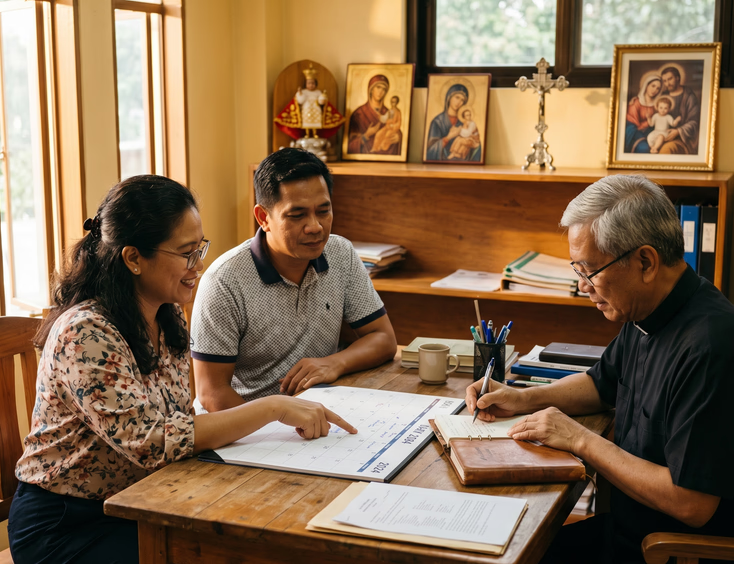
For a milestone anniversary renewal, approach the parish at least six months before your target date. Major parishes book quickly, especially during the popular wedding months of December, January, February, May, and June.
For a smaller renewal during a regular Sunday Mass, three months notice is usually enough. The priest just needs to know in advance so he can include you in the announcements and prepare for the renewal moment within the Mass.
The first conversation should happen with the parish secretary or the priest in charge of weddings and renewals. Bring your marriage certificate, a tentative date, and a sense of what you want the ceremony to look like. The parish will tell you what they can accommodate and what adjustments you need to make.
Avoid showing up the week of your intended date expecting a renewal to happen. Even simple parish renewals require scheduling, coordination, and sometimes a brief preparation session.
What to Do If Your Parish Says No
A few situations can lead to a parish declining your renewal request:
If your original marriage was not Catholic, the parish will redirect you to convalidation. This is not a refusal of the renewal but a correction of the request. You will need to go through the convalidation process before you can have any Catholic ceremony involving your marriage.
If the parish is fully booked for your preferred date, you have two options. Move your date, or approach a different parish where you have a connection. Many Filipino couples renew at a parish other than their home parish, especially when family ties or sentimental reasons pull them elsewhere.
If a specific priest declines for personal or pastoral reasons, you can approach the parish priest or pastor of the parish to discuss alternatives. Most dioceses have multiple priests, and one priest's hesitation does not necessarily reflect the parish's overall position.
If you receive a clear refusal across multiple priests and parishes, it usually means there is a canonical issue with your marriage that needs to be addressed before any Catholic renewal can happen. This is rare but does occur. In these cases, the diocesan marriage tribunal can clarify the situation.
Why the Catholic Renewal Matters for Many Filipino Couples
For Catholic Filipinos, the parish blessing carries weight that a non-religious ceremony does not. The priest stands in for the Church and, through the Church, for the broader community of faith. The blessing acknowledges that the marriage is not just a private relationship but a participation in something the Catholic tradition has held sacred for centuries.
This dimension matters more to some couples than others. For couples who attend Mass weekly, baptized their children in the Church, and consider their faith central to their marriage, a Catholic renewal is the natural and expected form of the ceremony. For couples whose Catholic practice is more cultural than active, the renewal may be more about family tradition than personal faith.
Both reasons are valid in the Church's pastoral practice. Priests rarely interrogate couples about the depth of their faith before agreeing to a renewal. The willingness to come forward and ask for the blessing is usually treated as sufficient.
For couples whose Catholic faith is not central to their renewal and who prefer a ceremony without religious framing, see non-religious vow renewal ceremony ideas in the Philippines and hiring an officiant for a non-religious vow renewal in the Philippines.
Putting It Together
A Catholic vow renewal in the Philippines is accessible to most couples whose original marriage was sacramental. The process is simpler than a first wedding because no new sacrament is being created. The parish needs minimal documentation, the planning timeline is shorter, and the cost is lower than a typical wedding.
What the renewal requires is a willingness to work within the Church's framework. The liturgy follows established forms. The music and readings stay within sacred boundaries. The priest leads the ceremony, even though the couple and their family carry most of the symbolic weight.
For couples comfortable with these conditions, the Catholic renewal offers something a backyard ceremony or a beach renewal cannot: the formal recognition of a marriage by the Church that originally witnessed the sacrament. The same priest, the same parish, or at least the same tradition stands again with the couple, years after the original day, to affirm that the marriage has lasted and continues.
For the bigger picture of how a Catholic renewal fits into the broader landscape of Filipino vow renewals, start with the pillar guide on wedding vow renewals in the Philippines. For the next step in planning, the vow renewal planning checklist for Filipino couples covers the sequence.
The Church will bless your marriage. The blessing will not change the legal status of anything. The blessing will change how the marriage feels, for you, your spouse, and the people who witness it. For many Filipino couples, that change is the whole point.
Still Searching for a Right Match?
Find Your Perfect Wedding Supplier Today!
Discover trusted wedding suppliers across the Philippines in our complete directory. Compare services and connect with the ones that fit your dream celebration.
Browse Wedding SuppliersFeatured Blog Posts

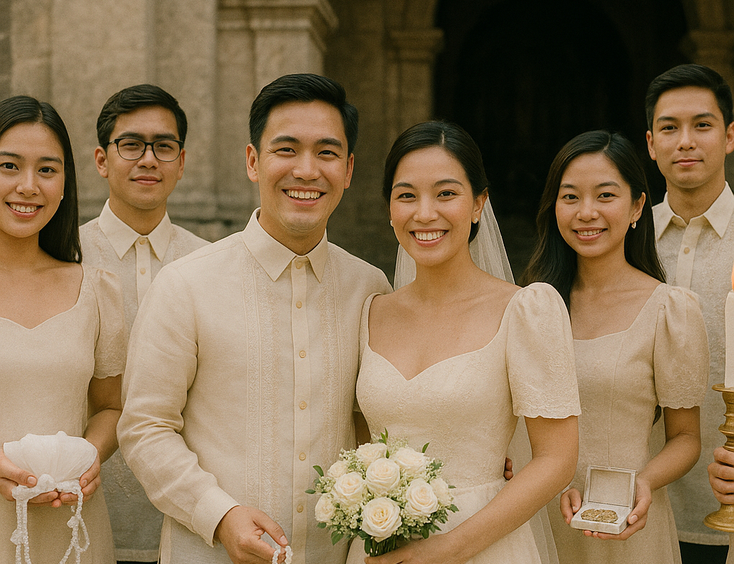

Filipino Wedding Entourage - Roles, Order of March, and Modern Etiquette
6 mins readCivil Weddings in the Philippines - Requirements, Costs, and Step-by-Step Process
9 mins readCivil Wedding Requirements in the Philippines - Complete Checklist
6 mins readCost of Wedding in the Philippines - 5 Essential Things You Need to Know
7 mins readPrincipal Sponsors (Ninong/Ninang) - How Many, How to Ask, What They Really Do
4 mins readVeil, Cord, Candle & Coins - Roles, Options, and When They Happen
4 mins readEntourage for a Traditional Pinoy Wedding - Complete Roles and Guide
6 mins readComplete List of Civil Wedding Requirements in the Philippines
8 mins readHow to Choose Wedding Ninongs and Ninangs - Ask Yourself These 3 Important Questions
5 mins read