


Catholic Vow Renewal Ceremony Script for Filipino Couples
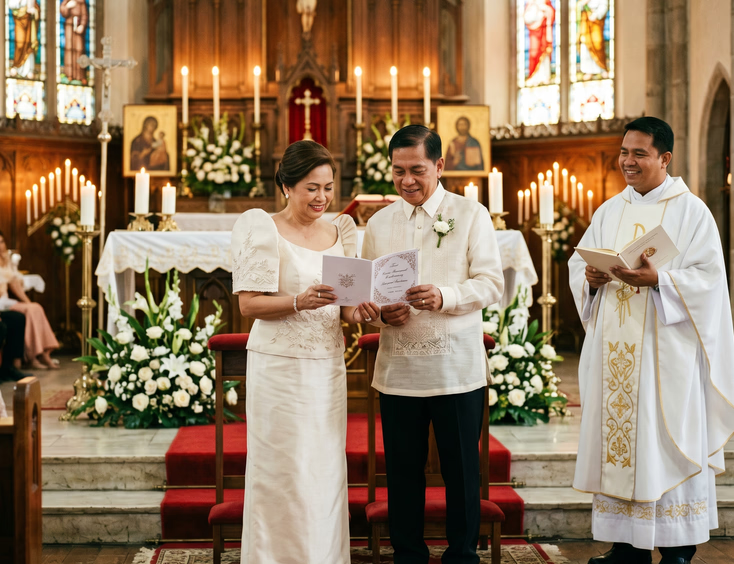
Filipino couples planning a Catholic vow renewal often want a script to work from. The parish priest or officiant usually brings their own format, but couples who are scheduling the ceremony, briefing family sponsors, or holding the renewal outside a regular Mass benefit from having the language laid out ahead of time.
This guide provides sample script wording for a Catholic vow renewal ceremony, with notes on which sections come from the official rite, which sections you adapt, and how to coordinate with your priest.
Before You Use This Script
Catholic vow renewals follow a structure rooted in the Rite of Marriage but adapted for couples already married. The exact wording varies by parish and priest. Some priests follow the official renewal text from the Catholic Book of Blessings. Others compose their own based on familiar elements.
This script gives you working language to bring to your priest. Use it as a starting point for the conversation rather than a finished document. The priest holds final authority over the ceremony content, especially when the renewal happens within a Mass.
For background on what the Catholic Church actually permits and how vow renewals differ from the original sacrament, the plain English guide to renewing vows in the Catholic Church in the Philippines lays out the framework.
Opening Remarks from the Officiant
The priest or deacon opens the renewal portion of the ceremony. Sample wording:
"Dear brothers and sisters, we have gathered to give thanks to God for the gift of marriage and to witness as [Husband's Name] and [Wife's Name] renew the promises they made to each other on their wedding day, [number] years ago. Through the years, their love has been tested, strengthened, and deepened. Today, they stand before God and before us once again to recommit themselves to the bond they entered into on [original wedding date]."
Some Filipino couples ask the priest to mention specific milestones, family members who have passed, or children and grandchildren by name. Coordinate these additions with the priest at least two weeks ahead.
Scripture Reading
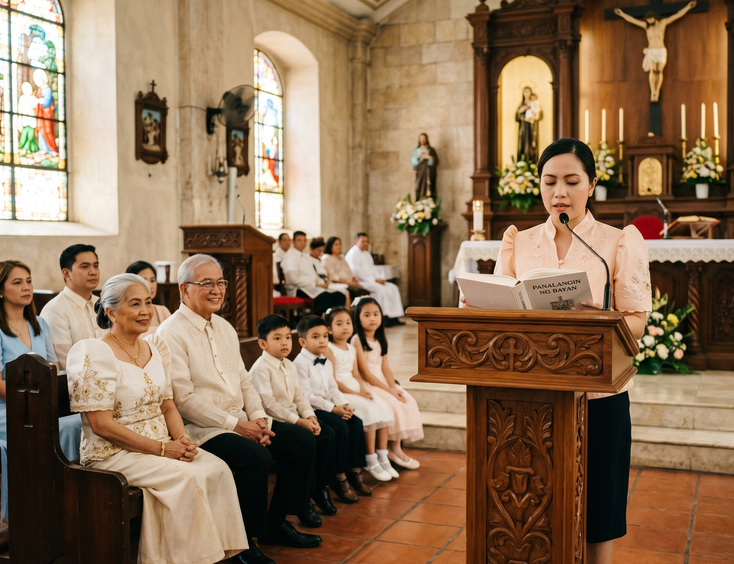
A family member typically reads one passage. Common choices for Filipino Catholic vow renewals:
1 Corinthians 13:1-13, the passage on love that suffers long and bears all things.
Ecclesiastes 4:9-12, on two being better than one.
Tobit 8:4-9, on Tobit and Sarah's prayer of marriage.
Mark 10:6-9, on what God has joined together.
The reader walks to the ambo or reading stand. Sample introduction:
"A reading from the First Letter of Saint Paul to the Corinthians."
After the reading:
"The Word of the Lord."
Guests respond: "Thanks be to God."
Homily by the Officiant
The priest delivers a short reflection. Couples often request the priest to address themes specific to their marriage, such as raising children, surviving illness, navigating distance during OFW seasons, or marking a particular anniversary milestone.
For couples who lived through years of separation due to overseas work, the renewal of vows for OFW couples covers how the OFW experience often weaves into the ceremony itself.
Brief the priest a week ahead with a short summary of the couple's story. A priest who knows the family well needs less briefing. A priest meeting the couple for the first time benefits from a written note covering the marriage year, the children's names, and any specific themes the couple wants mentioned.
Invitation to Renew Vows
After the homily, the priest invites the couple forward. Sample wording:
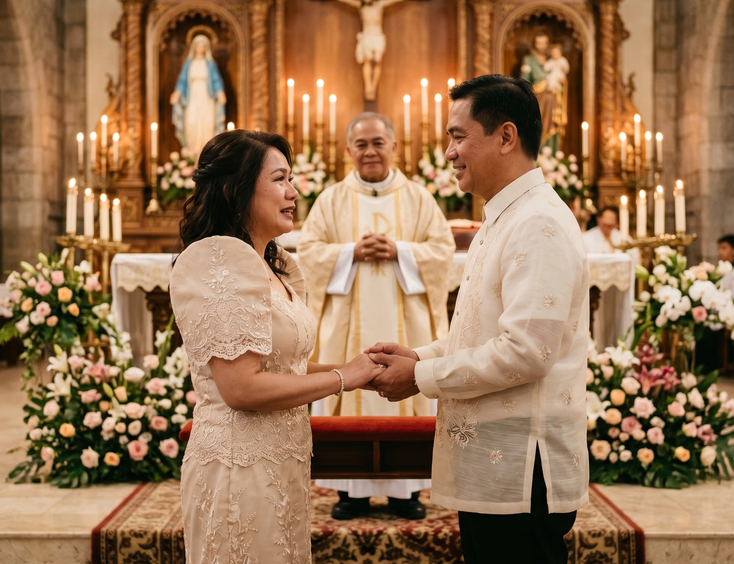
"[Husband's Name] and [Wife's Name], you stood before God [number] years ago and made promises to each other. Today, by the grace of God and surrounded by your family, you come before this altar to renew those promises. I invite you now to stand and face one another."
The couple stands and faces each other. The priest continues:
"My dear friends, you have come together in this church so that the Lord may seal and strengthen the love you have shared through the years. I ask you now to speak your renewed promises."
The Renewed Vows
Couples have two options at this point. They can use the traditional Catholic vow wording adapted for renewal, or they can speak personal vows they wrote themselves.
Traditional Renewal Vow Wording
The priest leads the husband first, then the wife. Each repeats after the priest, line by line:
For the husband:
"I, [Husband's Name], take you, [Wife's Name], to be my wife once again. I promise to remain faithful to you, to love and honor you, to comfort you in sickness and in health, to grow with you in joy and in sorrow, all the days of my life."
For the wife:
"I, [Wife's Name], take you, [Husband's Name], to be my husband once again. I promise to remain faithful to you, to love and honor you, to comfort you in sickness and in health, to grow with you in joy and in sorrow, all the days of my life."
Personal Vow Option
Couples who wrote their own vows speak them at this moment. The priest cues the husband first:
"[Husband's Name], please speak your renewed promise to your wife."
The husband reads or speaks his vow. The priest then cues the wife:
"[Wife's Name], please speak your renewed promise to your husband."
The wife reads or speaks her vow. For guidance on writing personal vows that fit a renewal context, the how to write wedding vow renewal vows that capture years of marriage covers the structure and content.
Blessing of the Rings
The couple removes their wedding rings. The priest blesses them:
"Lord, bless and consecrate these rings that have been worn for [number] years as a sign of [Husband's Name] and [Wife's Name]'s love and fidelity. May they continue to remind them of the promises they have renewed today. Through Christ our Lord."
Guests respond: "Amen."
The couple places the rings back on each other's fingers. The husband first, then the wife.
For couples who bought new rings or upgraded bands for the renewal, the priest blesses the new rings using the same wording.
Cord, Veil, and Coins
The cord, veil, and coins ceremony follows the ring blessing. Sample wording for each piece:
For the coins, the priest says:
"Lord, bless these coins, signs of [Husband's Name] and [Wife's Name]'s shared stewardship of all that God has entrusted to them. May they continue to provide for one another and for those in their care."
The groom pours the coins into the bride's hands. The bride returns them.
For the veil, the priest says:
"May this veil, draped over your shoulders, be a sign that you continue to live under God's protection and that you continue to shelter one another."
The veil sponsors drape the veil over the bride's head and the groom's shoulder.
For the cord, the priest says:
"May this cord, formed into the sign of infinity, remind you that the bond you renewed today cannot be broken."
The cord sponsors loop the cord in a figure eight over the couple's shoulders, on top of the veil.
The couple stays under the veil and cord for a moment of prayer. The priest offers a brief blessing, then the sponsors remove the cord and veil.
For more on selecting sponsors and adapting these symbols for a renewal context, the how to incorporate the cord, veil, and coins into your vow renewal goes deeper into each piece.
Prayer of the Faithful
A family member or several family members read intercessions. Sample structure:
"For the universal Church, that all married couples may grow in faith and love. We pray to the Lord."
Guests respond: "Lord, hear our prayer."
"For [Husband's Name] and [Wife's Name], that the grace of God may continue to bless their marriage. We pray to the Lord."
Guests respond: "Lord, hear our prayer."
"For their children, [names], and their grandchildren, [names], that they may grow in the love and faith their parents have shown them. We pray to the Lord."
Guests respond: "Lord, hear our prayer."
"For all married couples present, that they may be renewed in their own commitments by witnessing this ceremony. We pray to the Lord."
Guests respond: "Lord, hear our prayer."
"For those who have gone before us, especially [names of deceased family members], that they may rejoice with us today from heaven. We pray to the Lord."
Guests respond: "Lord, hear our prayer."
Couples often include intercessions for parents and grandparents who have passed. The mention carries weight, particularly at milestone anniversaries.
Final Blessing
If the renewal happens inside a Mass, the ceremony proceeds with the Liturgy of the Eucharist. The final blessing comes at the end of Mass.
If the renewal is a standalone blessing service, the priest concludes with a final blessing. Sample wording:
"May the Lord, who in the beginning blessed our first parents, bless you and keep you. May He fill you with His joy and surround you with His peace. May He grant you many more years together, in health, in love, and in the company of your family. And may the blessing of Almighty God, the Father, the Son, and the Holy Spirit, come down on you and remain with you for ever."
Guests respond: "Amen."
The priest concludes:
"Go in peace, to love and serve the Lord."
Guests respond: "Thanks be to God."
Recessional
The couple exits first, followed by family. Music plays as the recessional. Common choices for Filipino Catholic renewals include traditional hymns or instrumental versions of songs meaningful to the couple.
The wedding vow renewal order of ceremony gives the broader program flow with timing estimates that fit this script.
Adapting the Script to Your Parish
Every parish runs slightly differently. Some priests prefer brief renewals tucked into a regular Sunday Mass. Others handle full standalone blessing services with their own preferred wording.
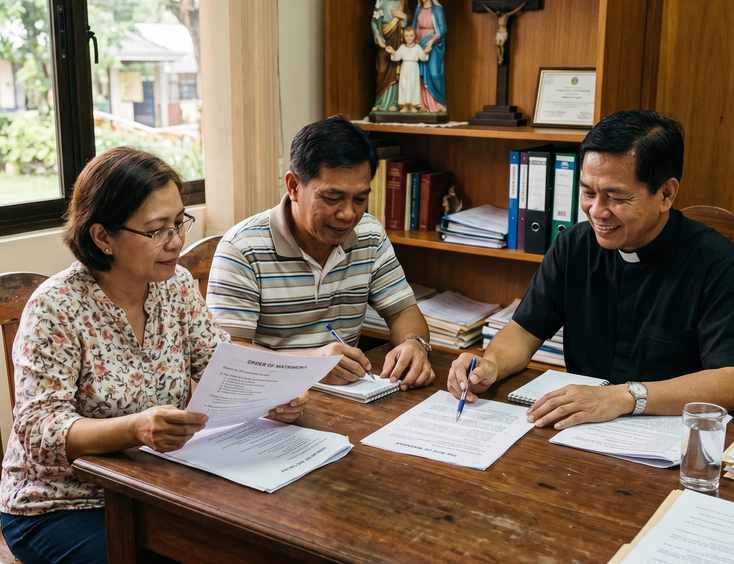
Bring this script to the priest at least a month before the ceremony. Sit down and walk through it together. The priest will mark sections to keep, sections to adjust, and sections that conflict with the parish's usual practice. The final ceremony reflects both the couple's preferences and the priest's pastoral judgment.
For couples coordinating the priest along with the rest of the suppliers, the vow renewal planning checklist for Filipino couples covers when to book the priest in the broader planning timeline.
Briefing Sponsors and Readers
A week before the ceremony, gather the sponsors handling the cord and veil, the readers handling the scripture passage and intercessions, and the family members involved in the processional. Walk through their cues. Print copies of the script with their parts highlighted.
The rehearsal usually runs thirty minutes. Hold it the evening before the ceremony at the actual venue if possible. Family members feel less nervous when they have walked through the space.
When to Adapt vs Follow Exactly
The official Catholic renewal rite carries weight because the wording connects the ceremony to centuries of Catholic marriage tradition. Couples often start with the traditional language and adjust only where the language feels too distant from their own story.
The vows themselves can stay traditional, the blessings can follow standard form, and the cord, veil, and coins can run the way they did at the original wedding. The personal touches usually come in the homily, the intercessions, the music, and the optional personal vow exchange.
For couples weighing a religious versus non-religious approach to the whole renewal, the non religious vow renewal ceremony ideas in the Philippines covers alternative ceremony structures.
The complete Filipino couple's guide to renewing your I do ties the ceremony into the broader planning arc, from venue selection through reception details.
Still Searching for a Right Match?
Find Your Perfect Wedding Supplier Today!
Discover trusted wedding suppliers across the Philippines in our complete directory. Compare services and connect with the ones that fit your dream celebration.
Browse Wedding SuppliersFeatured Blog Posts


Filipino Wedding Entourage - Roles, Order of March, and Modern Etiquette
6 mins readCivil Weddings in the Philippines - Requirements, Costs, and Step-by-Step Process
9 mins readCivil Wedding Requirements in the Philippines - Complete Checklist
6 mins readCost of Wedding in the Philippines - 5 Essential Things You Need to Know
7 mins readPrincipal Sponsors (Ninong/Ninang) - How Many, How to Ask, What They Really Do
4 mins readVeil, Cord, Candle & Coins - Roles, Options, and When They Happen
4 mins readEntourage for a Traditional Pinoy Wedding - Complete Roles and Guide
6 mins readComplete List of Civil Wedding Requirements in the Philippines
8 mins readHow to Choose Wedding Ninongs and Ninangs - Ask Yourself These 3 Important Questions
5 mins read