


Is a Vow Renewal Legally Binding in the Philippines? What Every Couple Should Know
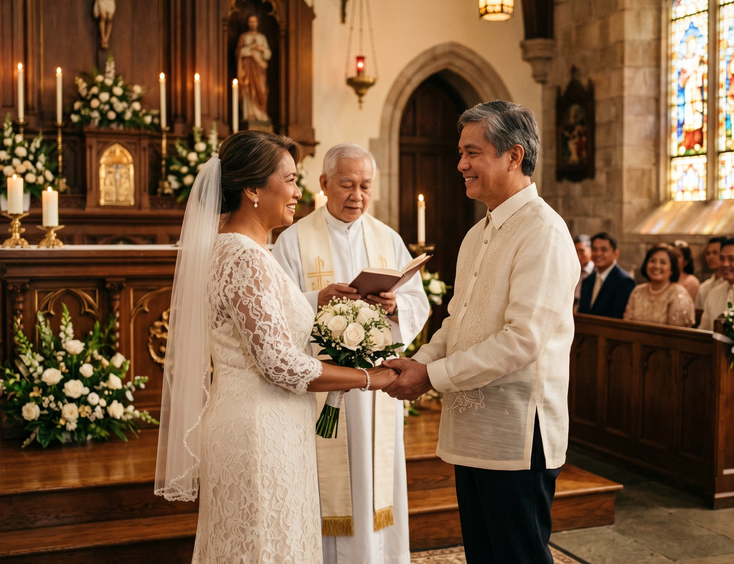
A vow renewal in the Philippines carries no legal weight. It does not create a new marriage. It does not require a license. It does not produce a new marriage certificate. Your original civil marriage record stays exactly as it was the day you first married.
You can renew your vows on a beach in Boracay, in your parish church, or in your living room with three witnesses. None of those settings changes the legal status of your marriage. The State already considers you married. The ceremony celebrates that fact. It does not redo it.
This matters because many Filipino couples assume the renewal updates something, replaces something, or produces a fresh document they can frame. It does none of those things.
What the Law Actually Says
Philippine law recognizes marriage as a legal contract solemnized once. The Family Code of the Philippines governs how marriages begin, what makes them valid, and how they end. The Code does not address vow renewals because vow renewals do not exist as a legal category. They sit outside the law entirely.
A valid Philippine marriage requires:
- Legal capacity of both parties
- Consent freely given
- A marriage license from the local civil registrar, with limited exceptions
- A ceremony before an authorized solemnizing officer
- Two witnesses of legal age
Once you meet those requirements and sign the marriage certificate, you are married under Philippine law. The marriage gets registered with the Philippine Statistics Authority. Your record becomes permanent.
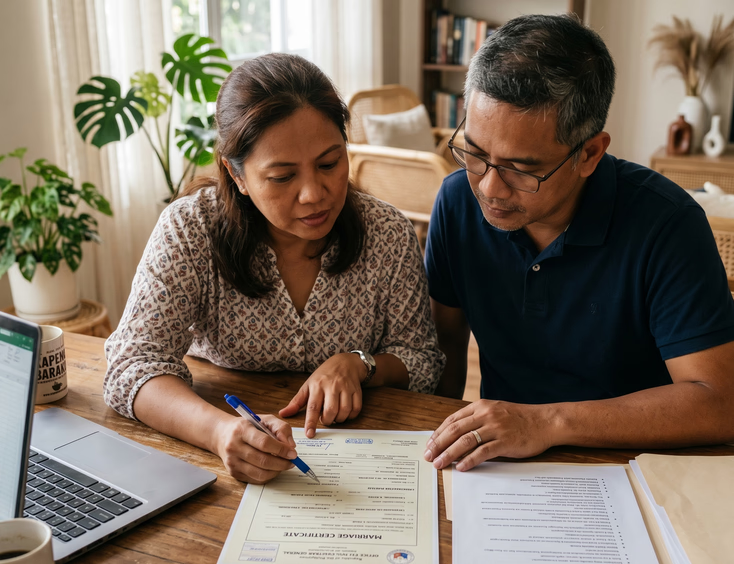
A vow renewal repeats none of these legal elements. You do not need a license. You do not need an authorized solemnizing officer. You do not sign a new marriage certificate because no new marriage exists to certify.
Why People Get Confused
The confusion usually comes from how a vow renewal looks. A priest officiates. A couple exchanges vows. Witnesses watch. Family applauds. The ceremony looks like a wedding because couples model it on their original wedding.
The visual similarity creates a false impression of legal similarity. A wedding produces a binding contract. A renewal produces only photographs and memories.
Some couples also confuse vow renewal with convalidation. Convalidation is a Catholic Church process that makes a civil marriage sacramentally valid in the eyes of the Church. It still produces no new civil marriage because the civil marriage already exists. For a full comparison of these two ceremonies, see the guide on renewal of vows vs. convalidation in the Philippines.
A third source of confusion: foreign vow renewals. Some couples travel to destinations where local providers issue commemorative certificates. These certificates have no legal force in the Philippines. They are souvenirs. The paper looks official. The signatures look authoritative. The document does not change your PSA record.
What a Vow Renewal Does and Does Not Change
A vow renewal does not:
- Create a new marriage
- Issue a new marriage certificate from PSA
- Update your civil registry record
- Restart any conjugal property regime
- Affect inheritance rights or succession
- Reset the date of your marriage for legal purposes
- Require a marriage license
- Need a solemnizing officer authorized to perform marriages
- Replace or supplement annulment, declaration of nullity, or legal separation proceedings
A vow renewal does:
- Reaffirm your existing commitment publicly
- Create new memories and documentation through photos and video
- Allow you to celebrate milestones with family and friends
- Permit you to write new vows that reflect your years together
- Function as a religious blessing if held in a church setting
The list of what it does not do is longer because the law treats the ceremony as having no legal function. The list of what it does do covers the personal, emotional, and spiritual dimensions, which are the actual reasons couples renew.
Who Can Officiate
Anyone can officiate a vow renewal. A priest, pastor, judge, friend, coordinator, or family member. The officiant does not need a license or accreditation because the ceremony has no legal weight.
A judge officiating your renewal is not acting in an official capacity. A priest officiating your renewal is offering a blessing, not solemnizing a marriage. A close friend officiating in your backyard is performing exactly the same legal function as any of the above, which is none.
This freedom matters when planning. You can ask a beloved uncle to lead the ceremony. You can hire a professional emcee. You can have your grown children read the vows back to you. None of these choices affects the legal status of anything because the ceremony has no legal status to affect.
For couples planning a renewal without religious framing, the guide on hiring an officiant for a non-religious vow renewal in the Philippines covers your options.
What About Destination Renewals
Filipino couples sometimes renew their vows in Bali, Maldives, Phuket, or other beach destinations that market vow renewal packages. These packages often include a local officiant, a certificate, and a small ceremony.
The certificates these venues issue have no legal effect anywhere, including in the country that issued them. They function as keepsakes. The ceremony itself is a private event with no civil registration component.
If you renew abroad and want to display the certificate at home, you can. It carries the same weight as a printed photo from the ceremony, which is to say, sentimental weight only. Your Philippine marriage record stays untouched.
For couples thinking about a destination renewal closer to home, the Boracay vow renewal guide for beach ceremonies and the romantic vow renewal spots in Cebu and Bohol cover Philippine options that produce the same memorable experience without the international travel.
What If We Lost Our Marriage Certificate
Some couples plan a vow renewal partly because they cannot find their original marriage certificate. The renewal will not solve this problem.
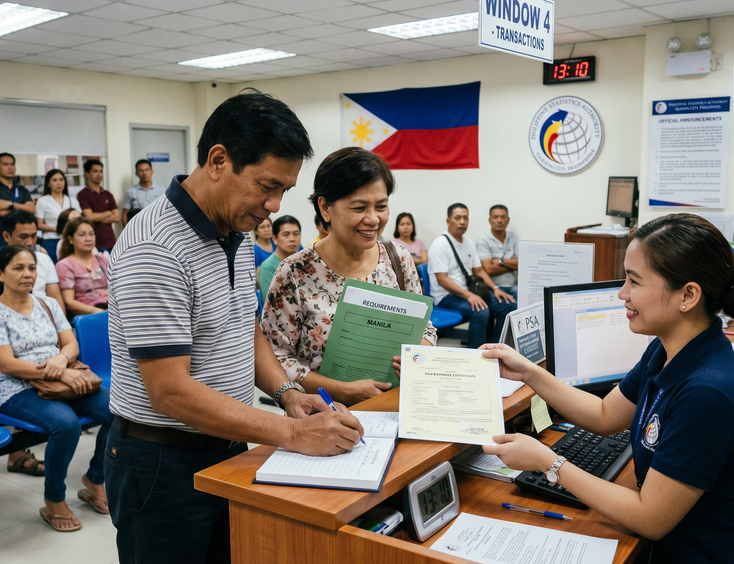
The Philippine Statistics Authority issues certified copies of marriage certificates. You can request one through PSA Serbilis, the PSA Helpline, or directly at a PSA office. The certificate is the only legally recognized proof of your marriage. A renewal ceremony does not replace it.
If your marriage was never registered with PSA, that is a separate legal issue requiring late registration through the local civil registrar where the marriage took place. A vow renewal cannot fix an unregistered marriage. Only the proper civil registration process can.
What If We Want Legal Recognition of a Long Relationship
Couples who lived together for years without ever formally marrying sometimes consider a vow renewal as a way to create legal recognition. It does not work that way.
If you never legally married, you cannot renew vows you never legally made. What you can do is legally marry now, following the standard Family Code requirements. A first marriage between you and your long-time partner would be a wedding, not a renewal.
This distinction matters for couples who lived together for decades and now want legal protection for inheritance, hospital visitation, or property rights. The path to those protections is a legal marriage, not a renewal ceremony that resembles one.
When the Renewal Carries Religious Weight
A vow renewal in a Catholic Church is a blessing. The priest blesses your existing sacramental marriage. The blessing has religious meaning in the Catholic tradition. It does not create civil obligations or change civil status.
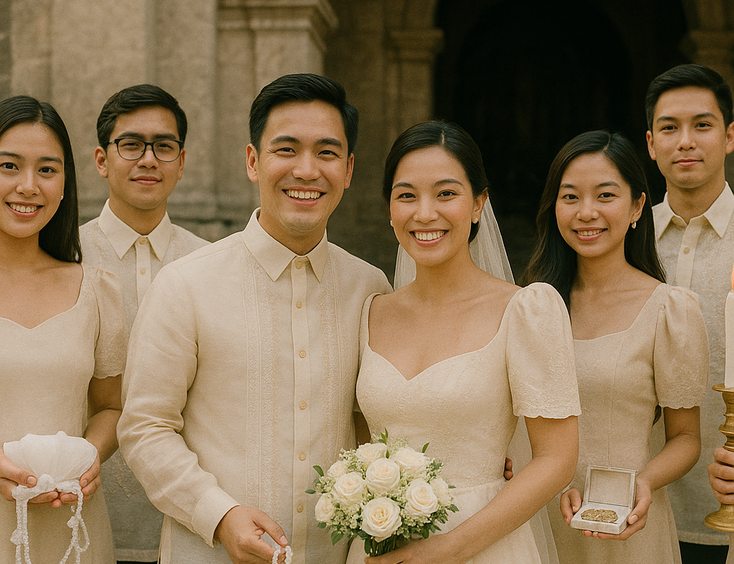
For Catholic couples, the blessing matters. It marks the marriage as continuing in the eyes of the Church. It often takes place during Mass, with full liturgical elements. Some parishes include the cord, veil, and coins. Family members stand in symbolic roles.
The religious significance is real. The legal significance is zero. Both can be true at the same time.
For details on what a Catholic vow renewal involves at the parish level, see the guide on renewing vows in the Catholic Church in the Philippines.
What You Should Bring to the Ceremony
Since the renewal carries no legal weight, you do not need to bring legal documents. The parish or venue may request a copy of your marriage certificate to confirm you are actually married, but they will not file anything with the State.
What you might bring instead:
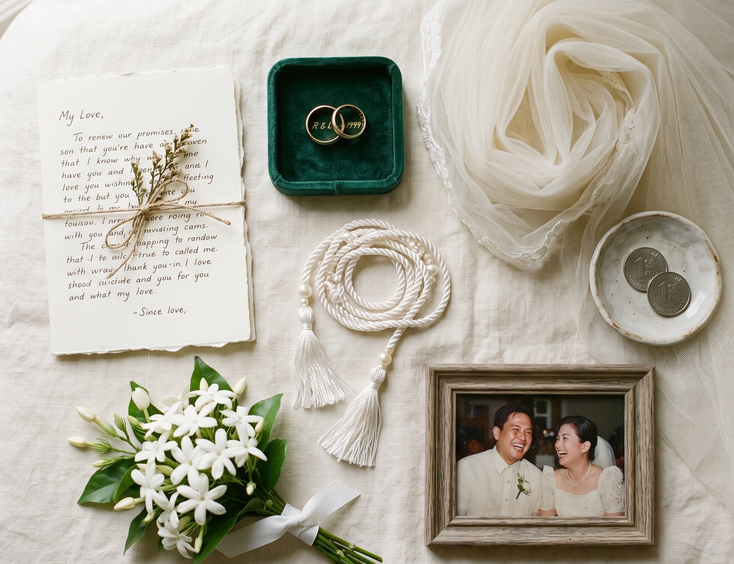
- Your written vows
- Your wedding rings, if you plan to bless them again
- The cord, veil, and coins, if you want to incorporate them
- Photos from your original wedding for display
- A guest book or memory book for the day
None of these items has legal significance. All of them have personal significance. The ceremony is about meaning, not documentation. For ideas on incorporating traditional elements, see the guide on how to incorporate the cord, veil, and coins into your vow renewal.
What This Means for Planning
The lack of legal weight simplifies planning in some ways and complicates it in others.
It simplifies because you have full creative freedom. You choose the officiant. You choose the venue. You choose the format. No civil registrar dictates your timeline.
It complicates because guests sometimes treat the event with less seriousness than a wedding. Some send regrets. Some skip the gifts. Some assume the ceremony is optional family theater. You may need to set expectations about attendance and tone in your invitations.
The freedom and the informality both come from the same source. The State steps back from a renewal because the State has no role to play. What fills the space is whatever you and your spouse decide matters most.
For couples building their full plan from scratch, the vow renewal planning checklist for Filipino couples covers the sequence. For the bigger picture of why couples renew at all, the pillar guide on wedding vow renewals in the Philippines walks through every angle.
The Bottom Line
You are not getting married again. You were married once, and once is enough for the law. What you are doing is celebrating that one marriage with a ceremony that resembles a wedding without producing the legal effects of one.
The renewal matters because you decided it does. The State has no opinion on the matter. Your parish may bless the union. Your guests may cry. Your photos will be beautiful.
None of that needs a license. None of that needs a certificate. None of that changes anything about your legal marriage. The renewal exists for reasons that sit outside the legal system, and those reasons are the only reasons that ever mattered for renewals in the first place.
Still Searching for a Right Match?
Find Your Perfect Wedding Supplier Today!
Discover trusted wedding suppliers across the Philippines in our complete directory. Compare services and connect with the ones that fit your dream celebration.
Browse Wedding SuppliersFeatured Blog Posts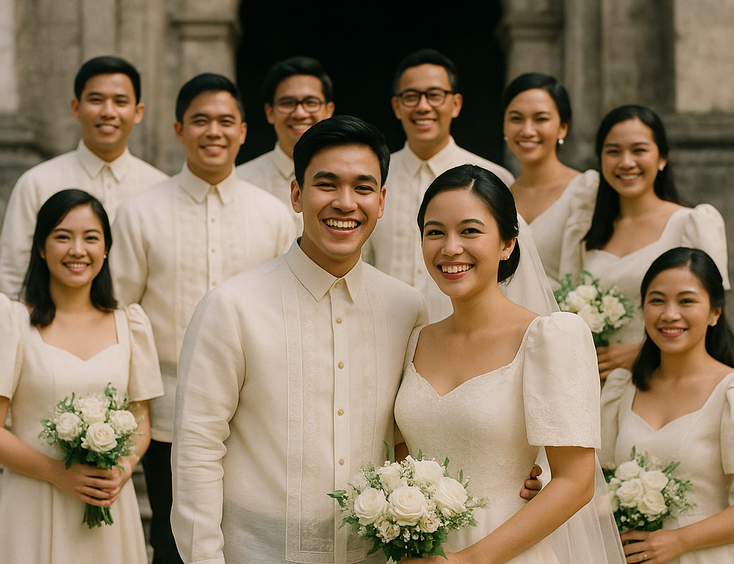


Filipino Wedding Entourage - Roles, Order of March, and Modern Etiquette
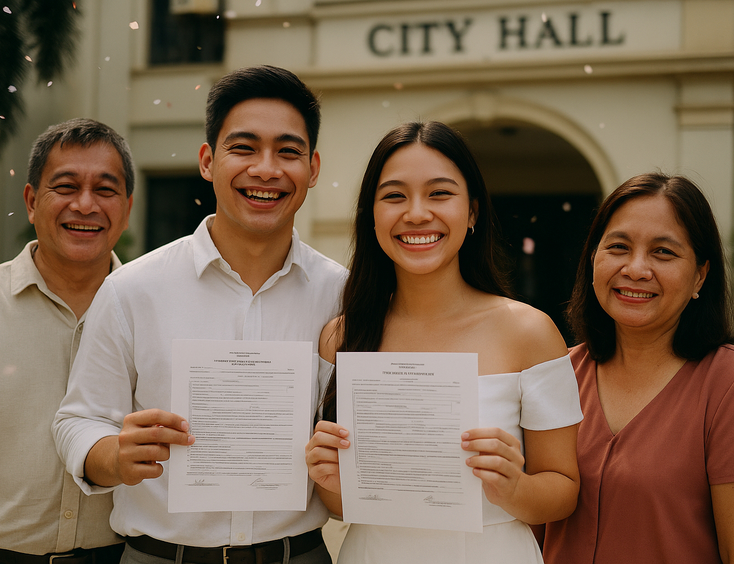
6 mins readCivil Weddings in the Philippines - Requirements, Costs, and Step-by-Step Process
9 mins readCivil Wedding Requirements in the Philippines - Complete Checklist
6 mins readCost of Wedding in the Philippines - 5 Essential Things You Need to Know
7 mins readPrincipal Sponsors (Ninong/Ninang) - How Many, How to Ask, What They Really Do
4 mins readVeil, Cord, Candle & Coins - Roles, Options, and When They Happen
4 mins readEntourage for a Traditional Pinoy Wedding - Complete Roles and Guide
6 mins readComplete List of Civil Wedding Requirements in the Philippines
8 mins readHow to Choose Wedding Ninongs and Ninangs - Ask Yourself These 3 Important Questions
5 mins read