


Renewal of Vows vs. Convalidation in the Philippines: Which One Do You Actually Need
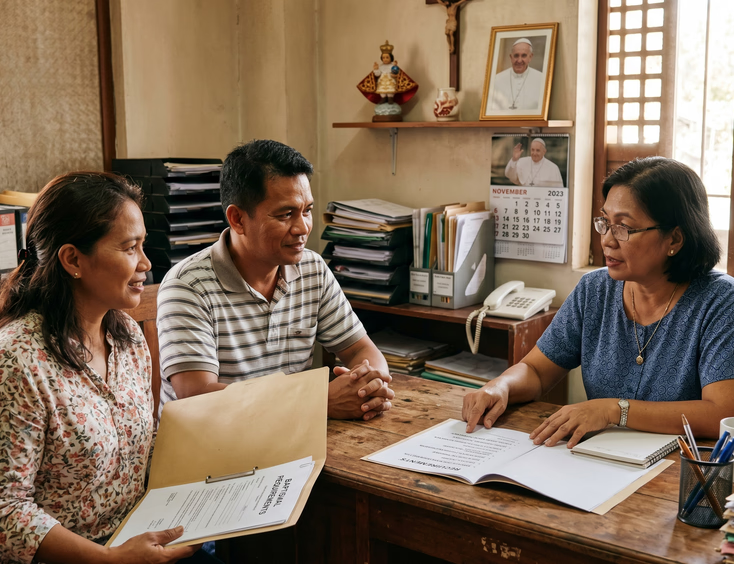
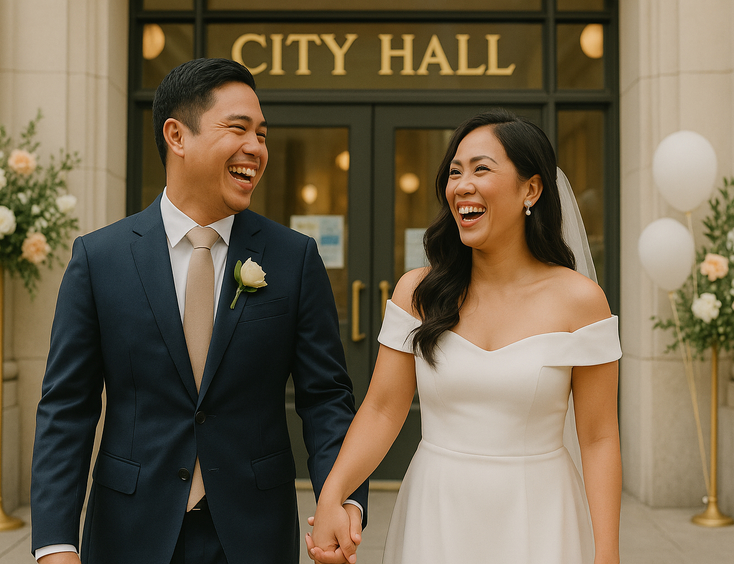
A couple walks into a parish office in Quezon City. They tell the secretary they want to renew their vows. She asks where they got married. They say a hotel ballroom, civil ceremony, judge officiating, ten years ago. She nods and hands them a list of requirements for convalidation.
They came in asking for one thing. They needed another. The parish caught the difference. Many couples don't, and they spend money planning the wrong ceremony.
Renewal of vows and convalidation sound related. They aren't. One is a celebration of an existing valid marriage. The other is a sacrament that makes a marriage valid in the eyes of the Catholic Church for the first time.
If you mix them up, you either skip a sacrament you actually needed or pay for a process you didn't.
What a Vow Renewal Actually Is
A vow renewal is a ceremony where you and your spouse publicly repeat your wedding promises. It carries no legal weight. It changes no documents. It produces no new marriage certificate.
Your original marriage stays your only marriage. The renewal celebrates it. The renewal doesn't create it.
In Filipino practice, vow renewals usually happen on milestone anniversaries. The 10th. The 25th. The 30th. The 50th. Some couples renew after surviving an illness or a financial crisis. Others renew because their kids are old enough to remember the day.
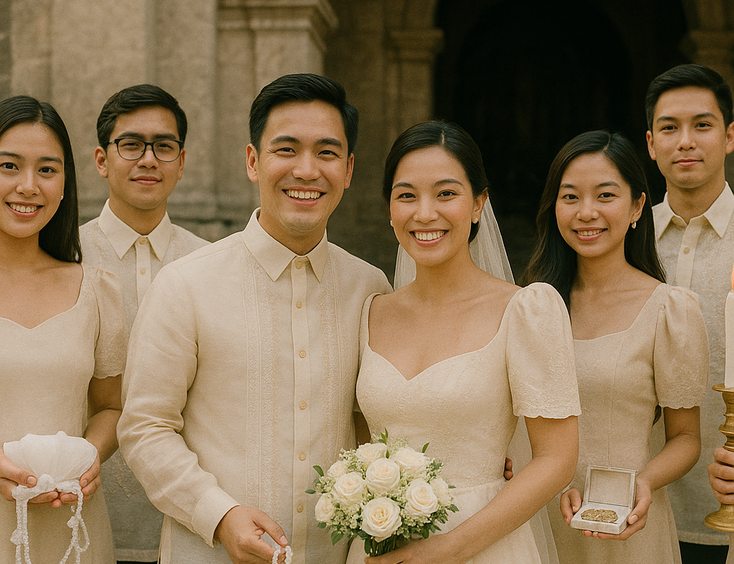
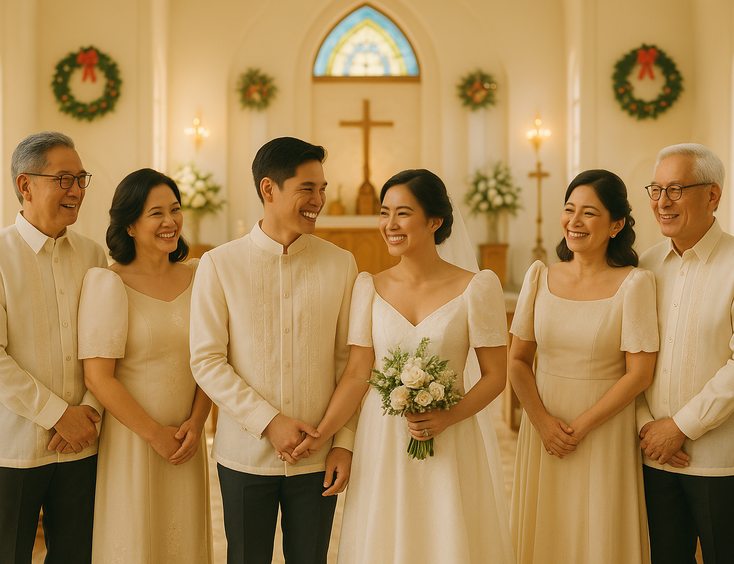
A Catholic vow renewal is a blessing, not a sacrament. The priest blesses your marriage. He does not marry you again because you are already married. The ceremony often includes a Mass, the cord, veil, and coins, and family members in symbolic roles. None of this changes your legal or sacramental status.
What Convalidation Actually Is
Convalidation is how the Catholic Church recognizes a marriage that was not previously sacramental. If you married outside the Church, in a civil ceremony, in a Protestant service, or in any setting the Church does not recognize as sacramental, convalidation is the process that makes your union a Catholic marriage.
The Church considers your civil marriage legally valid. The State recognizes you as married. The Church does too, for civil purposes. What the Church does not recognize is the sacramental dimension. Convalidation adds that dimension.
This matters for practicing Catholics who want to receive communion in good standing, baptize their children in the Church, or stand as ninong or ninang at a Catholic wedding. Without convalidation, the Church treats the couple as married civilly but not sacramentally, which affects access to other sacraments.
Convalidation involves the same canonical requirements as a first Church wedding. You submit baptismal certificates, attend a pre-cana seminar, secure a marriage license through the parish, and exchange consent in front of a priest and two witnesses.
The ceremony often looks small. Some couples invite only their sponsors and immediate family. Others hold a full Mass with a reception afterward. The scale varies. The canonical requirements don't.
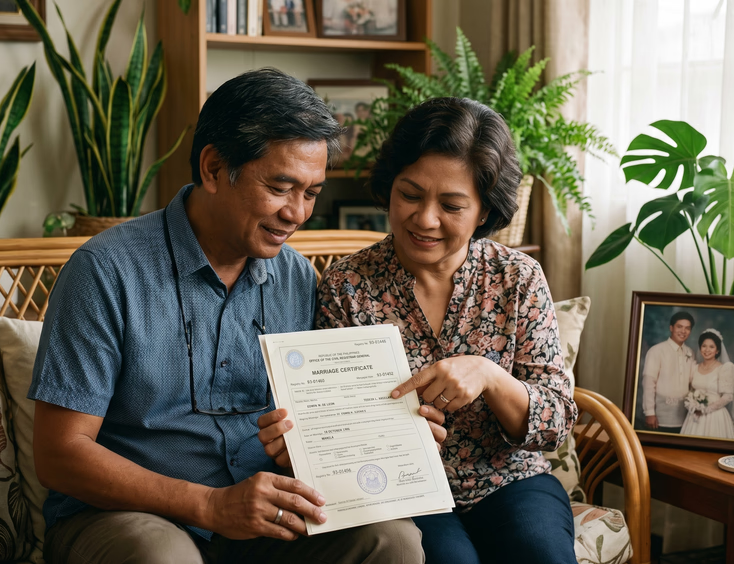
How to Tell Which One You Need
The question to ask yourself is simple: was your marriage celebrated in the Catholic Church with a Catholic priest officiating?
If yes, you had a sacramental Catholic wedding. You can renew your vows whenever you want. You cannot convalidate because there is nothing to convalidate. Your marriage is already a sacrament.
If no, you had a civil or non-Catholic ceremony. Your marriage is legally binding but not sacramental. If you want the Church to recognize the union as a sacrament, you need convalidation. If you don't care about the sacramental dimension and just want a celebration, you can hold a renewal-style ceremony, but the Church will not perform it as a Catholic blessing of a sacramental marriage because no such marriage exists in Church records.
A few scenarios to clarify:
You married in a Catholic Church 15 years ago. You want to celebrate your anniversary with a ceremony in your parish. You need a vow renewal.
You married at a Tagaytay garden venue with a judge officiating. You are a baptized Catholic and want the Church to bless your union as a sacrament. You need convalidation.
You married in a civil ceremony in the United States while working overseas. Now you live in the Philippines and want a Catholic ceremony. You need convalidation.
You married in a Catholic Church but want a larger celebration on your silver anniversary because the original wedding was small. You need a vow renewal.
You eloped to the courthouse 20 years ago and never had a religious ceremony. Your kids are grown and you want everything done properly in the Church. You need convalidation.
What Each Process Requires
The requirements differ because the purposes differ.
For a vow renewal, the parish typically asks for:
- A copy of your original Catholic marriage certificate
- A scheduled date that fits the parish calendar
- An offering or donation, which varies by parish
- Sometimes a short pre-renewal recollection or counseling session
That's it. No license. No new certificate. No canonical investigation.
For convalidation, the parish typically asks for:
- Baptismal certificates for both spouses, issued within the last six months and annotated for marriage purposes
- Confirmation certificates
- Your civil marriage certificate from PSA
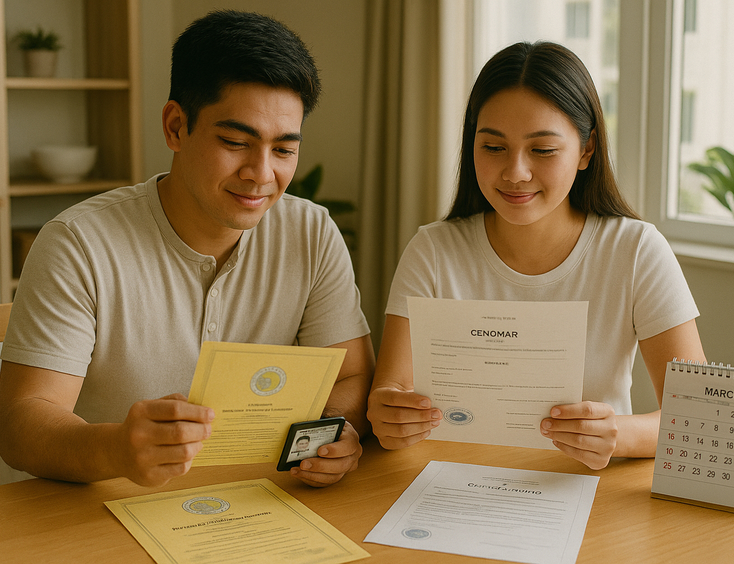
- CENOMAR or a similar document confirming your civil status
- Canonical interview with the priest
- Pre-cana or marriage preparation seminar
- Marriage license through the parish, depending on diocese
- Two witnesses present at the ceremony
Convalidation requires the same paperwork as a first Catholic wedding because canonically, it is a first Catholic wedding. The State already recognized your civil union. The Church is now performing the sacrament for the first time.

The Money Question
Couples often ask which is more expensive. The answer depends on the parish and the scale of the celebration, not the type of ceremony.
A simple vow renewal at the parish followed by lunch at home runs ₱30,000 to ₱80,000 for most Filipino couples. A grand renewal at a hotel with full styling can cross ₱500,000.
A convalidation costs roughly the same as a small Catholic wedding. The parish fees, document processing, pre-cana, and license usually total ₱15,000 to ₱40,000 before you factor in any reception. Add a celebration and the cost climbs the same way any wedding cost climbs.
The processes themselves carry similar parish fees. The price difference comes from the celebration around the ceremony, not the ceremony itself. For a deeper look at what a full celebration runs, see the realistic budget breakdown for a vow renewal in the Philippines.
What You Cannot Do With Either
Neither process changes your civil marriage status. Your PSA marriage certificate stays the same.
Neither process annuls a previous marriage. Convalidation only works if both parties are free to marry under canon law. If either spouse has a prior valid marriage in the eyes of the Church, that marriage must be resolved through annulment or declaration of nullity before convalidation can happen.
A vow renewal does not fix a marriage in trouble. Couples sometimes use a renewal to mark reconciliation after a difficult season, and that meaning is real. The ceremony itself does no legal or canonical work to repair anything. The repair happens between the couple. The renewal celebrates the repair after the fact.
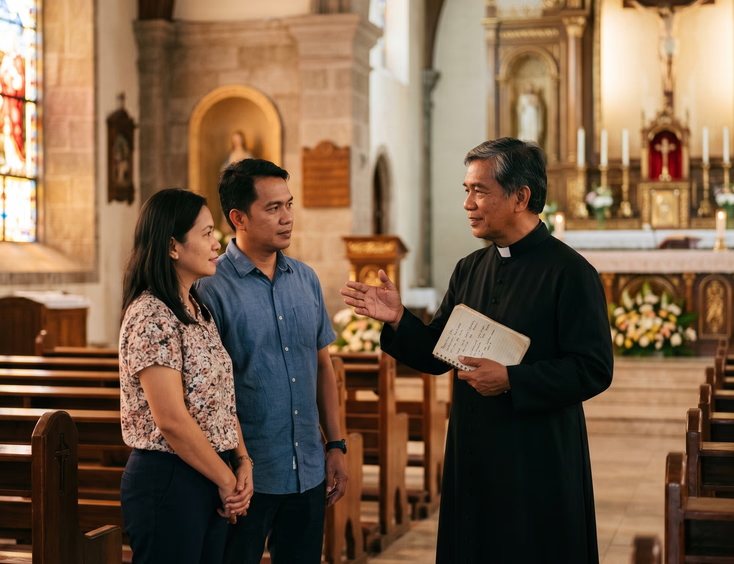
Where the Confusion Comes From
Many couples confuse the two because Filipino culture treats every Catholic ceremony involving a married couple as functionally similar. The cord goes on. The veil goes on. The priest blesses the couple. The family takes photos. The two events look almost identical from the pew.
The legal and canonical reality underneath the ceremony is what separates them. A vow renewal sits on top of an existing sacrament. A convalidation creates the sacrament for the first time.
The parish secretary cares about this distinction because the Church does. If you ask for the wrong one, the priest will redirect you to the right process. The redirection is not judgment. The Church wants the paperwork to match the reality.
If you're still uncertain about the legal status of either ceremony, see the guide on whether a vow renewal is legally binding in the Philippines.
Which Conversation to Have First
Before booking a venue, calling a coordinator, or buying a dress, sit down with your spouse and answer two questions.
First, where and how were we married? Pull out the marriage certificate. Look at who officiated and where the ceremony happened.
Second, what do we want from this ceremony? Do we want the Church to recognize a sacramental marriage we never had? Or do we want to celebrate a sacramental marriage we already have?
Your answer to the first question tells you what's possible. Your answer to the second tells you what you actually want. The two have to match before you spend a peso on anything else.
Once you know which path you're on, the rest of the planning becomes simpler. For couples on the renewal path, the vow renewal planning checklist for Filipino couples covers what comes next. For couples wondering how the Catholic Church handles renewals specifically, the guide on renewing vows in the Catholic Church in the Philippines walks you through parish-level details.
For the bigger picture of why and when Filipino couples renew at all, start with the pillar guide on wedding vow renewals in the Philippines.
Ask the right question first. Plan the right ceremony second. The order matters more than couples realize until they're standing in a parish office, listening to a secretary explain why the date they reserved is for a process they didn't actually need.
Still Searching for a Right Match?
Find Your Perfect Wedding Supplier Today!
Discover trusted wedding suppliers across the Philippines in our complete directory. Compare services and connect with the ones that fit your dream celebration.
Browse Wedding SuppliersFeatured Blog Posts

Filipino Wedding Entourage - Roles, Order of March, and Modern Etiquette
6 mins readCivil Weddings in the Philippines - Requirements, Costs, and Step-by-Step Process
9 mins readCivil Wedding Requirements in the Philippines - Complete Checklist
6 mins readCost of Wedding in the Philippines - 5 Essential Things You Need to Know
7 mins readPrincipal Sponsors (Ninong/Ninang) - How Many, How to Ask, What They Really Do
4 mins readVeil, Cord, Candle & Coins - Roles, Options, and When They Happen
4 mins readEntourage for a Traditional Pinoy Wedding - Complete Roles and Guide
6 mins readComplete List of Civil Wedding Requirements in the Philippines
8 mins readHow to Choose Wedding Ninongs and Ninangs - Ask Yourself These 3 Important Questions
5 mins read