


How to Incorporate the Cord, Veil, and Coins Into Your Vow Renewal
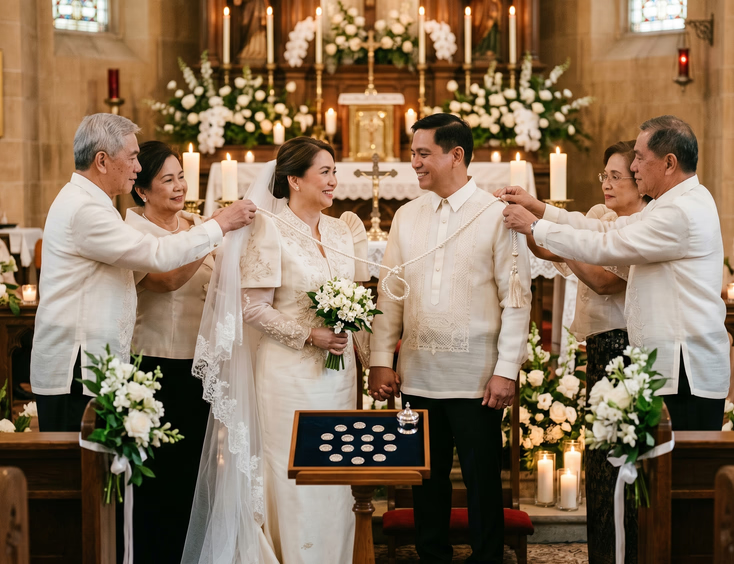
The cord, veil, and coins carry weight in Filipino weddings that few other traditions match. Couples who originally went through the full Catholic rite remember the moment family sponsors draped the veil over their shoulders, looped the cord in a figure eight, and handed over the arrhae. Decades later, those same symbols can anchor a vow renewal ceremony.
The question most couples ask: do you repeat the rituals exactly the way you did them on your wedding day, or do you adapt them for a ceremony marking a longer story?
This guide covers what the cord, veil, and coins mean, how to incorporate them into a vow renewal, and which adjustments make sense for couples who have already been married five, ten, or fifty years.
What the Cord, Veil, and Coins Mean
The three traditions come from Spanish colonial Catholic practice, adapted into Filipino weddings across generations. Each one carries a specific meaning that still applies to vow renewals.
The veil symbolizes unity and protection. Sponsors drape one long veil over the bride's head and the groom's shoulder, joining them under one cover. In a renewal context, the veil reaffirms that the couple still shelters one another after years of marriage.
The cord, usually a silk or yarn rope formed into a figure eight, represents the infinity of marriage. Sponsors loop it over the couple's shoulders during the ceremony. The figure-eight shape signals the bond cannot be untied. For a renewal, the cord marks that the bond has held across the seasons.
The coins, called arrhae, traditionally come as thirteen pieces representing Christ and the twelve apostles. The groom pours them into the bride's hands, and she returns them, signaling shared prosperity and stewardship. Some couples interpret the exchange as a commitment to provide for one another. Others see it as a promise about the family they build together.
For a fuller view of how renewal ceremonies work within the Catholic Church, the plain English guide to renewing vows in the Catholic Church in the Philippines explains what the church permits and how renewal services differ from the original sacrament.
Choosing Whether to Include All Three
Some couples include all three. Others pick one or two. The choice depends on the tone of the renewal and the religious context.
Catholic blessing services usually include the veil, cord, and coins because the priest follows a familiar liturgical structure. Non-religious ceremonies often skip the coins, which carry stronger Catholic associations, and keep the cord and veil as cultural rather than religious symbols.
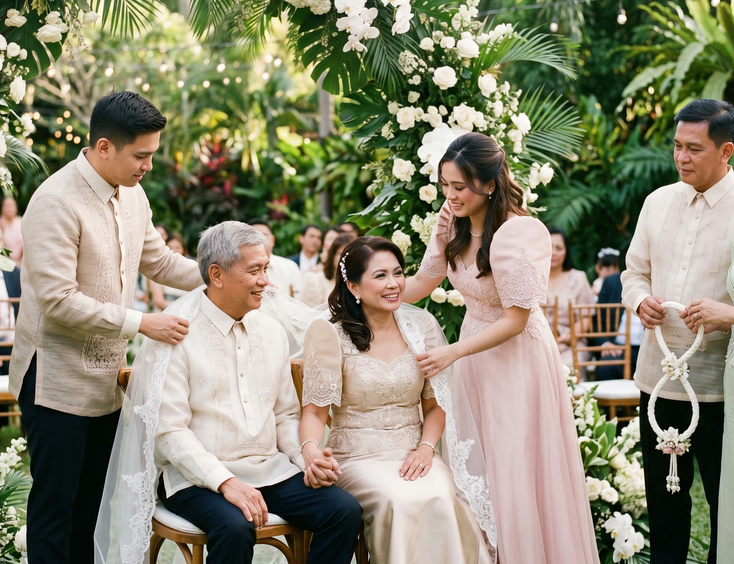
Intimate renewals at home or in a garden often condense the rituals. Couples skip the formal sponsor lineup and have their children or one or two close friends drape the veil and cord instead. The simpler setup fits the smaller scale.
For couples thinking through whether to lean religious or secular, the non religious vow renewal ceremony ideas in the Philippines covers ceremony formats that adapt or omit these symbols.
Who Drapes the Veil, Cord, and Coins
Original weddings assign these roles to ninongs and ninangs, the secondary sponsors who stand up at the ceremony. Vow renewals open the roles to a wider range of people, since the original sponsors might have passed away or moved abroad, and the renewal carries different significance.
Couples often assign the roles to:
Their adult children. Sons and daughters take on the sponsor role their godparents originally held. The shift signals that the next generation now witnesses the marriage.
Their grandchildren. Older grandchildren handle the veil and cord. Younger ones carry the coins on a small pillow.
Original sponsors who are still living and present. Some couples bring back the same ninongs and ninangs from their wedding day. The continuity carries weight, especially for couples renewing vows at twenty-five or fifty years.
Close friends who walked through the years with them. Friends who were there during the hard seasons sometimes get assigned the cord, since the figure eight represents the unbreakable bond.
The do you need ninongs and ninangs for a vow renewal guide gets deeper into how sponsor etiquette shifts for renewals.
Where the Rituals Sit in the Program
The cord, veil, and coins traditionally happen after the exchange of vows but before the priest's final blessing. For a renewal, the placement stays similar.
A typical sequence:
The couple exchanges renewed vows.
The officiant blesses the coins. The groom pours them into the bride's hands. The bride returns them.
The veil sponsors drape the veil over the couple.
The cord sponsors loop the cord in a figure eight over the couple's shoulders, on top of the veil.
The couple stays under the veil and cord during a blessing, a prayer, or a moment of silence.
The sponsors remove the cord and veil.
The officiant pronounces the renewal complete.
The whole sequence runs five to eight minutes. Couples sometimes pair the moments with music, either live or recorded, to give the ceremony room to breathe.
For a sample ceremony layout that places the cord, veil, and coins in context, the wedding vow renewal order of ceremony gives a full Filipino program.
Adapting the Traditions for a Renewal
The original wedding ceremony stays formal because it sacramentally marks the start of a marriage. A renewal carries different weight, since the marriage already exists. Couples often adapt the rituals to reflect this.
Some adaptations Filipino couples use:
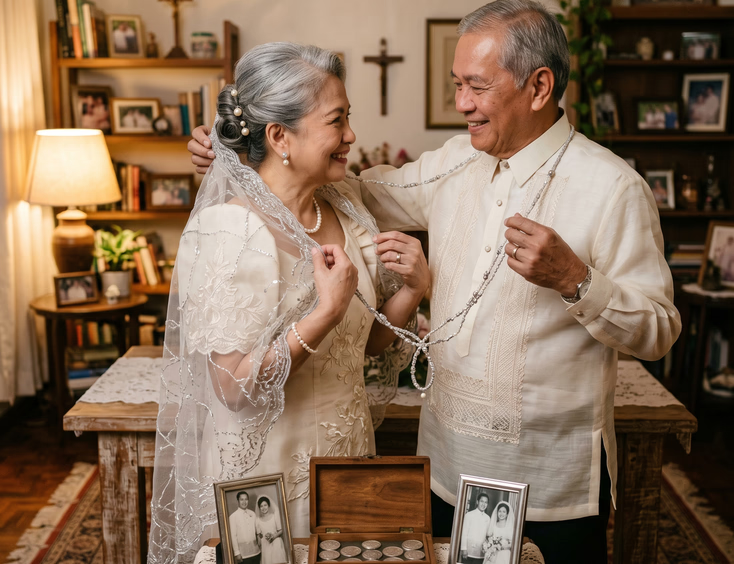
The couple drapes the veil and cord on each other instead of having sponsors do it. The shift signals that after twenty or thirty years, the couple now holds the marriage themselves rather than depending on external witnesses.
The children drape the veil and cord over the parents. The reversal acknowledges that the next generation now blesses the parents' marriage, not the other way around.
The couple uses the same veil, cord, and coins from their original wedding day. Some Filipino families preserve these items in storage. Bringing them back for the renewal connects the two ceremonies across the years.
The couple commissions a new cord and veil that reflects the renewal milestone. Silver thread for a twenty-fifth anniversary. Gold for a fiftieth. The new piece becomes an heirloom marking the renewal specifically.
Couples renewing vows after surviving illness, separation, or major hardship sometimes alter the figure-eight cord into a slightly different shape, or add a small charm to the cord representing what they came through together. The vow renewal vows for couples who survived hardship together covers how to mark that part of the story.
Sourcing the Cord, Veil, and Coins
Couples have a few options for getting the items themselves.
The original wedding set, if preserved. Check with parents or in storage boxes. Many Filipino families keep wedding sets wrapped in tissue paper inside aparadors. Using the original carries meaning no new set can match.
A wedding supplier shop. Stores along the wedding district areas of Manila, Cebu, and other cities carry standard cord, veil, and coin sets. Pricing runs PHP 1,500 to PHP 5,000 for a complete set, depending on materials.
A custom-made set. Local artisans craft cords in specific colors and materials. Couples celebrating silver or gold anniversaries often commission sets in metallic thread to match the milestone. The cost runs PHP 5,000 to PHP 15,000 for a fully custom set.
A family heirloom from another relative. Some couples borrow the wedding set of a parent or grandparent. The borrowed set adds another layer of family lineage to the renewal.
Working the Rituals Into a Non-Catholic Setting
Couples holding the renewal outside a Catholic church can still include the cord, veil, and coins. The symbols carry cultural meaning beyond their religious roots, and many Filipino couples include them in garden, hotel, or home renewals regardless of religious framing.
In non-Catholic settings, the officiant might explain the meaning of each ritual briefly before the moment happens. Guests who are not Filipino or not familiar with the traditions appreciate the context. The explanation usually runs thirty seconds per ritual and prevents the moment from feeling opaque to non-Filipino guests.
For couples writing their own ceremony script, the Catholic vow renewal ceremony script for Filipino couples covers traditional wording you can adapt or use as a reference even outside a Catholic context.
Photographing the Moments
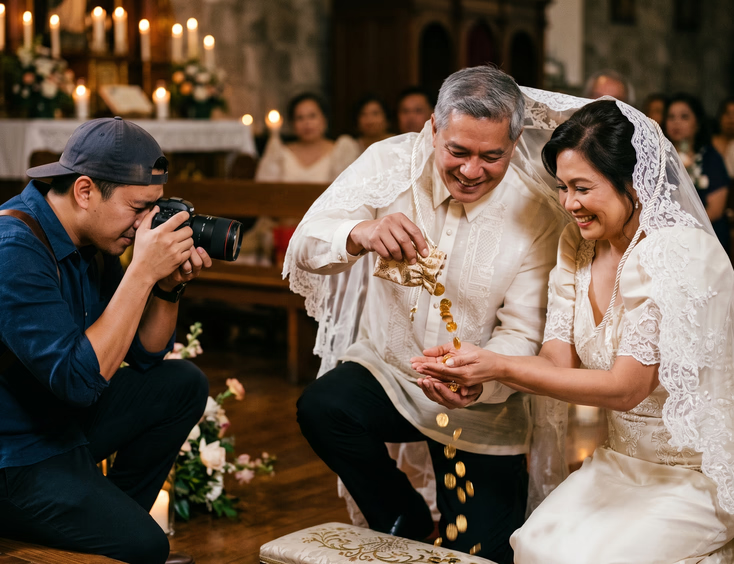
The cord, veil, and coins create three of the most photogenic moments in a Filipino renewal ceremony. Brief your photographer on each one specifically.
The veil moment works best photographed from the side, with the light coming from behind the couple. The sheer fabric catches the light and softens the frame.
The cord moment looks best photographed from a low angle, capturing both sponsors and the couple in the same frame as the figure-eight forms.
The coins exchange happens at hand level. Close-up shots of the coins passing between hands carry the symbolism more than wide shots of the full scene.
The how to choose a photographer and videographer for your vow renewal covers what to look for in a supplier who knows Filipino ceremony traditions.
Keeping the Symbols Meaningful
Rituals lose weight when they happen mechanically. The cord, veil, and coins matter because the couple, the sponsors, and the guests all understand what each one represents. Brief the sponsors a week ahead. Walk through the sequence at the rehearsal. Pause briefly during the ceremony so the moments register rather than blurring into one continuous ritual.
For couples planning the full ceremony layout around these symbols, the complete Filipino couple's guide to renewing your I do maps out the broader program and how the cord, veil, and coins fit into the day.
Pick the elements that match the meaning of your renewal. Skip what does not fit. The point is not to recreate the wedding day. The point is to mark what the marriage has become since then.
Still Searching for a Right Match?
Find Your Perfect Wedding Supplier Today!
Discover trusted wedding suppliers across the Philippines in our complete directory. Compare services and connect with the ones that fit your dream celebration.
Browse Wedding SuppliersFeatured Blog Posts


Filipino Wedding Entourage - Roles, Order of March, and Modern Etiquette
6 mins readCivil Weddings in the Philippines - Requirements, Costs, and Step-by-Step Process
9 mins readCivil Wedding Requirements in the Philippines - Complete Checklist
6 mins readCost of Wedding in the Philippines - 5 Essential Things You Need to Know
7 mins readPrincipal Sponsors (Ninong/Ninang) - How Many, How to Ask, What They Really Do
4 mins readVeil, Cord, Candle & Coins - Roles, Options, and When They Happen
4 mins readEntourage for a Traditional Pinoy Wedding - Complete Roles and Guide
6 mins readComplete List of Civil Wedding Requirements in the Philippines
8 mins readHow to Choose Wedding Ninongs and Ninangs - Ask Yourself These 3 Important Questions
5 mins read