


Involving Your Children and Family in Your Vow Renewal Ceremony
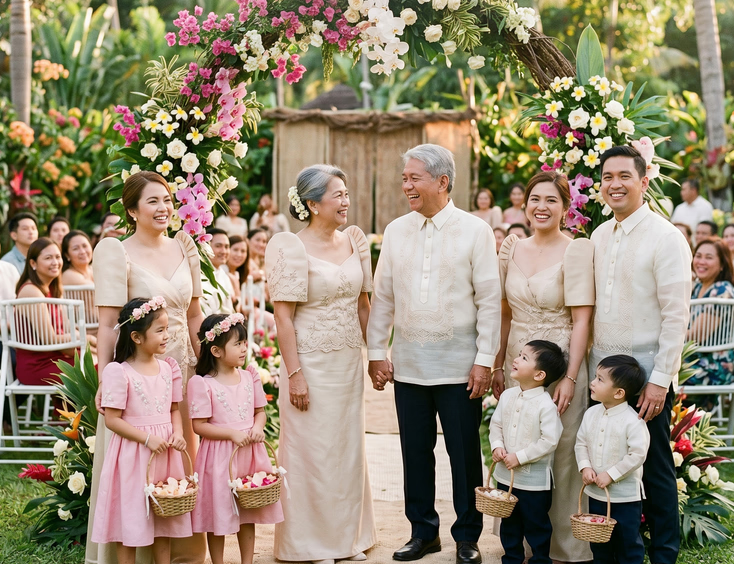
The original wedding day belonged to two people. A vow renewal belongs to everyone the marriage produced. Children who grew up watching their parents work through hard seasons. Grandchildren who only know the couple as lolo and lola. Siblings who stood up at the original wedding and watched the years unfold.
Filipino couples renewing vows often want the ceremony to feel different from the wedding precisely because the family has grown around the marriage. The renewal becomes a family event rather than a couple's event. Involving children and family members meaningfully shapes the ceremony into something the wedding could not be.
This guide covers ways to bring children, grandchildren, parents, siblings, and extended family into a vow renewal ceremony, with specific roles and ideas for each.
Why Family Involvement Matters at a Renewal
Catholic and cultural traditions assign family roles at weddings, but those roles often go to ninongs and ninangs the couple chose as sponsors. Renewals carry different significance. The people who matter now are the ones who lived inside the marriage with the couple.
Children, especially adult children, often hold a depth of insight into their parents' marriage that no outside sponsor can match. They saw the hard seasons. They watched their parents choose each other repeatedly. Bringing them into the ceremony acknowledges this.
Grandchildren add another layer. A couple celebrating fifty years sometimes has grandchildren who only know them as one unit. Including the youngest generation in the ceremony shows the marriage's reach across time.
For the broader picture on planning a renewal, the complete Filipino couple's guide to renewing your I do covers the planning arc.
Roles for Adult Children
Adult children typically take on the most prominent family roles in a vow renewal. They often replace the original sponsors from the wedding day.
Officiant. Some Filipino couples ask an adult child to officiate the ceremony entirely, especially in non-religious settings. The child guides the program, shares stories about their parents, and pronounces the renewal complete. The role carries weight because no one knows the marriage from the inside the way the children do.
Reader. Children read a scripture passage, a poem, a song lyric, or a letter they wrote for their parents. The reading often becomes one of the most emotional moments of the ceremony.
Witness or sponsor for the cord and veil. Adult children drape the cord and veil over their parents, replacing the ninongs and ninangs from the original wedding. The reversal carries symbolic weight, signaling that the next generation now blesses the parents' marriage.
Speaker at the reception. The vow renewal toasts and speeches: what to say as a child, sibling, or best friend covers what works for a child's speech.
Coordinator of family logistics. One adult child often takes on the operational role of coordinating siblings, managing the rehearsal, and handling family communication. The role frees the couple from running logistics on their own day.
Co-host with the couple. Some renewals position the children as co-hosts of the event, welcoming guests at the entrance and helping with reception flow.
Roles for Younger Children and Teens
Couples celebrating tenth or fifteenth anniversaries often have children still in their school years. These children take on age-appropriate roles.
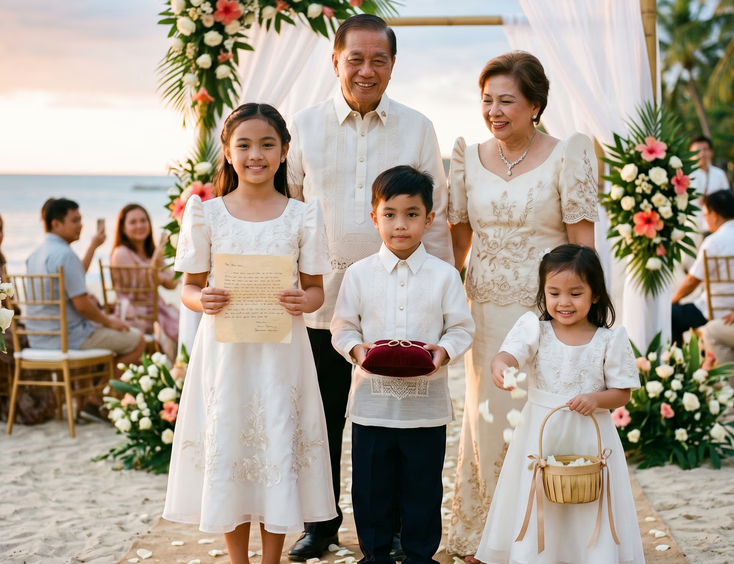
Ring bearer or coin bearer. The youngest children carry the rings or the thirteen arrhae on a small pillow. The role suits children five to ten years old.
Flower scatterer. Young children walk down the aisle ahead of the couple, scattering petals. The role works for children three to seven years old.
Junior reader. Teenagers handle a short reading or a poem. The role suits children twelve and older who feel comfortable reading aloud in front of a crowd.
Music performer. Teenagers who sing or play an instrument perform a song or piece during the ceremony. The performance becomes a personal moment that recorded music cannot match.
Sibling-led blessing. Older siblings lead a brief blessing or message for the parents, speaking on behalf of all the children together.
Roles for Grandchildren
Couples celebrating silver, pearl, or golden anniversaries often have grandchildren ranging from infants to teenagers. The youngest grandchildren bring a particular tenderness to the ceremony.
Tiny ring bearers or flower scatterers. Toddlers and preschoolers handle the simplest roles, often with a parent walking alongside them.
Mass procession participants. In Catholic ceremonies, older grandchildren help bring up the offertory gifts during Mass.
Letter readers. Grandchildren write short letters to their lolo and lola and read them during the ceremony. The letters often become keepsakes the couple frames after the ceremony.
Photo presenters. Grandchildren carry framed photos from the couple's original wedding day or from key milestones, displaying them at the front of the ceremony space.
Group song or dance performance. Multiple grandchildren perform a song or dance together. The group performance works especially well at home-based or garden ceremonies.
For couples celebrating golden anniversaries with multiple generations present, the golden wedding anniversary vow renewal ideas for Filipino couples covers how to integrate the extended family.
Roles for Parents of the Couple
Living parents of the renewing couple often carry significant emotional weight. Their presence reminds everyone that the marriage came from somewhere, from the families who raised the husband and wife.
Blessing of the couple. The eldest living parent offers a blessing or shares words of advice from their own long marriage. The moment often comes before the vow exchange or during the closing of the ceremony.
Walking the couple to the altar. Some couples have their living parents walk them to the front of the ceremony, mirroring the original wedding day where parents traditionally accompanied the bride and groom.
Sharing a memory from the wedding day. A parent shares a memory from the original wedding decades ago, connecting the renewal to the day the marriage began.
Honored seating. Even parents not assigned specific speaking roles get the front row of seating, with handwritten signs marking their spots.
For parents who have passed away, the memory lane and photo display ideas for vow renewal receptions covers ways to honor deceased family members during the ceremony.
Roles for Siblings
Siblings of the renewing couple often stood up at the original wedding. They carry a different perspective from children, since they grew up with one half of the couple before the marriage even began.
Memory sharing. Siblings share stories from before the wedding, giving guests a glimpse of who the couple was as individuals before their lives joined.
Toast at the reception. Siblings often handle the reception toasts, especially when adult children carry roles in the ceremony itself.
Cord and veil sponsors. Couples sometimes assign the cord and veil to siblings rather than children, particularly when the couple has no adult children or when the siblings were the original ninongs and ninangs.
Master of ceremonies. A close sibling, especially one comfortable speaking publicly, handles the emcee duties at the reception.
Roles for Extended Family
Cousins, in-laws, and other extended family often want to contribute even when not assigned specific ceremony roles. The renewal absorbs their involvement easily.
Welcome committee. Cousins and in-laws greet guests at the entrance, hand out programs, and direct people to their seats.
Photographer assistants or family historian. A cousin who knows the family well can help coordinate group photos after the ceremony, gathering specific combinations of family members.
Reception coordination. Extended family handles logistics that would otherwise fall on the couple, such as managing the buffet line, coordinating the cake cutting, or organizing the program.
Memory book contributors. Family members write entries in a memory book ahead of the ceremony, sharing stories or wishes for the couple. The book gets presented at the reception.
Roles for Family Members Who Cannot Attend
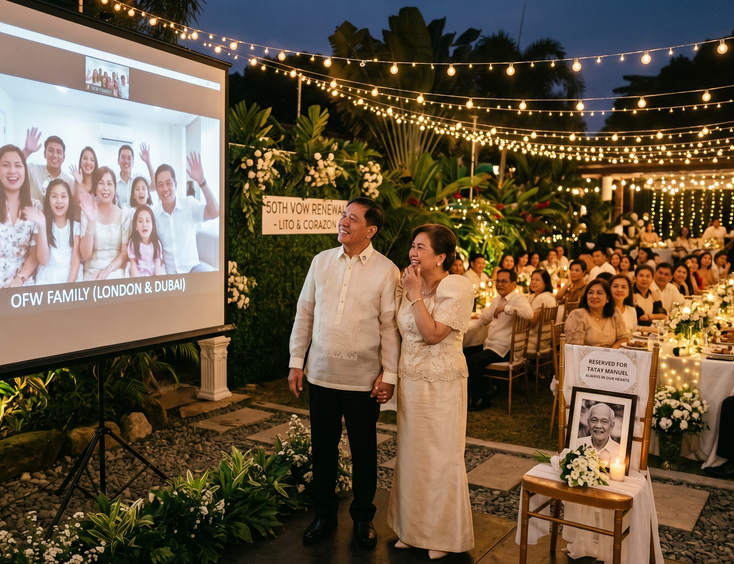
Vow renewals often include family members who cannot physically be present, especially OFWs working abroad, elderly relatives in poor health, or family who have passed away.
Video messages. OFW family members record video messages played during the reception. The messages let absent family contribute even from across the world. The renewal of vows for OFW couples covers the OFW context in more depth.
Letters read aloud. Absent family send letters that get read during the ceremony or reception.
Empty chair with a photo. Couples reserve seats for deceased parents or grandparents, placing a framed photo on the chair as a quiet acknowledgment.
Moment of silence or prayer. The ceremony pauses to acknowledge family members who have passed, with the officiant naming them and inviting guests into a brief silence.
Live video call. Some renewals include a live video call to family who cannot attend, especially OFWs. The technology lets absent family witness the ceremony in real time.
Briefing Family Members on Their Roles
Family members assigned ceremony roles need preparation. A week before the ceremony, sit down with each person and walk through their part.
For readers, give them the printed text and ask them to practice aloud at least three times.
For sponsors handling the cord and veil, walk through the choreography. Who stands where. When they step forward. How they drape the cord. When they step back.
For children and grandchildren with simple roles, have a parent or relative practice with them. Young children freeze up under pressure, and rehearsal helps reduce stage fright.
For speakers and emcees, agree on time limits. Five minutes feels short to the speaker but exactly right to the audience.
Hold a full rehearsal the evening before the ceremony if possible, at the actual venue. The rehearsal catches small issues before the day itself.
For more on building the program around family roles, the wedding vow renewal order of ceremony gives sample programs that incorporate family participation.
Avoiding Overcrowding
Couples sometimes try to give every family member a role, which produces a ceremony that feels like a recital. The strongest renewals limit roles to the people for whom the role carries the most meaning.
Pick three to five family members for primary roles. Reserve the role of speaking, reading, or carrying symbolic items for these people. Everyone else gets the roles of being present, being honored, or being included in group moments.
The ceremony stays meaningful when each role carries weight rather than feeling like filler.
Family Photos After the Ceremony
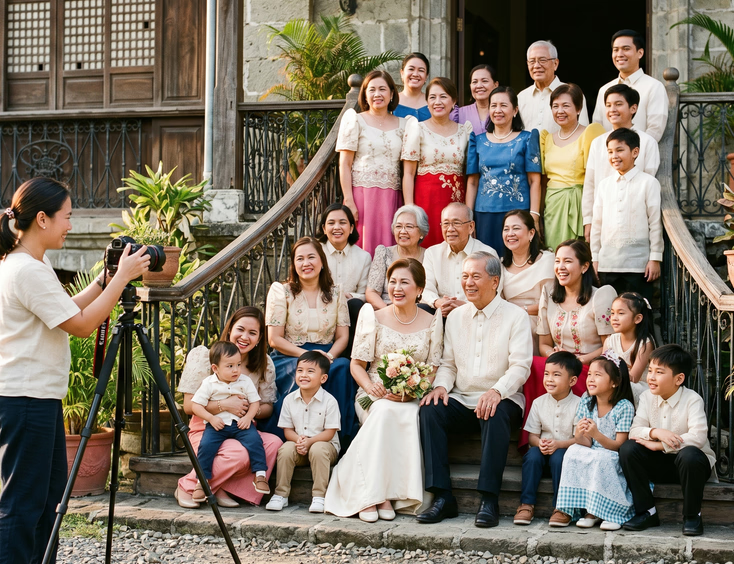
The ceremony ends, and the family photo session begins. Couples often underestimate how long family photos take. A list of specific groupings written ahead of time saves twenty minutes of confusion on the day.
Common groupings for Filipino renewals:
The couple alone.
The couple with all their children.
The couple with all their grandchildren.
The couple with each child's family.
The couple with both sets of living parents.
The couple with siblings.
The full extended family.
Specific friend groups.
A coordinator or a designated family member calls out the groupings. The photographer captures each one quickly. The system keeps the photo session under thirty minutes.
The how to choose a photographer and videographer for your vow renewal covers what to look for in suppliers who handle family-heavy events.
The Reception as Family Celebration
The ceremony ends, but the family involvement continues at the reception. Some couples structure the reception around family contributions, with multiple toasts, songs, dances, and shared memories woven through the meal.
Common reception family elements include a slideshow of family photos through the years, a parents' dance with the couple's children, a tribute video from absent OFW family, a group dance led by the grandchildren, or a closing message from the couple to their family.
The vow renewal toasts and speeches covers what each family member might share during the reception program.
The whole point of a vow renewal is to mark the marriage in front of the people the marriage produced. Building the ceremony and reception around meaningful family involvement honors that purpose. Pick the roles that fit each family member. Brief them well. Trust them on the day. The renewal becomes a family story, not just a couple's story.
Still Searching for a Right Match?
Find Your Perfect Wedding Supplier Today!
Discover trusted wedding suppliers across the Philippines in our complete directory. Compare services and connect with the ones that fit your dream celebration.
Browse Wedding SuppliersFeatured Blog Posts



Filipino Wedding Entourage - Roles, Order of March, and Modern Etiquette
6 mins readCivil Weddings in the Philippines - Requirements, Costs, and Step-by-Step Process
9 mins readCivil Wedding Requirements in the Philippines - Complete Checklist
6 mins readCost of Wedding in the Philippines - 5 Essential Things You Need to Know
7 mins readPrincipal Sponsors (Ninong/Ninang) - How Many, How to Ask, What They Really Do
4 mins readVeil, Cord, Candle & Coins - Roles, Options, and When They Happen
4 mins readEntourage for a Traditional Pinoy Wedding - Complete Roles and Guide
6 mins readComplete List of Civil Wedding Requirements in the Philippines
8 mins readHow to Choose Wedding Ninongs and Ninangs - Ask Yourself These 3 Important Questions
5 mins read