


Wedding Officiants in the Philippines: Everything Couples Need to Know Before Saying 'I Do'
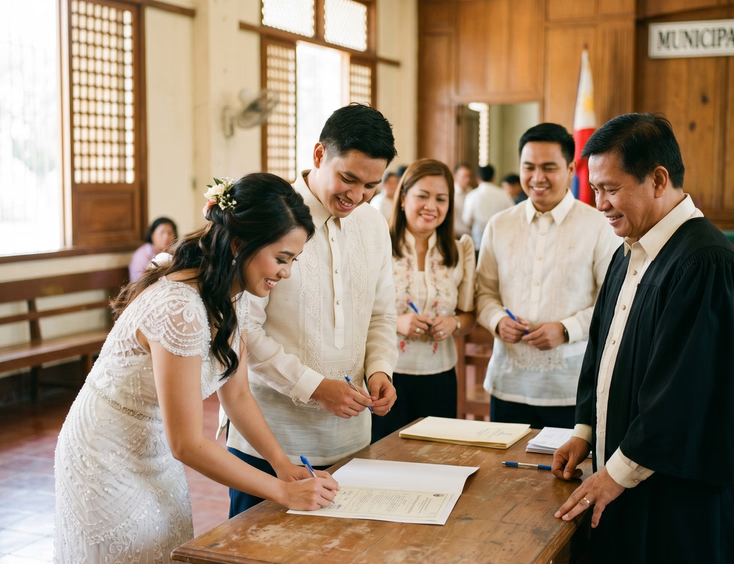
You picked the dress and booked the venue. Then someone asks who's officiating, and you pause. Your officiant signs the document that makes your marriage legal. Choose someone without the authority to do it, and your marriage is void from the day you say 'I do.'
The Family Code of the Philippines names who can solemnize a marriage. Learn the rules before you book anyone, because an unauthorized officiant gives you a void marriage, no matter how perfect the ceremony. Our guide on who is legally authorized to solemnize a marriage in the Philippines under the Family Code covers each category. The law recognizes these solemnizing officers:
- Incumbent judges officiate within their jurisdiction, from Supreme Court and Court of Appeals Justices to Regional Trial Court, Metropolitan Trial Court, and Municipal Trial Court judges.
- Priests, imams, rabbis, ministers, and pastors of a registered church or religious sect officiate once the Civil Registrar General authorizes them in writing, within the limits of that authority.
- Ship captains and airplane chiefs solemnize marriages in articulo mortis between passengers or crew during a voyage.
- Military commanders of a unit do the same in articulo mortis within a zone of military operations.
- Consuls-general, consuls, and vice-consuls officiate marriages between Filipino citizens abroad.
- Mayors officiate within their territorial jurisdiction under the Local Government Code of 1991.
A celebrity host, your favorite uncle, a hotel events manager, or a wedding coordinator in a barong can run a beautiful program. None of them can sign your marriage certificate or make the marriage valid.
The Marriage License Comes First
Before any officiant agrees to marry you, you need a marriage license. It is the government's confirmation that you are both free to marry under the law, and your officiant cannot proceed without it. The law spells out narrow exceptions, including a Muslim marriage under PD 1083 and a couple who have lived together as husband and wife for at least five years.
You apply at the Local Civil Registrar (LCR) in the city or town where you or your partner has lived for at least six months. The LCR posts your application for ten straight days, the publication period, so anyone with a legal objection can come forward. The LCR issues the license after that, and it stays valid for 120 days from the date of issue, anywhere in the country.
Your officiant handles several steps in this process:
- Reviews your marriage license before the ceremony begins.
- Confirms the names on the license match the two people standing in front of them.
- Performs the rites.
- Signs the marriage certificate.
- Submits the signed certificate to the LCR within 15 days for a civil ceremony, or 30 days for a religious one.
See the full timeline in the marriage license process in the Philippines and the role your officiant plays in it.
Documents You Need to Hand Over
Your officiant will ask for paperwork, and the list shifts with your situation. Most couples hand over:
- PSA-issued birth certificates for both parties
- A CENOMAR (Certificate of No Marriage Record) from the PSA for each of you
- Valid government-issued IDs
- The marriage license
- Parental consent if either party is 18 to 21 years old
- Parental advice if either party is 22 to 25 years old
Foreign nationals add a Certificate of Legal Capacity to Contract Marriage from their embassy. A widowed applicant submits the PSA death certificate of the late spouse. An applicant whose earlier marriage ended in annulment submits the PSA-annotated marriage certificate that shows it.
Tip: Request your PSA documents a month before you apply for the license. The PSA and couriers can run slow, and you do not want to chase a birth certificate the week of the wedding.
You will find the full checklist, including every special case, in what documents does your wedding officiant need from you in the Philippines.
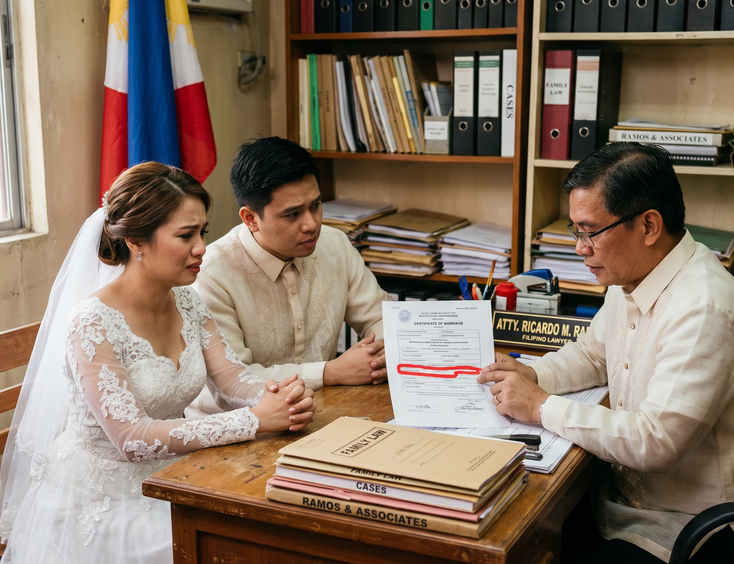
What Happens When the Officiant Has No Authority
If someone without legal authority solemnizes your marriage, it is void from the beginning under Article 35 of the Family Code. Void means the marriage never existed in the eyes of the law. You do not annul a void marriage, because there was nothing valid to undo.
One narrow exception protects couples who acted in good faith. If you or your partner believed the solemnizing officer held legal authority, and you had no reason to doubt it, the marriage stands. Good faith means you saw or trusted a Certificate of Authority to Solemnize Marriage (CASM), not that a friend changed his Facebook name to put 'Pastor' in front of it.
You inherit a stack of problems with a void marriage: property disputes, inheritance complications, a spouse's immigration status in question, a child's legitimacy challenged, and insurers refusing to pay out. We cover the full fallout in what happens if your wedding officiant is not legally authorized in the Philippines.
Church Wedding or Civil Wedding
Both give you a valid marriage under the law. The choice changes who officiates, where you stand, what the requirements are, and how the day feels.
A civil wedding happens at a judge's chambers, the mayor's office, or a venue the solemnizing officer accepts, with a judge or mayor presiding. It runs short. Many civil ceremonies wrap in under thirty minutes. You exchange vows, sign the certificate before two witnesses, and you walk out married.
A church wedding follows the rites of your denomination. Catholic couples sit for a canonical interview, gather baptismal and confirmation certificates annotated 'for marriage purposes,' attend a pre-Cana seminar, post marriage banns at both parishes for three Sundays, and celebrate the nuptial Mass. Iglesia ni Cristo, other Christian churches, and other registered religious groups set their own requirements.
A direct comparison:
| Factor | Civil Wedding | Church Wedding |
|---|---|---|
| Who officiates | A judge or a city or municipal mayor | A priest, minister, or other authorized religious officer |
| Where it happens | Chambers, the mayor's office, or an approved venue | A church or place of worship for your denomination |
| Main requirements | Marriage license, two witnesses, valid IDs | Marriage license plus denominational steps: interviews, seminars, banns, and religious certificates |
| Typical length | Under 30 minutes | Longer, and a Catholic nuptial Mass can run an hour or more |
| Legal validity | Valid and recognized | Valid and recognized |
Read the full side-by-side in church wedding vs. civil wedding in the Philippines: legal differences every couple must understand.
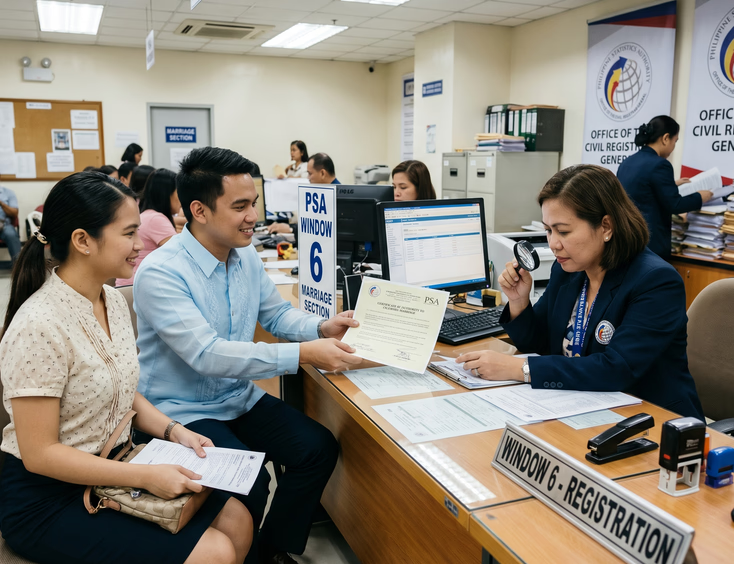
How to Check If Your Officiant Is Legitimate
Anyone can call themselves a wedding officiant, so verify before you sign.
Start with the Certificate of Authority to Solemnize Marriage (CASM). Religious solemnizing officers receive this from the Office of the Civil Registrar General (OCRG) under the Philippine Statistics Authority. A valid CASM carries a registration number, the officiant's name, the religious organization they represent, and the date of issuance. Judges and mayors hold no CASM, since their authority comes from public office, so confirm them through the court or the municipal hall.
Cross-check with the PSA, which keeps the registry of authorized solemnizing officers and answers verification requests. Confirm that the religious organization holds its own registration too. Some groups operate without SEC registration or PSA recognition. Marry through one of them, and your wedding is void, no matter how convincing the ceremony.
Work through every check in how to verify if your wedding officiant is registered and recognized in the Philippines.
Muslim Marriages Under the Code of Muslim Personal Laws
Muslim Filipinos marry under Presidential Decree 1083, the Code of Muslim Personal Laws, which runs parallel to the Family Code. The Shari'a District Court holds jurisdiction. An Imam, a Hakim, or a person the Imam designates solemnizes the marriage, following the requirements of Muslim law.
The Code recognizes the nikah (the marriage contract), the mahr (the bridal gift from the groom to the bride), the presence of two witnesses, and the consent of the wali (the bride's guardian). The Office of the Circuit Registrar registers the marriage, then transmits the certificate to the PSA for the national civil registry.
Muslim couples, and interfaith couples with one Muslim partner, should read marriage under the Code of Muslim Personal Laws: a legal guide for Muslim couples in the Philippines before booking anyone.
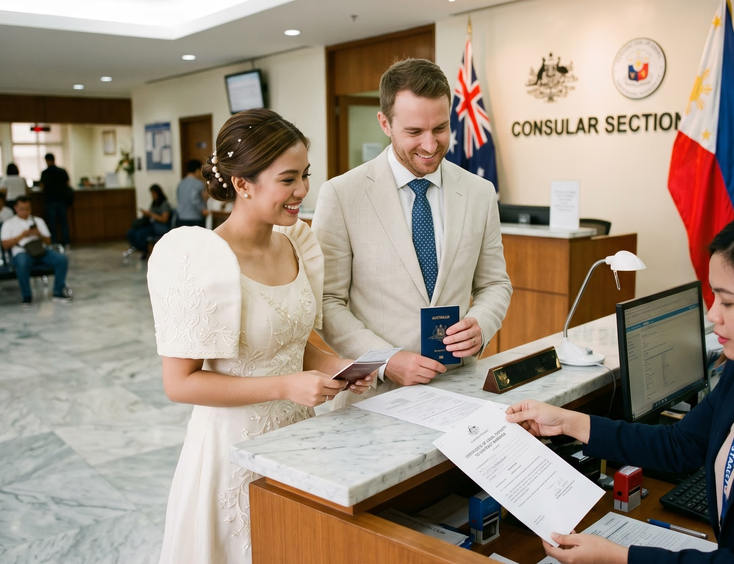
Marrying a Foreigner in the Philippines
A foreign national marrying a Filipino here submits a Certificate of Legal Capacity to Contract Marriage from their embassy or consulate. The certificate confirms the foreigner is single, divorced, or widowed under their home country's law and free to marry. Some embassies no longer issue it, and those nationals turn to alternatives, such as an affidavit sworn before a notary alongside supporting civil status records from home.
Your officiant should know what the foreign partner's nationality requires before the ceremony date. Show up with a missing document, and you lose the day. The foreign spouse also faces decisions after the wedding: immigration status, name changes, property regimes, and what becomes of the marriage if either of you relocates.
The full process, embassy-by-embassy quirks, and post-wedding paperwork sit in special circumstances: marrying a foreigner in the Philippines and what your officiant needs to know.
How to Choose Your Wedding Officiant
Start with the wedding you want. A civil ceremony narrows your choices to judges and mayors. A Catholic ceremony points you to the priest assigned to your parish, or one who agrees to officiate at your chosen church. For other denominations, you work with their registered ministers and pastors. For a Muslim ceremony, you bring in an Imam from your community.
Ask these questions before you sign anything:
- Do you hold a current Certificate of Authority to Solemnize Marriage?
- What is your CASM registration number?
- Will you submit the signed marriage certificate to the LCR yourself?
- Do you require pre-marriage counseling or seminars?
- What is your fee, and what does it cover?
Then read recent reviews and talk to two or three couples this officiant has married. Match the name on the CASM against the name they will sign on your marriage certificate.
Browse our wedding officiants directory, where each listed solemnizing officer has shared their credentials and contact details so you can verify before you book.
A Quick Pre-Wedding Officiant Checklist
Use this timeline to keep the legal side on track:
- Two months out: Confirm your officiant's availability for your date and venue, and submit your marriage license application to the LCR.
- Six weeks out: Hand over every required document, and sit through any counseling, seminar, or canonical interview your officiant or church asks for.
- Two weeks out: Pick up your marriage license, and settle the ceremony script, vows, and readings with your officiant.
- Wedding week: Walk through the venue with your officiant, and remind your two witnesses to bring valid IDs and arrive on time.
- Wedding day: Bring the marriage license, IDs for both parties, IDs for both witnesses, and the agreed officiant's fee.
- After the wedding: Confirm your officiant filed the signed marriage certificate with the LCR within the required period, then request your PSA-certified marriage certificate four to six months later to confirm the registration went through.
Your officiant holds more legal weight than any other vendor on your wedding day. Choose someone authorized, hand over the right papers, and you leave married. Choose the wrong person, and you leave with a beautiful album of a day that never counted as a marriage.
Still Searching for a Right Match?
Find Your Perfect Wedding Supplier Today!
Discover trusted wedding suppliers across the Philippines in our complete directory. Compare services and connect with the ones that fit your dream celebration.
Browse Wedding SuppliersFeatured Blog Posts

Filipino Wedding Entourage - Roles, Order of March, and Modern Etiquette
6 mins readCivil Weddings in the Philippines - Requirements, Costs, and Step-by-Step Process
9 mins readCivil Wedding Requirements in the Philippines - Complete Checklist
6 mins readCost of Wedding in the Philippines - 5 Essential Things You Need to Know
7 mins readPrincipal Sponsors (Ninong/Ninang) - How Many, How to Ask, What They Really Do
4 mins readVeil, Cord, Candle & Coins - Roles, Options, and When They Happen
4 mins readEntourage for a Traditional Pinoy Wedding - Complete Roles and Guide
6 mins readComplete List of Civil Wedding Requirements in the Philippines
8 mins readHow to Choose Wedding Ninongs and Ninangs - Ask Yourself These 3 Important Questions
5 mins read