


Marriage Under the Code of Muslim Personal Laws: A Legal Guide for Muslim Couples in the Philippines
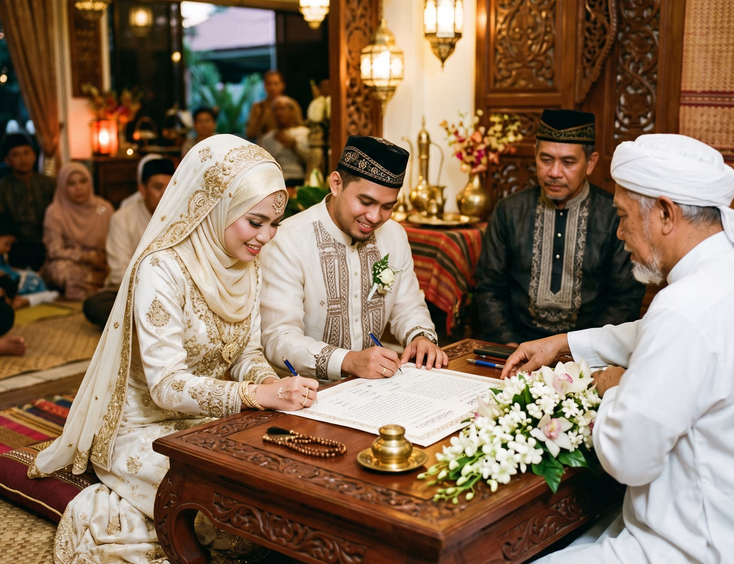
Muslim Filipinos marry under a different legal framework from the rest of the country. Catholic, Christian, and civil weddings run through the Family Code of the Philippines, while Muslim marriages run through Presidential Decree 1083, the Code of Muslim Personal Laws. The two codes operate in parallel, with PD 1083 governing personal status matters for Muslim Filipinos and recognized cultural communities.
The Code sits inside the Philippine legal system, not outside it. Lawmakers enacted it in 1977, and the marriages it produces carry the same legal weight as marriages under the Family Code. The PSA registers Muslim marriages alongside the rest in the national civil registry, and a PSA-certified Muslim marriage certificate looks and works the same as any other for passport applications, immigration, inheritance, banking, and government benefits. For the wider picture on who can marry you across Philippine law and how to choose them, start with our guide to wedding officiants in the Philippines.
Where the Code Applies
Article 13 of PD 1083 sets the scope of the Code for marriage and divorce. The Code applies when both parties are Muslims, or when only the male party is a Muslim and the marriage is solemnized in accordance with Muslim law or PD 1083 anywhere in the Philippines.
When both parties are Muslims, the Code governs without question. The marriage runs through Muslim solemnization, Muslim documentation, and registration with the Office of the Circuit Registrar, and it exists under PD 1083 from the moment the nikah is complete. When only the male party is a Muslim, the Code applies if the marriage follows Muslim rites. A Muslim man marrying a non-Muslim woman under Muslim rites and through a Muslim solemnizer produces a marriage under PD 1083. The same couple marrying through a civil ceremony produces a marriage governed by the Family Code instead.
A Muslim woman marrying a non-Muslim man cannot validly marry under PD 1083 in most cases. Article 14 of the Code bars a Muslim woman from marrying a non-Muslim man unless he converts to Islam before the marriage. Couples in this situation usually marry under the Family Code through a civil or non-Muslim religious ceremony, since Muslim law permits a Muslim man to marry a non-Muslim woman but not the reverse. The Code's reach also extends to ethnic cultural communities through the Indigenous Peoples Rights Act and related laws, though the specific frameworks vary by community.
The Essential Requirements of a Muslim Marriage
Article 14 of PD 1083 defines marriage as a civil contract, governed by the rules and effects the Code establishes. The essential requirements run across several articles in the chapter on marriage.
- Legal capacity of both parties. Article 16 sets the minimum age at 15 lunar years for males and the age of puberty for females, with a marriage between persons under 18 requiring the consent of the wali. These provisions interact with Republic Act 11648, which raised the age of sexual consent and tightened protections against child marriage. Current Philippine practice aligns the marriage age with the Family Code minimum of 18, and Shari'a courts and Circuit Registrars enforce the higher standard. Confirm the current age requirements with your local Office of the Circuit Registrar before you proceed.
- Mutual consent freely given. Both parties consent without coercion, expressed through the offer (ijab) by one party and the acceptance (qabul) by the other, both stated openly during the nikah.
- Presence of the wali for the bride. The wali is the bride's guardian, traditionally the father, then the paternal grandfather, then other male relatives in a defined order. Muslim law requires the wali's consent or representation for a valid marriage.
- Mahr (the bridal gift). The groom gives the mahr to the bride, agreed before or during the ceremony, in cash, property, jewelry, or anything of value. It belongs to the bride alone, not to her family. The couple can pay it in full at the marriage (mahr al-mu'ajjal) or defer it to a later date, divorce, or death (mahr al-mu'akhkhar), and the contract must specify it.
- Two competent witnesses. Article 17 requires at least two competent witnesses, who observe the ijab and qabul and sign the marriage contract.
- No legal impediment. The parties must fall outside the prohibited degrees of consanguinity or affinity under Articles 24 to 26, carry no existing marriage incompatible with the new one (a Muslim woman has one husband, a Muslim man up to four wives under conditions), and hold no other impediment under Muslim law.
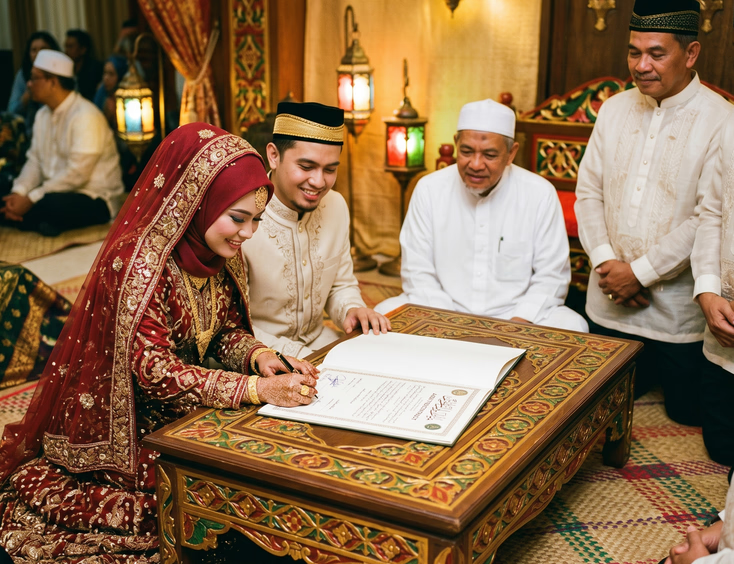
The Marriage Contract (Aqd)
Article 17 of PD 1083 requires the marriage contract, the aqd, in writing. The aqd is the formal record of the marriage, signed by the parties, the wali, the solemnizing officer, and the witnesses. It specifies:
- The names and personal details of both parties
- The mahr, with its amount and payment terms
- Any conditions or stipulations the parties choose to include
- The names of the wali, witnesses, and solemnizing officer
- The date and place of the marriage
The aqd is the documentary core of a Muslim marriage. The Office of the Circuit Registrar uses it to register the marriage and transmit the record to the Philippine Statistics Authority.
Tip: Put the mahr in the aqd in plain, specific terms: the exact amount or item, and whether it falls due now or later. A deferred mahr left vague turns into a dispute years on, when memories differ and the Shari'a court has only the contract to read. Spell it out the day you sign.
Who Can Solemnize a Muslim Marriage
Article 18 of PD 1083 names the persons who can solemnize Muslim marriages:
- An Imam, the religious leader of a Muslim community
- A Hakim, a Shari'a court judge
- Any person the Imam designates to solemnize a marriage according to the customs and traditions of Muslim Filipinos
The solemnizer follows Muslim law and community custom, verifies the parties' legal capacity, the wali's representation, the mahr agreement, and the consent of both parties, then completes the nikah. The solemnizer also handles registration: within 30 days of the marriage, they submit the aqd to the Office of the Circuit Registrar where the marriage took place, and the Circuit Registrar registers the marriage and forwards the record to the PSA. The full discussion of authorized solemnizing officers across Philippine law, including the Family Code categories, lives in who is legally authorized to solemnize a marriage in the Philippines under the Family Code.
The Office of the Circuit Registrar
The Office of the Circuit Registrar is the Muslim marriage counterpart of the Local Civil Registrar in the Family Code system. The Circuit Registrar keeps the registry of marriages, divorces, conversions, and other personal status matters under PD 1083 within a defined circuit, usually covering several municipalities in Muslim Mindanao or other areas with significant Muslim populations.
The Circuit Registrar receives the aqd from the solemnizing officer, registers the marriage in the Muslim civil registry, issues certified copies of the marriage certificate to the parties, and transmits the record to the PSA for the national civil registry. Know which Circuit Registrar covers your place of marriage and place of residence. That office is the source for certified copies, the place that processes annotations or corrections, and the office that handles divorces under the Code.
Marriage License Requirement
A marriage license under the Family Code does not apply to marriages solemnized under PD 1083. The Code supplies its own procedural framework, replacing the LCR application, the publication period, and the license itself. Article 33 of the Family Code provides the exemption: marriages between Muslims or among members of ethnic cultural communities may be performed validly without a marriage license, provided they follow the parties' customs, rites, or practices.
The Muslim marriage process stands in for the license process. The Imam or solemnizing officer confirms legal capacity, consent, mahr, witnesses, and wali under Muslim law. The aqd serves the documentary function the license would serve under the Family Code, and the Circuit Registrar's registration serves the function the LCR's registration would serve. A side-by-side helps:
| Step under the Family Code | Counterpart under PD 1083 |
|---|---|
| Marriage license from the LCR | No license; the aqd and the Code's own rules replace it |
| Ten-day LCR publication period | Solemnizer's verification of capacity, consent, mahr, witnesses, and wali |
| Local Civil Registrar registration | Office of the Circuit Registrar registration |
| Solemnizer files certificate with the LCR | Solemnizer files the aqd with the Circuit Registrar within 30 days |
| LCR forwards record to the PSA | Circuit Registrar forwards record to the PSA |
The full discussion of the license process for Family Code marriages, including the exemptions, lives in the marriage license process in the Philippines and the role your officiant plays in it.
Polygyny Under the Code
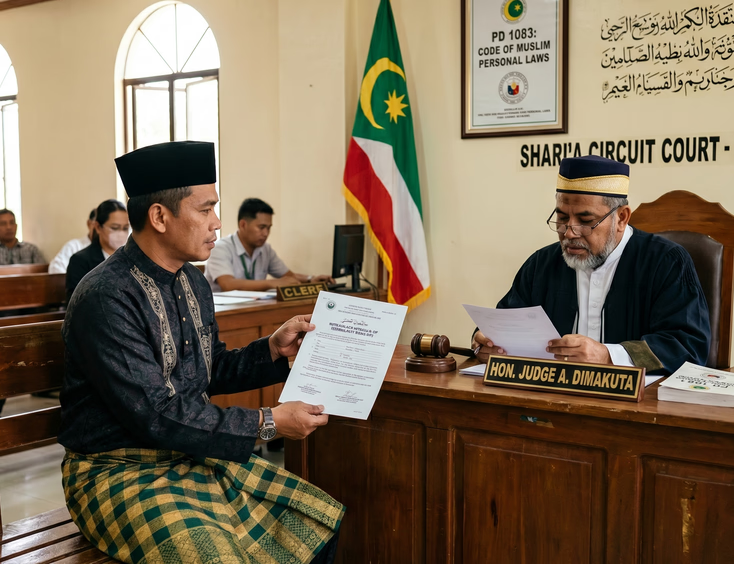
Article 27 of PD 1083 allows a Muslim man to have more than one wife, up to four, under strict conditions:
- He must provide equal treatment to all wives in support, maintenance, and lodging.
- He must obtain prior approval from the Shari'a Circuit Court before contracting a subsequent marriage.
- He must give notice to the existing wife or wives and to the prospective new wife about the existing marriages.
Article 162 makes a failure to meet these requirements a ground for the existing wife to seek dissolution of the marriage. The Shari'a court reviews petitions for permission to take additional wives and weighs the husband's capacity to maintain equal treatment. A Muslim man who marries a second wife without court approval and without satisfying the equal-treatment requirement enters a marriage procedurally defective under the Code, with consequences for the parties and for the children of the subsequent marriage. The proper path runs through a court petition before the second marriage, not after. A Muslim woman marries one husband at a time, since the Code does not recognize polyandry.
Divorce Under the Code
PD 1083 recognizes divorce, unlike the Family Code, which does not allow absolute divorce for marriages between Filipinos. The Code lists several forms under Muslim law:
- Talaq. Divorce by the husband through repudiation. He pronounces the talaq, usually over a defined waiting period (the iddah) that encourages reconciliation, and the divorce becomes final after the iddah if no reconciliation follows.
- Faskh. Judicial divorce granted by the Shari'a court on the grounds in Article 52, including the husband's failure to provide support, his absence for more than a year without reason, his impotence, his insanity, his cruel treatment of the wife, and his neglect of marital obligations.
- Khula. Divorce at the wife's instance with the husband's consent, usually with the wife returning the mahr or offering other consideration.
- Tafwid. Divorce by the wife exercising a delegated right of divorce the husband granted at the marriage or later.
- Mubara'at. Divorce by mutual consent of both parties.
- Li'an. Divorce by mutual imprecation, used where the husband accuses the wife of adultery.
- Ila and zihar. Specific traditional grounds with their own procedures.
Each form carries its own procedural requirements. The Office of the Circuit Registrar registers most divorces, annotates the marriage record, and forwards the divorce record to the PSA. This access to divorce marks one of the sharpest differences from the Family Code. A couple married under PD 1083 can seek divorce remedies, while a couple married under the Family Code cannot, holding only annulment, declaration of nullity, or legal separation.
Property Relations Under the Code
The Code establishes a property regime distinct from the absolute community of property under the Family Code. Article 38 of PD 1083 provides that a contract between the spouses governs their property relations, and absent a contract, complete separation of property applies.
Complete separation means each spouse owns separately whatever they earn or acquire during the marriage. The wife's earnings, inheritance, gifts, and acquisitions stay hers; the husband's stay his; and neither holds automatic rights over the other's property by reason of the marriage. The rule reverses the Family Code default, where, absent a marriage settlement, property acquired during the marriage forms the absolute community subject to specific exceptions.
The Muslim regime tracks classical Muslim law, which treats the wife as a separate economic person with her own property rights, her own inheritance, and her own management of her assets. The mahr the bride receives is her property, not joint property with the husband. A couple who wants a different regime can adopt one by contract signed before the marriage, much like a marriage settlement under the Family Code.
Children of Muslim Marriages
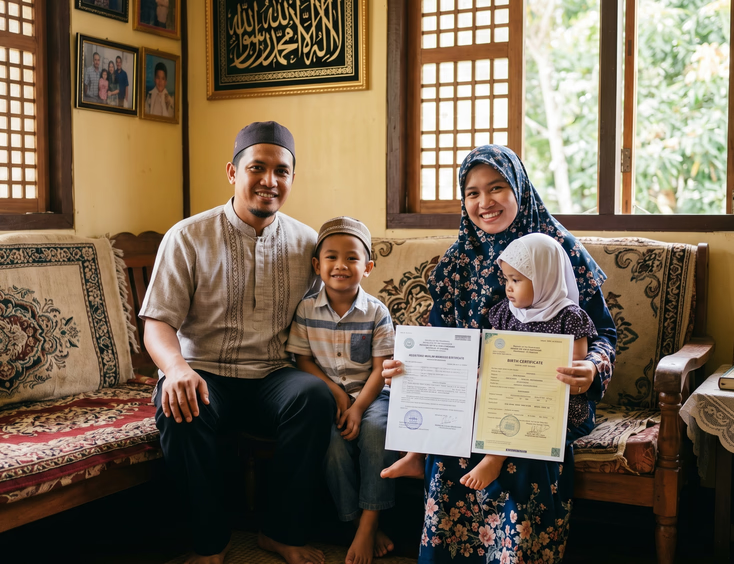
Children of a valid Muslim marriage are legitimate under PD 1083. The Philippine legal system recognizes that legitimacy through registration of the birth with the Circuit Registrar and the PSA, the same way it recognizes legitimacy under the Family Code through PSA registration.
The Code addresses paternity, custody, and support through its chapters on parental authority and succession. These provisions parallel the Family Code in many respects while following Muslim law on specific points, such as the wife's right to lactation support, the father's primary obligation for child support, and the rules of custody between parents. A child of a Muslim marriage receives a name following Muslim naming conventions, with the father's name usually forming part of the child's full name, and birth registration follows the standard PSA process through the Circuit Registrar.
Inheritance Under the Code
Succession in Muslim marriages follows the rules of Muslim inheritance law, codified in Book III of PD 1083, and these differ from the Civil Code's rules for non-Muslim Filipinos. The Code assigns fixed shares (faraid) to specific heirs, including the surviving spouse, parents, children, and other relatives, calculated under Articles 110 to 145.
| Heir | Share with no children | Share with children |
|---|---|---|
| Surviving wife | One-fourth of the husband's estate (multiple wives split this equally) | One-eighth (split equally among multiple wives) |
| Surviving husband | One-half of the wife's estate | One-fourth |
| Children | Take the residue after fixed shares | Take the residue, with a son receiving double a daughter's share under the classical rule |
A Muslim can dispose of up to one-third of the estate through a will (wasiya), with the remaining two-thirds passing to the legal heirs under faraid. The Civil Code, by contrast, allows wider testamentary freedom subject to legitime restrictions. These differences grow complicated in mixed families, and estate planning for Muslim families benefits from a Shari'a lawyer familiar with both PD 1083 and the surrounding Philippine framework.
Shari'a Courts and Their Jurisdiction
PD 1083 established the Shari'a court system to handle matters under the Code. These courts hold jurisdiction over personal status, family relations, inheritance, and property matters between Muslims.
- Shari'a Circuit Courts. First-level courts with original jurisdiction over offenses under the Code (with penalties not exceeding a specified amount) and over civil cases involving Muslim personal law below a certain value threshold.
- Shari'a District Courts. Higher-level courts with original jurisdiction over more serious cases and appellate jurisdiction over Shari'a Circuit Court decisions.
- Court of Appeals and Supreme Court. Appeals from Shari'a District Courts proceed through the regular court system.
Shari'a courts apply Muslim law and PD 1083 to cases within their jurisdiction, while cases involving Muslims that fall outside that jurisdiction proceed in the regular courts. A case involving a Muslim and a non-Muslim party often raises jurisdictional questions, which the courts resolve based on the nature of the case and the parties involved.
Documents Required for a Muslim Marriage
The Office of the Circuit Registrar requires documents to register the marriage, and the exact list varies by office. The standard set covers:
- Birth certificates or other proof of age for both parties
- Valid government-issued IDs for both parties
- Proof of the wali's relationship to the bride
- Documentation of the mahr (amount, type, payment terms)
- Names and identification of the two witnesses
- For a previously married party, the death certificate of the late spouse or the divorce decree under PD 1083
- For a convert to Islam, documentation of the conversion, usually a certificate from the Islamic council or mosque
Consult your local Office of the Circuit Registrar for the current checklist. The full discussion of documents for Philippine weddings, including those under the Family Code, runs through what documents does your wedding officiant need from you in the Philippines.
Mixed Marriages and Interfaith Couples
A Muslim marrying a non-Muslim raises framework questions to settle before the wedding.
A Muslim man marrying a non-Muslim woman can proceed under PD 1083 if a Muslim ceremony solemnizes the marriage, or under the Family Code if a civil or non-Muslim religious ceremony does. The choice shapes the property regime, the rules of divorce, the rules of succession, and the rights and obligations of the parties throughout the marriage.
A Muslim woman marrying a non-Muslim man cannot validly marry under PD 1083 unless the man converts to Islam. The conversion is a voluntary religious act, usually completed through the local Islamic council or mosque, after which the marriage can proceed under the Code. Without conversion, the couple usually marries under the Family Code, which affects how the Muslim community treats the marriage. When both parties are Muslim but one is a foreign national, the marriage can proceed under PD 1083, with the foreign spouse supplying the documents their nationality requires (a Certificate of Legal Capacity to Contract Marriage from their embassy or alternative documents). The full set of issues for marriages involving a foreign party runs through special circumstances: marrying a foreigner in the Philippines and what your officiant needs to know.
Practical Steps for Muslim Couples Planning to Marry
- Confirm the framework. Decide whether the marriage proceeds under PD 1083 (Muslim ceremony, Muslim solemnizer, Circuit Registrar registration) or the Family Code (civil or non-Muslim religious ceremony, LCR registration). Two Muslim parties follow PD 1083 as the standard path; mixed couples decide based on their religious choices and the framework they want to operate under.
- Identify the solemnizer. Find an Imam, Hakim, or designated solemnizer recognized in your community, and confirm their standing with the local Islamic council and the Office of the Circuit Registrar.
- Engage the wali. The bride and her wali coordinate the wali's role in the ceremony. If no eligible wali is available, the Code provides for substitution through the Shari'a court.
- Agree on the mahr. Settle the type (cash, property, jewelry), the amount, and the timing (immediate or deferred). The terms become part of the aqd.
- Select two witnesses. Choose Muslim adults of sound mind, available to attend the nikah and sign the aqd.
- Prepare documents. Gather what the Office of the Circuit Registrar requires, including birth certificates, IDs, wali documentation, and any prior-marriage documents.
- Conduct the nikah. The ceremony takes place at the agreed location, with the solemnizer leading, the wali representing the bride, the ijab and qabul exchanged, the mahr stated, and the witnesses observing.
- Sign and submit the aqd. The parties, the wali, the witnesses, and the solemnizer sign, and the solemnizer files the aqd with the Office of the Circuit Registrar within 30 days.
- Confirm PSA registration. Four to six months after the marriage, request a PSA-certified copy of the marriage certificate to confirm the marriage sits on the national civil registry, issued through the PSA's standard channels.
Verifying a Muslim Solemnizing Officer
Verifying a Muslim solemnizing officer runs through different channels than verifying a Family Code officer.
- Through the local Islamic council. The local Islamic council, the mosque committee, or the Bangsamoro Islamic Religious Affairs Office in the Bangsamoro Autonomous Region in Muslim Mindanao can confirm an Imam or Hakim's standing in the community.
- Through the Office of the Circuit Registrar. The Circuit Registrar keeps records of solemnizing officers who routinely register marriages with the office. A solemnizer unknown to the Circuit Registrar can run into registration problems, even when the marriage was conducted properly.
- Through the Shari'a court. For a Hakim or a person designated by Shari'a court order, the court itself can confirm the authority.
The full set of verification methods, including those for Family Code officers, lives in how to verify if your wedding officiant is registered and recognized in the Philippines.
Conversion to Islam Before Marriage
A non-Muslim who wishes to marry a Muslim under PD 1083 can convert to Islam before the marriage. The conversion is a voluntary religious act, usually completed through the recitation of the Shahada, the declaration of faith, before a community of Muslims at a mosque or Islamic center.
The mosque or Islamic council documents the conversion through a certificate, which the convert presents to the Office of the Circuit Registrar as part of the marriage registration. For marriage purposes, the conversion establishes the convert's eligibility to marry under PD 1083 and brings the marriage under the Code's framework. Conversion carries implications beyond the wedding, including obligations under Muslim law and integration into the Muslim community, so treat the decision as religious and personal, with the legal effect on marriage as one consideration among many.
When Things Go Wrong
Problems with Muslim marriages arise from defects in the solemnization, registration failures, or disputes between the parties, and the remedies run through the Shari'a courts and the Office of the Circuit Registrar.
A marriage conducted without proper consent, without a valid wali, without the required witnesses, or without agreement on the mahr may be defective under Muslim law, and the Shari'a court can determine its validity and the available remedies. A marriage properly solemnized but never registered with the Circuit Registrar exists under Muslim law yet lacks the documentary trail the Philippine government recognizes; the fix is registration after the fact, with affidavits from the solemnizer, the wali, and the witnesses confirming the marriage took place. Disputes over the amount, payment, or fulfillment of the mahr proceed through the Shari'a court under Article 36, and the court also hears property disputes between spouses and custody disputes involving children of Muslim marriages.
A marriage conducted by a person without proper authorization under PD 1083 faces consequences similar to those for unauthorized Family Code marriages. The full discussion of what happens when an officiant lacks authority lives in what happens if your wedding officiant is not legally authorized in the Philippines.
Working With Qualified Solemnizers
Muslim couples should work with a solemnizer experienced in both the religious requirements of the nikah and the documentary requirements of registration with the Circuit Registrar. A qualified solemnizer:
- Holds standing in the local Muslim community as an Imam or Hakim, or carries designation by a recognized Imam
- Is known to the Office of the Circuit Registrar covering the place of marriage
- Maintains accurate aqd documentation
- Files the aqd with the Circuit Registrar inside the 30-day period
- Gives the parties copies of the aqd and the registered marriage certificate
- Stays available to help with post-marriage documentation
Browse vetted solemnizers, including those qualified to perform marriages under PD 1083, through our wedding officiants directory, where every listed officer provides credentials and contact details upfront. Confirm the solemnizer's experience with Muslim marriages and the Circuit Registrar's process before you book.
The Code of Muslim Personal Laws is a complete legal framework, recognized by the Philippine government, producing marriages with full legal effect. Couples who marry under PD 1083 stand on solid legal ground from the moment the nikah is complete, the aqd is signed, and the Circuit Registrar receives the record for transmission to the PSA.
Still Searching for a Right Match?
Find Your Perfect Wedding Supplier Today!
Discover trusted wedding suppliers across the Philippines in our complete directory. Compare services and connect with the ones that fit your dream celebration.
Browse Wedding SuppliersFeatured Blog Posts




Filipino Wedding Entourage - Roles, Order of March, and Modern Etiquette
6 mins readCivil Weddings in the Philippines - Requirements, Costs, and Step-by-Step Process
9 mins readCivil Wedding Requirements in the Philippines - Complete Checklist
6 mins readCost of Wedding in the Philippines - 5 Essential Things You Need to Know
7 mins readPrincipal Sponsors (Ninong/Ninang) - How Many, How to Ask, What They Really Do
4 mins readVeil, Cord, Candle & Coins - Roles, Options, and When They Happen
4 mins readEntourage for a Traditional Pinoy Wedding - Complete Roles and Guide
6 mins readComplete List of Civil Wedding Requirements in the Philippines
8 mins readHow to Choose Wedding Ninongs and Ninangs - Ask Yourself These 3 Important Questions
5 mins read