


What Documents Does Your Wedding Officiant Need From You in the Philippines
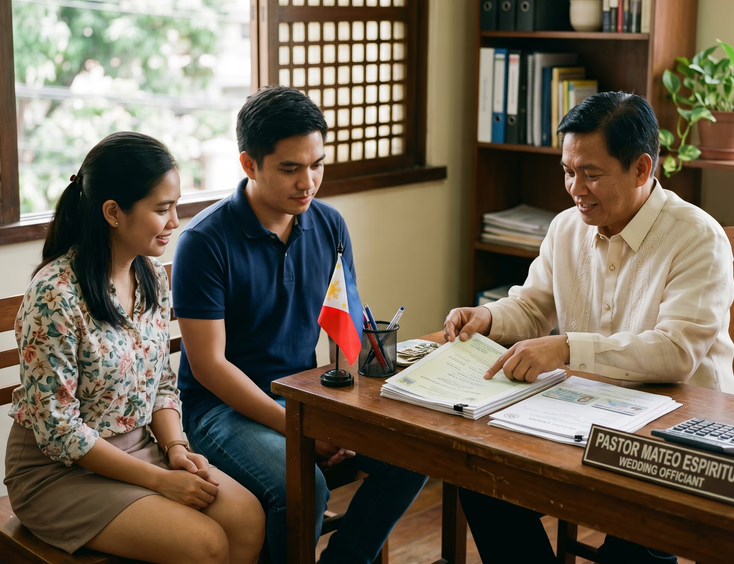
Your officiant signs the document that makes your marriage legal. Before they sign, they review a stack of paperwork that proves you are who you say you are, that you are free to marry, and that your wedding meets every requirement of the Family Code. Hand them an incomplete pile and the ceremony stops at the altar. Hand them everything in order and they perform the rites, sign the certificate, and file it with the LCR inside the legal period. For the full picture of who can marry you and how to choose them, start with our guide to wedding officiants in the Philippines.
The Core Document Checklist
Every wedding in the Philippines under the Family Code runs on the same baseline set of documents. Gather these before you book your officiant, since they will ask for the list at your first meeting.
- PSA-issued birth certificate, both parties. The PSA copy carries the official seal and security paper. A copy from the Local Civil Registrar where you were born is not the same document, and your officiant needs the PSA version. Order through PSAHelpline.ph, a PSA Serbilis branch, or the PSA online platform.
- CENOMAR (Certificate of No Marriage Record), both parties. This PSA document confirms you carry no existing marriage on record. Most LCRs accept a CENOMAR issued within the last six months, though some want one from the last three. Order it the same way you order your birth certificate.
- Marriage license. Issued by the LCR of the city or municipality where either of you habitually resides, it carries a serial number, both your names, and the LCR's signature and seal. It stays valid for 120 days from issuance and works anywhere in the country during that window. Walk through the full process in the marriage license process in the Philippines and the role your officiant plays in it.
- Valid government-issued IDs, both parties. At least one current ID with photo and signature: passport, driver's license, UMID, PRC license, postal ID, voter's ID, or PhilSys national ID. The name on it must match the PSA birth certificate.
- Community Tax Certificate (cedula), both parties. Issued by the barangay or city hall for a modest fee, for the current year. Some officiants want it at the LCR application stage, others at the ceremony.
- Witness IDs. Two witnesses of legal age present valid government IDs at the ceremony, and the officiant checks them before the witnesses sign. Family, friends, anyone who meets the age requirement and brings valid identification can serve.
Age-Based Document Requirements
The Family Code adds requirements when one or both of you fall inside certain age brackets, and each bracket changes whether the license issues and how fast.
| Age of either party | Added document | What happens without it |
|---|---|---|
| Under 18 | None available | No valid marriage under Article 5, even with parental consent; the marriage is void |
| 18 to 21 | Written parental consent (Article 14), notarized | The LCR will not release the license, and a marriage held anyway can be annulled under Article 45 |
| 22 to 25 | Written parental advice (Article 15) | The license still issues, but the LCR adds three months to the publication period |
Parental consent for the 18-to-21 bracket comes in writing, signed before a notary, from the father, the mother, the surviving parent or guardian, or the person with legal charge of the party, in that order, and goes in with the license application. Parental advice for the 22-to-25 bracket carries less force: withheld or unfavorable advice slows you down rather than stopping you, turning the ten-day publication into a three-month wait. A party under 18 has no path to a valid marriage here, so no officiant will perform the ceremony and no LCR will release a license.
Documents for Previously Married Parties
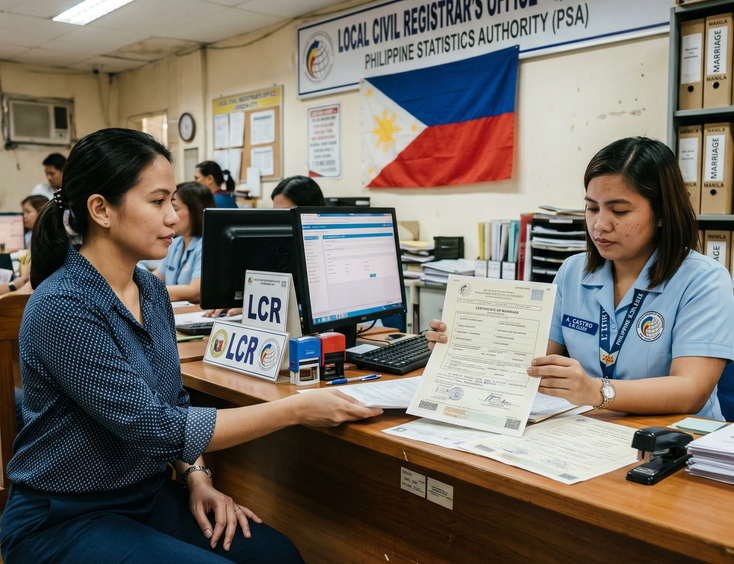
A party with a previous marriage adds documents proving that marriage no longer stands.
- Widowed party. The PSA-issued death certificate of the late spouse, which confirms the prior marriage ended and you are free to remarry.
- Annulled party. The PSA-annotated marriage certificate showing the annulment or declaration of nullity. The annotation appears on the certificate itself once the court decision becomes final. A court decision without the PSA annotation is not enough, since the PSA must process the order and update the registry record.
- Divorced foreign party. The divorce decree, authenticated by the issuing country and the Philippine consulate or embassy, plus PSA recognition of the foreign divorce for a Filipino, or proof of recognition under home-country law for a non-Filipino.
Recognition of a foreign divorce in the Philippines runs through the courts. A Filipino whose foreign spouse obtained a divorce abroad files a Petition for Recognition of Foreign Divorce before the Regional Trial Court. Once that decision becomes final, the PSA annotates the record, and only then can the Filipino party remarry here. The full treatment of foreign divorce and marriage to a foreigner runs through special circumstances: marrying a foreigner in the Philippines and what your officiant needs to know.
Documents for Religious Ceremonies
A Catholic, Christian, or other religious ceremony asks for the standard civil documents plus a set of religious ones. Your priest, pastor, or minister hands you their full list at the first meeting.
Catholic couples submit baptismal and confirmation certificates from the parishes where the sacraments took place, each annotated "for marriage purposes" and issued within the last six months, drawn from the original parish rather than a duplicate. They add the pre-Cana seminar certificate, the canonical interview record, and the marriage banns posted at both parishes for three consecutive Sundays. The priest officiating must hold a current Certificate of Authority to Solemnize Marriage from the Archdiocese covering the wedding location.
Protestant and Evangelical churches set their own pre-marriage requirements, often counseling sessions with the pastor and a church marriage seminar, while the pastor confirms a CASM number and the church's PSA registration. Iglesia ni Cristo members marry within the church under INC rites, with a minister holding a CASM from the INC central administration. Born Again, Methodist, Baptist, Anglican, Episcopal, Mormon, Seventh-day Adventist, and other registered denominations follow the same pattern: church-required counseling, a CASM held by the officiating minister, and the standard civil documents. In every case the legal civil set (PSA birth certificate, CENOMAR, marriage license, IDs, parental consent or advice) stays the same as a civil wedding. The differences between church and civil weddings, and the legal weight of each, run through church wedding vs. civil wedding in the Philippines: legal differences every couple must understand.
Documents for Muslim Marriages Under PD 1083
Muslim Filipinos marrying under Presidential Decree 1083, the Code of Muslim Personal Laws, submit a different set. The Code supplies the framework, so the standard Family Code marriage license does not apply.
The documents usually cover the parties' birth certificates or other acceptable proof of age, valid IDs, the mahr (bridal gift) agreement, the consent of the wali (the bride's guardian), and the presence of two witnesses. The Imam, Hakim, or designated solemnizer follows Muslim law and custom, completes the nikah (marriage contract), and registers the marriage with the Office of the Circuit Registrar, which transmits the record to the PSA for the national civil registry. The full framework, including how marriages under PD 1083 differ from those under the Family Code, lives in marriage under the Code of Muslim Personal Laws: a legal guide for Muslim couples in the Philippines.
Documents for Foreign Nationals Marrying in the Philippines
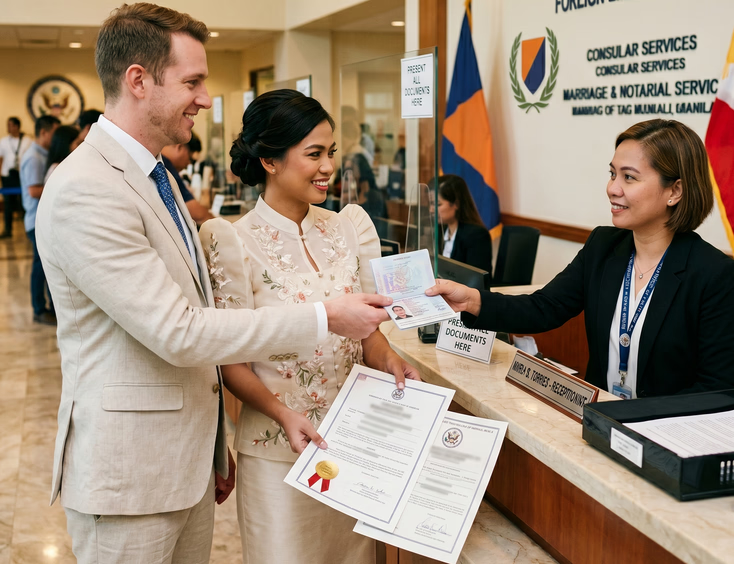
A foreign national adds documents beyond the standard set, and the exact list depends on nationality, the embassy or consulate covering them, and home-country law.
- Certificate of Legal Capacity to Contract Marriage. Issued by the foreigner's embassy or consulate in the Philippines, it confirms they are single, divorced, or widowed under home-country law and free to marry. Some embassies have suspended issuing it, so those nationals turn to alternatives, often an affidavit before a notary plus supporting civil status records from home.
- Passport and visa. A current passport with a valid Philippine entry visa or visa-free entry stamp, carrying a name that matches every other document.
- Birth certificate. A copy authenticated through the apostille process for Hague Convention countries, or through the home country's foreign affairs ministry and the Philippine embassy abroad for non-apostille countries.
- Divorce decree or death certificate. For a previously married foreigner, the authenticated foreign divorce decree or the authenticated death certificate of the late spouse.
- Bureau of Immigration certificate. Some LCRs ask for one confirming the foreigner's immigration status, though this varies by LGU rather than applying everywhere.
The full list, embassy-specific quirks, and the post-wedding paperwork run through special circumstances: marrying a foreigner in the Philippines and what your officiant needs to know.
Documents for License-Exempt Marriages
Certain marriages under Articles 27 through 34 of the Family Code need no marriage license, but each still leaves a document trail.
A couple marrying under Article 34, after living together as husband and wife for at least five years with no legal impediment, signs an affidavit stating the cohabitation period and the absence of any impediment. The solemnizing officer signs a matching affidavit after a personal investigation, and the five years must be exclusive, continuous, and free of any legal bar throughout. An articulo mortis marriage, between people at the point of death, calls for an affidavit by the officer setting out the dying condition and the urgency that justified skipping the license, and the marriage holds even if the sick party recovers. A marriage in a place too remote to reach the LCR needs an affidavit by the officer documenting that remoteness. Marriages between Muslim Filipinos under PD 1083 or members of recognized ethnic cultural communities follow their own document frameworks.
Your officiant still verifies the basis for any exemption. A false statement on these affidavits exposes both you and the officiant to perjury charges and criminal liability.
Documents the Officiant Brings
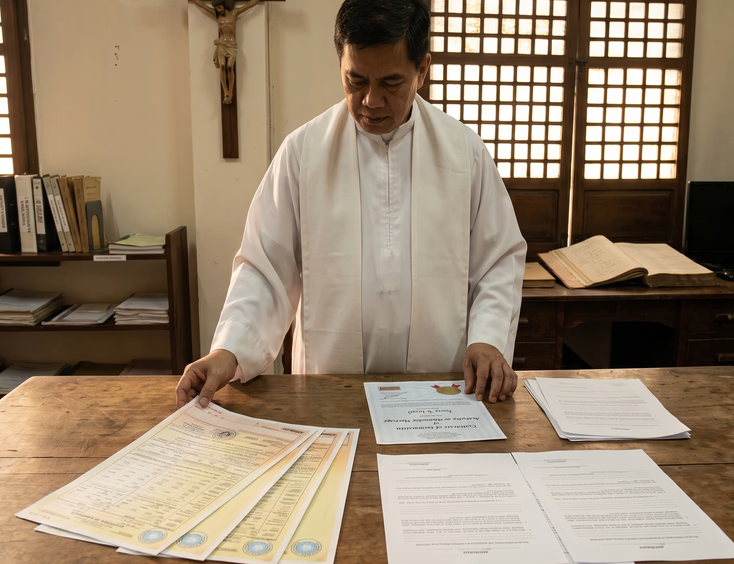
Your officiant carries paperwork of their own to the wedding. Confirm these are in hand before the ceremony:
- The marriage certificate forms. The PSA-prescribed Certificate of Marriage, in four copies, available at the LCR and PSA offices. A reliable officiant brings their own supply.
- Certificate of Authority to Solemnize Marriage (CASM). Religious officers carry a copy of their current CASM showing the registration number, the religious organization, and the area of authority. Judges and mayors carry none, since their authority comes from public office, but they can produce proof of incumbency on request.
- Affidavit forms for license-exempt marriages. For an Article 34 marriage, an articulo mortis marriage, or another exempt category, the officiant brings the affidavit forms the exemption requires.
The full verification process for officiant credentials lives in how to verify if your wedding officiant is registered and recognized in the Philippines.
When to Hand Over Which Document
Timing matters. Hand a document over too late and you delay the wedding; collect one too early and it can expire before the ceremony.
- Two to three months out: Order your PSA documents (birth certificates, CENOMARs, death certificates, annotated marriage certificates where they apply). Schedule any required seminars. Start gathering parental consent or advice forms.
- One to two months out: File the marriage license application with the standard documents at the LCR. The publication period begins.
- Six to seven weeks out: Pick up the marriage license, and confirm its expiration date sits well past the wedding.
- Four to six weeks out: Hand the full set to your officiant, including the license, IDs, parental consent or advice, and any religious documents. The officiant reviews everything and flags problems while time remains to fix them.
- Wedding day: Bring originals of every document: the marriage license, IDs for both parties, IDs for both witnesses, parental consent or advice, and anything else the officiant requested. The officiant checks the IDs against the names on the certificate before the ceremony starts.
Tip: Photograph or scan every document the day you collect it and keep the files in one folder on your phone. When the officiant asks for something during the review, you answer in seconds, and a lost original three days before the wedding becomes an inconvenience instead of a catastrophe.
What Happens If a Document Is Missing on the Wedding Day
A missing document on the wedding day puts the ceremony at risk, and the fallout depends on which one.
- Marriage license. The ceremony cannot proceed, since the license is the legal foundation of the marriage outside the exempt categories. An officiant who marries you without a valid license violates Article 4 of the Family Code, and the marriage runs into immediate complications. We cover the full consequences in what happens if your wedding officiant is not legally authorized in the Philippines.
- IDs. A party without valid ID cannot sign the marriage certificate, because the officiant cannot verify identity and the certificate cannot carry an unverifiable signature.
- Witnesses or witness IDs. Article 6 requires two witnesses of legal age. A wedding with no witnesses, or witnesses who cannot prove their identity, cannot proceed.
- Parental consent for parties aged 18 to 21. The license should never have issued without it. If it issued in error and the gap surfaces on the wedding day, the marriage is exposed to annulment under Article 45.
- Religious documents. A Catholic priest or other religious officiant may delay or cancel the ceremony when pre-marriage religious documents are missing. The legal requirements may still be met, but the religious solemnization waits for the documents.
A Document Master List for Filipino Couples Marrying in the Philippines
For a standard civil or church wedding between two Filipino citizens, both over 25, with no prior marriages:
- PSA birth certificate, both parties
- CENOMAR, both parties, issued within the last six months
- Marriage license from the correct LCR
- Valid government-issued ID, both parties
- Community Tax Certificate (cedula), both parties, current year
- Valid IDs of two witnesses
- Pre-marriage seminar certificate, both parties, where the LCR requires it
From there you adjust for your own situation. Parties aged 18 to 21 add parental consent, and parties aged 22 to 25 add parental advice. A widowed party adds the PSA death certificate of the late spouse, and an annulled party adds the PSA-annotated marriage certificate. A Catholic ceremony adds baptismal and confirmation certificates, the pre-Cana certificate, and the canonical interview record. A Muslim ceremony under PD 1083 follows the Code's separate framework. A foreign party adds the Certificate of Legal Capacity, an authenticated passport, an authenticated birth certificate, and any prior-marriage documents authenticated through apostille or the embassy.
Browse vetted solemnizing officers and confirm their document requirements through our wedding officiants directory, where every listed officer provides credentials, document checklists, and contact details upfront. The right officiant treats the document review as part of the job, catches the problems weeks ahead of the ceremony, and walks you to the altar with a complete legal trail behind you.
Still Searching for a Right Match?
Find Your Perfect Wedding Supplier Today!
Discover trusted wedding suppliers across the Philippines in our complete directory. Compare services and connect with the ones that fit your dream celebration.
Browse Wedding SuppliersFeatured Blog Posts

Filipino Wedding Entourage - Roles, Order of March, and Modern Etiquette
6 mins readCivil Weddings in the Philippines - Requirements, Costs, and Step-by-Step Process
9 mins readCivil Wedding Requirements in the Philippines - Complete Checklist
6 mins readCost of Wedding in the Philippines - 5 Essential Things You Need to Know
7 mins readPrincipal Sponsors (Ninong/Ninang) - How Many, How to Ask, What They Really Do
4 mins readVeil, Cord, Candle & Coins - Roles, Options, and When They Happen
4 mins readEntourage for a Traditional Pinoy Wedding - Complete Roles and Guide
6 mins readComplete List of Civil Wedding Requirements in the Philippines
8 mins readHow to Choose Wedding Ninongs and Ninangs - Ask Yourself These 3 Important Questions
5 mins read