


Who Is Legally Authorized to Solemnize a Marriage in the Philippines Under the Family Code
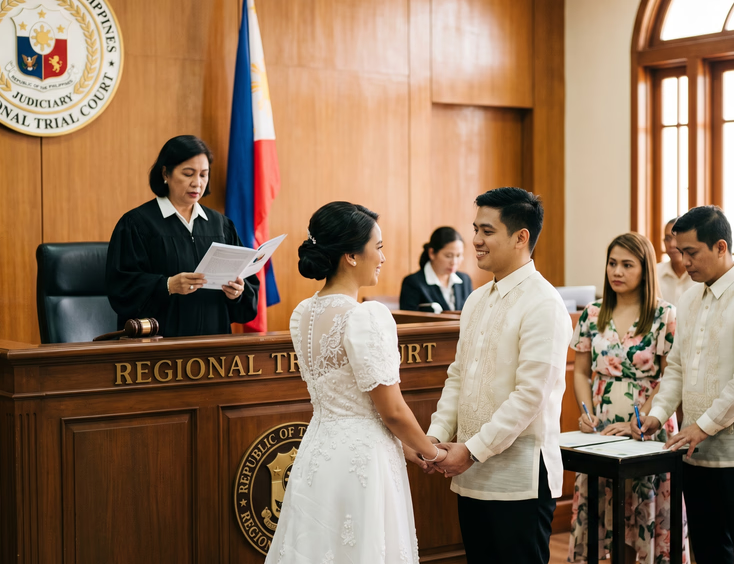
You can book a stunning venue and write vows that leave your guests in tears. An authorized solemnizing officer makes the marriage legal by signing your certificate. Article 7 of the Family Code names who holds that authority, and the list runs shorter than most couples expect. For the full picture, start with our complete guide to wedding officiants in the Philippines.
The Five Categories Under Article 7
Article 7 of Executive Order No. 209, the Family Code of the Philippines, lists the people who can solemnize marriages. The Local Government Code of 1991 added a sixth. Let anyone outside these six categories sign your certificate, and the marriage is void.
1. Incumbent Members of the Judiciary
A judge holds solemnizing authority by virtue of office. That covers Supreme Court, Court of Appeals, Sandiganbayan, and Court of Tax Appeals Justices, along with Regional Trial Court, Metropolitan Trial Court, Municipal Trial Court, and Municipal Circuit Trial Court judges. Shari'a District Court and Shari'a Circuit Court judges hold the same authority for cases under their jurisdiction.
Two conditions apply. The judge must be incumbent on the day of the ceremony, serving in office and not retired, suspended, or dismissed. The judge must also officiate inside their territorial jurisdiction. A Regional Trial Court judge from Cebu cannot solemnize a marriage in Davao. A retired judge who officiates a friend's wedding hands the couple a void marriage, no matter how sharp the barong looks.
2. Priests, Imams, Rabbis, Ministers, and Pastors of Registered Religious Sects
A religious solemnizing officer needs three things: membership in a church or religious sect registered with the Philippine Statistics Authority, a Certificate of Authority to Solemnize Marriage (CASM) from the Civil Registrar General, and the authority to officiate within the limits written into that CASM.
The CASM is a numbered document. It names the officiant, the religious organization, and the area where they can solemnize marriages. A Baptist pastor whose CASM covers Pampanga cannot officiate in Batangas. The organization itself must register with the Securities and Exchange Commission and earn PSA recognition. A church that skips SEC registration cannot produce a valid marriage, even with packed Sunday services.
At least one of you must belong to the officiant's church or religious sect. The Family Code sets this rule to keep religious officiants from marrying couples with no tie to their faith.
3. Ship Captains and Airplane Chiefs in Articulo Mortis
A ship captain or airplane chief can solemnize a marriage only between passengers or crew, only during a voyage, and only when one or both parties are in articulo mortis. Articulo mortis means the point of death, where a party faces imminent danger of dying.
The marriage stays valid even if the dying party recovers. The authority exists for emergencies far from land, where no regular solemnizing officer can reach the couple in time. A cruise ship captain cannot officiate a destination wedding off the coast of Palawan. The voyage requirement and the articulo mortis requirement keep this category narrow.
4. Military Commanders in Articulo Mortis
A military commander of a unit can solemnize a marriage between members of the armed forces, or between civilians inside the zone of military operations, when one or both parties are in articulo mortis and no chaplain is available.
Three conditions stack here. The commander must hold rank as a commissioned officer, the ceremony must fall inside the zone of military operations, and no chaplain can be on hand. Drop any one of the three, and the commander loses the authority.
5. Consuls-General, Consuls, and Vice-Consuls Abroad
A consul-general, consul, or vice-consul of the Philippines posted abroad can solemnize marriages between Filipino citizens outside the country. The consul performs the duties of both solemnizing officer and local civil registrar, then reports the marriage to the Philippine government through the standard process for marriages contracted abroad.
This authority reaches Filipino citizens only. A Filipino marrying a foreigner at a Philippine consulate falls outside the provision, and that marriage follows the law of the country where the consulate sits.
6. Mayors Under the Local Government Code of 1991
Republic Act 7160, the Local Government Code of 1991, restored solemnizing authority to mayors. The Family Code as first drafted left mayors off the list, and Sections 444(b)(1)(xviii) and 455(b)(1)(xviii) of the LGC put them back.
A mayor can solemnize marriages within their territorial jurisdiction. A Quezon City mayor cannot officiate a wedding in Tagaytay. The vice mayor steps in when the mayor is incapacitated or away, under Sections 446 and 456 of the LGC.
Tip: An officiant from the right category still hands you a void marriage if they work outside their jurisdiction. Confirm the judge, mayor, or religious officer can solemnize at your exact venue, not just somewhere in the province.
Who Cannot Solemnize Your Wedding
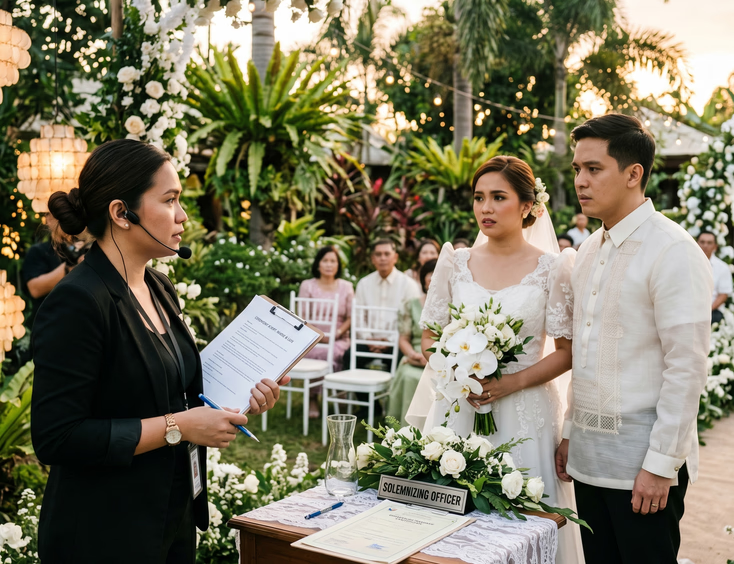
Anyone outside the six categories cannot give you a legal marriage. The same impostors show up at planning consultation after planning consultation:
- Celebrity hosts and TV personalities
- Wedding coordinators and planners
- Hotel managers and venue staff
- Family members "ordained" through online certificate websites
- Pastors of unregistered religious groups
- Retired judges and former mayors
- Foreign ministers without a Philippine CASM
- Notaries public, who hold no power to solemnize marriages
A celebrity reading vows on stage runs a program. A wedding planner reciting a script does a coordinator's job. Neither can sign your marriage certificate. The certificate carries the signature of someone from the six authorized categories, or it records no marriage at all.
What Authority Looks Like on Paper
Verify your officiant's authority before the wedding day. Each category proves it through a different document.
| Officiant | Proof of authority | Where to confirm it |
|---|---|---|
| Judge | Certificate of appointment and proof of incumbency | Office of the Court Administrator or the local court |
| Religious officer | Certificate of Authority to Solemnize Marriage (CASM) with a registration number | Philippine Statistics Authority |
| Mayor | Oath of office and current incumbency | City or Municipal Hall |
| Consul | Appointment and assignment to a Philippine consular post | Department of Foreign Affairs |
Ask for a copy of the CASM before you sign any contract, and trace the registration number through the PSA. We walk through every check in how to verify if your wedding officiant is registered and recognized in the Philippines.
The Marriage Certificate Reflects the Authority
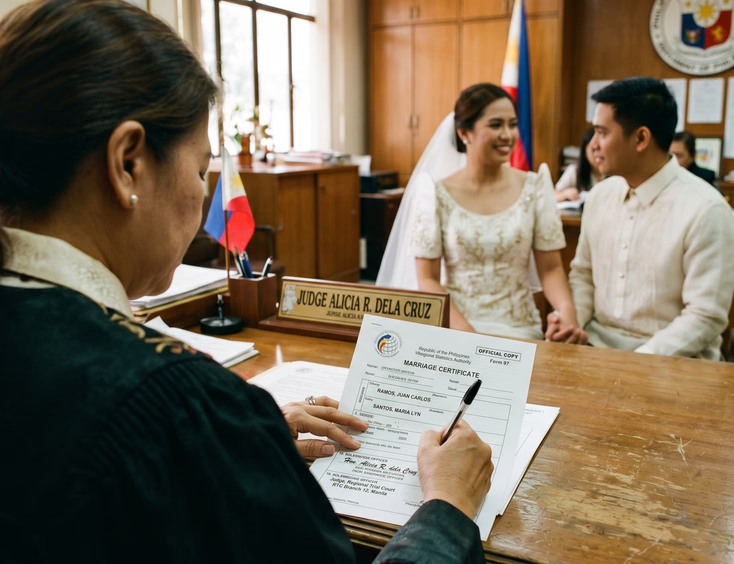
Article 6 of the Family Code requires both parties to appear in person before the solemnizing officer and declare their consent. The officer signs the marriage certificate after the ceremony, and that signature carries legal weight because the officer holds authority under Article 7.
Article 22 lists what the certificate must contain: the name and signature of the solemnizing officer, the title they officiate under, and a statement that they hold authority to solemnize the marriage. An officer who states false authority on the certificate faces criminal liability under Article 352 of the Revised Penal Code, which punishes the performance of an illegal marriage ceremony.
What Happens When Someone Without Authority Signs the Certificate
Article 35 of the Family Code declares a marriage void from the beginning when an unauthorized person solemnizes it. The marriage never existed. You file no annulment, though many couples still petition for a declaration of nullity to clear the public record.
One exception saves some couples. If you or your partner believed in good faith that the officer held legal authority, the marriage stands. Good faith means an honest belief without negligence. A couple who skipped basic verification cannot claim it later.
The fallout reaches further than most couples expect. Read what happens if your wedding officiant is not legally authorized in the Philippines before you book.
Special Rules for Muslim Marriages
Presidential Decree 1083, the Code of Muslim Personal Laws, governs the marriages of Muslim Filipinos. Its list of authorized solemnizers differs from the Family Code's. An Imam, a Hakim, or a person designated to officiate follows Muslim law and custom, and the Office of the Circuit Registrar registers the marriage before reporting it to the PSA.
A Muslim couple marrying under PD 1083 needs no marriage license, since the Code itself supplies the framework. A Muslim who marries a non-Muslim under the Family Code follows the Family Code instead. Read the full breakdown in marriage under the Code of Muslim Personal Laws: a legal guide for Muslim couples in the Philippines.
Documents the Authorized Officiant Will Ask You For
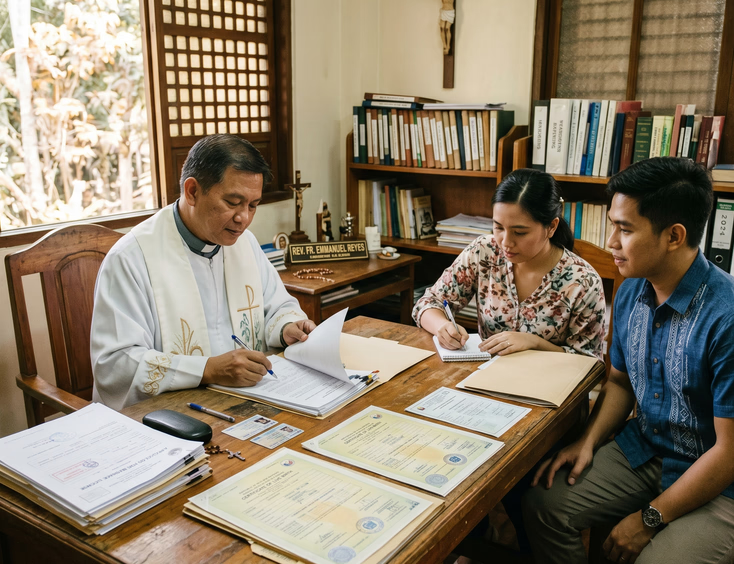
An authorized solemnizing officer works from Article 3 of the Family Code, which sets the essential and formal requisites of marriage. The formal requisites cover the authority of the solemnizing officer, a valid marriage license except in cases the law exempts, and a ceremony with both parties and two witnesses of legal age appearing in person.
Your officiant cannot move forward without checking these. Expect to hand over:
- The marriage license
- PSA birth certificates for both parties
- A CENOMAR for each of you
- Valid government-issued IDs
- Parental consent or parental advice, depending on your age
Run through the complete list in what documents does your wedding officiant need from you in the Philippines.
Picking the Right Authorized Officiant for Your Wedding
Match the officiant to the ceremony you want. A civil ceremony calls for a judge or a mayor. A Catholic ceremony calls for a priest holding a current CASM from the Archdiocese where you will marry. Other Christian denominations bring in their registered ministers, a Muslim ceremony brings in an Imam or Hakim, and a Filipino couple abroad can turn to the local Philippine consul.
Then confirm three things before the wedding date. The officiant must work inside their jurisdiction, since a judge or mayor who steps outside it hands you a void marriage even when the paperwork looks perfect. The CASM number must trace back to an active, registered religious organization. The judge, mayor, or consul must still hold the office or assignment on your wedding day.
Browse pre-verified solemnizing officers in our wedding officiants directory, where each listed officer has submitted credentials for review so you can match the right officiant to your ceremony with confidence.
The Short Answer for Couples Planning Now
Six kinds of people can solemnize a marriage in the Philippines:
- Incumbent judges, within their jurisdiction
- Religious officers with current CASMs from registered sects
- Ship captains in articulo mortis at sea
- Military commanders in articulo mortis within the zone of operations
- Philippine consuls abroad, for Filipino citizens
- Mayors, within their territorial jurisdiction
Let anyone else sign your marriage certificate, and you get a void marriage. Pick from the six, verify the credentials, and match the officiant to the ceremony you want. The signature that matters most on your wedding day comes from the person the law named.
Still Searching for a Right Match?
Find Your Perfect Wedding Supplier Today!
Discover trusted wedding suppliers across the Philippines in our complete directory. Compare services and connect with the ones that fit your dream celebration.
Browse Wedding SuppliersFeatured Blog Posts


Filipino Wedding Entourage - Roles, Order of March, and Modern Etiquette
6 mins readCivil Weddings in the Philippines - Requirements, Costs, and Step-by-Step Process
9 mins readCivil Wedding Requirements in the Philippines - Complete Checklist
6 mins readCost of Wedding in the Philippines - 5 Essential Things You Need to Know
7 mins readPrincipal Sponsors (Ninong/Ninang) - How Many, How to Ask, What They Really Do
4 mins readVeil, Cord, Candle & Coins - Roles, Options, and When They Happen
4 mins readEntourage for a Traditional Pinoy Wedding - Complete Roles and Guide
6 mins readComplete List of Civil Wedding Requirements in the Philippines
8 mins readHow to Choose Wedding Ninongs and Ninangs - Ask Yourself These 3 Important Questions
5 mins read