


The Marriage License Process in the Philippines and the Role Your Officiant Plays in It

A marriage license is the government's permission slip for your wedding. Without it, your officiant cannot marry you under the law, outside a few specific exceptions. The process takes time, follows a strict sequence, and runs through your Local Civil Registrar. Your officiant sits on the receiving end: checks the license, performs the ceremony, and files the signed certificate back with the LCR after the wedding. Miss a step and the paperwork breaks. For the wider picture on who can marry you and how to choose them, start with our guide to wedding officiants in the Philippines.
Where You Apply
Article 9 of the Family Code requires you to file your marriage license application at the Local Civil Registrar of the city or municipality where either of you habitually resides. Habitual residence means the place you have lived for at least six months before the application, not the address printed on your ID. The LCR can ask for proof: utility bills, a barangay certificate, or affidavits from neighbors and family.
You cannot pick any LCR for convenience. The LCR of Makati cannot accept your application if neither of you has lived in Makati for the past six months. File in the wrong office and you walk out with a license any court can later challenge, and a careful officiant will refuse to proceed.
Once the LCR issues the license, you can marry anywhere in the Philippines. You apply in your hometown and marry in Boracay. The license travels with you. The residency rule attaches to the application, not the ceremony.
What You Bring to the Application
The LCR asks each of you to bring the following when you apply:
- PSA-issued birth certificate
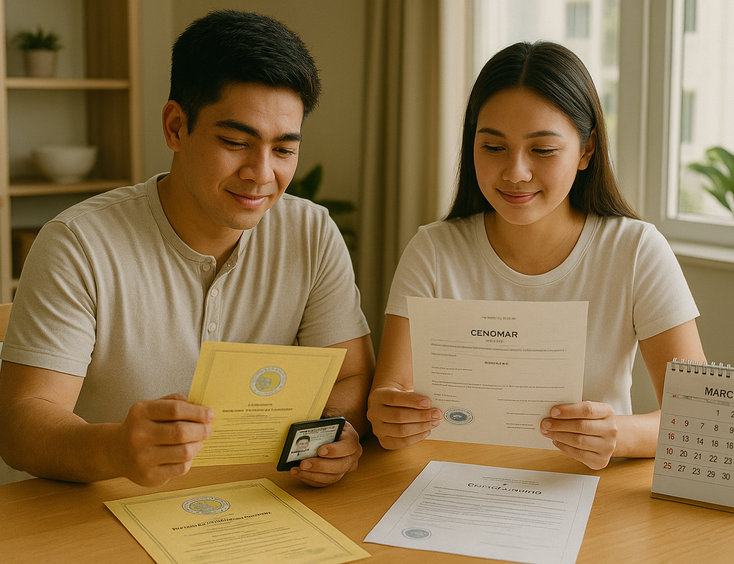
- CENOMAR (Certificate of No Marriage Record) from the PSA, issued within the last six months
- Valid government-issued ID with photo and signature
- Community Tax Certificate (cedula) for the current year
- Parental consent if you are 18 to 21 years old
- Parental advice if you are 22 to 25 years old
- Certificate of attendance at the pre-marriage counseling, family planning, and responsible parenthood seminars your LCR requires
- Application fee, which varies by LGU
Foreign nationals submit extra documents, a widowed applicant submits the PSA death certificate of the late spouse, and an applicant whose earlier marriage ended in annulment submits the PSA-annotated marriage certificate that shows it. The full checklist, with every special case, lives in what documents does your wedding officiant need from you in the Philippines.
Age, Consent, and Advice
Article 5 of the Family Code sets 18 as the minimum age to marry. A party below 18 cannot marry even with parental consent, and the marriage is void. Above that line, the law splits couples into two brackets, each with its own paperwork and its own effect on the license.
| Age of either party | Requirement | Effect on the license |
|---|---|---|
| Below 18 | No path to a valid marriage | Void even with parental consent (Article 5) |
| 18 to 21 | Written parental consent (Article 14) | LCR releases the license only with the consent; a marriage held without it can be annulled under Article 45 |
| 22 to 25 | Parental advice (Article 15) | License still issues without it, but the LCR adds three months to the publication period |
Parental consent for the 18-to-21 bracket comes from the father, the mother, the surviving parent or guardian, or the person with legal charge of the party, in that order. Parental advice for the 22-to-25 bracket carries less weight: withheld or unfavorable advice does not block the marriage, it only stretches the ten-day publication into a three-month wait.
The Ten-Day Publication Period
Article 17 of the Family Code requires the LCR to post a notice of your application in a conspicuous place outside its office for ten consecutive days. The notice carries both your names, your nationalities, and the date you applied.
The publication invites anyone with a legal objection to come forward. An existing spouse, an impediment under Articles 37 or 38 (incestuous or void marriages by reason of public policy), or any other legal bar can surface during the ten days. The LCR reviews written objections and decides whether the license still issues.
The ten days run on calendar days, so Sundays and holidays count. Apply on October 1 and the notice runs October 1 through October 10. The LCR can release the license starting October 11, absent any objection. Article 21 allows a waiver of the publication for three situations: marriages in articulo mortis, marriages in places where transportation makes a trip to the LCR impractical, and marriages of Muslim Filipinos and ethnic cultural minorities solemnized under their customs. A two-week countdown to your reception does not qualify.
When the License Issues
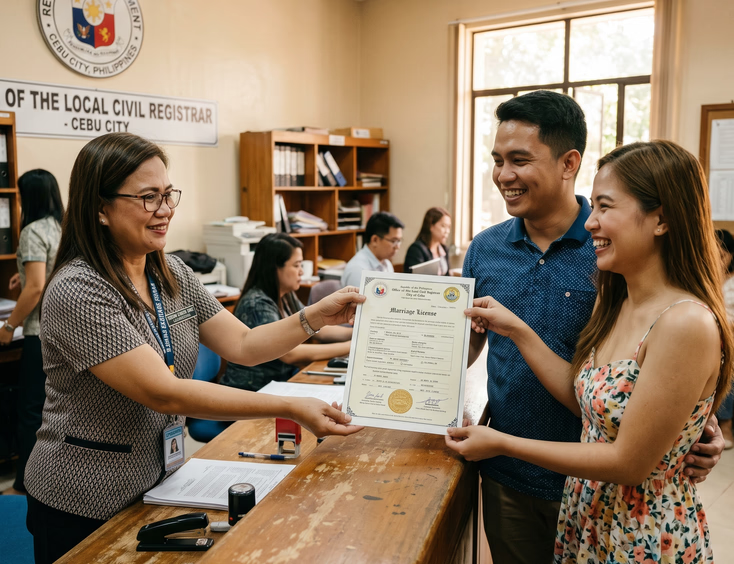
After the publication closes with no valid objection, the LCR releases the marriage license. It carries a serial number, the date of issuance, both your names, and the LCR's seal and signature.
Article 20 of the Family Code gives the license a validity of 120 days from the date of issuance. The license expires on the 121st day, and an expired license is worthless. Apply, collect the license, then postpone the wedding by five months, and you return to the LCR to start over. Within those 120 days the license works nationwide. A Quezon City couple can carry their Quezon City license to a wedding in Bohol or Bukidnon.
Tip: File for the license six to eight weeks before the wedding, not earlier. Apply too soon and the 120-day clock can run out before a postponed date; apply too late and the ten-day publication can spill past your target. The narrow window in the middle is where you want to land.
Couples Exempt from the License Requirement
Articles 27 through 34 list the marriages that need no license, and each covers a narrow case.
A marriage in articulo mortis, between people at the point of death, needs no license and holds even if the sick party recovers. A marriage in a place so remote that reaching the LCR is impractical can proceed without one, though the remoteness bar sits high and rarely applies. Marriages between Muslim Filipinos under PD 1083, or between members of recognized ethnic cultural communities under their own customs, skip the standard license. The full Muslim framework lives in marriage under the Code of Muslim Personal Laws: a legal guide for Muslim couples in the Philippines.
Article 34 exempts couples who have lived together as husband and wife for at least five years with no legal impediment to marry. You sign an affidavit stating the cohabitation and the absence of any impediment, and the solemnizing officer signs one confirming the same. The five years must be exclusive, continuous, and free of any legal bar throughout. Live together four years, spend a year apart, and you lose the exemption.
Your officiant still verifies the basis for an exempt marriage. A judge or pastor cannot marry you under Article 34 without seeing the affidavit and confirming the five years. A false statement on that affidavit exposes both you and the officiant to perjury charges and criminal liability under Article 350 of the Revised Penal Code.
What Your Officiant Does With the License
Your officiant's job with the license runs from the day you book them to the day the LCR receives the signed certificate. The sequence:
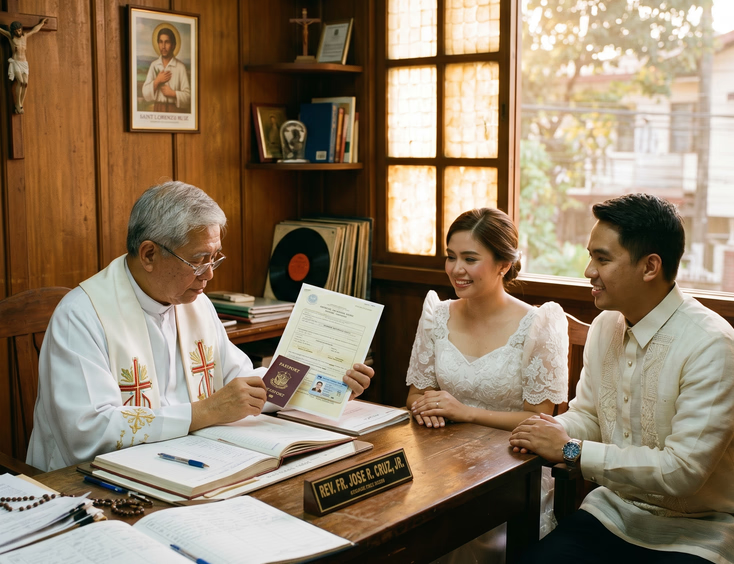
- Reviews the license before the wedding. A week or two out, your officiant checks that the names match both parties, the license has not expired, and the document carries valid LCR signatures and the official seal. A misspelled name, a wrong birthdate, or a missing signature goes back to the LCR for correction. Catch it two weeks out and you have time. Catch it on the wedding day and you lose the ceremony.
- Conducts the ceremony. Article 6 requires both of you to appear in person, declare your consent before the officer, and stand witnessed by two people of legal age. The officiant performs the rites for your format, receives your consent, and pronounces you married.
- Signs the marriage certificate. The certificate is a four-copy document. You and your partner sign first, then your two witnesses, then the solemnizing officer, who notes the title they officiate under: judge, mayor, priest with CASM number, Imam, or consul.
- Files the certificate with the LCR. Article 23 gives the officer 15 days to submit for a civil ceremony and 30 days for a religious one, filed with the LCR of the place where you married. The officer keeps one copy, you keep one, the LCR keeps one, and the LCR forwards the last to the PSA for the national civil registry.
An officer who misses the deadline faces administrative and criminal liability under Article 100 of the Family Code. Follow up within 30 to 60 days of the wedding and confirm the filing happened.
When the PSA Issues Your Marriage Certificate
The PSA takes the certificate the LCR forwards and adds it to the national civil registry. Processing runs four to six months from the wedding date, sometimes longer at busy LCRs or during PSA backlogs.
Request a PSA-certified copy of your marriage certificate four to six months after the wedding through PSAHelpline.ph, a PSA Serbilis branch, or the PSA online platform. That copy is the document you hand over for passport changes, immigration, insurance, a joint bank account, and any government transaction that asks for proof of marriage.
If the PSA cannot produce a copy four months after the wedding, contact the LCR that registered your marriage. The LCR confirms whether the officer submitted the certificate and whether it reached the PSA. Unsubmitted certificates cause most missing PSA records, and the fix runs through the LCR and the officiant.
What Can Go Wrong with the License Process
The same problems trip up couple after couple. Spot them early and they stay small.
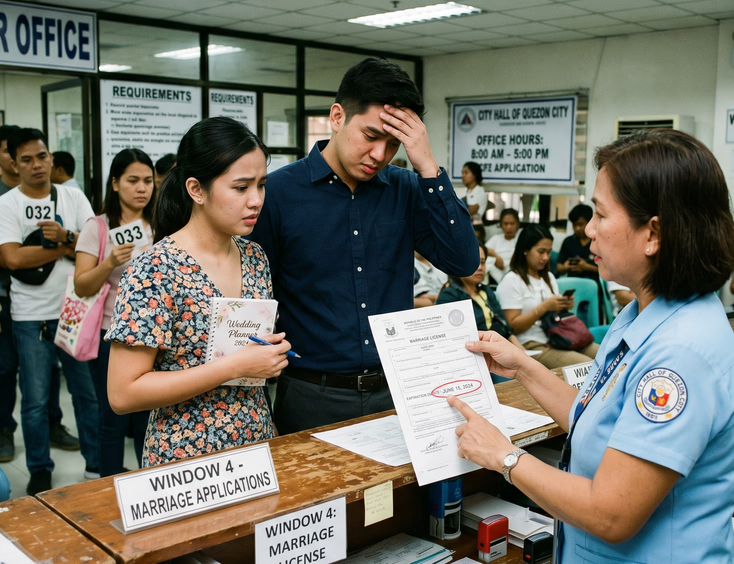
- Wrong LCR. Filing outside the residence of either party voids the application. Confirm the six-month residency before you walk into any LCR.
- Expired CENOMAR. Some LCRs accept a CENOMAR issued up to six months before the application; others want one from the last three months. Check your LCR's policy before you pay the PSA fee.
- Mismatched names. The names on the license must match your PSA birth certificate exactly. A nickname, a married name from a prior marriage, or a spelling variation gives you a license your officiant cannot accept. Use your full legal name as the PSA records it.
- Late seminar attendance. The pre-marriage counseling, family planning, and responsible parenthood seminars run on fixed schedules at most LCRs. Book late and you can miss the publication window for your target date.
- Expired license. The 120-day clock passes faster than couples expect. File six to eight weeks out for a buffer, and no more than three months ahead.
- Missing parental consent or advice. A party aged 18 to 21 without written consent gets no license. A party aged 22 to 25 without advice triggers the three-month delay. Put the consent or advice in writing before you apply.
- Officiant skips the submission. The most common post-wedding problem. The wedding happens, the certificate gets signed, then the officer misplaces it or files past the deadline. Follow up within 30 days and ask for proof of submission.
How to Verify Your Officiant Will Handle the License Correctly
An officer who books many weddings a year knows the license process cold. A first-time officiant, a retired judge doing a one-off favor, or an unregistered religious officer may not. Confirm before you book.
Ask the officiant to describe their process step by step. A reliable officer answers without pause: they review the license a week before the wedding, confirm the names and dates, perform the ceremony, sign the certificate, and file it with the LCR inside the legal period. They give you a copy and put the submission date in writing.
Then confirm the authority itself. A judge must be incumbent, a mayor must hold office, and a religious officer must carry a current CASM from the PSA covering your wedding location. The full verification process lives in how to verify if your wedding officiant is registered and recognized in the Philippines.
Browse vetted solemnizing officers through our wedding officiants directory, where every listed officer has provided credentials and contact details so you can confirm authority and license-handling experience before you book.
A Working Timeline for the License Process
- Three to four months out: Confirm both parties' residency and pin down the correct LCR. Schedule any required pre-marriage seminar. Order your PSA documents: birth certificates, CENOMARs, and death or annulment papers if they apply.
- Two months out: File the marriage license application at the correct LCR. The publication period starts the day you file.
- Six to seven weeks out: The ten-day publication ends. Pick up your marriage license.
- Four to six weeks out: Hand the license to your officiant for review. Confirm names, dates, and signatures, and settle the ceremony script and submission plan.
- Wedding day: Bring the marriage license, IDs for both parties, IDs for both witnesses, and the agreed officiant's fee.
- Within 15 to 30 days after: Confirm your officiant filed the signed certificate with the LCR, and ask for a copy of the submission receipt.
- Four to six months after: Request your PSA-certified marriage certificate and confirm the marriage sits on the national civil registry.
The license process rewards couples who start early, work with the correct LCR, and pick an officiant who treats the paperwork as part of the job. The license lets the wedding happen. The marriage certificate, signed by an authorized officer and filed with the LCR on time, proves it did.
Still Searching for a Right Match?
Find Your Perfect Wedding Supplier Today!
Discover trusted wedding suppliers across the Philippines in our complete directory. Compare services and connect with the ones that fit your dream celebration.
Browse Wedding SuppliersFeatured Blog Posts

Filipino Wedding Entourage - Roles, Order of March, and Modern Etiquette
6 mins readCivil Weddings in the Philippines - Requirements, Costs, and Step-by-Step Process
9 mins readCivil Wedding Requirements in the Philippines - Complete Checklist
6 mins readCost of Wedding in the Philippines - 5 Essential Things You Need to Know
7 mins readPrincipal Sponsors (Ninong/Ninang) - How Many, How to Ask, What They Really Do
4 mins readVeil, Cord, Candle & Coins - Roles, Options, and When They Happen
4 mins readEntourage for a Traditional Pinoy Wedding - Complete Roles and Guide
6 mins readComplete List of Civil Wedding Requirements in the Philippines
8 mins readHow to Choose Wedding Ninongs and Ninangs - Ask Yourself These 3 Important Questions
5 mins read