


Church Wedding vs. Civil Wedding in the Philippines: Legal Differences Every Couple Must Understand
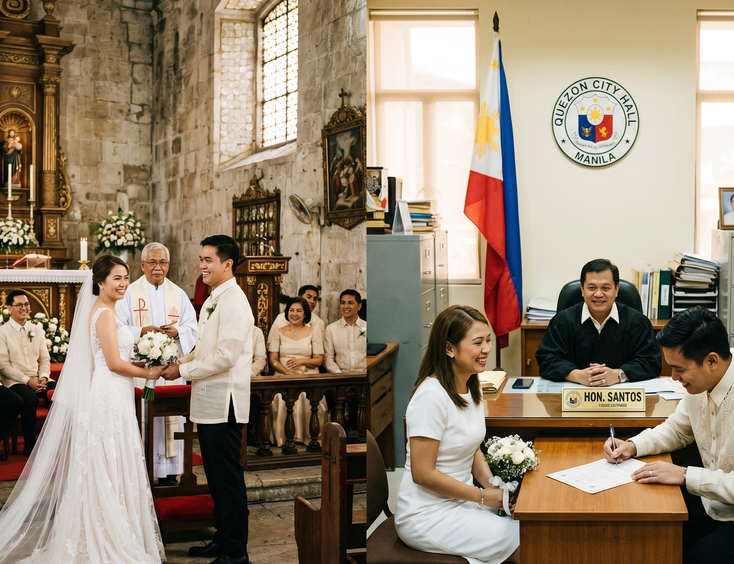
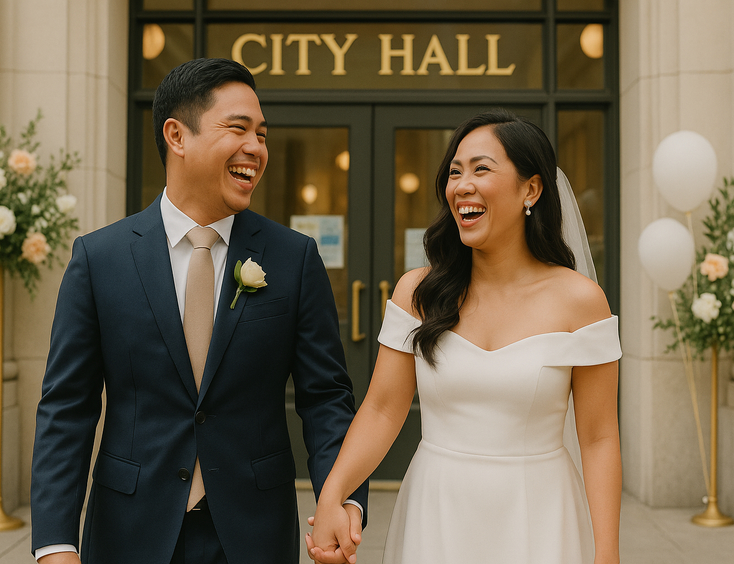
Two couples marry on the same Saturday. One stands in a parish church before a priest, family in formal attire, a string quartet playing them down the aisle. The other sits across from a judge in a city hall office, signs the certificate, and is back in the car within thirty minutes. The Philippine government treats both marriages the same way.
The legal weight of a Philippine wedding does not depend on the venue, the dress code, or the length of the ceremony. It rests on who solemnized the marriage, the documents behind it, and whether the marriage certificate reached the Local Civil Registrar inside the required period. Church and civil weddings split on the path. They land at the same legal destination. For the wider picture on who can marry you and how to choose them, start with our guide to wedding officiants in the Philippines.
What the Law Says About Both
Article 1 of the Family Code defines marriage as a special contract of permanent union between a man and a woman, entered into in accordance with law for the establishment of conjugal and family life. Article 2 sets the essential requisites: legal capacity of both parties and consent freely given before the solemnizing officer. Article 3 sets the formal requisites: authority of the solemnizing officer, a valid marriage license except in exempt cases, and a ceremony where both parties appear in person and declare their consent before the officer and at least two witnesses of legal age.
A civil wedding meets these requirements. A church wedding meets these requirements. The Family Code assigns no greater legal value to one over the other. A marriage solemnized by a judge carries the same legal status, property regime, inheritance rights, and immigration effects as one solemnized by a Catholic priest, a Protestant pastor, an Imam, or a consul abroad.
The differences live in the lead-up: the religious requirements layered on top of the civil ones, the venue, the cost, and the timeline. None of them change whether you are married under the law once the certificate is signed and filed.
Who Solemnizes Each Type
A civil wedding goes to a judge or a mayor. Authorized judges cover incumbent members of the judiciary within their territorial jurisdiction: Supreme Court, Court of Appeals, Sandiganbayan, and Court of Tax Appeals Justices, along with Regional Trial Court, Metropolitan Trial Court, Municipal Trial Court, and Municipal Circuit Trial Court judges, plus Shari'a District and Circuit Court judges. Mayors gained the authority under Sections 444(b)(1)(xviii) and 455(b)(1)(xviii) of the Local Government Code of 1991, and a mayor officiates within the city or municipality where they hold office. The vice mayor steps in when the mayor is incapacitated or away.
A church wedding goes to a priest, imam, rabbi, minister, or pastor of a religious sect registered with the Philippine Statistics Authority, holding a Certificate of Authority to Solemnize Marriage (CASM) from the Office of the Civil Registrar General. The religious officer must work within the limits of that written authority, usually a specific archdiocese, diocese, or geographic area, and at least one of you must belong to the officiant's church or sect. The full breakdown of authorized solemnizing officers under Article 7 lives in who is legally authorized to solemnize a marriage in the Philippines under the Family Code.
The Civil Wedding Process
A civil wedding runs lean. The requirements come from the Family Code with no religious steps stacked on top.
- Apply for the marriage license. File at the LCR of the city or municipality where either of you has lived for the past six months. Bring PSA birth certificates, CENOMARs issued within the last six months, valid IDs, cedulas, and any age-based documents (parental consent for parties aged 18 to 21, parental advice for parties aged 22 to 25). Walk through the full list in what documents does your wedding officiant need from you in the Philippines.
- Complete the pre-marriage seminar. Most LCRs require a pre-marriage counseling seminar, a family planning seminar, and a responsible parenthood seminar before they issue the license, usually one or two sessions over a single day.
- Wait through the publication period. The LCR posts a notice of your application for ten consecutive days to invite legal objections, then releases the license if none stand.
- Schedule the ceremony. Coordinate with the judge's or mayor's office. City hall ceremonies usually run during office hours on set days, and some judges accept off-site ceremonies at a garden, function hall, or hotel for an added fee, within their jurisdiction.
- Hold the ceremony. The judge or mayor receives the license, verifies the IDs of both parties and the two witnesses, conducts a brief ceremony, takes your consent, and signs the certificate. Most civil ceremonies run fifteen to forty-five minutes.
- Submit the marriage certificate. The officer files the signed certificate with the LCR within 15 days, and the LCR forwards it to the PSA for the national civil registry.
The Catholic Church Wedding Process
A Catholic wedding adds religious requirements to the civil ones, and both tracks run in parallel.
- Consult the parish. Book your date with the parish where you will marry, often six months to a year ahead. The parish secretary hands you the document checklist and the schedule.
- Order religious documents. Both of you order baptismal and confirmation certificates from the parishes where you received the sacraments, each annotated "for marriage purposes," issued within the last six months, and drawn from the original parish rather than a duplicate.
- Sit for the canonical interview. The officiating priest interviews both of you, separately and together, to confirm you enter the marriage freely, with full knowledge, without impediment under canon law, and with intent to live the Catholic understanding of marriage. It can run one to two hours.
- Attend the pre-Cana seminar. The Church's marriage preparation program runs one or two days, covering the theology of marriage, communication, finances, family planning under Church teaching, and the practical side of married life. Most parishes accept a certificate from any Catholic-recognized provider.
- Post the marriage banns. The parish posts the banns at both home parishes for three consecutive Sundays, inviting anyone aware of an impediment to come forward, much like the LCR publication. A bishop can dispense with the banns for serious reason.
- Apply for the marriage license. The church wedding does not replace the civil license. Without it, the priest cannot solemnize the marriage under the Family Code, so the church and LCR tracks usually run together across the six months before the wedding.
- Prepare sacramentally. Catholic couples typically receive the sacrament of confession before the wedding and confirm they stand in good standing with the Church.
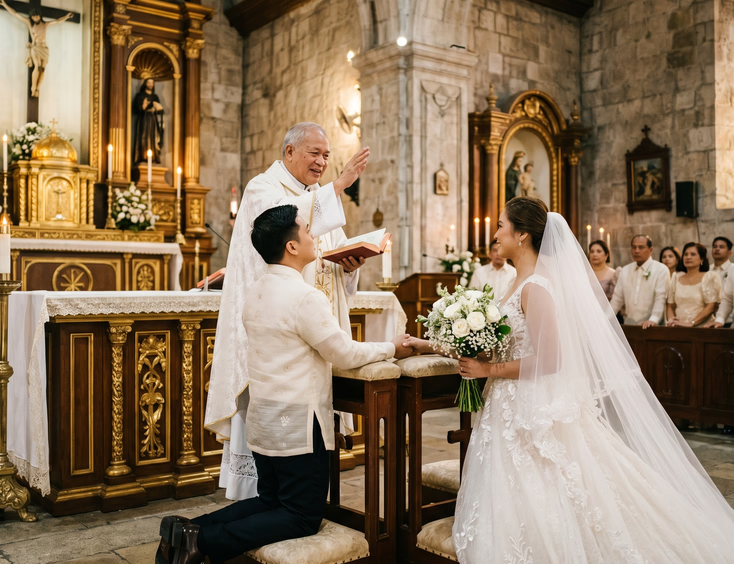
- Celebrate the nuptial Mass or wedding rite. The wedding takes place within a Mass or as a rite outside Mass, depending on whether both of you are Catholic, and includes the Liturgy of the Word, the exchange of consent and rings, the blessing of the marriage, and the signing of the certificate in the sacristy.
- Submit the marriage certificate. The priest files the signed certificate with the LCR within 30 days, and the LCR forwards it to the PSA.
Christian Protestant and Evangelical Weddings
Protestant and Evangelical denominations follow a path that echoes the Catholic one with their own variations, while the Family Code requirements hold steady.
- Pre-marriage counseling with the pastor. Most denominations require several sessions covering the Biblical foundations of marriage, communication, conflict resolution, finances, and family planning, anywhere from three to ten meetings depending on the church.
- Membership and pastoral confirmation. Some denominations ask that one or both of you stand in good standing with the local church, and the pastor confirms your spiritual readiness before agreeing to officiate.
- Marriage license. The same civil process at the LCR, required regardless of the religious tradition.
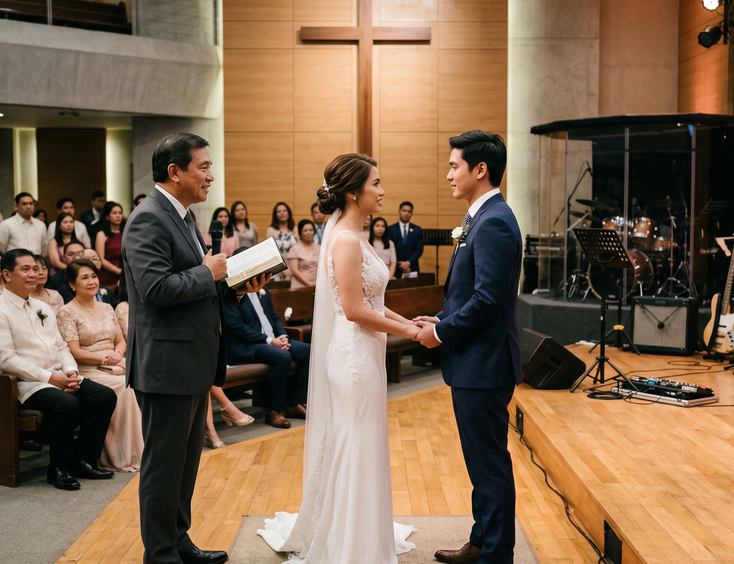
- The ceremony. Scripture readings, the exchange of vows and rings, a sermon or wedding message, and prayers, with the legal exchange of consent before the officer and two witnesses meeting Article 6.
- Submission. The same 30-day rule for religious solemnizing officers.
The pastor must hold a current CASM from the PSA, and the denomination itself must register with the SEC and earn PSA recognition. Verification details run through how to verify if your wedding officiant is registered and recognized in the Philippines.
Iglesia ni Cristo Weddings
Iglesia ni Cristo members marry within the church under INC rites, with the officiating minister holding a CASM from the INC central administration. Couples complete the church's pre-marriage requirements, which include doctrinal classes and pastoral counseling, and the ceremony takes place inside an INC chapel under the rites the central administration sets.
The civil license requirement still applies. The minister files the certificate with the LCR within 30 days, and the LCR forwards it to the PSA. An INC wedding carries the same legal weight as a Catholic wedding, a civil wedding, or any other authorized ceremony under the Family Code.
Muslim Marriages Under PD 1083
Muslim Filipinos marry under Presidential Decree 1083, the Code of Muslim Personal Laws. An Imam, a Hakim, or a person the Imam designates solemnizes the marriage, following the rites and customs of Muslim law.
This process differs from both the church and civil tracks under the Family Code. The Code supplies its own framework: the nikah (the marriage contract), the mahr (the bridal gift from groom to bride), the presence of two witnesses, the consent of the wali (the bride's guardian), and registration with the Office of the Circuit Registrar, which then transmits the record to the PSA for the national civil registry. A standard Family Code marriage license does not apply, since the Code's own rules replace it. The full framework lives in marriage under the Code of Muslim Personal Laws: a legal guide for Muslim couples in the Philippines.
Side-by-Side: Civil Wedding vs. Church Wedding
| Factor | Civil Wedding | Church Wedding |
|---|---|---|
| Solemnizing officer | Judge or mayor | Priest, pastor, minister, or other religious officer with a current CASM |
| Venue | Judge's chambers, city hall, or an approved venue within jurisdiction | Parish church, chapel, or denomination-approved venue |
| Marriage license | Required | Required |
| Added pre-marriage documents | None beyond the civil set | Religious documents, such as annotated baptismal and confirmation certificates for Catholic weddings |
| Pre-marriage requirements | LCR seminars | LCR seminars plus religious preparation (pre-Cana, denominational counseling) |
| Ceremony format | Brief, centered on consent and signing | Full religious rite with Scripture, prayers, a message, and vows |
| Typical length | 15 to 45 minutes | 45 minutes to two hours, longer for a nuptial Mass |
| Certificate submission deadline | 15 days | 30 days |
| Timeline to the wedding | Two to three months | Six months to a year |
| Relative cost | Lower | Higher |
| Legal weight | Identical | Identical |
Both submit to the LCR of the place where the marriage was performed, and both produce a marriage with the same legal status, property regime, inheritance rights, and immigration effects.
Property Regime Applies to Both
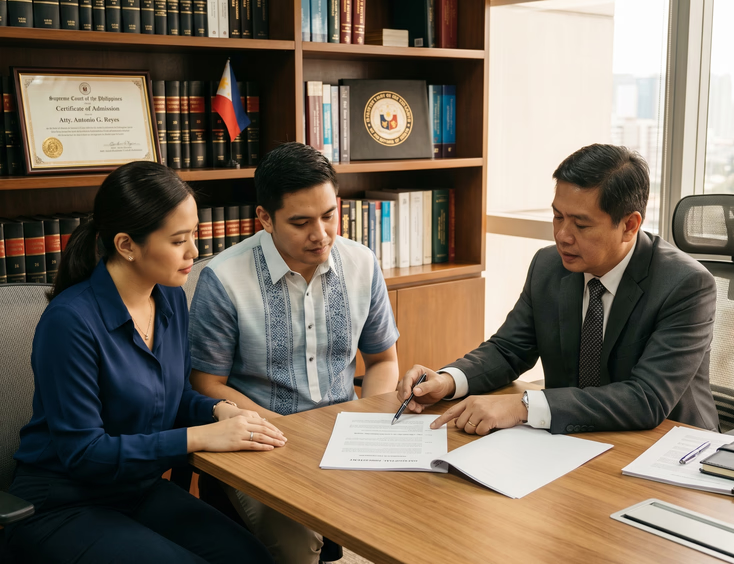
Whether you marry in a church or at city hall, the same property regime applies. Article 75 of the Family Code lets future spouses agree, in a marriage settlement signed before the wedding, on absolute community, conjugal partnership of gains, complete separation of property, or another regime. Without a settlement, or when the chosen regime is void, absolute community of property governs.
Most Filipino couples who marry without a prenuptial agreement default to absolute community. Property each of you owns at the time of the marriage and acquires during it forms the community property, subject to the exceptions in Article 92 (property acquired by gratuitous title, property for personal and exclusive use except jewelry, and property acquired before the marriage by a spouse with legitimate descendants from a former marriage). The regime governs management, disposition, debt liability, and partition on dissolution, and your choice between a church and a civil wedding has no effect on which one applies.
Inheritance, Insurance, and Benefits Apply to Both
A spouse from a church wedding and a spouse from a civil wedding hold identical legal rights. Both stand as compulsory heirs under the Civil Code rules on succession. Both qualify as spouse beneficiaries under SSS, GSIS, PhilHealth, and private insurance. Both qualify for spousal immigration benefits. Both draw the same tax treatment.
A void marriage from either type carries the same consequences. A church wedding solemnized by a priest without a current CASM is as void as a civil wedding solemnized by someone impersonating a judge. The full set of consequences runs through what happens if your wedding officiant is not legally authorized in the Philippines.
When Couples Choose One Over the Other
The choice usually comes down to religious belief, family expectations, budget, timeline, and personal preference.
- Couples who marry civilly. Religious tradition sits low on the list, the budget is tight, or the timeline cannot absorb six months to a year of religious preparation. Interfaith couples where neither party belongs to a single denomination often land here too, as do couples planning a religious blessing later.
- Couples who marry in a church. Religious tradition sits at the center, families expect a religious ceremony, and the couple wants a large traditional wedding rooted in their faith community.
- Couples who marry civilly first, then in church. A Filipino marrying a foreign national whose visa or schedule forces a quick civil ceremony, with the church wedding set for later when relatives abroad can travel. A pregnant bride who wants the marriage legally in place before the birth. Couples who need to file taxes, change immigration status, or secure benefits quickly.
Tip: If you marry civilly and plan a church wedding later, the first ceremony is your legal marriage; the second is a religious blessing, not a second marriage. Many Catholic parishes will not perform a full nuptial Mass for an already-civilly-married couple and offer a sacramental blessing instead. Ask your parish what they celebrate before you set the date or print the invitations.
Legally, the marriage exists from the first ceremony. The certificate filed with the LCR after that ceremony controls the legal status, and the later celebration renews rather than replaces it.
Practical Recommendations
Choose on what matters to you, and verify the legal foundation either way.
For a civil wedding, confirm the judge's or mayor's incumbency and territorial jurisdiction, schedule far enough ahead to clear the license application and the ten-day publication, bring every required document on the day, and confirm the officer files the certificate with the LCR within 15 days.
For a church wedding, confirm the priest, pastor, or minister holds a current CASM and the religious organization is registered with the PSA. Start the religious preparation early enough to finish the parish requirements, the LCR license process, and any travel coordination, and confirm the officer files within 30 days.
For a civil ceremony followed by a church wedding, remember the first ceremony is the legal marriage and the church wedding afterward is a religious renewal. Confirm what your parish offers, since some priests celebrate a blessing rather than a full nuptial Mass for already-married couples.
Browse pre-screened officiants for both civil and church weddings through our wedding officiants directory, where every listed officer provides credentials, contact details, and the specific type of ceremony they perform, so you can match your tradition, your venue, and your timeline with the legal foundation verified before you book.
The Family Code picks no winner between civil and church weddings. The law treats both with equal weight. The difference lies in what the wedding day looks like, what the road to it asks of you, and what the ceremony means to the people at the altar or across the desk from the judge.
Still Searching for a Right Match?
Find Your Perfect Wedding Supplier Today!
Discover trusted wedding suppliers across the Philippines in our complete directory. Compare services and connect with the ones that fit your dream celebration.
Browse Wedding SuppliersFeatured Blog Posts


Filipino Wedding Entourage - Roles, Order of March, and Modern Etiquette
6 mins readCivil Weddings in the Philippines - Requirements, Costs, and Step-by-Step Process
9 mins readCivil Wedding Requirements in the Philippines - Complete Checklist
6 mins readCost of Wedding in the Philippines - 5 Essential Things You Need to Know
7 mins readPrincipal Sponsors (Ninong/Ninang) - How Many, How to Ask, What They Really Do
4 mins readVeil, Cord, Candle & Coins - Roles, Options, and When They Happen
4 mins readEntourage for a Traditional Pinoy Wedding - Complete Roles and Guide
6 mins readComplete List of Civil Wedding Requirements in the Philippines
8 mins readHow to Choose Wedding Ninongs and Ninangs - Ask Yourself These 3 Important Questions
5 mins read