


Corporate Event Stylists and Set Designers to Know
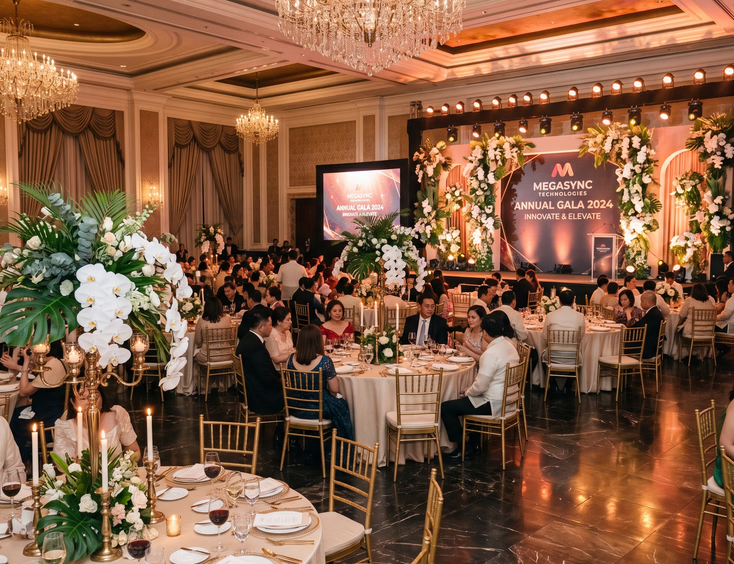
Styling is what makes the event look like the event. The venue gives you walls. The caterer fills the plates. The AV team handles sound and light. The stylist transforms the empty room into the brand experience guests photograph, post, and remember. Without strong styling, every corporate event looks like every other corporate event. With it, your night becomes the one people reference when planning their own.
This guide covers how to choose corporate event stylists and set designers in the Philippines. What to look for, what to ask, how to brief them, and how to coordinate styling with the rest of your event. Use it before your next event commits to who builds the visual experience.
Why Styling Affects Event Outcomes More Than Most Categories
Styling and set design costs run 8 to 15 percent of most corporate event budgets. The percentage climbs at product launches, milestone anniversaries, and brand activations where visual identity matters most. The impact runs across photography, brand perception, social media content, and guest experience long after the event ends.
What strong styling delivers:
- Photography that elevates brand content for months after the event
- Visual experiences guests share across social platforms
- Brand alignment that reinforces company identity
- Atmosphere supporting program emotional beats
- Stage design that frames every key program moment
- Differentiation from competitor events sharing the same venue category
- Memorable installations driving word-of-mouth coverage
What weak styling produces:
- Generic table setups indistinguishable from any other corporate event
- Backdrops that look like leftover wedding decor
- Branded signage that fights with venue aesthetic
- Stage design that flatters no one in photographs
- Floral arrangements that wilt within hours or block sight lines
- Color palettes that clash with venue interiors
- Installations guests walk past without noticing
The cost difference between a generic stylist and a strong one often runs PHP 80,000 to PHP 400,000 depending on event scale. The impact difference defines whether your event content gets used for years or quietly retired after the first social post.
Stylist Categories in the Philippines
The Filipino event styling market splits into categories based on specialization, scale, and pricing tier.
The main categories:
- Premier corporate event stylists: Established stylists specializing in corporate-scale events. Suit anniversaries, launches, and high-profile events. Pricing tier: premium to luxury.
- Boutique creative-led stylists: Smaller studios with strong design point of view. Suit brands prioritizing aesthetic depth and concept-driven styling. Pricing tier: mid to premium.
- Wedding stylists expanding to corporate: Many wedding stylists handle corporate work as secondary line. Suit corporate events wanting wedding-style aesthetic. Pricing tier: mid.
- Mid-tier styling and decor providers: Established providers serving the bulk of mid-budget corporate events. Suit standard Christmas parties and recurring events. Pricing tier: mid.
- Set design and production specialists: Companies focused on custom set builds, theatrical staging, and large installations. Suit product launches and themed events. Pricing tier: premium.
- Floral specialists: Florists handling floral arrangements as primary service with limited styling scope. Suit events where florals dominate the visual direction. Pricing tier: varies by scale.
- Branded environment specialists: Studios specializing in brand activation and immersive environments. Suit launches, brand activations, and PR-driven events. Pricing tier: premium.
- Themed event specialists: Stylists with depth in specific themes (Filipiniana, vintage, modern minimalist). Suit theme-heavy events. Pricing tier: mid to premium.
Match the stylist category to your event scale, design ambition, and budget tier. A premier corporate stylist may overdeliver for a small departmental holiday lunch. A wedding stylist may underdeliver for a product launch requiring custom branded installations.
Distinguishing Stylists From Florists From Production Designers
Three overlapping disciplines work together in event styling. Knowing the difference helps you spec the right partner for your event.
The distinctions:
- Event stylist: Manages overall visual direction including table setups, decor, color palettes, and atmospheric design. Coordinates with florists and set designers when needed.
- Florist: Specializes in floral arrangements including centerpieces, installations, and bouquets. Some florists offer broader styling. Others stay focused on florals only.
- Set designer or production designer: Manages custom builds, stage design, large installations, and immersive environments. Often coordinates with carpenters, fabricators, and AV teams.
For most corporate events, an event stylist serves as the primary creative lead, coordinating florists and set designers as subcontractors. For larger productions, set designers may lead while stylists handle table-level design.
Confirm scope before signing. Some stylists handle florals in-house. Others bring florists separately. Some handle small set builds. Others require production designers for anything beyond standard styling.
When You Need an Event Stylist
Not every corporate event needs an outside stylist. Knowing when to hire one prevents wasted budget on simple events while ensuring complex events get the visual treatment they need.
You need an event stylist when:
- The event requires custom decor beyond what venues provide
- The program features stage moments needing custom backdrop design
- The event positions around a specific theme requiring execution
- Photography and social content matter for brand purposes
- The event includes branded installations or product displays
- VIP and protocol elements need specific styling treatment
- Multiple program areas need coordinated visual identity
You can skip an outside stylist when:
- The venue provides adequate standard styling
- The event is internal and not photographed for marketing
- The program is simple without staging or decor needs
- The budget cannot support styling beyond venue defaults
- The hotel ballroom provides centerpieces and table setups included
For larger events, the planning a memorable company anniversary celebration, guide to hosting a product launch event, and planning an employee recognition or awards night cover events that benefit from professional styling.
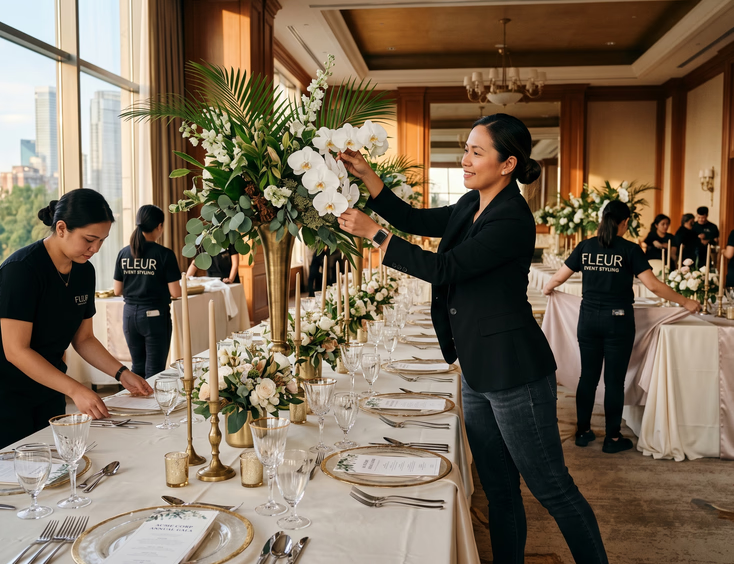
What to Look For in a Strong Stylist
Beyond category fit, specific criteria separate strong stylists from weak ones.
What strong stylists demonstrate:
- Portfolio relevant to your event type: A wedding-heavy portfolio may not translate to corporate launches. Ask for corporate event case studies.
- Strong design point of view: Strong stylists have recognizable aesthetic. Weak stylists copy whatever Pinterest trend is current.
- Consistent recent work: Strong stylists maintain active corporate event calendars. Gaps signal inconsistency.
- Coordination experience with multiple suppliers: Strong stylists work seamlessly with caterers, AV teams, and venue staff. Weak stylists create conflicts.
- Photography that documents real installations: Strong stylists show real event installations, not just renders or mood boards.
- Quality of execution beyond concept: Strong stylists deliver installations that match presentation concepts. Weak stylists oversell in concept meetings.
- Reliable production timelines: Strong stylists deliver on schedule. Weak stylists run late and stress event timelines.
- Quality of materials and finishes: Strong stylists invest in premium materials. Weak stylists cut corners visible in photographs.
- Insurance and equipment coverage: Strong stylists carry insurance. Weak stylists do not.
What weak stylists demonstrate:
- Generic portfolios indistinguishable from other stylists
- Inconsistent execution quality across past events
- Render-only portfolios without real installation photos
- Reliance on rented decor without custom touches
- Late delivery and rushed installations
- Cheap materials visible in close-up photography
- Poor coordination with other suppliers
- Limited or no insurance documentation
Questions to Ask Before Hiring Stylists
The questions you ask filter out weak stylists fast.
Ask about experience:
- How many corporate events at our scale have you styled in the past year?
- Can you share three case studies in our event type with comparable scope?
- Can we see installation photos from recent corporate events (not renders)?
- Can we speak with three past corporate clients?
Ask about process:
- Walk us through your approach from booking to installation.
- How do you develop concepts and present design direction?
- How many revision rounds are included?
- How do you coordinate with the event organizer, caterer, and AV team?
- What is your installation timeline before the event?
Ask about deliverables:
- What is included in your scope (concept, design, sourcing, installation, breakdown)?
- Do you handle florals in-house or coordinate with separate florists?
- Do you handle custom builds or coordinate with set designers?
- Do you provide rental decor or only custom design?
Ask about pricing:
- What is your fee structure (flat fee, percentage of budget, hourly)?
- What is included in your fee and what costs extra?
- How do you handle decor rentals (markup, pass-through, flat fee)?
- What are your payment terms?
- What is your cancellation policy?
Ask about logistics:
- How early do you arrive for installation?
- How much space do you need for installation?
- What venue access requirements do you have?
- How do you handle breakdown and cleanup?
Ask about contingency:
- What backup planning do you carry for installation issues?
- What happens if specific items arrive damaged or missing?
- How do you handle weather affecting outdoor installations?
- What insurance coverage do you carry?
Red Flags That Signal Trouble
Specific patterns during the hiring process signal stylists to avoid.
Red flags to watch:
- Render-heavy portfolios without real installations: Strong stylists show real work. Render-only signals concept-only capability.
- Generic portfolios indistinguishable from competitors: Strong stylists have recognizable aesthetic. Generic signals weak design point of view.
- Vague pricing without detailed breakdowns: Strong stylists present transparent pricing. Vagueness usually means surprise costs.
- Pressure to commit before contract review: Strong stylists allow review time. Pressure means hidden terms.
- Reluctance to share client references: Strong stylists connect you with past clients readily. Reluctance signals problems.
- Late delivery on past events: Strong stylists maintain reliable timelines. Late delivery signals operational weakness.
- Limited insurance details: Strong stylists document insurance. Skipping creates liability risk.
- Negative talk about past clients: Professional stylists maintain discretion. Negative talk signals difficult relationships.
- Inability to adapt to your brand: Strong stylists adapt their aesthetic to your brand. Inflexibility signals they cannot serve diverse clients.
Pricing Structures and What to Expect
Stylist pricing varies based on scope, scale, and complexity.
Typical pricing structures:
- Flat project fee: A fixed fee covering the full styling scope. Suits events with clearly defined design scope. Predictable cost.
- Per-table or per-area pricing: Pricing scaled by number of tables, stations, or distinct areas to style. Suits events with clear breakdown into stylable units.
- Cost-plus markup on decor rentals: Base design fee plus markup on rented and sourced decor. Common at mid-tier stylists.
- Hybrid retainer plus pass-through costs: A base creative fee plus pass-through costs for materials and rentals. Suits larger events with complex sourcing.
- Hourly billing: Suits smaller events or design-only consultation engagements.
Typical pricing tiers:
- Budget tier (PHP 30,000 to PHP 100,000): Basic decor and standard table styling. Suits small events and internal programs.
- Mid tier (PHP 100,000 to PHP 400,000): Custom styling, themed table setups, branded signage. Suits standard corporate events.
- Premium tier (PHP 400,000 to PHP 1.2 million): Full venue transformation, custom builds, premium florals, branded installations. Suits anniversaries, launches, and milestone events.
- Luxury tier (PHP 1.2 million and above): Custom production design, large-scale installations, themed environments, full brand activation. Suits flagship events and high-stakes brand activations.
What typically affects pricing:
- Total area requiring styling
- Custom build complexity
- Floral volume and variety
- Material quality (premium fabrics, custom prints, specialty finishes)
- Installation team size
- Setup and breakdown time
- Travel and out-of-town fees
- Theme execution complexity
For benchmark pricing across event types, how much does a corporate event cost in the Philippines covers full ranges. The sample corporate event budget breakdown shows where styling fits in overall budget allocation.

How to Brief Stylists Properly
Strong briefs produce strong styling. Weak briefs produce generic execution missing brand-specific direction.
What to include in the brief:
- Event objective and brand context: What the event is meant to accomplish and how styling supports the goal
- Target audience: Who is attending and what aesthetic they respond to
- Theme direction: Initial creative direction or themes to avoid
- Venue details: Floor plan, photos, dimensions, existing aesthetic constraints
- Color palette preferences: Brand colors, palette guidance, colors to avoid
- Mood and aesthetic references: Past events you liked, brand imagery, aspirational references
- Specific styling needs: Tables, stage, photo wall, registration area, food stations, branded installations
- Floral preferences: Style direction, must-haves, must-avoids
- Custom build requirements: Backdrops, photo installations, product displays
- Branding integration: Logo placement, brand elements, signage requirements
- Budget envelope: Realistic range for the styling scope
- Timeline expectations: When the styling team can access the venue
- Coordination with other suppliers: Caterer, AV, photographer
A clear brief allows the stylist to propose direction matching your event vision. A weak brief produces generic styling that misses what makes your event specific.
Concept Development and Revision Process
Strong stylists develop concepts through structured presentation and revision rounds.
The typical process:
- Initial brief and discovery: Understanding event goals, audience, budget
- Concept presentation: Mood boards, color direction, key design elements
- First revision round: Refining based on initial feedback
- Detailed design package: Floor plans, decor sourcing, material samples
- Final revision round: Final adjustments before production
- Production and installation: Execution following approved design
What to expect:
- Two to three revision rounds typically included
- Material samples for premium events
- Floor plans showing every styling area
- Cost breakdown by category and area
- Timeline showing installation phases
What to watch:
- Vague concepts without specific details
- Multiple revision rounds without convergence
- Generic mood boards lifted from Pinterest
- Production timelines that stress event schedules
Coordinating With Other Suppliers
Styling interacts with multiple supplier categories. Strong coordination prevents conflicts during installation and the event.
Coordination points:
- Caterer: Table setups, runner placement, centerpiece height affecting service
- AV provider: Stage design coordination, backdrop dimensions, lighting alignment with decor
- Photographer: Capturing styled installations before guests arrive
- Florist (if separate): Floral integration with overall styling direction
- Set designer (if separate): Custom build integration with surrounding styling
- Event organizer: Overall design coordination and timeline management
- Venue staff: Installation access, rigging permissions, storage space
For supplier categories interacting with styling:
- Best caterers for corporate events in the Philippines covers catering setups affecting table styling
- Choosing AV, lights, and sound system suppliers covers AV integration with stage design
- Guide to hiring corporate event photographers and videographers covers documentation capturing styled installations
- How to choose the right event organizer for your company covers organizer scope including styling coordination
- Best catering packages for corporate events in the Philippines covers catering style affecting overall aesthetic
- Filipino buffet and cocktail menu ideas for company parties covers menu styling integration
- Mobile bar services for company events covers bar setup styling
- Food cart and dessert buffet ideas for company events covers specialty station styling
- Hiring hosts, emcees, and performers for company events covers stage design supporting host work
- Live band vs DJ for corporate parties covers entertainment area styling
Themes That Match Stylist Specialties
Theme direction connects to stylist selection. Different stylists excel at different theme categories.
What stylists handle by specialty:
- Filipiniana and cultural themes: Stylists with depth in Filipino design elements, capiz, woven materials, tropical florals
- Black-tie and formal themes: Stylists focused on classic luxury aesthetic, premium florals, refined tablescapes
- Modern minimalist themes: Stylists with contemporary design sensibility and restraint
- Tropical and garden themes: Stylists comfortable with extensive florals, outdoor installations, organic materials
- Industrial and modern themes: Stylists comfortable with raw materials, geometric elements, contemporary aesthetic
- Vintage and retro themes: Stylists with sourcing access to period-appropriate decor and styling
- Brand-driven themes: Stylists experienced in translating brand identity into spatial design
For theme direction guidance, the trending corporate event themes for Filipino companies covers current direction. For specific theme depth, Filipiniana and cultural theme ideas for corporate events, black tie and gala night theme inspirations, fun and casual team building theme ideas, and eco-friendly and sustainable corporate event themes cover specific directions that match different stylist specialties.
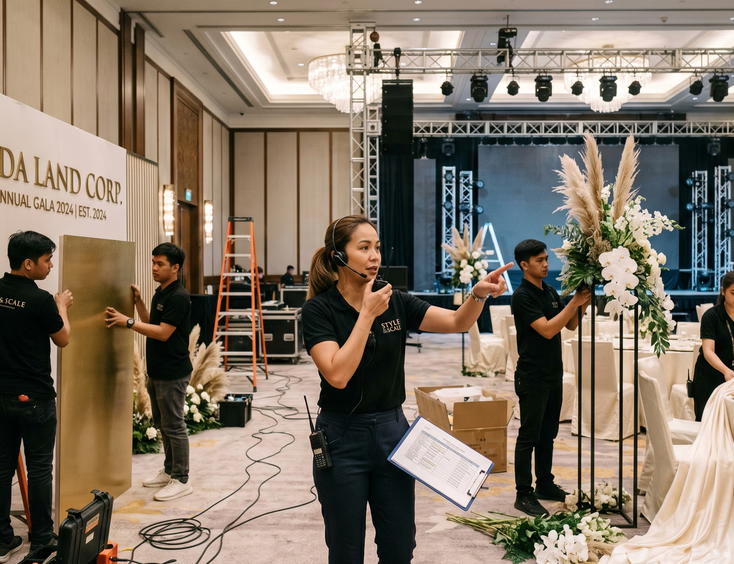
Installation Timelines and Logistics
Strong styling installations follow clear timelines. Understanding the typical flow prevents conflicts with other suppliers.
Standard installation phases:
- Pre-event planning (2 to 8 weeks before): Sourcing, fabrication, sample approvals
- Material delivery (1 to 3 days before): Decor and materials arrive at venue or staging area
- Setup access (8 to 24 hours before event): Stylists begin installation
- Final touches (2 to 4 hours before event): Last details, floral installation, lighting adjustments
- Photography window (1 hour before guests): Photographer captures styled installations
- Event execution: Stylist on standby for adjustments
- Breakdown (immediately after event or next morning): Removal and storage
What to coordinate:
- Venue access times for installation
- Storage space for materials before installation
- Coordination with AV setup on shared spaces (stage, key program areas)
- Coordination with catering setup on table areas
- Photographer access to capture installations before guests arrive
Common Styling Pitfalls
Styling engagements fail in predictable ways.
The recurring problems:
- Hiring without seeing real installations: Render portfolios may not reflect execution quality.
- Vague briefs producing generic styling: Without specific direction, stylists default to safe choices.
- Inadequate venue access for installation: Limited setup time creates rushed execution.
- Conflict with other supplier setups: Stylists working in spaces shared with catering or AV without coordination.
- Underestimating breakdown costs: Some venues require post-event removal that costs separately.
- Floral failures from heat or stress: Florals wilting before the event from poor handling.
- Centerpieces blocking sight lines: Tall centerpieces blocking guest views of the stage.
- Generic styling indistinguishable from other events: Stylists relying on standard packages without customization.
For mistakes that have sunk other corporate events, common mistakes to avoid when planning company events covers recurring failure patterns.
For contingency planning that includes styling backup, crisis and contingency planning for corporate functions covers frameworks applicable to styling risk.
Measuring Styling Performance
Stylist evaluation extends beyond whether the room looked styled. Strong evaluation supports the next event and informs whether to re-engage.
What to measure:
- Execution match to approved concept
- Quality of materials and finish work
- Coordination with other suppliers
- Installation timeline adherence
- Photography quality of styled installations
- Guest reactions to design elements
- Social media engagement on event content featuring styling
- Stakeholder satisfaction from internal teams
The how to measure the success of a corporate event covers event outcome measurement that informs styling evaluation.
For broader planning timelines that include styling booking, corporate event planning timeline and checklist covers when to book and brief.
For managing complex events with detailed RSVPs that affect styling decisions, managing RSVPs and guest lists for large events covers data coordination workflows.
Long-Term Stylist Relationships
Some companies build long-term relationships with one stylist across multiple events per year. Others hire event-by-event.
When long-term relationships work:
- Consistent brand aesthetic across all events
- Familiarity with brand guidelines and executive preferences
- Streamlined briefing and concept development
- Negotiated annual rates
- Reliable execution for recurring events
When event-by-event hiring works:
- Diverse event types requiring different aesthetic approaches
- Cost optimization through competitive bidding
- Fresh creative perspectives across events
- Limited annual event volume
Match the approach to your event calendar and brand needs.
A Stylist Who Earns the Look
The best stylist for your corporate event matches the formality of your program, the aesthetic your brand wants to project, the venue you have booked, and the budget your organization has approved. Filter on relevant portfolio. Demand real installation photos. Brief thoroughly. Coordinate with other suppliers. Confirm installation timelines.
For broader corporate event planning context, the complete guide to corporate events in the Philippines connects stylist selection to suppliers, venues, themes, and the full planning workflow. The right stylist transforms the empty room into the event your team imagined. The wrong one delivers something that looks like every other corporate event your guests have attended.
Still Searching for a Right Match?
Find Your Perfect Wedding Supplier Today!
Discover trusted wedding suppliers across the Philippines in our complete directory. Compare services and connect with the ones that fit your dream celebration.
Browse Wedding SuppliersFeatured Blog Posts


Filipino Wedding Entourage - Roles, Order of March, and Modern Etiquette
6 mins readCivil Weddings in the Philippines - Requirements, Costs, and Step-by-Step Process
9 mins readCivil Wedding Requirements in the Philippines - Complete Checklist
6 mins readCost of Wedding in the Philippines - 5 Essential Things You Need to Know
7 mins readPrincipal Sponsors (Ninong/Ninang) - How Many, How to Ask, What They Really Do
4 mins readVeil, Cord, Candle & Coins - Roles, Options, and When They Happen
4 mins readEntourage for a Traditional Pinoy Wedding - Complete Roles and Guide
6 mins readComplete List of Civil Wedding Requirements in the Philippines
8 mins readHow to Choose Wedding Ninongs and Ninangs - Ask Yourself These 3 Important Questions
5 mins read