


Best Caterers for Corporate Events in the Philippines
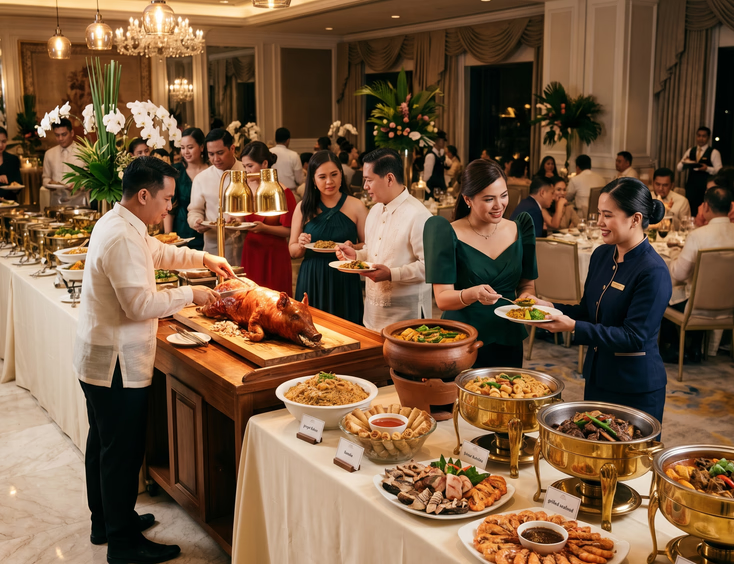
Catering is the line item employees remember after every corporate event. The venue impresses for an hour. The program runs its course. The food sits with people through the night and into the next morning's office chat. Get the catering right and the event is half-won. Get it wrong and the rest of the production cannot save the night.
This guide covers how to choose corporate event caterers in the Philippines. The categories of caterers available, what each tier delivers, what to ask before signing, and how to coordinate catering with the rest of your event. Use it before your next event commits to a menu.
Why Catering Choice Matters More Than Most Categories
Catering eats 30 to 45 percent of most corporate event budgets. The decision affects guest experience, photography quality, program flow, and post-event satisfaction more than any single supplier choice.
What strong catering delivers:
- Guest satisfaction that drives positive post-event survey scores
- Photography content showing well-styled food and confident service
- Smooth program flow with timely service that does not interrupt program beats
- Filipino menu items that resonate with employee preferences
- Dietary accommodation that includes every attendee
- Memorable signature dishes that get talked about for weeks
What weak catering produces:
- Generic buffet food that disappoints across all guest demographics
- Slow service that delays the program
- Photographs that brand teams hide rather than share
- Dietary failures that exclude guests with restrictions
- Cold food, long lines, and exhausted service staff
- Negative survey feedback that shapes next year's planning
The cost difference between mid-tier and premium catering often runs PHP 500 to PHP 1,500 per head. The brand impact difference runs across employee satisfaction, retention signals, and event reputation that lasts well past the night itself.
Caterer Categories in the Philippines
The Filipino caterer market splits into clear tiers based on price, service style, and specialization.
The main categories:
- Hotel in-house catering: Operated by hotels for events held at their venues. Suits events booked at hotel ballrooms. Pricing tier: mid to premium.
- Premium independent caterers: Established caterer brands serving high-end corporate events. Suits anniversaries, awards nights, and formal events. Pricing tier: premium to luxury.
- Mid-tier corporate caterers: Established caterers serving the bulk of mid-budget corporate events. Suits most Christmas parties, sportsfests, and standard events. Pricing tier: mid.
- Budget caterers: Smaller caterers serving cost-conscious events. Suits team buildings, internal meetings, and smaller events. Pricing tier: budget.
- Specialty cuisine caterers: Caterers focused on specific cuisines (Japanese, Korean, Middle Eastern, vegetarian). Suits events with specific menu themes or dietary requirements. Pricing tier: mid to premium.
- Filipino specialty caterers: Caterers focused on authentic Filipino menus and lechon specialists. Suits Filipiniana-themed events and Filipino-pride menus. Pricing tier: mid to premium.
- Restaurant-based catering: Restaurants offering off-premise catering from their menus. Suits smaller events wanting specific restaurant cuisine. Pricing tier: varies by restaurant.
Match the caterer category to your event scale, budget, and program style. A premium independent caterer may overdeliver for a team building. A budget caterer may underdeliver for a 25th anniversary gala.
For specific menu direction across event types, Filipino buffet and cocktail menu ideas for company parties covers tested combinations. For package structures across price tiers, best catering packages for corporate events in the Philippines covers what each tier includes.
When to Use Hotel In-House Catering
Hotel in-house catering becomes the default when you book a hotel ballroom. Most hotels require in-house catering as part of the venue contract.
What hotel catering delivers:
- Trained service staff familiar with the venue
- Coordination with venue setup, AV, and event flow
- In-house bar service with liquor licensing handled
- Plate, glassware, linen, and equipment included
- Single-vendor coordination simplifying logistics
- Service standards consistent with hotel brand reputation
What hotel catering charges for:
- Premium pricing aligned with hotel brand positioning
- Corkage fees for outside cake, wine, or specialty items
- Limited menu customization beyond established packages
- Service charges and VAT added to base catering fees
When hotel catering works well:
- Events booked at hotel ballrooms requiring in-house catering
- Formal events benefiting from hotel service standards
- Events where supplier coordination simplification justifies premium pricing
- VIP and executive events expecting hotel-grade hospitality
For broader hotel venue considerations affecting catering, hotel ballrooms and function halls for company events covers the venue side of the decision.
When to Use Premium Independent Caterers
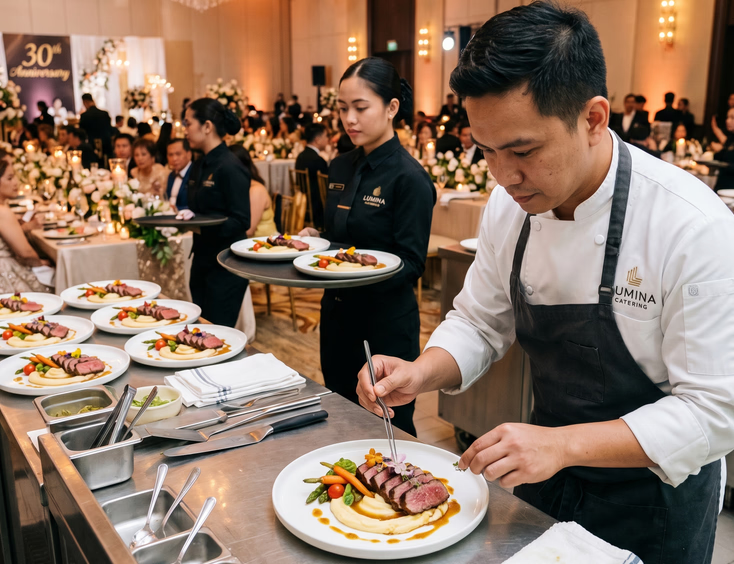
Premium independent caterers bring elevated menu development and service quality to events held outside hotel venues or where hotel catering does not meet event needs.
What premium caterers deliver:
- Strong menu development with seasonal and innovative options
- Chef-driven food preparation with attention to presentation
- Trained service staff matching hotel-grade quality
- Custom menu development for specific events
- Strong handling of dietary restrictions and special requests
- Beautiful food styling and presentation supporting photography
What premium caterers charge for:
- Premium pricing reflecting menu development and service quality
- Setup and breakdown fees for off-premise events
- Travel fees for venues outside Metro Manila
- Specialty equipment rental fees
- Service staff fees scaled to guest count
When premium caterers work well:
- Anniversary celebrations and milestone events
- Awards nights and recognition programs
- Product launches needing food styling that photographs well
- Events at unconventional venues without in-house catering
- High-end client and VIP events
When to Use Mid-Tier Corporate Caterers
Mid-tier caterers serve the bulk of Filipino corporate events. They balance menu quality, service standards, and reasonable pricing for standard event scopes.
What mid-tier caterers deliver:
- Reliable menu execution across familiar Filipino and international dishes
- Trained service staff at standard service ratios
- Standard equipment, plates, linens, and setup
- Established processes for buffet and station service
- Capacity for events from 50 to 500 guests reliably
What mid-tier caterers charge for:
- Standard packages with limited customization
- Add-on fees for premium menu items, additional stations, or extended hours
- Travel fees for out-of-town events
- Service charges per guest count
When mid-tier caterers work well:
- Standard Christmas parties and Christmas reception events
- Sportsfests and family days needing full-day catering
- Mid-budget anniversaries and milestone events
- Team buildings, conferences, and recurring corporate events
- Events at function halls and event venues
For Christmas party catering planning, how to plan a successful company Christmas party in the Philippines covers menu requirements specifically. For sportsfest catering across the day, how to organize a company sportsfest and family day covers all-day meal pacing.
When to Use Budget Caterers
Budget caterers serve smaller events and cost-conscious programs. The menu and service tier sits below premium and mid-tier options.
What budget caterers deliver:
- Affordable per-head pricing for simple events
- Basic Filipino menus emphasizing common dishes
- Standard buffet setup with basic equipment
- Functional service staff at modest ratios
- Capacity for events from 30 to 200 guests
What budget caterers charge for:
- Per-head pricing well below mid-tier rates
- Minimal customization
- Limited equipment and presentation
- Basic service without premium touches
When budget caterers work well:
- Internal team buildings and department lunches
- Smaller meetings and workshops
- Casual gatherings without VIP or client components
- Events where cost containment matters more than menu elevation
When budget caterers do not work:
- Events with VIPs, clients, or media in attendance
- High-stakes events where food quality affects brand perception
- Events photographed for marketing assets
- Programs requiring polished service flow
When to Use Filipino Specialty Caterers
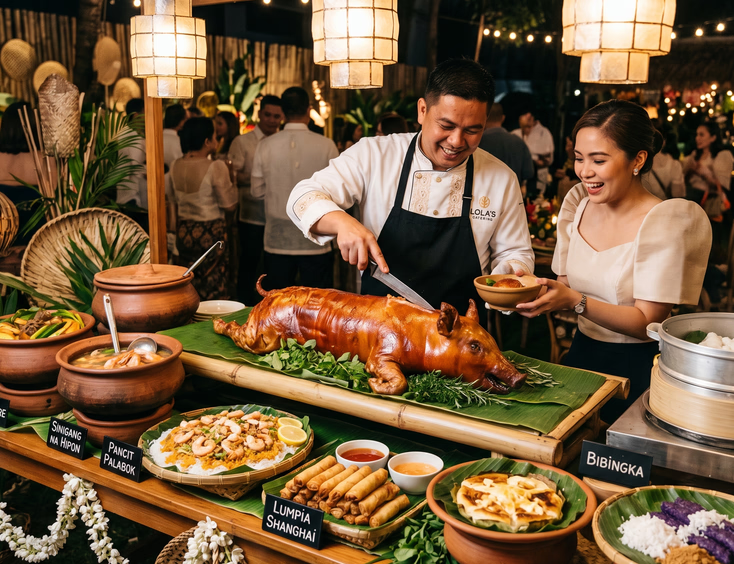
Filipino specialty caterers focus on authentic Filipino menus, often with regional specialties or lechon as anchors. They suit Filipiniana-themed events and brands emphasizing Filipino identity.
What Filipino specialty caterers deliver:
- Authentic Filipino menus with regional depth
- Lechon and Filipino specialty stations as showstoppers
- Filipino dessert and merienda specialties
- Cultural alignment for Filipiniana-themed events
- Menu items that resonate with Filipino employee preferences
What to consider:
- Some caterers specialize in specific regional cuisines (Ilocano, Bicolano, Visayan)
- Lechon specialists often serve only their specialty alongside basic sides
- Pricing varies based on menu complexity and lechon quantity
When Filipino specialty caterers work well:
- Filipiniana-themed Christmas parties, anniversaries, and corporate events
- Cultural events emphasizing Filipino identity
- Events where lechon or other Filipino dishes serve as menu anchors
- Brand activations targeting Filipino heritage messaging
For Filipiniana theme direction, Filipiniana and cultural theme ideas for corporate events covers theme execution that pairs with Filipino specialty catering.
What to Look For in a Strong Caterer
Beyond category fit, specific criteria separate strong caterers from weak ones.
What strong caterers demonstrate:
- Portfolio relevant to your event scale: Wedding caterers may struggle at corporate scale. Corporate caterers may struggle at wedding scale. Match experience to event type.
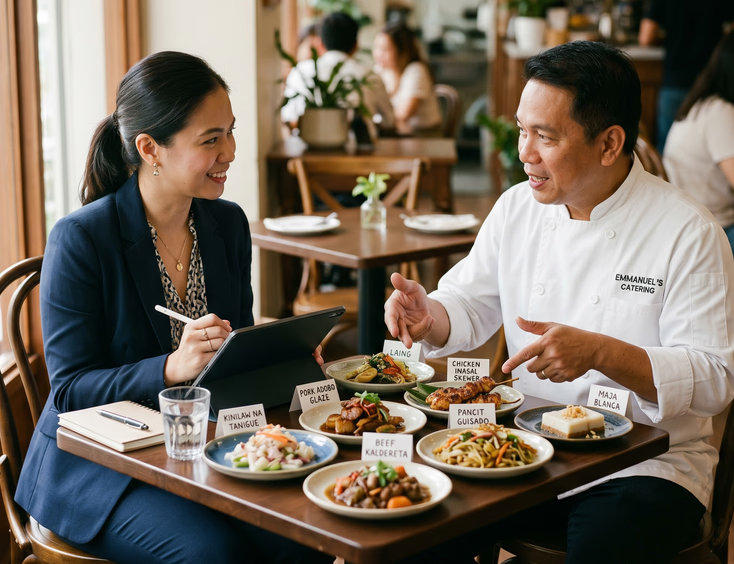
- Tasting offered before signing: Strong caterers include tasting in their proposal process. Weak caterers ask you to commit without tasting.
- Detailed menu options across price tiers: Strong caterers present multiple menu options. Weak caterers offer take-it-or-leave-it packages.
- Clear service staff ratios: Strong caterers commit to specific server-to-guest ratios. Weak caterers stay vague.
- Strong dietary accommodation: Strong caterers handle halal, vegetarian, vegan, and allergen-free without difficulty. Weak caterers treat these as exceptions.
- Beautiful food presentation: Strong caterers invest in plating and station design. Weak caterers serve food on plain trays.
- Reliable service timing: Strong caterers coordinate service with program beats. Weak caterers serve when convenient for the kitchen.
- Backup planning: Strong caterers carry contingencies for equipment failure, ingredient shortages, or supplier delays. Weak caterers improvise.
- Insurance and food safety certifications: Strong caterers document insurance and food safety compliance. Weak caterers skip this.
What weak caterers demonstrate:
- Inconsistent food quality across events
- Reluctance to offer tastings
- Generic menu packages without flexibility
- Vague service staff commitments
- Difficulty handling dietary restrictions
- Poor food presentation
- Service that conflicts with program timing
- No documented food safety or insurance coverage
Questions to Ask Before Hiring
The questions you ask filter out weak caterers fast.
Ask about experience:
- How many corporate events at our scale have you catered in the past year?
- Can you share three case studies with comparable headcount and budget?
- Who from your team manages our event day-of?
- Can we speak with three past corporate clients?
Ask about menus:
- What menu options come at our price tier?
- Can we customize within the package?
- Do you offer tastings before we sign?
- How do you handle dietary restrictions (halal, vegetarian, vegan, allergies)?
- Can we add specialty stations or specific items beyond the standard package?
Ask about service:
- What is your service staff ratio to guests?
- How do you coordinate service timing with the program?
- What is your standard equipment, plate, glassware, and linen package?
- Are uniforms standardized or can we request specific styling?
- How do you handle plating for plated dinner service?
Ask about logistics:
- How early do you arrive for setup?
- What is your breakdown process?
- Do you handle waste management and cleanup?
- What space and equipment do you need from the venue?
- How do you coordinate with the event organizer and venue staff?
Ask about pricing:
- What is included in your per-head rate?
- What costs extra (specialty stations, premium menu items, additional service hours)?
- What are your payment terms?
- What is your cancellation policy?
- What is your final headcount confirmation deadline?
- What happens if actual headcount differs from confirmed numbers?
Ask about contingency:
- What backup equipment do you carry?
- How do you handle weather affecting outdoor service?
- What happens if key kitchen staff cannot make the event?
- Do you carry food safety insurance?
Red Flags That Signal Trouble
Specific patterns during the hiring process signal caterers to avoid.
Red flags to watch:
- Reluctance to offer tastings: Strong caterers welcome tastings. Reluctance usually means inconsistent food quality.
- Vague pricing without detailed breakdowns: Strong caterers present transparent pricing. Vagueness usually means surprise costs later.
- Pressure to commit before contract review: Strong caterers allow review time. Pressure means hidden terms.
- Negative talk about past clients: Strong caterers maintain professionalism. Negative talk signals difficult working relationships.
- Single-menu offerings without flexibility: Strong caterers customize. Inflexibility means they cannot adapt to your event.
- Reluctance to share recent references: Strong caterers connect you with past clients readily. Reluctance signals problems.
- No documented food safety or insurance coverage: Strong caterers maintain certifications. Skipping this creates liability risk.
- Pushy upselling toward premium tiers: Strong caterers present options. Pushy upselling means commission-driven sales.
- Limited equipment or basic presentation despite premium pricing: Strong caterers invest in presentation. Mismatched presentation signals weak operations.
Pricing Structures and What to Expect
Corporate event catering pricing varies based on tier, menu complexity, and service style.
Typical pricing tiers:
- Budget tier (PHP 500 to PHP 1,000 per head): Basic buffet with standard Filipino menu. Suits team buildings and internal events.
- Mid tier (PHP 1,000 to PHP 2,000 per head): Standard corporate event catering with strong Filipino and international menu options. Suits Christmas parties, anniversaries, sportsfests.
- Premium tier (PHP 2,000 to PHP 3,500 per head): Premium menu with multiple stations, specialty items, and elevated presentation. Suits milestone anniversaries, formal awards nights, and brand events.
- Luxury tier (PHP 3,500 and above per head): Plated dinner service, custom menu development, and high-end presentation. Suits flagship anniversaries, VIP events, and premium product launches.
What typically affects pricing:
- Guest count (some caterers offer volume discounts)
- Menu complexity and ingredient costs
- Service style (buffet versus plated versus stations)
- Service hours (extended events cost more)
- Equipment and linen rental inclusions
- Bar service if included
- Travel fees for out-of-town events
- Specialty stations and additions
For benchmark pricing across event types, how much does a corporate event cost in the Philippines covers ranges. The sample corporate event budget breakdown shows how catering fits in full event allocation.
How to Brief Caterers Properly
Strong briefs produce strong menus. Weak briefs produce generic packages.
What to include in the brief:
- Event type and tone: Christmas party energy differs from anniversary formality
- Total headcount with breakdowns: Adults, children, dietary restrictions
- Service style preference: Buffet, plated, stations, or hybrid
- Program timeline: When meals should serve and how long service runs
- Theme and aesthetic direction: Filipino specialty, formal, casual, themed
- Specific menu requirements: Must-have items, items to avoid
- Dietary requirements with counts: Halal, vegetarian, vegan, allergies
- VIP and special menu needs: Different menu for executive table or VIP guests
- Beverage requirements: Soft drinks, juices, water, coffee, tea inclusion
- Bar service requirements: If alcohol service is needed
- Venue specifics: Kitchen access, electrical capacity, water source, space limitations
- Budget range: Realistic envelope per head
- Equipment requirements: Plates, glassware, linens, chafing dishes
- Service staff style: Uniformed, themed costumes, casual
A clear brief allows the caterer to propose menus matching your event vision. A weak brief produces generic packages that miss what your specific event needs.
Tasting Best Practices
Tastings give you the chance to evaluate food quality, presentation, and caterer responsiveness before committing.
What to do at the tasting:
- Bring all key decision-makers (you cannot decide alone for a 300-person event)
- Taste a representative sample of the proposed menu
- Evaluate presentation as much as flavor
- Discuss customization or substitutions
- Confirm service style (buffet versus plated affects what tasting shows)
- Ask about ingredient sources and seasonality
- Discuss dietary accommodation execution
- Photograph the tasting for reference during planning
What to confirm post-tasting:
- Menu adjustments based on tasting feedback
- Final menu confirmed in writing
- Substitutions agreed in writing
- Plating direction confirmed
- Service flow and timing confirmed
Strong caterers include one tasting in their proposal process. Premium caterers may include multiple tastings. Confirm tasting policy before signing.
Catering Service Styles
Different service styles fit different events. Match the style to the program and venue.
The main service styles:
- Buffet service: Guests serve themselves from stations. Suits casual events, sportsfests, and Christmas parties. Faster service but creates lines.
- Station service: Multiple themed stations across the venue. Guests graze across stations. Suits product launches, cocktail receptions, and brand activations.
- Plated service: Servers deliver plated courses to seated guests. Suits formal events, anniversaries, and awards nights. Slower but more elegant.
- Family-style service: Large platters served to each table for guests to share. Suits casual Filipino-themed events. Encourages interaction.
- Cocktail-style service: Passed canapes and stations during standing reception. Suits product launches, networking events, and cocktail receptions.
- Hybrid service: Combination styles across the event (cocktail during reception, plated for dinner, dessert station for closing).
Service style affects timing, staffing, equipment, and guest experience. Brief the caterer on service preferences during initial discussions.
Coordinating With the Event Organizer
Caterers work alongside event organizers, AV providers, stylists, and venue staff. Clear coordination prevents conflicts during the event.
What the event organizer coordinates:
- Service timing with program flow
- Menu approvals and tasting coordination
- Venue access and setup logistics
- Dietary accommodation across guest lists
- VIP and executive seating with catering needs
- Crisis coordination if service issues arise
For event organizer selection, how to choose the right event organizer for your company covers organizer scope including catering coordination.
Coordinating With Other Suppliers
Catering interacts with several other supplier categories.
Coordination points:
- Stylists: Coordinating table setups, runner installation, and centerpiece compatibility with table service
- AV providers: Coordinating service timing around program beats
- Photographers: Capturing food styling before service begins
- Bar service providers: If separate from catering, coordinating service flow
- Venue staff: Confirming kitchen access, electrical capacity, and waste management
For supplier categories interacting with catering:
- Corporate event stylists and set designers to know covers stylists whose table setups affect service
- Choosing AV, lights, and sound system suppliers covers AV timing affecting service
- Mobile bar services for company events covers bar service often coordinated separately
- Food cart and dessert buffet ideas for company events covers specialty food stations often added to standard catering
- Hiring hosts, emcees, and performers for company events covers program flow affecting service timing
- Live band vs DJ for corporate parties covers entertainment that runs alongside service
- Guide to hiring corporate event photographers and videographers covers documentation capturing food styling
Managing Dietary Restrictions
Filipino corporate events increasingly include guests with dietary restrictions. Strong dietary management protects guest experience and brand reputation.
Common dietary requirements:
- Halal compliance for Muslim guests
- Vegetarian and vegan options
- Allergen-free options (nuts, shellfish, dairy, gluten)
- Religious dietary requirements (no pork, no beef during Lent)
- Medical dietary restrictions
- Children's menu for family events
What to do:
- Collect dietary requirements during RSVP
- Share dietary breakdown with caterer before menu finalization
- Confirm caterer's process for handling restricted diets
- Verify food preparation handles cross-contamination concerns
- Mark dietary-friendly items clearly at buffet stations
- Brief service staff on restricted-diet identification
For RSVP coordination capturing dietary data, managing RSVPs and guest lists for large events covers data collection workflows.
Common Catering Pitfalls
Catering engagements fail in predictable ways.
The recurring problems:
- Hiring without tasting: Menu on paper differs from execution. Skipping tasting creates surprises.
- Vague briefs producing generic packages: Without specific direction, caterers default to standard menus.
- Underestimating service staffing: Understaffed events create long lines and slow service.
- Skipping dietary planning: Late dietary requests create exclusion and embarrassment.
- Conflict between catering and program flow: Service timing that ignores program beats creates disruption.
- Inadequate kitchen access at venues: Caterers struggle when venues lack kitchen support.
- No backup for equipment failure: Failed chafing dishes ruin service.
- Cold food from poor station planning: Distance from kitchen to stations creates temperature problems.
- Choosing cheapest option without quality consideration: Cheap catering costs more in survey scores and brand impact.
For mistakes that have sunk other corporate events, common mistakes to avoid when planning company events covers recurring failure patterns.
For contingency planning that includes catering backup, crisis and contingency planning for corporate functions covers frameworks applicable to catering risk.
Measuring Catering Performance
Caterer evaluation extends beyond whether guests ate. Strong evaluation supports the next event and informs whether to re-engage.
What to measure:
- Total guest count served against contracted numbers
- Food quality ratings from post-event surveys
- Service timing adherence to program
- Dietary accommodation success
- Staff professionalism feedback
- Setup and breakdown efficiency
- Stakeholder feedback from internal teams and VIP guests
The how to measure the success of a corporate event covers event outcome measurement that informs caterer evaluation.
For broader timelines that include caterer booking, corporate event planning timeline and checklist covers when to book and brief.
Long-Term Caterer Relationships
Some companies build long-term relationships with one or two caterers across multiple events per year. Others hire event-by-event.
When long-term relationships work:
- Consistent quality and brand alignment across events
- Familiarity with executive preferences and dietary restrictions
- Streamlined briefing and menu development
- Negotiated annual rates
- Reliability for recurring events
When event-by-event hiring works:
- Diverse event types requiring different cuisine specializations
- Cost optimization through competitive bidding
- Fresh menu perspectives across events
- Limited annual event volume
Match the approach to your event calendar and brand needs.
A Caterer Who Earns the Plate
The best caterer for your corporate event matches the formality of your program, the scale of your guest list, the complexity of your dietary requirements, the venue you have booked, and the budget your organization has approved. Filter on relevant portfolio. Demand a tasting. Brief thoroughly. Coordinate with the event organizer. Confirm service ratios and equipment.
For broader corporate event planning context, the complete guide to corporate events in the Philippines connects catering selection to suppliers, venues, themes, and the full planning workflow. The right caterer feeds your guests well and protects the night. The wrong one leaves a taste your survey scores will not forget.
Still Searching for a Right Match?
Find Your Perfect Wedding Supplier Today!
Discover trusted wedding suppliers across the Philippines in our complete directory. Compare services and connect with the ones that fit your dream celebration.
Browse Wedding SuppliersFeatured Blog Posts






Filipino Wedding Entourage - Roles, Order of March, and Modern Etiquette
6 mins readCivil Weddings in the Philippines - Requirements, Costs, and Step-by-Step Process
9 mins readCivil Wedding Requirements in the Philippines - Complete Checklist
6 mins readCost of Wedding in the Philippines - 5 Essential Things You Need to Know
7 mins readPrincipal Sponsors (Ninong/Ninang) - How Many, How to Ask, What They Really Do
4 mins readVeil, Cord, Candle & Coins - Roles, Options, and When They Happen
4 mins readEntourage for a Traditional Pinoy Wedding - Complete Roles and Guide
6 mins readComplete List of Civil Wedding Requirements in the Philippines
8 mins readHow to Choose Wedding Ninongs and Ninangs - Ask Yourself These 3 Important Questions
5 mins read