


Choosing AV, Lights, and Sound System Suppliers
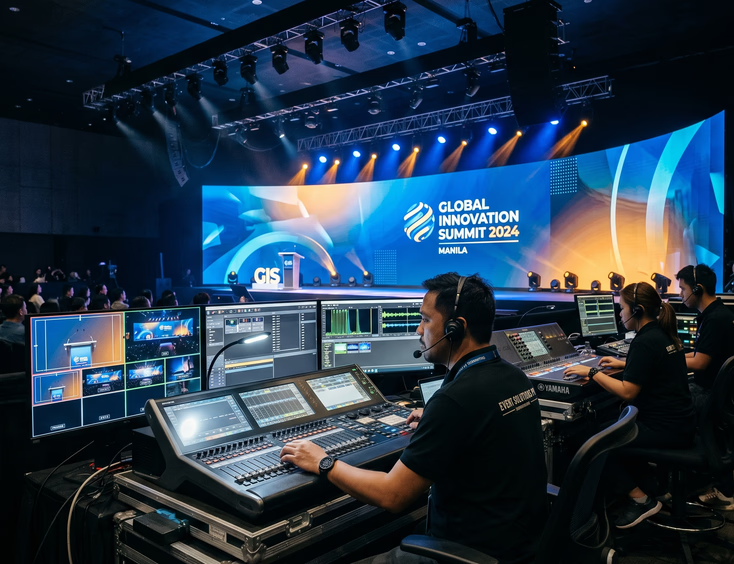
The AV team makes or breaks every corporate event you cannot afford to fail. A muddy microphone during the CEO's speech. A frozen AVP during the founder tribute. A flickering LED wall during the product reveal. Each of these creates the disasters that haunt your survey results for years. Get the AV right and the production becomes invisible. Get it wrong and nothing else you spent money on matters.
This guide covers how to choose AV, lighting, and sound system suppliers for corporate events in the Philippines. What to look for, what to ask, what specifications matter, and how to coordinate the AV team with the rest of your event. Use it before your next event commits to a production partner.
Why AV Decisions Affect Event Outcomes More Than Most Categories
AV runs 10 to 25 percent of most corporate event budgets. The percentage climbs at product launches, conferences, and milestone anniversaries where production scale matters. The impact runs across every program moment, every speech, every video playback, and every photograph.
What strong AV delivers:
- Speeches that every guest hears clearly across the entire room
- AVPs that play without glitches at the right moment in the program
- Lighting that supports key program beats with intentional design
- Stage presence that makes recipients and speakers look their best
- Photography that captures stage moments without lighting failures
- Music that supports the energy at each program phase
- Smooth transitions between program segments
What weak AV produces:
- Speeches muddled by feedback, dropouts, or weak amplification
- AVPs that freeze, lag, or fail to play
- Lighting that washes out faces or creates harsh shadows
- Stage shots that look amateur in marketing assets
- Music that cuts at the wrong moment or runs at wrong volumes
- Awkward transitions where the audience notices the technical staff
The cost difference between mid-tier and premium AV often runs PHP 100,000 to PHP 500,000 depending on event scale. The impact on event outcome separates events guests remember fondly from events they talk about for the wrong reasons.
AV Categories in the Philippines
The Philippine AV market splits into categories based on scale, specialization, and pricing tier.
The main categories:
- Hotel in-house AV: Operated by hotels for events held at their venues. Standard AV included in venue packages with add-ons for premium production. Pricing tier: included with venue or modest add-ons.
- Mid-tier corporate AV providers: Established providers serving the bulk of mid-budget corporate events. Equipment and operators sized for events of 100 to 500 guests. Pricing tier: mid.
- Premium production companies: Established companies handling large corporate events, launches, and conferences. Convention-grade equipment and experienced operators. Pricing tier: premium.
- Specialized event production studios: Production companies with custom staging, lighting design, and creative AV capability. Suits launches and brand events requiring custom production. Pricing tier: premium to luxury.
- Convention-scale AV providers: Companies handling conference, trade show, and large-format events. Equipment includes line arrays, LED walls at scale, and multi-camera production. Pricing tier: luxury.
- Specialty providers: Companies focused on specific niches (lighting design only, audio only, livestream, drone). Suits events with specialized production needs. Pricing tier: varies.
Match the AV category to your event scale, program complexity, and budget tier. A premium production company may overdeliver for a small team building. Hotel in-house AV may underdeliver for a product launch requiring LED walls and programmable lighting.
When Hotel In-House AV Is Enough
Hotel in-house AV handles standard corporate events at hotel venues. Knowing when it suffices and when you need outside AV saves budget without compromising production.
What hotel AV typically includes:
- Standard projector and screen
- Basic stage lighting with general washes
- Two to four wireless microphones
- Podium with built-in microphone
- Background music capability
- An on-site AV technician for setup and operation
- Standard sound system sized for the ballroom
When hotel AV works well:
- Standard Christmas parties without significant AV demands
- Team buildings and internal events
- Conferences with single-room setup and basic presentation
- Awards nights at smaller scale
- Recurring corporate events with predictable production needs
When hotel AV underdelivers:
- Product launches requiring LED walls and programmable lighting
- Milestone anniversaries with AVP playback as program centerpieces
- Awards nights requiring custom stage lighting and spotlight cues
- Events needing multi-camera coverage or livestream
- Productions with custom audio mixing or specialized microphone setups
For broader hotel venue considerations affecting AV, hotel ballrooms and function halls for company events covers the AV side of venue decisions.
When to Bring in Outside AV
Outside AV becomes necessary when production demands exceed hotel in-house capability or when venues lack built-in AV infrastructure.
You need outside AV when:
- The event uses an unconventional venue without built-in AV
- The program requires LED walls beyond what hotels offer
- Programmable lighting needs to tie to specific program beats
- Multi-camera coverage and livestream are part of deliverables
- The event needs more than four wireless microphones
- Specialized audio requirements (line arrays, custom mixing, podcast-grade)
- The show requires extensive rigging or custom staging
- Backup redundancy beyond hotel standards matters
You should keep hotel AV when:
- Production demands fit standard hotel capability
- Budget cannot support premium AV upgrades
- The event organizer recommends in-house for logistical simplicity
- Hotel restrictions limit outside AV access
Some venues restrict outside AV entirely. Confirm venue AV policy before committing to outside providers.
What to Look For in a Strong AV Provider
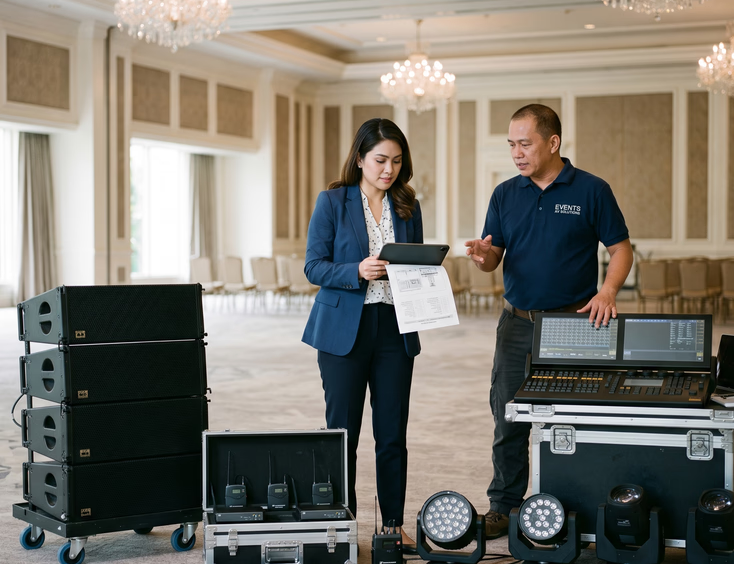
Beyond category fit, specific criteria separate strong AV providers from weak ones.
What strong AV providers demonstrate:
- Portfolio relevant to your event type: A wedding-heavy portfolio does not guarantee corporate launch capability. Ask for corporate event case studies.
- Equipment inventory matched to your event scale: Strong providers carry sufficient equipment for your headcount. Weak providers under-equip and improvise.
- Trained operators with corporate event experience: Strong providers staff experienced operators. Weak providers send whoever is available.
- Comprehensive backup planning: Strong providers carry redundant equipment. Weak providers run single-source setups that fail when one component breaks.
- Clear technical specifications: Strong providers document equipment, capacity, and capabilities. Weak providers stay vague.
- Strong coordination with other suppliers: Strong providers work seamlessly with event organizers, caterers, and stylists. Weak providers create conflicts.
- Tech rehearsal commitment: Strong providers include rehearsal time in their service. Weak providers skip rehearsals to save time.
- Insurance and equipment liability coverage: Strong providers carry insurance. Weak providers do not.
- Documented preventive maintenance: Strong providers maintain equipment properly. Weak providers run failing equipment until it breaks during events.
What weak AV providers demonstrate:
- Inconsistent past work quality
- Vague equipment specifications
- Single-equipment setups without backup
- Untrained or rotating operators
- No rehearsal time included
- No insurance documentation
- Maintenance issues affecting reliability
- Poor coordination with other event suppliers
Questions to Ask Before Hiring
The questions you ask filter out weak providers fast.
Ask about experience:
- How many corporate events at our scale have you handled in the past year?
- Can you share three case studies in our event type with comparable production scope?
- Who from your team operates AV day-of?
- Can we speak with three past corporate clients?
Ask about equipment:
- What is your full equipment inventory for our event?
- What backup equipment do you carry on-site?
- What is the age and maintenance status of your gear?
- How do you handle equipment failure during events?
Ask about staffing:
- How many operators staff our event?
- What is the experience level of each operator?
- Will the operators presenting at our meeting be the same ones on-site?
- How do you handle long event days requiring shift coverage?
Ask about process:
- Walk us through your approach from booking to wrap-up.
- When does setup begin, and when does breakdown happen?
- How do you coordinate with the event organizer and venue?
- What rehearsals do you include in your service?
- How do you handle program changes during the event?
Ask about deliverables:
- Do you provide recordings of speeches, performances, or program moments?
- What is your livestream capability if needed?
- How do you support same-day or next-day social deliverables?
Ask about pricing:
- What is included in your base package?
- What costs extra (additional equipment, longer hours, specialty staging)?
- What are your payment terms?
- What is your cancellation policy?
- Do you charge travel fees for out-of-town events?
Ask about contingency:
- What backup equipment do you carry?
- What happens if a key operator cannot make the event?
- How do you handle power failures or venue infrastructure issues?
- What insurance coverage do you carry?
Red Flags That Signal Trouble
Specific patterns during the hiring process signal AV providers to avoid.
Red flags to watch:
- Vague equipment specifications: Strong providers document specs. Vagueness usually means under-equipped operations.
- Single-equipment setups without backup: Strong providers carry redundancy. Single setups create failure risk.
- Reluctance to confirm operator names: Strong providers identify who runs your event. Vagueness means whoever is available.
- No rehearsal time included: Strong providers rehearse. Skipping rehearsal usually means rough execution.
- Limited insurance details: Strong providers document insurance. Skipping creates liability exposure.
- Pressure to commit before contract review: Strong providers allow review time. Pressure means hidden terms.
- Negative talk about past clients: Strong providers maintain professionalism. Negative talk signals difficult relationships.
- Old equipment with maintenance issues: Strong providers maintain gear. Visible wear suggests reliability problems.
- Poor coordination communication: Strong providers respond to messages. Slow response signals weak coordination during events.
Equipment Categories to Understand
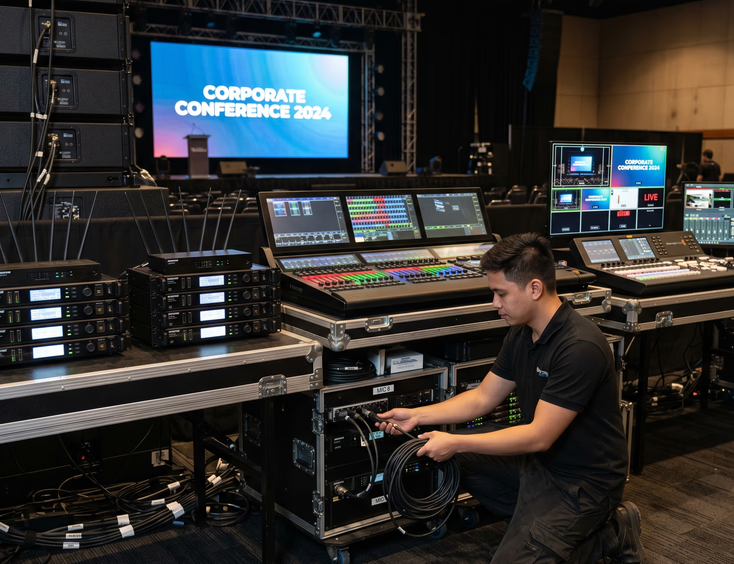
AV equipment breaks into categories. Understanding what you need helps you spec correctly and avoid being upsold equipment your event does not require.
Sound and Audio
Audio equipment delivers speeches, music, and program audio across the venue.
Common audio components:
- Speakers: Sized to the venue (smaller speakers for 100-person rooms, line arrays for 500-plus or large halls)
- Mixing console: Manages audio inputs and outputs during the event
- Wireless microphones: Handheld, lapel, and headset versions for different uses
- Wired microphones: For lecterns and fixed stage positions
- In-ear monitors: For performers and emcees needing audio feedback
- Audio processing: Equalizers, compressors, and effects processors
- Backup systems: Redundant microphones, cables, and signal paths
What to spec:
- Speaker count and positioning matched to venue and headcount
- Number of wireless microphones (most corporate events need 4 to 8)
- Mixer capacity matched to input count
- Backup microphones for key program moments
- Quality of audio brand (premium brands like Shure, Sennheiser, DPA outperform generic brands)
Lighting
Lighting affects atmosphere, photo quality, and visual interest at every event.
Common lighting components:
- Wash lighting: General room lighting and color washes
- Spot lighting: Focused lighting on speakers and key positions
- Programmable theatrical lighting: Moving lights, gobos, and patterns
- Uplighting: Wall-mounted lighting creating atmosphere
- LED walls: Large-scale video and graphics display
- Truss systems: Rigging for lighting installations
- Lighting console: Controls and programs lighting cues
What to spec:
- Wash lighting coverage for the full event space
- Spotlight capability for stage moments
- Programmable lighting for events with multiple program beats
- LED wall sizing matched to stage proportions and venue
- Color and intensity capability matched to event aesthetic
Video and Projection
Video equipment handles AVPs, presentations, and visual content during programs.
Common video components:
- Projectors: For events using traditional projection screens
- LED walls: For events requiring brighter, more dynamic display
- Screens and projection surfaces: For projector-based setups
- Confidence monitors: Forward-facing screens for speakers to read
- Multi-camera switching: For events with multiple cameras and live mixing
- Video processing: Scalers, switchers, and signal processors
What to spec:
- Display size matched to venue and audience
- Brightness and resolution matched to ambient lighting
- Confidence monitor placement for speakers
- File format and resolution requirements for AVPs
- Backup playback systems
Staging and Rigging
Staging supports the physical event structure including stage platforms, truss systems, and rigging for lighting and AV.
Common staging components:
- Stage platforms: Risers and platforms for elevated program areas
- Backdrops: Branded or themed visual elements behind the stage
- Trusses: Rigging structures for lighting and AV equipment
- Catwalks and walkways: For larger events with overhead access
- Stage skirting and dressing: Visual elements covering stage components
What to spec:
- Stage size matched to program needs and venue
- Backdrop dimensions and design coordination with stylists
- Truss requirements for lighting and rigging
- Load capacity for performers and equipment
Pricing Structures and What to Expect
AV pricing varies based on equipment scope, staffing, and event scale.
Typical pricing tiers:
- Budget tier (PHP 50,000 to PHP 150,000): Basic sound, simple lighting, projector setup. Suits team buildings and smaller events.
- Mid tier (PHP 150,000 to PHP 400,000): Quality audio, basic theatrical lighting, projection or small LED wall. Suits standard corporate events.
- Premium tier (PHP 400,000 to PHP 1.5 million): Premium audio, programmable lighting, LED walls, multi-camera coverage. Suits launches, anniversaries, awards nights.
- Luxury tier (PHP 1.5 million and above): Convention-scale AV, custom staging, livestream, full production. Suits major conferences, flagship launches, and milestone events.
What typically affects pricing:
- Equipment specifications and quantities
- Operator count and experience
- Event duration and load-in time
- Rigging and staging complexity
- Multi-camera coverage and livestream requirements
- Specialty equipment (drones, robotic cameras, specialty lighting)
- Travel and out-of-town fees
- Rehearsal time included
For benchmark pricing across event types, how much does a corporate event cost in the Philippines covers full ranges. The sample corporate event budget breakdown shows where AV fits in overall budget allocation.
How to Brief AV Providers Properly
Strong briefs produce strong AV. Weak briefs produce generic production that misses program-specific needs.
What to include in the brief:
- Event type and program flow: Detailed program with timing for each segment
- Total headcount and venue layout: Capacity affects audio coverage and screen visibility
- Venue specifications: Existing AV infrastructure, power capacity, rigging access
- Stage and presentation requirements: Stage size, backdrop, podium needs
- Audio requirements: Number of speakers, microphones needed, music sources
- Visual content requirements: AVPs, presentations, live video, social feeds
- Lighting design direction: Atmospheric goals, key moments needing emphasis
- Recording and livestream needs: Speech recording, full event recording, social-ready clips
- Coordination with other suppliers: Stylists, photographers, performers, hosts
- Brand guidelines: Color preferences, aesthetic direction, brand voice
- Budget envelope: Realistic range for the production scope
- Tech rehearsal schedule: When the team can rehearse with operators
- Contingency expectations: Backup equipment, key moment redundancy
A clear brief allows the AV provider to recommend appropriate equipment and staffing. A weak brief produces proposals that miss specific needs.
Tech Rehearsals and Run-Throughs
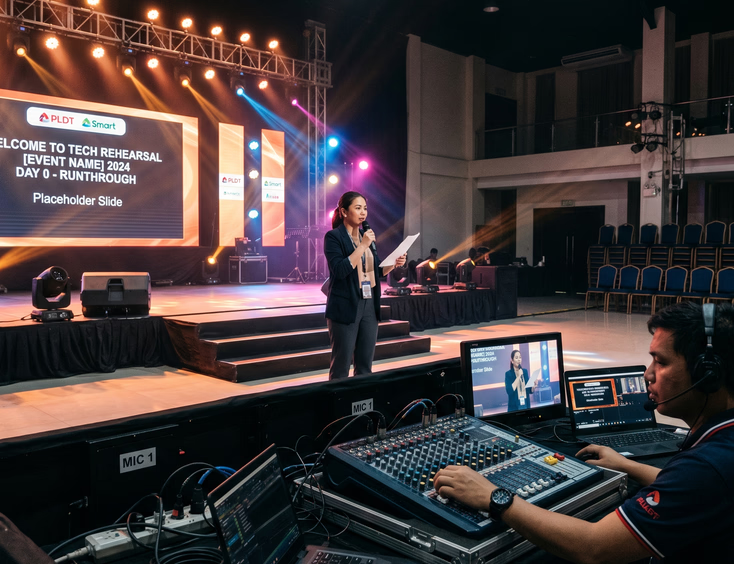
Tech rehearsals separate smooth events from chaotic ones. Strong AV providers include rehearsal time. Strong event teams use it.
What to do at tech rehearsals:
- Run through the full program with AV cues
- Test every microphone with each speaker
- Play every AVP file from the venue system
- Test stage lighting on every program position
- Confirm music transitions and volumes
- Brief AV operators on every cue point
- Identify and resolve any equipment issues
- Document the final cue sheet for the operator
Schedule rehearsals at least 24 hours before the event. Day-of rehearsals create rushed problem-solving when issues surface.
Coordinating With the Event Organizer
AV providers work alongside event organizers, who manage overall event flow and coordination.
What the event organizer coordinates:
- AV booking and contract management
- Program flow that AV operators follow
- Coordination with venue staff on access and infrastructure
- Communication of program changes to AV operators
- Crisis coordination if AV failures occur
For event organizer selection, how to choose the right event organizer for your company covers organizer scope including AV coordination.
Coordinating With Other Suppliers
AV interacts with several other supplier categories.
Coordination points:
- Caterers: AV operators need access for setup before food service blocks pathways
- Stylists: Stage and lighting design coordination with set design and backdrop builds
- Photographers and videographers: Coordinating shot positioning around AV equipment
- Hosts and performers: Microphone preferences, music cues, lighting requirements
- Venue staff: Power access, rigging permissions, load-in scheduling
For supplier categories interacting with AV:
- Best caterers for corporate events in the Philippines covers catering coordination with AV
- Corporate event stylists and set designers to know covers stylists coordinating with stage and lighting
- Guide to hiring corporate event photographers and videographers covers documentation around AV setups
- Hiring hosts, emcees, and performers for company events covers hosts working with AV operators
- Live band vs DJ for corporate parties covers music decisions affecting audio setup
- Best catering packages for corporate events in the Philippines covers catering packages affecting setup logistics
- Filipino buffet and cocktail menu ideas for company parties covers menu setups affecting AV positioning
- Mobile bar services for company events covers bar service setups
- Food cart and dessert buffet ideas for company events covers specialty stations affecting venue layout
Power and Infrastructure Requirements
AV equipment draws significant power. Venue infrastructure often limits what AV can support.
What to confirm with the venue:
- Total electrical capacity available for AV
- Outlet locations and capacity at stage and operator positions
- Generator availability for events at venues with limited power
- Backup power for critical AV systems
- Rigging capacity and structural limits for hanging equipment
- Cable routing paths that do not create tripping hazards
- AV operator station location with sight lines to the stage
Brief the venue and AV provider together early in planning. Power and infrastructure constraints often shape what AV is possible.
Common AV Pitfalls
AV engagements fail in predictable ways.
The recurring problems:
- Hiring the cheapest option: Cheap AV creates technical failures that ruin events. The savings rarely justify the risk.
- Skipping tech rehearsals: Without rehearsal, every problem becomes a crisis during the event.
- Vague equipment specifications: Without specifics, providers under-equip and improvise.
- No backup planning for key moments: Single-equipment setups fail at critical moments.
- Inadequate power planning: Power failures during programs damage events permanently.
- Poor coordination with other suppliers: AV conflicts with catering, photography, and stylist setups.
- Underestimating operator count: Single operators cannot manage complex events.
- Skipping recording capability: No recording means no post-event content from speeches and program moments.
- Wrong venue match: AV designed for one venue type fails in different environments.
For mistakes that have sunk other corporate events, common mistakes to avoid when planning company events covers recurring failure patterns.
For contingency planning that includes AV backup, crisis and contingency planning for corporate functions covers frameworks applicable to AV risk.
Measuring AV Performance
AV evaluation extends beyond whether the event happened. Strong evaluation supports the next event and informs whether to re-engage the same provider.
What to measure:
- Equipment reliability across the full event
- Operator responsiveness and professionalism
- Audio clarity feedback from guests and speakers
- Visual quality of LED walls, projection, and lighting
- Program flow adherence with smooth transitions
- Crisis management if issues arose
- Stakeholder feedback from program participants
The how to measure the success of a corporate event covers event outcome measurement that informs AV evaluation.
For broader planning timelines that include AV booking, corporate event planning timeline and checklist covers when to book and brief.
For RSVPs and guest data that AV teams need access to, managing RSVPs and guest lists for large events covers data coordination workflows.
Long-Term AV Provider Relationships
Some companies build long-term relationships with one AV provider across multiple events per year. Others hire event-by-event.
When long-term relationships work:
- Consistent production quality and brand alignment
- Familiarity with executive presentation styles
- Streamlined briefing process
- Negotiated annual rates
- Reliable contingency for recurring events
When event-by-event hiring works:
- Diverse event types requiring different specializations
- Cost optimization through competitive bidding
- Specialty events requiring specific capabilities
- Limited annual event volume
Match the approach to your event calendar and production needs.
An AV Provider That Earns the Production
The best AV provider for your corporate event matches the complexity of your program, the production scale your event demands, the venue you have booked, and the budget your organization has approved. Filter on relevant portfolio. Spec equipment carefully. Demand rehearsals. Coordinate with the event organizer. Build backup planning into every critical moment.
For broader corporate event planning context, the complete guide to corporate events in the Philippines connects AV selection to suppliers, venues, themes, and the full planning workflow. The right AV team makes your production invisible. The wrong one creates problems no other supplier can fix.
Still Searching for a Right Match?
Find Your Perfect Wedding Supplier Today!
Discover trusted wedding suppliers across the Philippines in our complete directory. Compare services and connect with the ones that fit your dream celebration.
Browse Wedding SuppliersFeatured Blog Posts




Filipino Wedding Entourage - Roles, Order of March, and Modern Etiquette
6 mins readCivil Weddings in the Philippines - Requirements, Costs, and Step-by-Step Process
9 mins readCivil Wedding Requirements in the Philippines - Complete Checklist
6 mins readCost of Wedding in the Philippines - 5 Essential Things You Need to Know
7 mins readPrincipal Sponsors (Ninong/Ninang) - How Many, How to Ask, What They Really Do
4 mins readVeil, Cord, Candle & Coins - Roles, Options, and When They Happen
4 mins readEntourage for a Traditional Pinoy Wedding - Complete Roles and Guide
6 mins readComplete List of Civil Wedding Requirements in the Philippines
8 mins readHow to Choose Wedding Ninongs and Ninangs - Ask Yourself These 3 Important Questions
5 mins read