


How to Measure the Success of a Corporate Event

An event that felt great and an event that succeeded are not always the same thing. The party where everyone danced may have missed its real goal; the quiet conference may have closed deals worth more than any dance floor. Without measuring against what the event set out to do, you cannot tell which one you ran, and you cannot prove the spend to the people who approved it. Measuring success turns a gut feeling into evidence, and evidence into a stronger case for the next event.
Define Success Before the Event
You cannot measure success you never defined. The mistake happens at the start: a company plans an event without naming what it should achieve, then judges it afterward by whether people seemed happy. Vague goals produce vague results that prove nothing to leadership.
Set clear objectives before any planning begins. A product launch aims for press coverage, leads, and awareness. An employee event aims for morale, retention, and engagement. A client function aims for relationships, deals, and loyalty. Name what your event must accomplish, and you give yourself something concrete to measure against.
Make the goals specific enough to track. "Boost morale" tells you nothing; "improve the employee engagement score by ten points" gives you a target. The clearer the objective, the cleaner the measurement, and the stronger your case when you report back. The corporate event planning timeline and checklist builds goal-setting into the start, where it belongs.
Track Attendance and Engagement
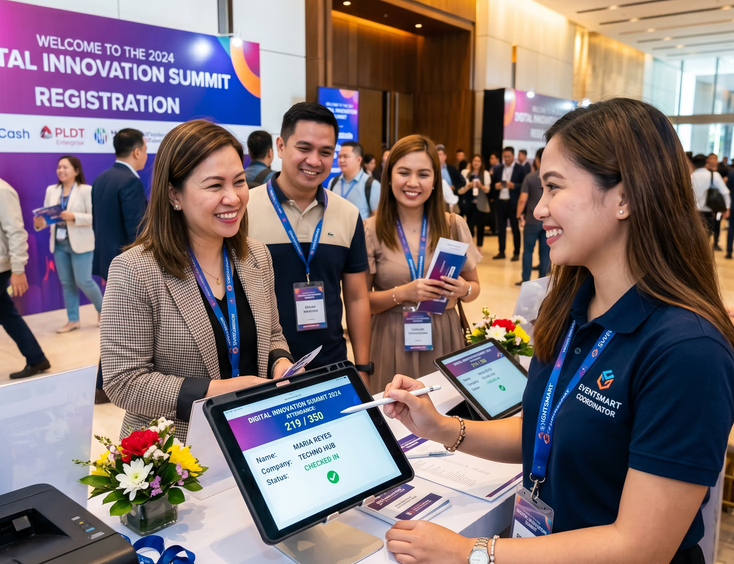
Attendance is the first and simplest measure. Compare how many confirmed against how many showed, and you learn your true draw and your no-show rate. A strong turnout signals interest; a weak one tells you the invitation, the timing, or the appeal missed.
Engagement runs deeper than bodies in the room. Watch how people participated: did they join the activities, stay through the program, interact at the stations, or drift to the edges and leave early. For a hybrid event, track the online numbers too, since drop-off rates and chat activity reveal how well the stream held the remote crowd. This builds on the data you gathered in managing RSVPs and guest lists for large events.
Capture the engagement signals as they happen. Note when the energy peaked and when it sagged, which segments held the room and which lost it, and how long guests stayed past the official end. These observations tell you what worked and feed directly into planning the next event.
Gather Feedback the Right Way
Feedback turns impressions into data, but only when you collect it well. A survey sent a week later, when the event has faded, pulls thin responses and vague memories. A short, well-timed survey, sent within a day or two while the experience is fresh, gathers honest, specific answers.
Keep the survey short and pointed. Ask what guests valued, what fell flat, and whether the event met its purpose, with a mix of rating scales for quick data and open questions for the details numbers miss. A survey that takes ten minutes gets abandoned; one that takes two gets completed.
Read beyond the survey too. Informal feedback in conversations, comments in the event chat, and what people post afterward all reveal how the event landed. A guest who voluntarily shares a photo and a kind word tells you something a rating scale cannot. Weigh both the numbers and the texture of what people say.
Measure Against the Business Goals
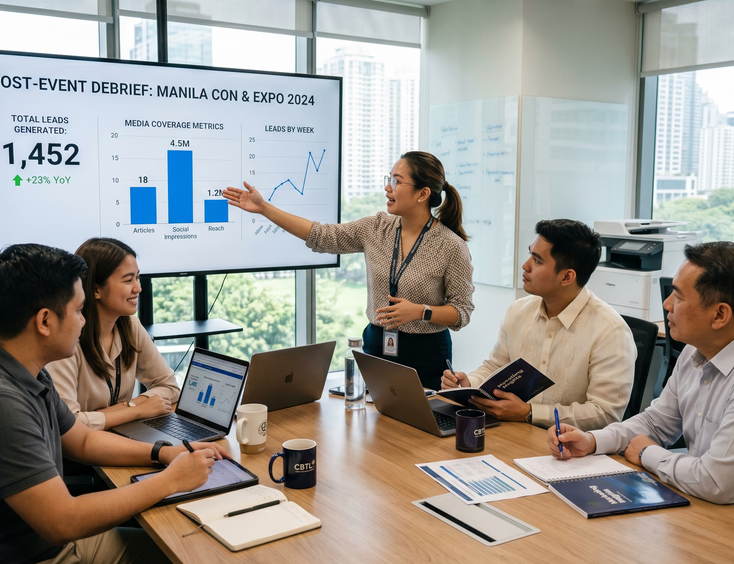
The deepest measure ties the event back to why the company spent the money. A morale event should show up in engagement scores, retention, and how people talk about the company afterward. A launch should show up in coverage, leads, and sales. A client function should show up in relationships strengthened and business won.
Track the metrics that match your objectives. For an employee event, compare engagement or retention data before and after. For a launch, count the press pickups, the leads captured, and the sales that trace back. For a client event, follow the conversations that turned into deals. These numbers speak the language leadership cares about.
Connect the spend to the return. A clear link between what the event cost and what it produced justifies the budget and strengthens the case for the next one. Build this analysis on the figures from your sample corporate event budget breakdown, so you can show what each peso achieved.
Calculate the Return on Investment
ROI makes the case to leadership in terms they respect. The calculation compares what the event delivered against what it cost, and it turns a celebration into a justified business decision. Even when the return is hard to quantify fully, the attempt forces the right thinking.
Some returns count easily: leads generated, deals closed, sales attributed, media value earned. Others resist a clean number but still matter: morale lifted, loyalty built, a team that feels valued and stays. Capture both, and present the hard numbers alongside a fair account of the softer gains.
Frame the ROI for your audience. Leadership weighing next year's budget wants to see what the spend bought, so present the return in the terms that matter to them. A clear ROI story, backed by real data, turns the event from a cost into an investment worth repeating.

Document Everything for Next Time
The measurement loses half its value if it lives only in your head. Document the results, the feedback, the metrics, and your own observations in one place, and you build a record that sharpens every future event. The next planner, or your future self, starts from evidence instead of guesswork.
Capture the lessons while they are fresh. What worked, what failed, which suppliers delivered, which fell short, where the budget held and where it slipped: write it all down within days of the event, before the details fade. A post-event review with the team surfaces insights one person misses.
Feed the documentation forward. Your true no-show rate sharpens the next headcount; your supplier notes shape the next bookings; your engagement findings guide the next program. Avoiding the common mistakes when planning company events starts with a record of what went wrong last time and what you learned from it.
The Event Measurement Checklist
Run through this around your event:
- Clear, specific objectives set before planning began
- Attendance and engagement tracked on the day
- A short feedback survey sent within a day or two
- Informal feedback and social signals captured
- Business metrics measured against the objectives
- ROI calculated, with hard and soft returns presented
- Results and lessons documented while fresh
- Findings fed forward into the next event
Measuring an event turns a feeling into evidence and a single celebration into a cycle of improvement. Define what success means, track it honestly, and document what you learn, and each event teaches you how to run the next one better while proving its worth to the people who fund it.
For the full picture on running corporate functions in the Philippines, from venues to suppliers to themes, see the complete guide to corporate events in the Philippines.
Still Searching for a Right Match?
Find Your Perfect Wedding Supplier Today!
Discover trusted wedding suppliers across the Philippines in our complete directory. Compare services and connect with the ones that fit your dream celebration.
Browse Wedding SuppliersFeatured Blog Posts






Filipino Wedding Entourage - Roles, Order of March, and Modern Etiquette
6 mins readCivil Weddings in the Philippines - Requirements, Costs, and Step-by-Step Process
9 mins readCivil Wedding Requirements in the Philippines - Complete Checklist
6 mins readCost of Wedding in the Philippines - 5 Essential Things You Need to Know
7 mins readPrincipal Sponsors (Ninong/Ninang) - How Many, How to Ask, What They Really Do
4 mins readVeil, Cord, Candle & Coins - Roles, Options, and When They Happen
4 mins readEntourage for a Traditional Pinoy Wedding - Complete Roles and Guide
6 mins readComplete List of Civil Wedding Requirements in the Philippines
8 mins readHow to Choose Wedding Ninongs and Ninangs - Ask Yourself These 3 Important Questions
5 mins read