


Hiring Hosts, Emcees, and Performers for Company Events

The host carries the night. Every program transition, every awards announcement, every joke that lands or falls flat traces back to the person holding the microphone. A great host turns a mediocre program into a memorable one. A weak host kills a brilliant production within twenty minutes. The performers and entertainment that follow either build on what the host establishes or fight against the energy the host failed to create.
This guide covers how to hire hosts, emcees, and performers for corporate events in the Philippines. What to look for, what to ask, how to brief them, and how to coordinate entertainment with the rest of your event. Use it before your next event commits to who carries the program.
Why Host and Performer Choice Affects Event Outcomes
Host and entertainment costs run 8 to 15 percent of most corporate event budgets. The impact runs disproportionately higher across guest experience, program pacing, and event memorability.
What strong hosts and performers deliver:
- Smooth program flow with energy that matches each segment
- Clean transitions between speakers, AVPs, and program beats
- Confident handling of pronunciations, titles, and protocol
- Ad-lib capability when AV runs over or under
- Energy management that builds the room from arrival to closing
- Performances that elevate program moments
- Cultural fit with Filipino audiences and corporate context
What weak hosts and performers produce:
- Awkward transitions that interrupt program momentum
- Mispronounced names and titles damaging guest experience
- Flat energy that drains the room within thirty minutes
- Inappropriate jokes or comments that embarrass the company
- Performances that miss the audience or feel disconnected from the event
- Crisis when AV fails and the host cannot recover
- Programs that run long, short, or off-script
The cost difference between hiring a mediocre host and a top-tier one often runs PHP 30,000 to PHP 200,000 depending on tier. The impact difference defines whether your event lives in employees' memories as the night they enjoyed or the night they sat through.
Host and Performer Categories in the Philippines
The Filipino host and performer market splits into clear tiers based on profile, experience, and pricing.
The main categories:
Hosts and Emcees
- Top-tier celebrity hosts: Established TV personalities, radio hosts, and known media figures. Suit large-scale launches, milestone anniversaries, and major brand events. Pricing tier: premium to luxury.
- Premier corporate emcees: Professional hosts focused on corporate events with strong track records. Suit anniversaries, awards nights, formal events, and high-stakes programs. Pricing tier: premium.
- Mid-tier professional hosts: Established corporate event hosts with consistent client bases. Suit standard Christmas parties, mid-budget events, and recurring corporate programs. Pricing tier: mid.
- Niche or specialty hosts: Hosts focused on specific event categories (sports events, tech launches, fashion shows). Suit category-specific events. Pricing tier: mid to premium.
- Bilingual or English-only hosts: Hosts with stronger English fluency for international or executive audiences. Suit B2B events, expat-heavy audiences, and global brand events. Pricing tier: mid to premium.
- Budget hosts and emerging talent: Newer hosts building portfolios. Suit smaller events, internal programs, and budget-conscious productions. Pricing tier: budget.
Performers and Entertainment
- Established headliner performers: Known singers, bands, and entertainers commanding premium fees. Suit milestone events, brand activations, and headline programming. Pricing tier: premium to luxury.
- Professional cover bands: Established bands with strong corporate event experience. Suit Christmas parties, anniversaries, and standard corporate dance programs. Pricing tier: mid to premium.
- Acoustic and ensemble performers: Smaller acoustic acts, jazz trios, string ensembles. Suit dinner programs, cocktail receptions, and ambient programming. Pricing tier: mid.
- DJs: Professional DJs handling music programming throughout events. Suit cocktail events, dance programs, and modern corporate events. Pricing tier: budget to premium depending on profile.
- Production performers: Choreographed dance groups, theatrical performers, aerialists, and production specialists. Suit launches, anniversaries with production numbers, and themed events. Pricing tier: premium.
- Cultural performers: Traditional Filipino dance groups, kundiman performers, rondalla ensembles. Suit Filipiniana-themed events. Pricing tier: mid to premium.
- Specialty entertainers: Magicians, mentalists, comedians, illusionists. Suit unique event programming and breakout entertainment. Pricing tier: mid to premium.
Match the category to your event scale, program style, and budget tier. A celebrity host may overdeliver for an internal team building. Budget talent may underdeliver for a 25th anniversary gala.
When You Need a Top-Tier or Celebrity Host
Top-tier hosts bring brand recognition, polish, and experience that elevate high-profile events.
When to invest in a top-tier host:
- Milestone anniversaries (25th, 50th, 100th)
- Major product launches with significant PR and media coverage
- Awards nights at premium scale with VIP audiences
- Conferences and industry summits with prominent speakers
- Events with extensive media coverage where host quality reflects on brand
- B2B events targeting executive audiences
When top-tier hosts are not necessary:
- Internal team buildings and department events
- Smaller Christmas parties without media or VIP components
- Recurring corporate meetings and town halls
- Budget-conscious events where audience does not expect celebrity-level talent
When to Use Mid-Tier Professional Hosts
Mid-tier corporate hosts handle the bulk of Filipino corporate event programs. They balance professionalism, experience, and reasonable pricing.
When mid-tier hosts work well:
- Standard Christmas parties for companies of 100 to 500 guests
- Anniversaries below milestone scale
- Awards nights with internal audiences
- Sportsfests and family days
- Conferences without celebrity speaker components
- Grand openings and brand activations
What strong mid-tier hosts deliver:
- Professional script delivery and program flow
- Ad-lib capability for unexpected moments
- Comfortable handling of Filipino corporate audiences
- Bilingual delivery in English and Tagalog
- Strong coordination with AV operators and event organizers

What to Look For in a Strong Host
Beyond category fit, specific criteria separate strong hosts from weak ones.
What strong hosts demonstrate:
- Portfolio relevant to your event type: A wedding-heavy portfolio may not translate to corporate. A TV-only portfolio may not translate to event hosting. Match experience to event type.
- Consistent recent work: Strong hosts maintain active corporate event calendars. Gaps in work signal inconsistency.
- Strong pronunciation and language fluency: Strong hosts handle Filipino names, English titles, and code-switching cleanly. Weak hosts struggle with both.
- Ad-lib capability: Strong hosts recover when AV fails, speeches run long, or programs change. Weak hosts crumble.
- Energy management across long programs: Strong hosts maintain energy across four-hour programs. Weak hosts fade after two hours.
- Cultural sensitivity for corporate context: Strong hosts adapt humor and references to corporate audiences. Weak hosts use party material that does not fit.
- Professional script management: Strong hosts work from scripts while sounding natural. Weak hosts read robotically or ignore scripts.
- Coordination with AV and event teams: Strong hosts integrate with production teams. Weak hosts create coordination problems.
- Reliability and punctuality: Strong hosts arrive early and rehearse. Weak hosts arrive late and skip preparation.
What weak hosts demonstrate:
- Inconsistent past work quality
- Limited recent corporate event experience
- Pronunciation problems with Filipino or English names
- Inability to recover from unexpected program changes
- Energy that fades during long programs
- Inappropriate humor for corporate audiences
- Robotic script reading or scripted-sounding delivery
- Poor coordination with production teams
- Late arrivals and skipped rehearsals
What to Look For in Strong Performers
Performer evaluation follows similar logic with category-specific criteria.
What strong performers demonstrate:
- Strong portfolio in your event category: Wedding performers may not match corporate energy. Concert performers may not adapt to corporate stage limitations.
- Reliable booking history: Strong performers maintain active calendars with consistent corporate event bookings.
- Quality of performance audio and video: Strong performers provide samples that demonstrate live performance quality, not just studio recordings.
- Coordination with event organizers: Strong performers integrate into programs without diva behavior.
- Equipment and technical riders: Strong performers provide clear equipment needs in writing. Weak performers improvise on event day.
- Repertoire matched to corporate audiences: Strong performers handle Filipino corporate music preferences. Weak performers play sets that miss the audience.
- Professional behavior on event day: Strong performers arrive ready, rehearse with AV teams, and behave professionally backstage.
Questions to Ask Before Hiring Hosts
The questions you ask filter out weak hosts fast.
Ask about experience:
- How many corporate events at our scale have you hosted in the past year?
- Can you share three case studies in our event type with comparable production scope?
- Can we speak with three past corporate clients?
- What recent corporate events have you hosted in the past three months?
Ask about preparation:
- How do you prepare for events including script work and pronunciation rehearsal?
- How early do you arrive for setup?
- Do you participate in tech rehearsals?
- How do you handle script revisions during planning?
- Do you work from scripts you write or scripts our team provides?
Ask about delivery:
- How do you handle bilingual delivery in English and Tagalog?
- What is your approach when AV fails or programs run off-schedule?
- How do you manage VIPs and protocol guests during the program?
- How do you handle long programs without losing energy?
Ask about pricing:
- What is your base fee for our event type and duration?
- What costs extra (additional hours, multiple events, travel)?
- What are your payment terms?
- What is your cancellation policy?
Ask about coordination:
- How do you coordinate with the event organizer and AV team?
- What materials do you need from us before the event?
- What is your communication style during planning?
- How do you handle program changes during the event itself?
Questions to Ask Before Hiring Performers
Performer evaluation requires different questions covering technical and programmatic considerations.
Ask about experience:
- How many corporate events have you performed at in the past year?
- Can you share three case studies in our event type?
- Can we hear or see recent live performance samples?
- Can we speak with three past corporate clients?
Ask about repertoire:
- What is your standard corporate event setlist?
- Can you customize the setlist to our event theme?
- Do you take song requests during the event?
- How do you handle music license requirements?
Ask about technical needs:
- What is your equipment rider (what equipment do you bring versus what we provide)?
- What are your AV and sound requirements?
- How much rehearsal time do you need with AV teams?
- What space do you need for setup and performance?
Ask about pricing:
- What is your base fee for our event duration?
- What costs extra (additional hours, encore performances, travel)?
- What are your payment terms?
- What is your cancellation policy?
Ask about logistics:
- How early do you arrive for setup and soundcheck?
- What is your performance start and end time flexibility?
- Do you need a holding room or dressing space?
- What food and beverage do you require backstage?

Red Flags That Signal Trouble
Specific patterns during the hiring process signal hosts and performers to avoid.
Red flags to watch:
- Inconsistent past work quality: Strong talent delivers consistently. Inconsistency signals unpredictable results.
- Reluctance to commit to rehearsals: Strong talent rehearses. Reluctance means rough execution.
- Limited recent corporate event work: Active recent calendars indicate current relevance. Limited recent work signals waning demand.
- Pressure to commit before contract review: Strong talent allows review time. Pressure signals hidden terms.
- Negative talk about past clients: Professional talent maintains discretion. Negative talk signals difficult relationships.
- Reluctance to share references: Strong talent connects you with past clients readily. Reluctance signals problems.
- Excessive ego or diva behavior in initial meetings: Strong talent maintains professionalism. Ego signals on-event problems.
- Limited or no insurance coverage: Strong professionals carry liability insurance. Skipping creates risk.
- Vague pricing without detailed breakdowns: Strong talent presents transparent pricing. Vagueness usually means surprise costs.
Pricing Structures and What to Expect
Host and performer pricing varies based on tier, event duration, and scope.
Typical host pricing tiers:
- Budget hosts (PHP 15,000 to PHP 50,000): Emerging talent and budget options. Suits internal events and smaller corporate programs.
- Mid-tier hosts (PHP 50,000 to PHP 150,000): Established corporate hosts. Suits standard corporate events.
- Premium hosts (PHP 150,000 to PHP 400,000): Top-tier corporate emcees and select TV personalities. Suits milestone events and high-profile programs.
- Celebrity hosts (PHP 400,000 and above): Established TV and media celebrities. Suits major launches, milestone anniversaries, and prominent industry events.
Typical performer pricing tiers:
- DJ services (PHP 25,000 to PHP 200,000): Range from budget to premium DJs
- Cover bands (PHP 50,000 to PHP 250,000): Range from emerging to established corporate bands
- Acoustic ensembles (PHP 30,000 to PHP 100,000): String quartets, jazz trios, acoustic duos
- Established headliner performers (PHP 200,000 to PHP 2 million): Established singers, bands, and entertainers
- Production performers (PHP 100,000 to PHP 500,000): Choreographed groups, theatrical performers
- Cultural performers (PHP 50,000 to PHP 200,000): Traditional Filipino performance groups
- Specialty entertainers (PHP 30,000 to PHP 200,000): Magicians, mentalists, comedians
What typically affects pricing:
- Talent tier and brand recognition
- Event duration and performance length
- Travel and out-of-town fees
- Rehearsal time included
- Equipment provided versus required
- Day of week (Saturday premiums)
- Season (December premiums)
- Exclusivity or competing events
For benchmark pricing across event types, how much does a corporate event cost in the Philippines covers full ranges. The sample corporate event budget breakdown shows where host and entertainment fees fit in overall budget.
How to Brief Hosts Properly
Strong briefs produce strong hosting. Weak briefs produce generic delivery that misses event-specific needs.
What to include in the host brief:
- Event objective: What the event is meant to accomplish
- Audience profile: Who is attending and their expectations
- Program flow: Detailed program with timing for each segment
- Speaker list with phonetic pronunciations: Every name the host will say, with correct phonetic spelling
- Award recipient list with categories and citations: For awards nights, complete lists with phonetic spellings
- Brand voice and tone: Formal, casual, energetic, refined
- Language preferences: English-heavy, Tagalog-heavy, or balanced bilingual
- Humor parameters: What is appropriate and what to avoid
- Cultural sensitivities: Industry-specific or company-specific considerations
- Reference materials: Past event recordings, brand videos, executive speaking styles
- VIP handling: How to address principals, founders, government officials
- Contingency expectations: What to do if AV fails or speeches run over
- Closing instructions: How to end the program properly
A clear brief allows the host to prepare authentically. A weak brief produces generic hosting that misses what makes your event specific.
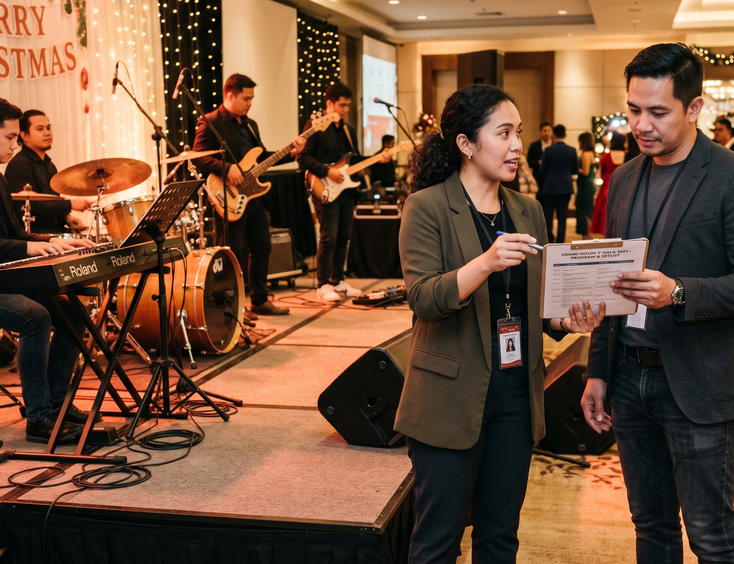
How to Brief Performers Properly
Performer briefs focus on integration with the program and audience.
What to include in the performer brief:
- Performance slot and duration: When in the program the performance happens and how long
- Audience profile and energy expectations: Who is in the room and what energy you want
- Setlist coordination: What songs work for your audience and what to avoid
- Theme integration: How the performance ties to event theme if applicable
- Technical requirements coordination: AV setup specifications and rehearsal time
- Program flow coordination: How the performance transitions from previous and to next segments
- Backstage requirements: Dressing rooms, food and beverage, equipment storage
- VIP and protocol considerations: Who is in the audience and how to address them
Coordinating Hosts and Performers With AV
Hosts and performers depend on AV for their work to function. Coordination prevents technical problems that ruin performances.
What to coordinate:
- Microphone preferences (handheld, lapel, headset)
- Music cues and playback for performance numbers
- Lighting cues for stage moments
- Monitor and in-ear setups for performers
- Stage positioning and movement areas
- Sound levels and equalization preferences
- Cue sheets shared between hosts, performers, and AV operators
For AV provider selection, choosing AV, lights, and sound system suppliers covers what to specify when coordinating with hosts and performers.
For broader event coordination, how to choose the right event organizer for your company covers organizer scope that includes host and performer coordination.
Coordinating With Other Suppliers
Hosts and performers interact with multiple supplier categories.
Coordination points:
- Event organizer: Overall program flow, briefing coordination, rehearsal scheduling
- AV provider: Technical setup, microphones, music cues, lighting
- Stylist: Stage design and backdrop affecting host positioning
- Photographer and videographer: Capturing host and performer moments
- Caterer: Backstage food and beverage for performers
- Venue staff: Holding rooms, dressing rooms, access
For supplier categories interacting with hosts and performers:
- Corporate event stylists and set designers to know covers stage design and backdrops
- Guide to hiring corporate event photographers and videographers covers documentation capturing host and performer moments
- Best caterers for corporate events in the Philippines covers backstage food and beverage
- Live band vs DJ for corporate parties covers music decisions integrating with host-led programs
- Best catering packages for corporate events in the Philippines covers catering coordination
- Mobile bar services for company events covers bar service during entertainment programming
- Food cart and dessert buffet ideas for company events covers specialty stations
- Filipino buffet and cocktail menu ideas for company parties covers menu integration with program flow
Pre-Event Rehearsals and Run-Throughs
Rehearsals separate professional execution from chaotic events. Strong hosts and performers participate. Strong event teams require it.
What to do at rehearsals:
- Walk through the full program with the host reading the script
- Test every microphone the host and performers will use
- Rehearse award announcements with phonetic pronunciation drills
- Run through performance numbers with the AV team
- Test music cues and transitions
- Confirm stage positioning and movement
- Review contingency procedures for AV or program issues
Schedule rehearsals at least 24 hours before the event. For large or high-stakes events, schedule full dress rehearsals.
Matching Hosts and Performers to Event Type
Different event types call for different host and performer profiles.
For Christmas parties, energetic hosts and crowd-engaging performers work best. Mid-tier corporate hosts paired with established cover bands or DJs deliver the energy expected. The how to plan a successful company Christmas party in the Philippines covers entertainment requirements specifically.
For anniversaries, refined hosts with strong ceremonial delivery work best. Premium corporate hosts paired with classical ensembles for dinner and dance bands for the open program deliver the formal-to-casual flow. The planning a memorable company anniversary celebration covers anniversary-specific host and performer needs.
For product launches, hosts comfortable with brand scripts and product terminology work best. Premium corporate hosts with launch experience handle the cleaner brand delivery. The guide to hosting a product launch event covers launch-specific host requirements.
For awards nights, hosts with strong pronunciation skills and ceremonial pacing work best. Premium corporate hosts with awards night experience handle the program weight. The planning an employee recognition or awards night covers awards-specific host needs.
For grand openings, hosts comfortable with protocol and ceremony work best. Mid-tier corporate hosts with grand opening experience handle the protocol elements. The guide to hosting a grand opening or ribbon cutting ceremony covers grand opening-specific host needs.
For sportsfests and family days, energetic hosts who handle long days and adapt to outdoor environments work best. Mid-tier corporate hosts with event experience handle the format. The how to organize a company sportsfest and family day covers sportsfest-specific host requirements.
Common Host and Performer Pitfalls
Host and performer engagements fail in predictable ways.
The recurring problems:
- Hiring without seeing recent work: Past portfolio may not reflect current quality.
- Vague briefs producing generic delivery: Without specific direction, hosts default to standard corporate hosting.
- Skipping pronunciation rehearsal: Mispronounced names damage event experience permanently.
- No script alignment: Hosts and scriptwriters working from different versions create confusion.
- Missing AV coordination: Performers and AV teams that do not rehearse create technical problems.
- Underestimating energy management: Long programs exhaust unprepared hosts.
- Inappropriate humor for the audience: Hosts using party material at corporate events embarrass companies.
- No contingency briefing: Hosts unable to ad-lib when AV fails create crisis moments.
- Performers running over scheduled time: Performance time overruns disrupt program flow.
For mistakes that have sunk other corporate events, common mistakes to avoid when planning company events covers recurring failure patterns.
For contingency planning that includes host and performer backup, crisis and contingency planning for corporate functions covers frameworks applicable to talent risk.
Measuring Host and Performer Performance
Talent evaluation extends beyond whether they showed up. Strong evaluation supports the next event and informs whether to re-engage.
What to measure:
- Script adherence and ad-lib quality
- Pronunciation accuracy across all names and titles
- Energy management across the full program
- Coordination quality with AV and event teams
- Audience response to performances
- Recipient and VIP feedback on host treatment
- Overall guest satisfaction with the program
The how to measure the success of a corporate event covers event outcome measurement that informs host and performer evaluation.
For broader planning timelines that include host and performer booking, corporate event planning timeline and checklist covers when to book and brief.
For RSVPs and VIP data that hosts need access to, managing RSVPs and guest lists for large events covers data coordination workflows.
Long-Term Host and Performer Relationships
Some companies build long-term relationships with specific hosts or performers across multiple events per year. Others hire event-by-event.
When long-term relationships work:
- Consistent brand voice across all events
- Familiarity with executive preferences and program styles
- Streamlined briefing process
- Negotiated annual rates
- Reliable execution for recurring events
When event-by-event hiring works:
- Diverse event types requiring different host or performer profiles
- Cost optimization through competitive bidding
- Fresh perspectives across events
- Limited annual event volume
Match the approach to your event calendar and audience expectations.
A Host and Performance That Earns the Program
The best host and performers for your corporate event match the formality of your program, the scale of your guest list, the complexity of your script, and the budget your organization has approved. Filter on relevant portfolio. Brief thoroughly. Demand rehearsals. Coordinate with AV and event teams. Verify pronunciations.
For broader corporate event planning context, the complete guide to corporate events in the Philippines connects host and performer selection to suppliers, venues, themes, and the full planning workflow. The right host carries every program transition. The right performers elevate every key moment. The wrong choices leave guests checking their watches.
Still Searching for a Right Match?
Find Your Perfect Wedding Supplier Today!
Discover trusted wedding suppliers across the Philippines in our complete directory. Compare services and connect with the ones that fit your dream celebration.
Browse Wedding SuppliersFeatured Blog Posts




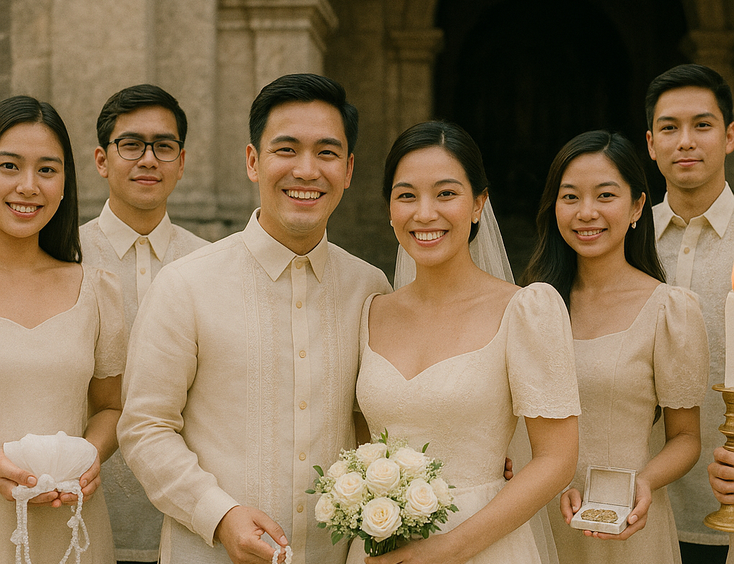


Filipino Wedding Entourage - Roles, Order of March, and Modern Etiquette
6 mins readCivil Weddings in the Philippines - Requirements, Costs, and Step-by-Step Process
9 mins readCivil Wedding Requirements in the Philippines - Complete Checklist
6 mins readCost of Wedding in the Philippines - 5 Essential Things You Need to Know
7 mins readPrincipal Sponsors (Ninong/Ninang) - How Many, How to Ask, What They Really Do
4 mins readVeil, Cord, Candle & Coins - Roles, Options, and When They Happen
4 mins readEntourage for a Traditional Pinoy Wedding - Complete Roles and Guide
6 mins readComplete List of Civil Wedding Requirements in the Philippines
8 mins readHow to Choose Wedding Ninongs and Ninangs - Ask Yourself These 3 Important Questions
5 mins read