


Guide to Hiring Corporate Event Photographers and Videographers
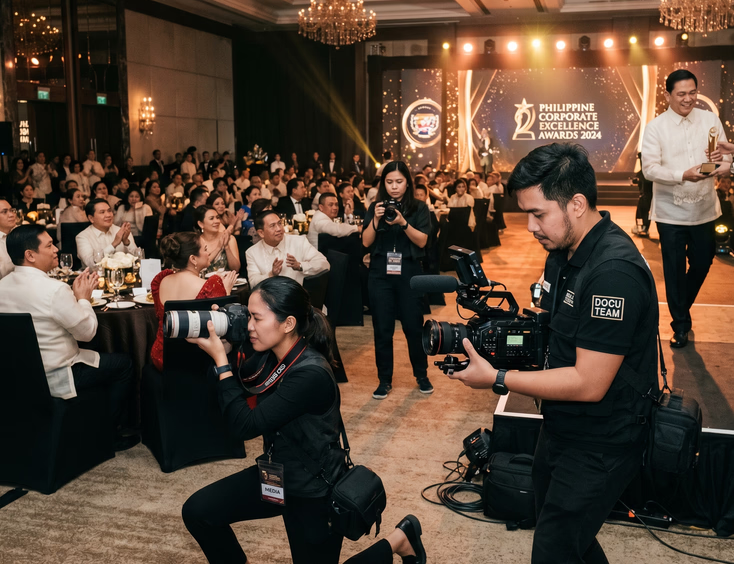
The photos and videos from your corporate event live longer than the event itself. Marketing teams use them for the next year. Recruitment decks recycle them for two years. Anniversary AVPs reference them for a decade. Hire the wrong team and you carry mediocre content through every brand touchpoint until the next event. Hire the right team and you bank assets that pay dividends across the company.
This guide covers how to hire corporate event photographers and videographers in the Philippines. What to look for, what to ask, what to brief, and what to expect in deliverables. Use it before your next event.
Why Documentation Quality Matters More Than Most Companies Realize
Corporate event documentation gets treated as a checkbox line item in most budgets. Hire someone affordable. Get a USB drive afterward. Move on. This pattern produces the generic, forgettable content that fills most company social feeds.
What strong documentation delivers:
- Marketing assets that elevate brand perception for months
- Recruitment content that wins candidates over competitors
- Anniversary AVPs that pull from a decade of strong archives
- Press-ready images for media coverage
- Internal communications visuals that build pride
- Social media content driving employee engagement
- Investor and partner presentation materials
- Year-end report imagery showing company milestones
What weak documentation produces:
- Generic photo galleries that all look the same year after year
- Awkward candid shots used reluctantly because nothing better exists
- Posed group photos that feel staged and corporate
- Video footage shot without intent that cannot be edited into anything meaningful
- AVPs that struggle to find usable B-roll for the next event
The cost difference between weak and strong documentation often runs PHP 30,000 to PHP 80,000. The brand impact difference runs into the millions of pesos over the asset lifetime.
Photographer vs Videographer vs Full Content Team
Corporate event documentation breaks into three coverage levels. Match the level to your event needs.
The three coverage levels:
- Photographer only: Stills coverage of the event. Suits smaller events, internal team meetings, and events where photos serve as the primary asset.
- Photographer plus videographer: Stills and video coverage. Suits most mid-sized corporate events including Christmas parties, anniversaries, and awards nights.
- Full content team: Multiple photographers, multiple videographers, livestream support, social content creators, and behind-the-scenes capture. Suits product launches, large conferences, milestone anniversaries, and PR-driven events.
What each level delivers:
- Photographer only: 200 to 800 edited photos delivered within 7 to 14 days
- Photographer plus videographer: Photos plus a 2 to 5 minute highlight video and 30 to 60 second social cut
- Full content team: Photos, highlight video, social cuts, livestream recording, behind-the-scenes content, press-ready images, and same-day social posts
Match the level to your event tier. A 100-person team building does not need a full content team. A 500-person anniversary gala usually needs more than photographer plus videographer.
Categories of Corporate Event Documentation Teams
The Philippine documentation market splits into categories based on specialization, scale, and pricing tier.
The main categories:
- Solo professional photographers and videographers: Individual professionals with established portfolios. Suit smaller events with focused coverage needs. Pricing tier: budget to mid.
- Two-person teams (photographer plus videographer): Coordinated coverage from a small team. Suit mid-sized corporate events. Pricing tier: mid.
- Boutique production studios: Small studios specializing in corporate event coverage. Suit brands prioritizing quality and consistency. Pricing tier: mid to premium.
- Wedding photographers expanding to corporate work: Many wedding photographers handle corporate work as a secondary line. Suit corporate events wanting wedding-style aesthetic. Pricing tier: mid.
- PR-integrated documentation teams: Teams working with PR agencies on launches and brand events. Suit product launches and media-heavy events. Pricing tier: premium.
- Corporate-specialized production companies: Companies focused entirely on corporate work. Suit recurring corporate events and B2B environments. Pricing tier: mid to premium.
- Industry-specialist videographers: Specialists in tech launches, fashion shows, or specific event categories. Suit category-specific events. Pricing tier: premium.
Match the category to your event type. A wedding photographer doing their first product launch may underdeliver on what the brand needs. A corporate-specialized team may produce predictable work for a creative agency event.
What to Look For in a Strong Documentation Team
Beyond category fit, specific criteria separate strong documentation teams from weak ones.
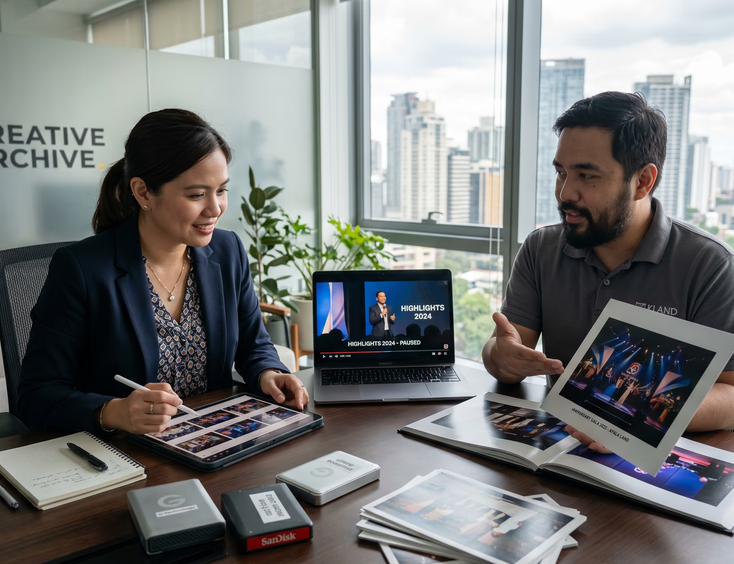
What strong teams demonstrate:
- Portfolio relevant to your event type: A wedding-heavy portfolio does not guarantee corporate launch capability. Ask for case studies in your category.
- Consistent aesthetic across projects: Strong teams have a recognizable style. Weak teams produce work that varies in quality and approach.
- Strong low-light capability: Most corporate events run in challenging lighting. Strong teams handle this. Weak teams produce muddy, dark images.
- Sharp action capture: Stage moments, ribbon cuttings, and product reveals happen fast. Strong teams capture decisive moments. Weak teams miss them.
- Genuine portrait capability: Strong teams produce flattering candid and posed portraits. Weak teams produce awkward shots.
- Clear delivery timelines: Strong teams commit to delivery dates in writing. Weak teams stay vague.
- Professional editing and color grading: Strong teams deliver consistent, polished edits. Weak teams deliver raw or inconsistent images.
- Backup equipment: Strong teams carry redundant cameras, lenses, and storage. Weak teams shoot with single units that fail at critical moments.
- Insurance and liability coverage: Strong teams carry equipment and liability insurance. Weak teams do not.
What weak teams demonstrate:
- Portfolios that all look similar to every other photographer's portfolio
- Inconsistent quality across galleries
- Missing critical moments because of weak situational awareness
- Posed-only shots without strong candid capture
- Vague delivery timelines
- Heavy filters or over-processing covering weak base photography
- Single-camera setups without backups
- No documented insurance coverage
Questions to Ask Before Hiring
The questions you ask filter out weak teams fast.
Ask about experience:
- How many corporate events in our category have you shot in the past year?
- Can you share three case studies in our event type with comparable scope?
- Who from your team would shoot our event, and what is their specific experience?
- Can we see edited galleries from events similar to ours?
Ask about process:
- Walk us through your approach from booking to delivery.
- How do you handle shot lists and briefing?
- How many shooters and second shooters cover an event our size?
- How do you coordinate with the event organizer and venue?
- What is your turnaround time for first deliverables?
Ask about deliverables:
- How many edited photos do we receive?
- What video deliverables do we receive and at what lengths?
- What file formats and resolutions do we get?
- Are raw files included or available?
- Do you provide a teaser or same-day deliverable?
- How are files delivered (USB, cloud, gallery link)?
Ask about pricing:
- What is included in your base package?
- What costs extra (additional shooters, longer coverage, faster delivery)?
- What are your payment terms?
- What is your cancellation policy?
- Do you charge travel fees for out-of-town events?
Ask about contingency:
- What backup equipment do you carry?
- What happens if a shooter cannot make the event last-minute?
- How do you handle weather contingencies for outdoor shoots?
- What insurance coverage do you carry?
Ask about ownership:
- Who owns the photos and videos after delivery?
- Are there restrictions on how we can use the content?
- Can we edit or repurpose the content ourselves?
- Are there credit requirements when we use the work?
Red Flags That Signal Trouble
Specific patterns during the hiring process signal documentation teams to avoid.
Red flags to watch:
- Inconsistent portfolio quality: Strong teams deliver consistently. Inconsistency means inconsistent results.
- Vague turnaround promises: Strong teams commit to dates. Vague answers usually mean late delivery.
- No backup equipment plans: Strong teams carry backups. Single-camera shooters create risk.
- Pressure to commit before contract review: Strong teams allow contract review time. Pressure usually means hidden terms.
- Negative talk about past clients: Strong teams maintain professionalism. Negative talk signals difficult working relationships.
- Reluctance to share recent work: Strong teams showcase recent projects. Reluctance means recent work may be weaker.
- No clear team structure: Strong teams identify who shoots and who edits. Vagueness means whoever is available shows up.
- Limited insurance details: Strong teams document insurance coverage. Weak teams skip this entirely.
- No client references available: Strong teams readily connect you with past clients. Reluctance signals problems.
Pricing Structures and What to Expect
Corporate event documentation pricing varies based on coverage scope, team size, and deliverable complexity.
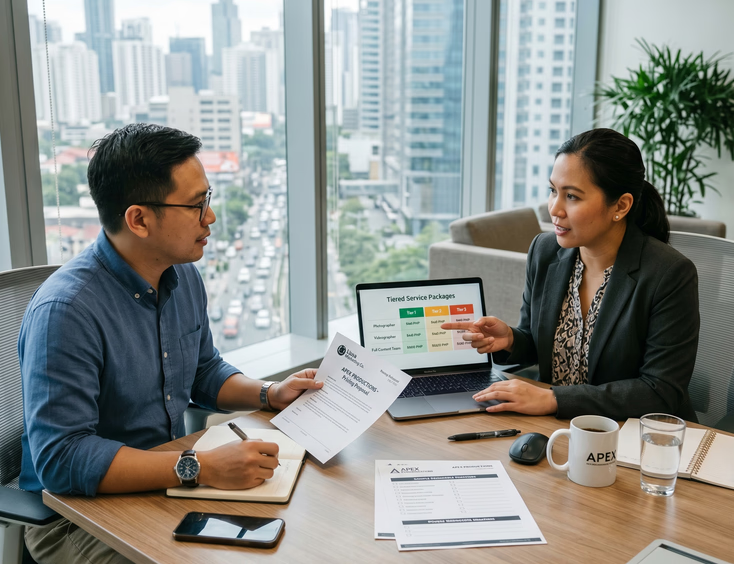
Typical pricing tiers:
- Budget tier (PHP 25,000 to PHP 60,000): Solo photographer or small team for short coverage. Suits team buildings, smaller events, and basic documentation needs.
- Mid tier (PHP 60,000 to PHP 150,000): Photographer plus videographer for standard event coverage. Suits most Christmas parties, anniversaries, and mid-sized corporate events.
- Premium tier (PHP 150,000 to PHP 350,000): Full team with multiple shooters, social content, and faster delivery. Suits product launches, milestone anniversaries, and high-stakes events.
- Luxury tier (PHP 350,000 and above): Full production team with livestream, multi-day coverage, and comprehensive deliverables. Suits major conferences, flagship launches, and PR-driven events.
What typically affects pricing:
- Event duration and coverage hours
- Number of shooters and crew
- Number of edited photos and video deliverables
- Turnaround time (faster delivery costs more)
- Travel and out-of-town fees
- Additional services (livestream, drone, behind-the-scenes content)
- Same-day or next-day social media deliverables
For benchmark pricing context, how much does a corporate event cost in the Philippines covers full cost ranges across event types. The sample corporate event budget breakdown shows where documentation fits in overall budget allocation.
How to Brief Photographers and Videographers Properly
Strong briefs produce strong content. Weak briefs produce generic galleries that miss what the brand actually needs.
What to include in the brief:
- Event objective: What the event is meant to accomplish and what role documentation plays
- Target audience for content: Who will see the photos and videos after the event
- Key program moments: Specific stage moments, reveals, awards, blessings, ribbon cuttings
- Must-capture shots: VIPs, principals, key partners, milestone moments
- Brand guidelines: Color preferences, aesthetic direction, brand voice references
- Specific candid moments: Networking, dining, performances, audience reactions
- Portrait requirements: Group photos, executive portraits, team shots
- Detail shots: Branding, signage, decor, food styling, table setups
- Coverage timing: When the team arrives, key moments to cover, when the team can leave
- Coverage areas: Stage, photo wall, dining areas, registration, networking zones
- Restricted areas or moments: Private conversations, certain VIPs requiring permission
- Reference imagery: Past event photos you liked or aspirational references
A clear brief allows the team to plan equipment, positioning, and shot sequences. A weak brief produces galleries that miss specific moments your team will reference for months.
Shot Lists That Cover the Essentials
Beyond the creative brief, specific shot lists guide the team through key moments.
For most corporate events, the shot list should cover:
Pre-event setup:
- Venue exterior and signage
- Empty venue interior showing styling
- Detail shots of decor, table settings, branding
- Welcome registration area
Arrivals and pre-program:
- Guest arrivals and registration
- Photo wall portraits
- Cocktail and networking
- VIP arrivals
- Detail candids of guests interacting
Program moments:
- Opening and welcome
- All speakers from multiple angles
- Audience reactions
- AVPs playing (capturing audience watching)
- Awards or recognition moments
- Stage performances
- Toasts and ceremonial moments
Reception and post-program:
- Dining and food service
- Open program activities
- Dancing and entertainment
- Candid group shots
- Closing moments
Post-event:
- Group photo of all guests
- Group photo with VIPs
- Detail shots of any installations or branding for archival use
For specific event types, the shot list shifts. Anniversaries focus more on recognition and AVP capture. Product launches focus more on reveal moments and product detail shots. Grand openings focus on ribbon cutting and first customer.
For event-specific documentation needs, the planning a memorable company anniversary celebration, guide to hosting a product launch event, and guide to hosting a grand opening or ribbon cutting ceremony cover category-specific moments worth capturing.
Video Deliverable Specifications
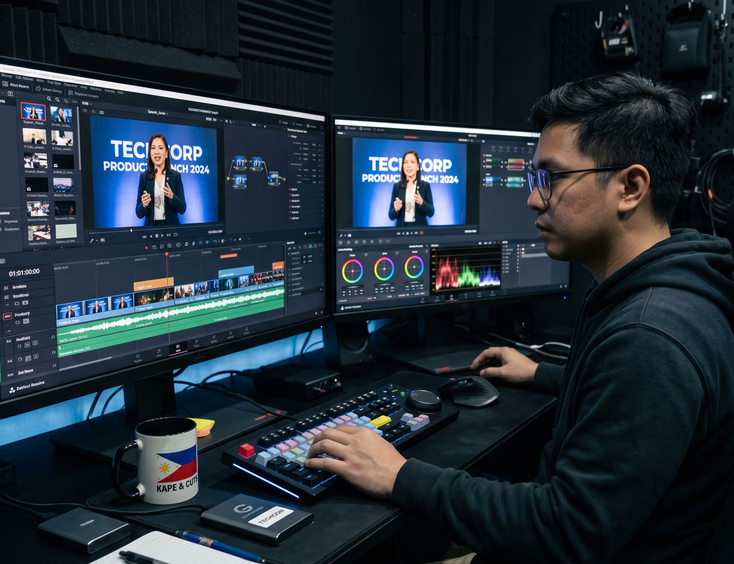
Video deliverables need specification beyond what photographers require. Length, format, music rights, and use cases all matter.
What to specify:
- Highlight video length: Most corporate highlight videos run 2 to 5 minutes
- Social media cuts: 30 to 60 second versions for Instagram, Facebook, LinkedIn
- Recap or AVP for future events: Longer-format videos for anniversary use
- Speaker recordings: Full recordings of speeches for internal archives
- Behind-the-scenes content: Casual social-ready clips
- Aspect ratios: 16:9 for traditional video, 9:16 for vertical social, 1:1 for square
- Music selection: Licensed music with usage rights
- Captions and subtitles: Especially for social-ready cuts
- Brand bumpers: Opening and closing brand elements
- Color grading direction: Consistent with brand aesthetic
For events where same-day social deliverables matter, brief the team specifically. Same-day teasers maintain event momentum on social platforms.
Coverage Timing and Logistics
Documentation coverage timing affects what gets captured and what gets missed.
What to plan:
- Arrival time at least 90 minutes before guest arrivals for setup shots
- Coverage through the program with breaks coordinated around meal service
- Departure timing after the major program moments end (or extend for full coverage)
- Coordination with the event organizer on key moments
- Briefing on stage and AV positioning to avoid blocking sight lines
- Communication with venue staff about access and movement
For longer events, build in shooter rotations to prevent fatigue affecting quality. A single photographer shooting 10 hours straight delivers weaker work in the final hours.
Coordinating With the Event Organizer
Documentation teams work alongside the event organizer. Clear coordination prevents conflicts and ensures coverage of every key moment.
What the event organizer coordinates:
- Sharing the full program timeline with the documentation team
- Briefing the team on VIPs and protocol guests
- Coordinating access to backstage and holding rooms
- Ensuring the team has badges or credentials for venue access
- Coordinating with venue staff on movement restrictions
- Briefing the team on any sensitive moments
For event organizer selection guidance, how to choose the right event organizer for your company covers organizer scope and what they manage with documentation teams.
Coordinating With Other Suppliers
Documentation teams also interact with AV providers, stylists, and venue staff.
Coordination points:
- AV providers: Confirming stage and lighting setups support photography
- Stylists: Capturing styled setups before guests arrive
- Catering teams: Capturing food styling before service begins
- Venue staff: Confirming access and movement restrictions
- Hosts and performers: Coordinating stage positioning and program flow
For supplier categories that interact with documentation:
- Choosing AV, lights, and sound system suppliers covers AV considerations affecting photo and video capture
- Corporate event stylists and set designers to know covers stylists whose work documentation captures
- Best caterers for corporate events in the Philippines covers catering visual presentation
- Best catering packages for corporate events in the Philippines covers catering decisions affecting visual content
- Filipino buffet and cocktail menu ideas for company parties covers menu choices that photograph well
- Mobile bar services for company events covers bar setups that photograph well
- Food cart and dessert buffet ideas for company events covers stations that contribute to visual content
- Hiring hosts, emcees, and performers for company events covers stage positioning and program flow
- Live band vs DJ for corporate parties covers entertainment that adds visual interest
Delivery Timelines and What to Expect
Standard delivery timelines vary by team and package. Confirm timelines in writing before signing.
Typical delivery expectations:
- Same-day or next-day teaser: 5 to 15 photos and a 30 to 60 second social clip
- Initial gallery: Full photo gallery within 7 to 14 days
- Highlight video: 2 to 4 weeks for edited highlight video
- Full deliverables: All photos, videos, and additional content within 4 to 6 weeks
- Raw files (if included): Within 30 days
What to confirm:
- Format of delivery (download link, USB, cloud gallery)
- File organization and naming conventions
- File quantity guarantees
- Revision rounds included in package
- Additional revision costs
For events where delivery timing matters (next-day press releases, weekly social content), specify deliverable deadlines in the contract.
Common Documentation Pitfalls
Documentation engagements fail in predictable ways.
The recurring problems:
- Hiring the cheapest option: Cheap teams deliver cheap-looking content. The cost difference rarely justifies the quality gap.
- Vague briefs producing generic content: Without specific direction, teams default to standard corporate aesthetic.
- Skipping the shot list: Without explicit shot lists, key moments get missed.
- Single-shooter coverage of complex events: Events with simultaneous moments need multiple shooters.
- No same-day teaser: Without same-day content, event momentum on social fades by 48 hours.
- No backup equipment confirmation: Equipment failure without backup ruins coverage.
- Conflicting access with venue staff: Without coordination, photographers get blocked from key positions.
- Late delivery affecting brand timing: Late delivery means missed campaign windows.
- Generic licensed music in highlight videos: Default music makes every corporate video sound the same.
- Over-processed editing: Heavy filters age fast and look dated within a year.
For mistakes that have sunk other corporate events, common mistakes to avoid when planning company events covers recurring failure patterns.
For contingency planning that includes documentation backup, crisis and contingency planning for corporate functions covers frameworks applicable to high-stakes documentation.
Measuring Documentation Quality and Outcomes
Documentation evaluation extends beyond whether the content looks good. Strong evaluation supports the next event and informs whether to re-engage the same team.
What to measure:
- Total deliverable count against contract specifications
- On-time delivery against committed dates
- Coverage of must-capture moments from the brief
- Usable content rate (how much of the gallery does marketing actually use)
- Social engagement on shared content
- Internal stakeholder satisfaction with the deliverables
- Long-term asset usage across campaigns
The how to measure the success of a corporate event covers broader event outcome measurement that informs documentation evaluation.
For broader planning timelines that include documentation, corporate event planning timeline and checklist covers when to book and brief the team.
For managing guest lists and ensuring the documentation team has access to VIP information, managing RSVPs and guest lists for large events covers data coordination.
Long-Term Documentation Team Relationships
Some companies build long-term relationships with a single documentation team across multiple events per year. Others hire event-by-event.
When long-term relationships work:
- Consistent brand aesthetic across all events
- Familiarity with executives and recurring guests
- Streamlined briefing process
- Negotiated annual rates
- Archive consistency across years
When event-by-event hiring works:
- Diverse event types requiring different specializations
- Cost optimization through competitive bidding
- Fresh perspectives across events
- Limited annual event volume
Match the approach to your event calendar and brand needs.
A Documentation Team That Earns the Content
The best photographer and videographer for your corporate event match the complexity of your program, the production scale of your event, the aesthetic your brand wants to project, and the budget your organization has approved. Filter on relevant portfolio. Brief thoroughly. Coordinate with the event organizer. Specify deliverables. Confirm delivery timelines.
For broader corporate event planning context, the complete guide to corporate events in the Philippines connects documentation selection to suppliers, venues, themes, and the full planning workflow. The right team produces content your company references for the next decade. The wrong one produces content nobody wants to look at twice.
Still Searching for a Right Match?
Find Your Perfect Wedding Supplier Today!
Discover trusted wedding suppliers across the Philippines in our complete directory. Compare services and connect with the ones that fit your dream celebration.
Browse Wedding SuppliersFeatured Blog Posts


Filipino Wedding Entourage - Roles, Order of March, and Modern Etiquette
6 mins readCivil Weddings in the Philippines - Requirements, Costs, and Step-by-Step Process
9 mins readCivil Wedding Requirements in the Philippines - Complete Checklist
6 mins readCost of Wedding in the Philippines - 5 Essential Things You Need to Know
7 mins readPrincipal Sponsors (Ninong/Ninang) - How Many, How to Ask, What They Really Do
4 mins readVeil, Cord, Candle & Coins - Roles, Options, and When They Happen
4 mins readEntourage for a Traditional Pinoy Wedding - Complete Roles and Guide
6 mins readComplete List of Civil Wedding Requirements in the Philippines
8 mins readHow to Choose Wedding Ninongs and Ninangs - Ask Yourself These 3 Important Questions
5 mins read