


Hotel Ballrooms and Function Halls for Company Events
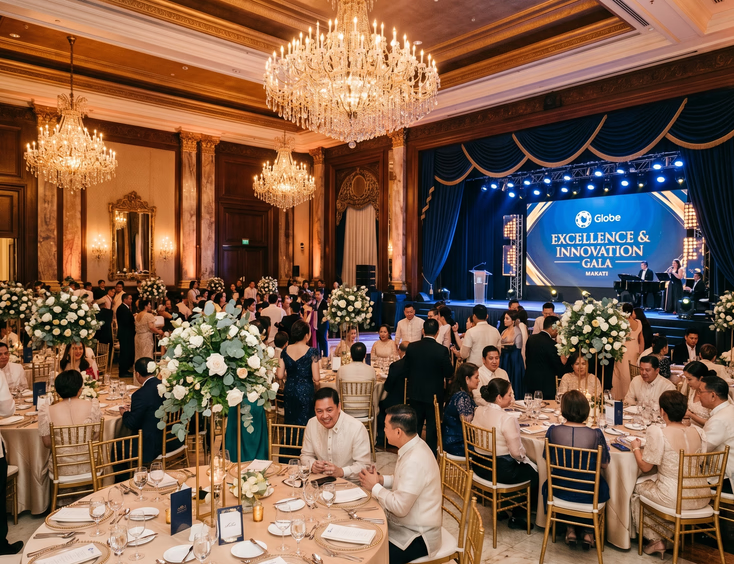
Hotel ballrooms still anchor the Filipino corporate event scene. Anniversaries, awards nights, Christmas parties, formal launches, and milestone celebrations land in ballrooms more often than any other venue format. The reasons hold up. In-house catering. Built-in AV. Polished service teams. Valet parking. Guest accommodations under the same roof.
This guide covers what hotel ballrooms and function halls deliver, how to evaluate them, and how to pick the right one for your next company event. Use it before signing your next venue contract.
Why Hotel Ballrooms Still Dominate Corporate Events
Hotel ballrooms win bookings because they solve five problems at once. Venue, catering, AV, parking, and staff coordination all sit under one vendor.
What hotel ballrooms deliver that other venues cannot:
- In-house catering with proven menus and trained service staff
- Built-in stage, lighting, and AV infrastructure
- Banquet teams that handle hundreds of corporate events per year
- Hotel-grade restrooms scaled for large gatherings
- Climate-controlled spaces that handle Manila heat
- Coordinated valet and parking management
- Adjacent guest rooms for out-of-town attendees, executives, and VIPs
- Liquor license and bar service in-house
The supplier consolidation alone saves planners 30 to 50 percent of coordination time. Instead of managing six vendors for a Christmas party, you manage one venue and two outside suppliers (often just photographer and host).
The trade-off is pricing. Hotel ballrooms charge premium rates because the in-house service model carries operational cost. Expect to pay 20 to 50 percent more than equivalent function hall venues for the same headcount.
When a Hotel Ballroom Is the Right Choice
Hotel ballrooms suit specific event types better than others. Knowing when to pick a ballroom (and when to skip it) saves budget and matches venue to event correctly.
Hotel ballrooms work best for:
- Formal anniversary celebrations, especially milestone years like 25th, 50th, and 100th
- Awards nights and recognition programs requiring proper stage and AV
- Christmas parties for companies wanting a formal or premium experience
- Black-tie galas and high-end client events
- Conferences and industry events requiring conference-grade AV
- Plated dinner events where service timing matters
- Events targeting VIP guests who expect hotel-grade hospitality
- Multi-day corporate events that need accommodation included
- Events drawing out-of-town or international guests
Hotel ballrooms work less well for:
- Casual team buildings or smaller departmental events
- Brand activations needing warehouse aesthetic
- Product launches targeting younger or design-conscious audiences
- Events with significant outdoor components
- Budget-conscious events under PHP 1,500 per head
- Events requiring extensive interior customization
For events that fall in the "less well" category, alternatives exist. The outdoor and unconventional venues for company events covers warehouse, rooftop, and design-forward spaces. The top convention centers and conference venues in the Philippines covers larger-format options.
Understanding Function Hall Categories
Beyond hotel ballrooms, Metro Manila offers standalone function halls and event venues that operate independently of hotel properties. These fill the gap between hotel-grade service and warehouse-style flexibility.
Function hall categories:
- Standalone event venues: Built specifically for events. Multiple ballrooms, dedicated event teams, often without attached hotel rooms.
- Mall-attached function halls: Located within or beside major malls. Convenient parking and access. Often family-friendly.
- Restaurant function halls: Private dining rooms or upper floors of restaurants used for smaller corporate events. Built-in catering from the restaurant.
- Country club function halls: Located within club properties. Often require club member sponsorship to book.
- University or institutional halls: Available for external bookings at certain hours. Suit academic-corporate events.
- Cultural and arts venue function halls: Located in museum or cultural property complexes. Suit events leaning into cultural positioning.
Each category trades off differently between price, service level, and flexibility. Standalone event venues often deliver the best balance for mid-budget corporate events.
What to Evaluate in a Hotel Ballroom
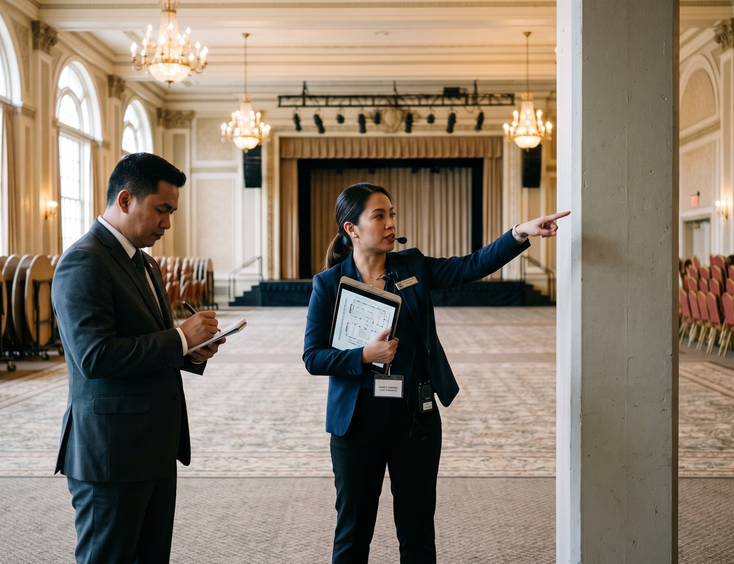
Site visits matter. Photos and floor plans flatter every venue. Walking the space at the lighting conditions you expect for your event tells you what the venue actually delivers.
Check the room dimensions:
- Ceiling height (lower than 4 meters limits staging and LED wall options)
- Length-to-width ratio (long narrow rooms create sight line problems)
- Pillar placement (pillars obstruct views from certain seats)
- Loading dock or ingress path width for AV equipment and large props
- Power outlet locations and capacity
Check the lighting:
- Dimmer control on existing fixtures
- Ability to use programmable lighting beyond the venue defaults
- Natural light during day events (and ability to block it for AVP playback)
- Stage lighting capabilities
Check the acoustics:
- Sound bleed from adjacent function rooms
- Echo or reverb in the empty room (a problem for speeches)
- Ambient noise from the lobby or building systems
Check the back-of-house:
- Holding rooms for performers, hosts, and AV teams
- Dressing rooms for VIPs or program participants
- Loading and storage space for supplier deliveries
- Kitchen proximity to the room (affects service timing for plated meals)
Check the front-of-house:
- Pre-function area for registration and cocktails
- Photo wall location and backdrop options
- Restroom location and capacity
- Coat check or storage if needed for formal events
Catering Considerations in Hotel Ballrooms
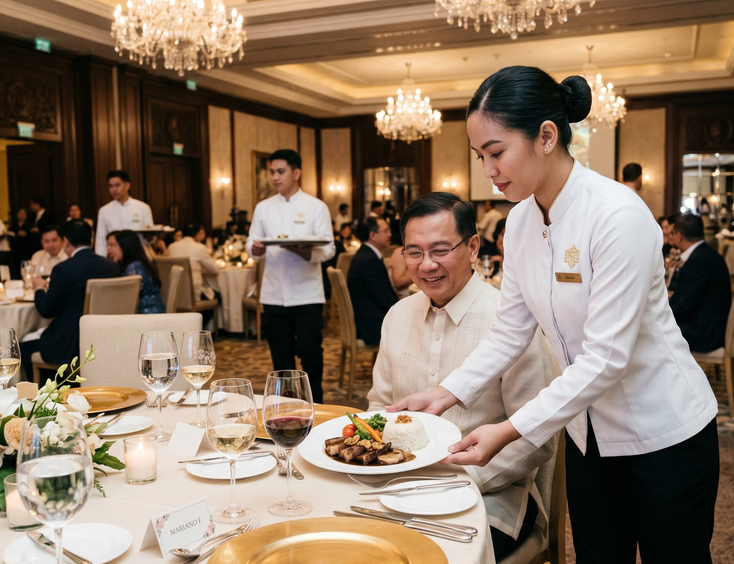
Hotel ballrooms almost always require in-house catering. Outside catering allowances are rare and usually come with significant corkage fees that erase the savings.
What to evaluate in hotel catering:
- Per-head pricing across packages (gold, silver, bronze tiers)
- Menu flexibility within each tier (substitutions for dietary restrictions)
- Tasting policy (some hotels include one tasting, others charge)
- Service staff ratio (one server per how many guests)
- Plated versus buffet pricing differences
- Corkage fees for outside cake, wine, or specialty items
- Children's menu options if family events are involved
- Halal, vegetarian, vegan, and allergy accommodations
For most Filipino corporate events, hotel buffets at the mid to upper tier deliver acceptable food. The top tier with plated service and premium menu items elevates anniversaries and awards nights worth the extra spend.
For broader catering decisions, the best caterers for corporate events in the Philippines covers vendors when outside catering is allowed. The best catering packages for corporate events in the Philippines covers package structures across price tiers.
For Filipino menu options that work in formal hotel settings, Filipino buffet and cocktail menu ideas for company parties covers menu direction. For specialty stations and dessert spreads that hotels often allow as additions, food cart and dessert buffet ideas for company events lists vendors.
For bar service, most hotels handle this in-house with their existing beverage license. The mobile bar services for company events covers situations where outside bar service is allowed.
AV and Staging in Hotel Ballrooms
Hotel AV ranges from basic to convention-grade depending on the property. Confirm capabilities before booking, especially for events requiring LED walls, programmable lighting, or multi-camera coverage.
What hotel AV typically includes in the base package:
- Standard projector and screen
- Basic stage lighting with general washes
- Wireless microphones (usually two to four)
- Podium with microphone
- Background music capability
- An on-site AV technician for setup and operation
What hotel AV usually charges extra for:
- LED walls and panel arrays
- Programmable theatrical lighting
- Additional microphones beyond the base allocation
- Confidence monitors and teleprompters
- Multi-camera setups and livestream support
- Specialty audio (line arrays for large rooms, podcasting mics for interviews)
For events with significant AV demands, outside AV providers often deliver better value and capability than hotel in-house teams. Confirm whether the venue allows outside AV before assuming.
Read choosing AV, lights, and sound system suppliers for guidance on when to bring in outside AV and what to expect from in-house teams.

Stage and Backdrop Setup
Hotel ballrooms typically include a basic stage with podium. Anything beyond requires planning and often outside suppliers.
What hotels usually provide as standard:
- A platform stage of approximately 4m x 6m
- A podium with built-in microphone
- A background drape or basic backdrop
- Stage steps for processional access
What hotels charge extra for or require outside suppliers for:
- Custom branded backdrops or LED walls
- Larger stage builds for production numbers
- Runway extensions for fashion or product launch events
- Themed stage design beyond basic drapes
- Programmable lighting tied to program beats
- Custom signage and event branding
For event-specific stage design, the corporate event stylists and set designers to know lists professionals who handle hotel ballroom builds within venue restrictions.
Pricing Tiers in Hotel Ballrooms
Hotel ballroom pricing structures vary, but most follow predictable patterns.
Typical pricing components:
- Room rental: Either a flat fee or waived if catering minimum is met
- Catering per head: Tiered by package, with minimum guarantees required
- Service charge: Usually 10 percent on catering
- VAT: 12 percent on the total
- Corkage fees: For outside cake, wine, or specialty items
- AV add-ons: Beyond the standard package
- Parking validation: Often a per-head or flat charge
- Overtime fees: Beyond the contracted event hours
A 200-person Christmas party at a mid-tier hotel ballroom with PHP 2,500 per head buffet, basic AV, and standard service runs approximately PHP 650,000 to PHP 800,000 all-in. The same party at a luxury hotel runs PHP 950,000 to PHP 1.4 million.
For benchmark pricing context, how much does a corporate event cost in the Philippines covers cost ranges across event types. The sample corporate event budget breakdown shows full line-item allocation.
Contracts and Booking Considerations
Hotel ballroom contracts run longer than function hall contracts. Read them carefully before signing.
What to negotiate before signing:
- Deposit structure (typically 25 to 50 percent down)
- Cancellation and rescheduling policy
- Weather-related rescheduling for outdoor components
- Force majeure clauses
- Liability and insurance requirements
- Outside supplier policies and corkage fees
- Final headcount confirmation deadlines (usually 72 hours before)
- Overtime rates if the event runs past contracted hours
- Damages and cleanup fees
What to confirm in writing:
- Exact room name and configuration
- Setup time (ingress) and breakdown time (egress)
- Catering menu, including substitutions agreed during the tasting
- AV package inclusions and add-ons
- Parking inclusions and additional fees
- Holding rooms and VIP space access
Lock the contract at least 8 to 12 weeks before the event. Premium dates (Friday and Saturday in December) book out 6 to 9 months in advance at top hotels.
Coordinating Hotel Events with Outside Suppliers
Hotel events still need outside suppliers for specific roles. Coordinating them with the hotel banquet team requires advance planning.
Outside suppliers typically allowed:
- Photographer and videographer
- Host or emcee
- Performers and entertainment
- Stylist for additional decor or branded installations
- Event organizer or coordinator
- Specialty cake or dessert vendor (often with corkage)
Outside suppliers often restricted:
- Catering (in-house only at most hotels)
- Primary AV (varies by property)
- Bar service (in-house only at most hotels)
Brief the hotel banquet manager on every outside supplier and their access needs at least two weeks before the event. The hotel typically requires supplier names, ingress times, equipment lists, and contact details for security clearance and coordination.
For host and entertainment coordination, hiring hosts, emcees, and performers for company events covers rate ranges and briefing requirements. For music decisions, live band vs DJ for corporate parties compares options and how they interact with hotel sound systems.
For documentation, the guide to hiring corporate event photographers and videographers covers what to brief outside teams about hotel restrictions on flash, movement, and access.
Common Hotel Ballroom Pitfalls
Hotel ballroom events fail in predictable ways. Plan around these.
The recurring problems:
- Underestimating sight line obstructions: Pillars and chandeliers block views from back tables. Walk the room and check from every seat.
- Over-relying on in-house AV: Standard AV packages do not handle production-grade events. Confirm what is included and what costs extra.
- Skipping the tasting: Hotel menus on paper often differ from how the food actually tastes and looks. Always taste before signing.
- Forgetting parking validation: Guests stuck paying parking fees after a Christmas party damages goodwill.
- Ignoring sound bleed: Adjacent function rooms running concurrent events can disrupt your program.
- Booking the wrong room shape: Long narrow ballrooms work for some events. Wider square rooms work for others. Match the shape to the program.
- Misjudging the ceiling height: Low ceilings limit LED walls, theatrical lighting, and dramatic staging.
For mistakes that have sunk other corporate events at hotel venues, read common mistakes to avoid when planning company events.
Matching Hotel Ballroom to Event Type
Different event types call for different hotel ballroom features.
For Christmas parties, prioritize ballrooms with good dance floor space, capable bar service, and a fun atmosphere. Mid-tier hotels often deliver better Christmas party energy than luxury properties. The how to plan a successful company Christmas party in the Philippines covers ballroom requirements specifically.
For anniversaries, prioritize ballrooms with high ceilings, premium service, and prestige positioning. Heritage luxury hotels and modern flagship properties handle milestone anniversaries best. The planning a memorable company anniversary celebration covers anniversary-specific venue needs.
For awards nights, prioritize ballrooms with strong stage capability, clear sight lines, and reliable AV. Both heritage and modern hotels work depending on the company's brand positioning. The planning an employee recognition or awards night covers stage and AV requirements.
For product launches, modern hotels with LED-capable function rooms work better than heritage ballrooms. The guide to hosting a product launch event covers launch-specific venue needs.
For conferences, hotels with multiple breakout rooms in addition to the main ballroom work best. Confirm breakout capacity and AV in each room.
For grand openings, hotel ballrooms work for premium grand opening dinners or VIP previews. The actual ribbon cutting usually happens at the new business location. The guide to hosting a grand opening or ribbon cutting ceremony covers the dual-venue approach.
Geographic Considerations
Hotel ballroom choice connects to district selection. Different Metro Manila districts offer different hotel ballroom strengths.
For broader district guidance, the best corporate event venues in Metro Manila compares districts by event type and capacity.
For events extending beyond Metro Manila or requiring overnight components, the Tagaytay and Batangas venues for corporate retreats covers hotel and resort options that work for corporate retreats and combined event-accommodation needs.
A Hotel Ballroom That Earns the Booking
The best hotel ballroom for your event matches the formality of your program, the size of your guest list, the production demands of your AV, and the budget tier your company has approved. Visit the room before signing. Read the contract carefully. Brief outside suppliers on hotel restrictions. Plan around the pillars, the AV package limits, and the in-house catering constraints.
For broader corporate event planning context, the complete guide to corporate events in the Philippines connects venue selection to suppliers, themes, and the full planning workflow. The right ballroom carries half the event before you finalize a single other decision.
Still Searching for a Right Match?
Find Your Perfect Wedding Supplier Today!
Discover trusted wedding suppliers across the Philippines in our complete directory. Compare services and connect with the ones that fit your dream celebration.
Browse Wedding SuppliersFeatured Blog Posts



Filipino Wedding Entourage - Roles, Order of March, and Modern Etiquette
6 mins readCivil Weddings in the Philippines - Requirements, Costs, and Step-by-Step Process
9 mins readCivil Wedding Requirements in the Philippines - Complete Checklist
6 mins readCost of Wedding in the Philippines - 5 Essential Things You Need to Know
7 mins readPrincipal Sponsors (Ninong/Ninang) - How Many, How to Ask, What They Really Do
4 mins readVeil, Cord, Candle & Coins - Roles, Options, and When They Happen
4 mins readEntourage for a Traditional Pinoy Wedding - Complete Roles and Guide
6 mins readComplete List of Civil Wedding Requirements in the Philippines
8 mins readHow to Choose Wedding Ninongs and Ninangs - Ask Yourself These 3 Important Questions
5 mins read