


Signs It Is Time to Renew Your Wedding Vows
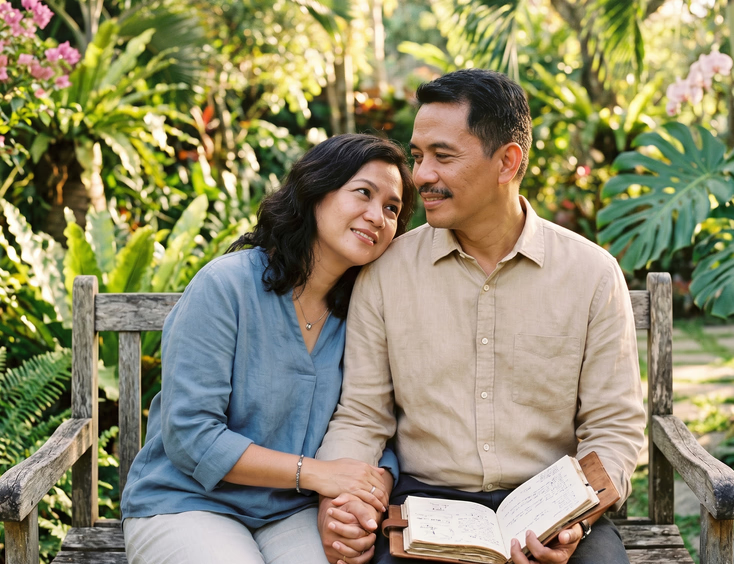
A lot of Filipino couples wait for the 25th or the 50th to renew their vows. They circle the year on the calendar and start planning two years out. Nothing wrong with that. The milestone gives the celebration a frame.
Other couples wake up one ordinary morning and know it's time. No round number. No anniversary on the horizon. Just a quiet certainty that they want to say the words again, out loud, with people watching.
Both kinds of renewals are valid. The signs below show up in both groups. If two or three of these match your marriage, the ceremony is probably overdue.
You Survived a Hard Season Together
Marriages hit hard seasons. Job loss. A child's illness. A parent's death. A miscarriage. A house that flooded. A business that failed. A betrayal followed by years of rebuilding.
The couples who walk through these seasons together often emerge with a marriage that looks different from the one they started with. The vows they made at the altar described a relationship they hadn't lived yet. The relationship they have now needs its own ceremony.
Renewing after a hard season is not a victory lap. It's an acknowledgment. The marriage that survived deserves to be named in front of the people who watched it bend without breaking.
For couples whose vows need to reflect what they came through, the guide on vow renewal vows for couples who survived hardship together shows you how to write about hard years without turning the ceremony into a confession.
Your Original Wedding Wasn't What You Wanted
Many Filipino couples married small. A judge at city hall. A quiet Catholic ceremony with twelve guests. An elopement to Tagaytay. A wedding rushed because of a pregnancy, a deployment, a family situation, or a budget that couldn't stretch to a celebration.
These marriages are valid. The wedding day, in the couple's memory, often feels incomplete. The dress they wanted. The reception they pictured. The dance with their father. The toast from their best friend. Skipped, postponed, or never possible at the time.
A vow renewal years later lets you stage the wedding you didn't have. The marriage stays the marriage. The celebration gets a second chance.
Your Children Are Old Enough to Remember
Couples who married before having children eventually face the same realization. The kids weren't there. The wedding photos show parents who don't quite look like the parents the kids know. The day that started the family happened before the family existed.
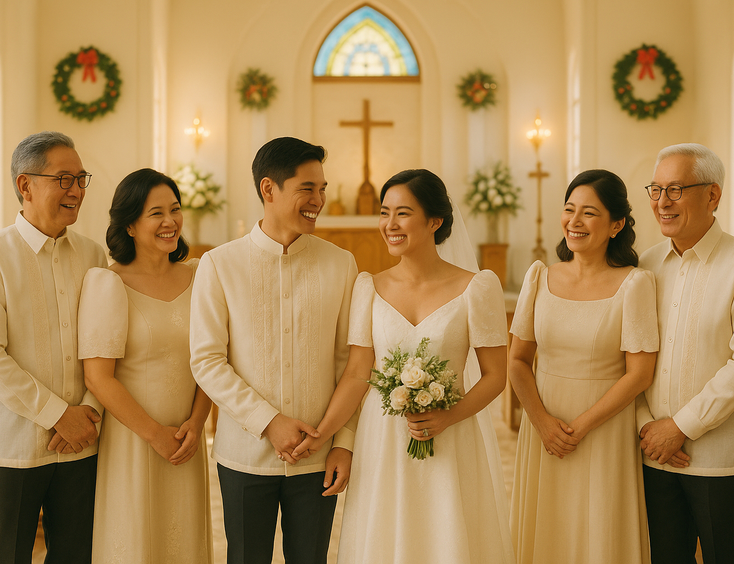
A renewal lets your children witness the union. They walk you down the aisle. They read passages. They hold the cord, veil, and coins. They stand beside you as your sponsors. The ceremony becomes part of their memory, not just a story you tell them.
This pull becomes stronger as kids reach their teens and twenties. The window for them to participate as adults but still as family closes faster than parents expect. The guide on involving your children and family in your vow renewal ceremony shows you specific roles by age.
You're an OFW Couple Who Hasn't Gathered Everyone in Years
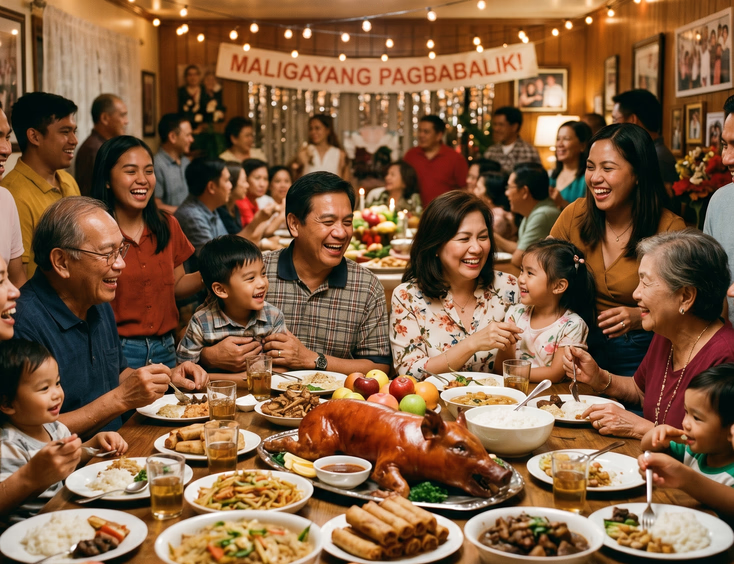
OFW marriages run on shorter visits and longer separations. Couples who built their life across time zones often realize one year that they haven't been in a room with all their relatives at once since the wedding itself.
A vow renewal becomes a reason to gather everyone. The lola in Pangasinan. The cousin who moved to Davao. The sibling who couldn't make the original wedding because of work. The parents who are getting older and who deserve to see the marriage they helped build.
For couples whose marriage was shaped by distance, the renewal of vows for OFW couples celebrating love across distance speaks to that specific kind of love.
You Feel the Marriage Is Stronger Now Than at the Wedding
Some couples notice that the relationship they have today is more honest, more comfortable, and more grounded than the one they entered into at the altar. The vows they made were aspirational. The marriage they have now has earned those vows by living them.
This feeling sometimes shows up around the 10th year. Sometimes the 15th. Sometimes the 7th, after a hard stretch that ended with both partners choosing each other again. The age of the marriage matters less than the shift in how you both experience it.
A renewal at this point isn't about doubt. It's about wanting the public language to catch up with the private reality. You want to say in front of witnesses what you already say to each other across the kitchen table.
You Want to Mark a Spiritual Shift
Some couples come back to faith years after their original wedding. The wedding may have been civil. The marriage may have been Catholic but practiced loosely for years. A conversion, a return, a renewed church involvement, or a deepening of personal faith sometimes leads couples to want a religious ceremony they didn't have or didn't fully participate in the first time.
If your marriage was civil and you now want the Church to recognize it sacramentally, what you actually need is convalidation, not a vow renewal. For the difference between the two, see renewal of vows vs. convalidation in the Philippines.
If your marriage was already Catholic and you want a fresh religious celebration of your faith and your marriage, a Catholic vow renewal fits. The guide on renewing vows in the Catholic Church in the Philippines covers what your parish will and won't do.
You Hit a Milestone Anniversary Year
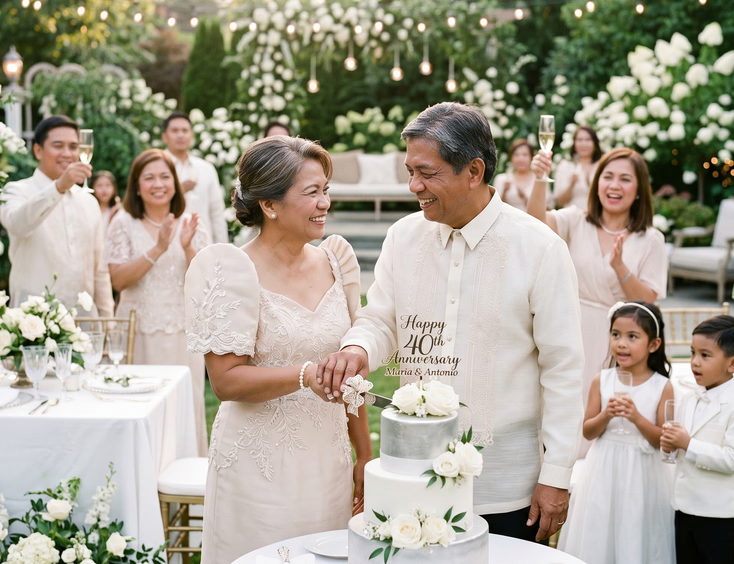
The traditional anniversary years still pull strongly in Filipino practice. The 10th, 25th, 30th, and 50th anniversaries especially. Each carries its own symbolism, its own color palette, and its own cultural weight.
The 10th year, the tin anniversary, marks the point where the marriage has settled into itself. Couples at this stage often have young children, a mortgage, and the early evidence that they will probably make it. See the tin anniversary vow renewal guide for the 10th year.
The 25th, the silver anniversary, sits at the midpoint. The kids are teens or young adults. The career has reached a level. The marriage has weathered the hardest stretches. See the planning guide on how to plan a silver wedding anniversary vow renewal in the Philippines.
The 30th, the pearl anniversary, often surprises couples with its quiet weight. Three decades of marriage in the Philippines is not common, and the ceremony at this stage tends to draw out emotion that earlier years did not. See the pearl anniversary celebration guide for the 30th year.
The 50th, the golden anniversary, is the milestone the whole extended family treats as sacred. Grandchildren old enough to participate. Parents who may no longer be around to attend. The full sweep of a life shared. See the golden wedding anniversary vow renewal ideas for Filipino couples.
If you want the full reference of anniversary years and their meanings, the Filipino wedding anniversary names and symbols by year guide covers each year from the first to the diamond.
You've Reconciled After a Real Break
Some couples separate for months or years. Some sleep in different rooms. Some live in different houses. Some file paperwork they later withdraw. Some go through counseling, individual therapy, or a long period of quiet renegotiation.
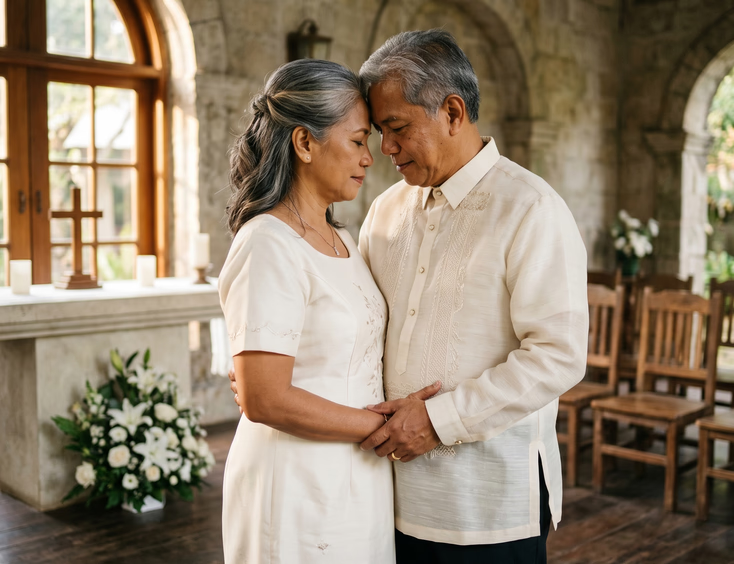
When reconciliation holds, couples sometimes want a ceremony to mark the new chapter. The renewal is not magic. It does not fix anything. The work of repair happens between the couple, often with help from a therapist or a trusted priest. The ceremony comes after the work, as a public acknowledgment that the marriage chose itself a second time.
This kind of renewal tends to be quiet. Small guest list. Trusted family and friends. The ceremony often skips the spectacle of a milestone celebration and leans into something more reflective.
You've Always Wanted to and Never Found the Reason
Some couples want a vow renewal for years and keep waiting for a milestone to justify it. The 10th feels too soon. The 25th feels too far. The kids are too young. The kids are too busy. The budget isn't right. The timing never lines up.
The reason is simple: you want to. That's enough.
Filipino culture sometimes treats grand celebrations as needing external justification. A milestone year. A surviving illness. A returning OFW. The truth is that wanting to renew your vows with your spouse is a complete reason by itself. You don't need permission from a number on the calendar.
If budget is the holdup, the realistic budget breakdown for a vow renewal in the Philippines shows what the ceremony actually costs at different scales. If scale is the question, the intimate vs. grand vow renewal scale guide helps you pick what fits.
You Want Your Spouse to Hear It Again
Some couples reach a point where they realize their spouse hasn't heard them say it, out loud, in years. The marriage works. The communication is fine. The daily rhythm holds. The actual sentence, "I choose you, I love you, I will keep choosing you," hasn't been spoken in any formal way since the wedding.
A vow renewal puts that sentence back into the marriage. Not whispered across a pillow. Not folded into a birthday card. Said clearly, in front of witnesses, with the same weight as the first time.
For couples writing those words again, the guide on how to write wedding vow renewal vows that capture years of marriage walks through the process. For couples writing in Tagalog or mixing English and Filipino, the sample Tagalog vow renewal vows for Filipino husbands and wives gives you starting points.
The Sign That Matters Most
The signs above all point in the same direction. You want to say it again. Your spouse wants to hear it. The people who love you both deserve to witness it.
Some couples need a milestone to justify the ceremony. Other couples need permission to skip the milestone and renew because they want to. Both paths lead to the same room with the same vows and the same tears.
If you've read this far and you're still on the fence, here's a useful test. Picture yourself five years from now. Did you renew? If the answer feels like regret, plan the ceremony.
For the full picture of how to plan from here, start with the pillar guide on wedding vow renewals in the Philippines. For the next concrete step, the vow renewal planning checklist for Filipino couples gives you the sequence.
The signs are personal. The decision is mutual. The ceremony, when it happens, makes the private part of your marriage finally as visible as the marriage itself.
Still Searching for a Right Match?
Find Your Perfect Wedding Supplier Today!
Discover trusted wedding suppliers across the Philippines in our complete directory. Compare services and connect with the ones that fit your dream celebration.
Browse Wedding SuppliersFeatured Blog Posts

Filipino Wedding Entourage - Roles, Order of March, and Modern Etiquette
6 mins readCivil Weddings in the Philippines - Requirements, Costs, and Step-by-Step Process
9 mins readCivil Wedding Requirements in the Philippines - Complete Checklist
6 mins readCost of Wedding in the Philippines - 5 Essential Things You Need to Know
7 mins readPrincipal Sponsors (Ninong/Ninang) - How Many, How to Ask, What They Really Do
4 mins readVeil, Cord, Candle & Coins - Roles, Options, and When They Happen
4 mins readEntourage for a Traditional Pinoy Wedding - Complete Roles and Guide
6 mins readComplete List of Civil Wedding Requirements in the Philippines
8 mins readHow to Choose Wedding Ninongs and Ninangs - Ask Yourself These 3 Important Questions
5 mins read