


Renewal of Vows for OFW Couples: Celebrating Love Across Distance
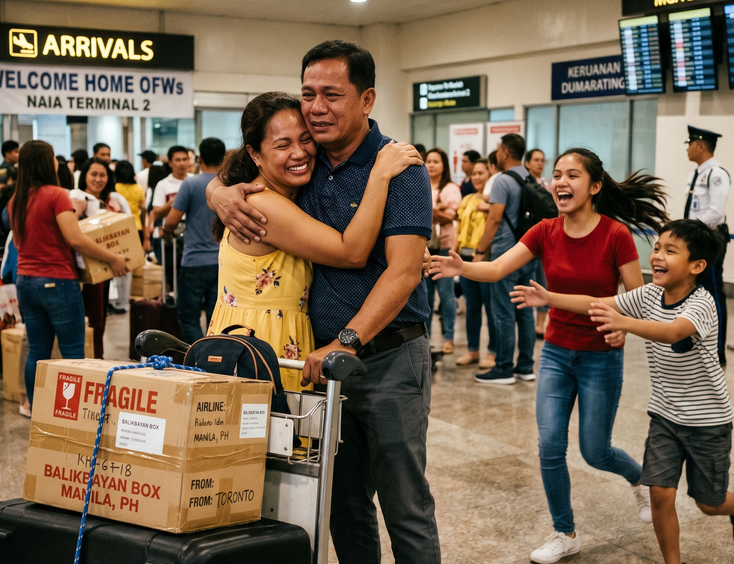
Your wedding photos show the two of you together. The years after the wedding show one of you in Riyadh, Hong Kong, Dubai, Singapore, or a cruise ship somewhere in the Caribbean. The other one stayed home with the kids, the parents, the bills, and the quiet evenings that stretched into months.
This is how a large share of Filipino marriages get built. Across time zones. Through unstable video calls. Around the schedule of a contract that controls when you come home and how long you can stay.
A vow renewal for an OFW couple is not a standard anniversary ceremony. It is a homecoming, a family reunion, and a public acknowledgment of a marriage that survived something most marriages never have to survive. The planning, the timing, and the emotional weight all sit differently.
Why OFW Couples Often Want to Renew
The original wedding for an OFW couple often happened in a narrow window. A short leave. A rushed booking. A guest list trimmed to whoever could come on the available date. Many OFW weddings happen during a two-week vacation, between flights, with everything compressed into the few days the contract allowed.
Years later, the couple wants the celebration they couldn't have at the time. The kids are old enough to participate. The lola is still alive. The siblings have grown up. The contract finally lines up with a stretch of time long enough to plan something properly.
Other reasons show up too. The marriage survived the loneliness, the temptation, the suspicion, and the long stretches of separation. Many didn't. The ones that did want to mark that survival with something more than a Facebook post.
Some couples are reaching the end of the OFW chapter. The contract is winding down. The breadwinner is coming home for good. A renewal becomes the threshold between the marriage that was lived across distance and the marriage that will finally be lived under one roof.
For a broader view of when renewals tend to happen, see the guide on signs it is time to renew your wedding vows.
Timing the Renewal Around the Contract
OFW renewals require a different planning timeline than non-OFW renewals. The planning has to fit around the contract, not the other way around.
Most OFW workers get a fixed leave period, usually one to two months, sometimes less. The ceremony date has to fall inside this window with enough buffer for jet lag, family gatherings, and the days you actually want to spend with each other before the wedding becomes the focus.
A practical approach:
- Book the venue and major suppliers six to nine months before the leave starts
- Have the spouse at home handle most of the planning while the OFW partner approves decisions remotely
- Schedule the ceremony in the middle of the leave, not at the start or end
- Build in at least three days of recovery before the ceremony for jet lag
- Leave the final week of leave for honeymoon time, family visits, and rest
Some couples plan two leave periods. One for final preparation and pre-ceremony events. One six months later for the renewal itself. This is uncommon but useful for couples renewing on a major milestone like the 25th or 50th anniversary, where the scale of the event justifies the extra travel.
For the full planning sequence, the vow renewal planning checklist for Filipino couples covers the steps in order.
Dividing the Planning Work Across Distance
The spouse at home usually carries most of the planning load. This is the practical reality of distance. The OFW partner can review photos, approve menus, and pick colors over video calls, but the in-person work like venue visits, supplier meetings, and dress fittings falls to the partner on Philippine soil.
This division can become a source of friction. The OFW partner often feels disconnected from the planning. The spouse at home often feels overwhelmed by the scale of decisions. Both are reasonable feelings.
A few approaches that work:
- Assign clear ownership. The spouse at home decides on suppliers and logistics. The OFW partner owns the music, the speech to give at the reception, and the vows.
- Use one shared planning document. A simple Google Sheet or Notion page beats scattered messages across multiple apps.
- Schedule a weekly planning call. Thirty minutes, same day each week, even if there's nothing urgent. The rhythm matters more than the agenda.
- Hire a coordinator earlier than non-OFW couples typically would. The coordinator becomes the bridge between the partner abroad and the suppliers at home.
For coordinators experienced with anniversary celebrations and the specific demands of OFW timelines, see wedding coordinators in the Philippines who specialize in anniversary celebrations.
Choosing the Right Venue
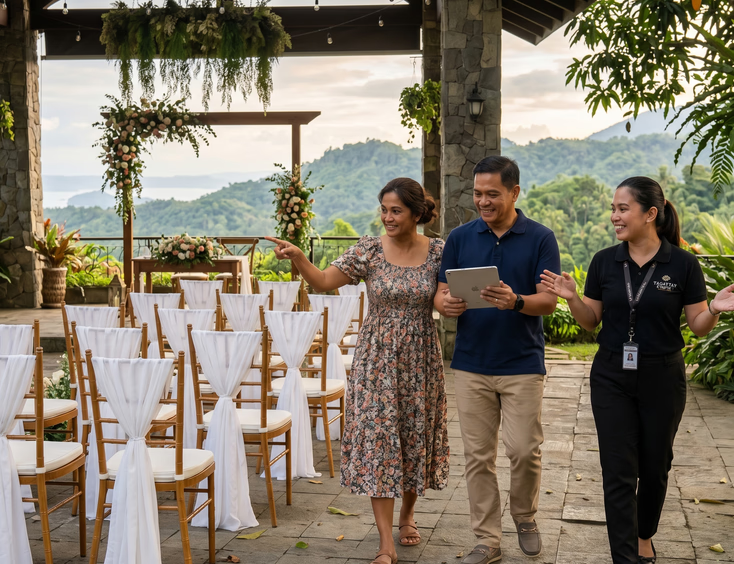
OFW couples tend to pick venues that solve specific problems. The biggest problem is travel and accommodation for a guest list that often includes relatives flying in from different parts of the Philippines, the partner's foreign coworkers, and sometimes friends from the host country.
A few venue patterns show up often:
Tagaytay works for couples whose families are based in Metro Manila and Luzon. The drive is short. The weather is cooler. The garden venues photograph well. See best vow renewal venues in Tagaytay for Filipino couples.
Boracay attracts OFW couples who want the destination feel without leaving the Philippines. The beach ceremony lets relatives turn the trip into a family vacation. See the Boracay vow renewal guide for beach ceremonies.
Cebu and Bohol pull couples whose families are based in the Visayas or who want a destination with less crowd than Boracay. See romantic vow renewal spots in Cebu and Bohol.
Metro Manila garden and hotel venues work for couples whose guests need to fly in from abroad and want minimal additional travel inside the Philippines. See garden and hotel venues for an intimate vow renewal in Metro Manila.
The ancestral home option carries particular meaning for OFW couples. The renewal happens in the same house where the family grew up. Lola's living room. The garden where the kids played. The space where the family existed before the OFW chapter began. See backyard and ancestral home vow renewal ideas for Filipino families.
Writing Vows About Distance
OFW vows carry weight that non-OFW vows don't have to carry. The years apart. The birthdays missed. The medical emergencies handled over Viber. The school events watched on Facebook Live. The promotions celebrated alone. The grief held by one partner while the other worked through the night to send money home.
These years deserve to be named. They shaped the marriage. The vows that ignore them feel incomplete.
A few elements OFW couples often include in their renewal vows:
- An acknowledgment of the years apart and what they cost both partners
- A naming of the specific support the spouse at home provided
- A naming of the specific sacrifice the OFW partner made
- Gratitude for the children, parents, or siblings who held the family together
- A statement about the next chapter, whether that means continued work abroad or finally coming home
For couples writing vows about hard years, the guide on vow renewal vows for couples who survived hardship together shows how to write about difficult chapters without turning the ceremony into a confession. For couples writing in Tagalog or mixing English and Filipino, see sample Tagalog vow renewal vows for Filipino husbands and wives.
Including Children Who Grew Up With One Parent Away
OFW children carry a specific kind of weight. They grew up with one parent on a screen for years at a time. They had birthdays where the absent parent waved through a video call. They learned to share their good news with one parent in real time and the other in a delayed message.
A vow renewal gives these kids a chance to be present at a family event that centers their parents' marriage. The roles matter. The participation matters. The ceremony matters precisely because they were so often absent from the everyday version of their parents' relationship.
Common roles for OFW couples' children:
- Walking one parent down the aisle, often the parent who was abroad
- Reading a Scripture passage or a meaningful poem
- Holding the cord, veil, or coins
- Giving a toast at the reception that names what they observed growing up
- Performing a song or dance number at the reception
For specific roles by age and how to involve grown children meaningfully, see involving your children and family in your vow renewal ceremony.
The Guest List Question
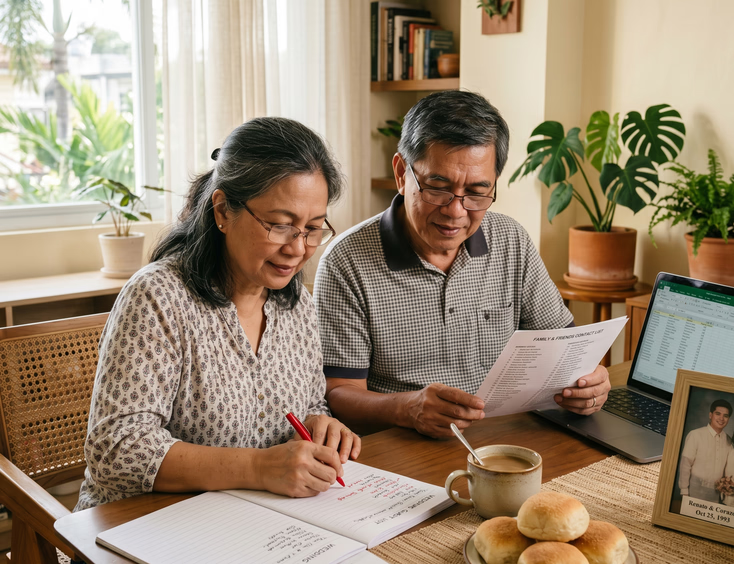
OFW guest lists run longer than non-OFW guest lists for predictable reasons. The relatives who couldn't come to the original rushed wedding. The friends from the host country who want to fly in. The work colleagues, the kasambahay who raised the kids, the neighbors who looked after the family during emergencies.
The instinct is to invite everyone. The budget rarely allows it. The decisions get harder when each name on the list represents someone who supported the marriage in a real way during the years of separation.
A few approaches that help:
- Set the scale first based on budget, then build the list backward from that number
- Separate the ceremony guests from the reception guests. A small intimate ceremony with 30 people, followed by a larger reception with 100, costs less than 100 people at both
- Plan a follow-up gathering for the people who couldn't make the main event. Many OFW couples host a smaller home celebration for the extended family the week after
- Be honest about what you can afford and don't apologize for the size
For help choosing between intimate and grand scales, see intimate vs. grand vow renewal: how to choose the right scale.
Budgeting in Multiple Currencies
OFW couples often budget in two currencies, which complicates planning. The income arrives in dollars, dirhams, riyals, or Hong Kong dollars. The expenses get paid in pesos. The exchange rate moves between the deposit and the final payment.
A practical approach:
- Convert the OFW partner's contribution to pesos at the start of planning, using a slightly conservative rate
- Open a peso account specifically for the renewal budget
- Move the money in stages tied to supplier payment schedules
- Build in a 10 percent buffer for exchange rate movement
- Pay all suppliers in pesos through Philippine bank transfers to avoid extra remittance fees on each payment
The total cost of a Filipino vow renewal varies by scale. For a realistic budget breakdown that fits both modest and ambitious celebrations, see how much does a vow renewal cost in the Philippines.
Documentation That Matters More Than Usual
OFW couples have a stronger reason than most to invest in photography and videography. The relatives who couldn't travel for the renewal will only experience it through the documentation. The OFW partner heading back overseas after the ceremony will rely on the photos and video to carry the memory through the next contract.
A few considerations specific to OFW renewals:
- Prioritize candid family moments over staged portraits. The hugs at the airport. The lola seeing the apo for the first time in years. The kids running to the parent who just landed
- Request a same-day edit if possible. The OFW partner often leaves within days. Having a video to take back makes the trip back easier
- Allocate part of the budget to a photo book or printed album. Digital files get lost. A printed book stays
- Make sure someone documents the pre-ceremony family time, not just the ceremony itself. For OFW families, the reunion before the renewal often carries as much weight as the renewal itself
For choosing the right documentation team, see how to choose a photographer and videographer for your vow renewal.
The Reception as a Family Reunion
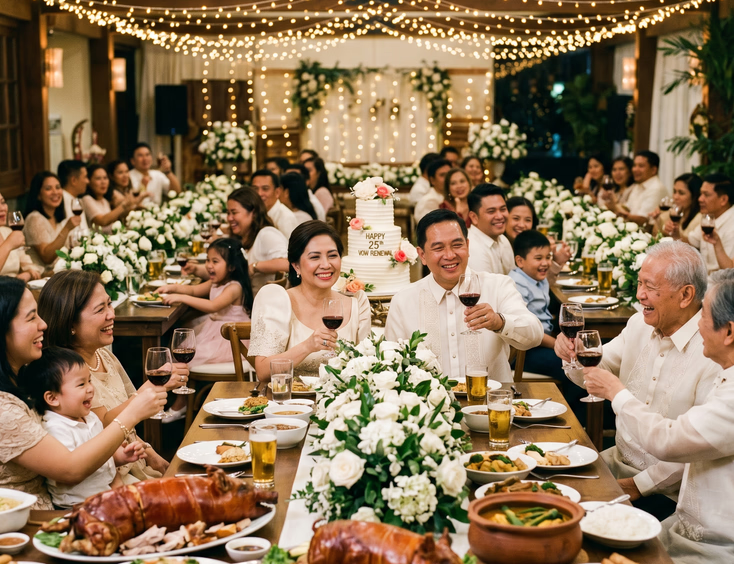
OFW vow renewal receptions function as more than receptions. They are reunions for relatives who haven't been in the same room in years. The renewal ceremony is the occasion. The salu-salo that follows is often the part the family remembers most.
This changes how the reception gets planned. The program tends to be shorter and the open time longer. The food matters more than the spectacle. The music often shifts to old Filipino classics that the older relatives sing along to. The toast list grows because more people have meaningful things to say.
For food planning that honors this kind of reunion, see catering, cake, and salu-salo ideas for a Filipino vow renewal.
For the broader question of the ceremony program and how it flows, see the wedding vow renewal order of ceremony sample Filipino program.
What the Renewal Actually Marks
For a non-OFW couple, a vow renewal celebrates years of marriage. For an OFW couple, it celebrates years of marriage built across distance, which is a different thing.
The renewal acknowledges the choice both partners made every time the contract got renewed. The choice to keep loving someone through a screen. The choice to keep building a life that one partner only visited in pieces. The choice to trust someone you couldn't see for months at a time.
These choices don't show up on the marriage certificate. They show up in the marriage itself, and a renewal is one of the few moments in Filipino culture where they can be named in front of the people who watched them happen.
If you've been waiting for the right leave to plan this, the right contract cycle, the right anniversary year, the right family configuration, the answer is usually that no perfect moment will arrive. The OFW life rarely produces perfect moments. It produces the moments you make.
For the bigger picture of how to plan from here, start with the pillar guide on wedding vow renewals in the Philippines. The next concrete step is the planning checklist, which works just as well across time zones as it does across the same address.
The distance shaped the marriage. The renewal lets the marriage finally take up the space the distance kept it from filling.
Still Searching for a Right Match?
Find Your Perfect Wedding Supplier Today!
Discover trusted wedding suppliers across the Philippines in our complete directory. Compare services and connect with the ones that fit your dream celebration.
Browse Wedding SuppliersFeatured Blog Posts

Filipino Wedding Entourage - Roles, Order of March, and Modern Etiquette
6 mins readCivil Weddings in the Philippines - Requirements, Costs, and Step-by-Step Process
9 mins readCivil Wedding Requirements in the Philippines - Complete Checklist
6 mins readCost of Wedding in the Philippines - 5 Essential Things You Need to Know
7 mins readPrincipal Sponsors (Ninong/Ninang) - How Many, How to Ask, What They Really Do
4 mins readVeil, Cord, Candle & Coins - Roles, Options, and When They Happen
4 mins readEntourage for a Traditional Pinoy Wedding - Complete Roles and Guide
6 mins readComplete List of Civil Wedding Requirements in the Philippines
8 mins readHow to Choose Wedding Ninongs and Ninangs - Ask Yourself These 3 Important Questions
5 mins read