


How to Write Wedding Vow Renewal Vows That Capture Years of Marriage
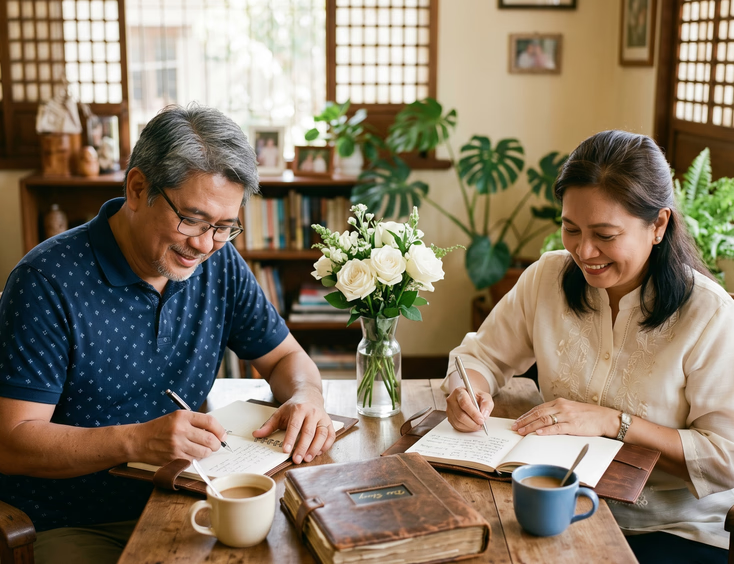
The original wedding vows were a promise. The renewal vows are a report.
That single distinction shapes everything else about writing vows for a Filipino vow renewal ceremony. On the wedding day, the couple promised what the marriage would be. Years later, the renewal lets each partner stand up and say what the marriage actually became, what held, what changed, and what they choose again.
Filipino couples often struggle with renewal vows because they default to wedding-vow language. "I promise to love you forever" lands differently when said by a thirty-year-old at the altar versus a fifty-five-year-old standing in front of grown children. The renewal needs its own voice.
This guide walks through how to write vow renewal vows that capture the actual years of marriage rather than rehashing the wedding day script.
What Makes a Renewal Vow Different from a Wedding Vow
Wedding vows are forward-looking. They promise behavior that has not happened yet. The couple commits to love, honor, and cherish across an unknown future.
Renewal vows are backward-and-forward looking. They acknowledge what has already happened and renew the commitment going forward. The structure shifts from "I promise" to "I have, and I still will."
A wedding vow might say: "I promise to stand by you in sickness and in health."
A renewal vow might say: "When the kids got sick, when your father passed, when I lost my job in 2015, you stayed. I have seen what it looks like when you stand by me. I will keep doing the same for you."
The second one carries weight the first cannot. It points to specific years and specific moments. It says the speaker actually knows what the promise means because they have already lived inside it.
For couples planning the broader ceremony around the vows, the complete Filipino couple's guide to renewing your I do covers how the vow exchange fits into the larger program.
Start by Listing the Years
Before writing a single sentence of vows, sit down and make a list. The list should cover the years of the marriage in concrete terms.
Write down the hardest season you went through together. Name the specific event.
Write down the year that felt the easiest. Why.
Write down a moment when you doubted the marriage. What kept you in it.
Write down a habit your spouse has that drives you crazy. Write down why you still chose them despite it.
Write down a moment when you saw your spouse at their best. Describe what they did.
Write down what your spouse believed about you when you stopped believing it yourself.
Write down the smallest gesture your spouse does daily that you would miss if they stopped.
The list does not become the vows directly. The list becomes the material the vows draw from. Vague language disappears when the writer has specifics on hand.
The Structure That Works
Most strong renewal vows follow a three-part structure. The structure gives the vows shape without forcing them into a template.
The acknowledgment. Open by naming what the marriage has been. Specific years, specific seasons, specific moments. The acknowledgment grounds the vows in real history.
The recognition. Move to what the speaker sees in their partner that they did not see on the wedding day. This is the part that wedding vows cannot do. The recognition section captures growth, surprise, and the version of the partner that only emerged through the years.
The renewed promise. Close with what the speaker commits to going forward. This section can borrow some wedding-vow language, but it should sound informed by the years rather than separated from them.
A worked example. Imagine a wife writing vows for her husband after twenty-five years.
The acknowledgment: "Twenty-five years ago, you stood in front of me and said you would be a partner to me. I had no idea what that would mean. I did not know about the year we lost the baby, or the year your mother got sick, or the three years we barely spoke because we were both so tired from raising kids and chasing work. I did not know how many small Tuesdays would matter more than the big days."
The recognition: "What I see in you now that I did not see then is patience. I thought you were patient when we got married. You were not. You learned it. I watched you become a more patient man over twenty-five years, and most of that patience was for me. I see that now in a way I could not see then."
The renewed promise: "I am promising you the same things I promised at twenty-six, but this time I know what they cost. I will choose you again. I will keep choosing you. I am not promising perfection. I am promising the same patience back, as much as I have, for as long as I have it."
The vow runs about a minute and a half spoken aloud. It carries weight because it points to specific things. The wedding day vow could not have included any of the specific years because they had not happened yet.
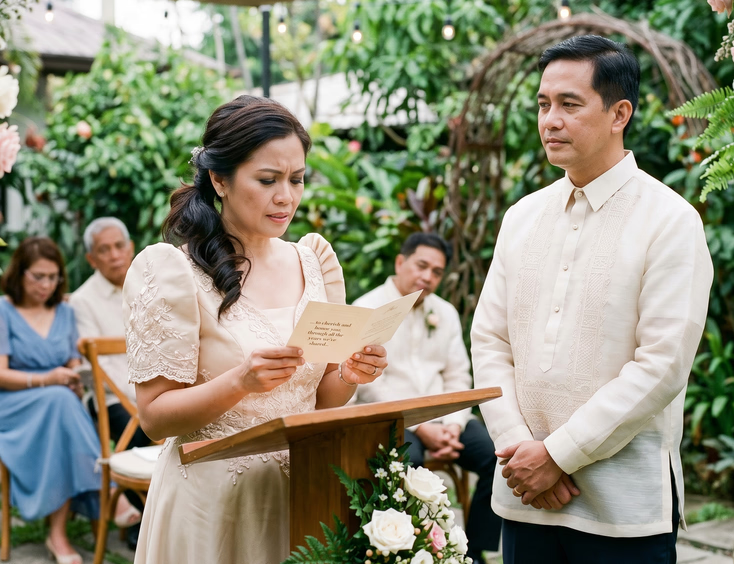
Common Mistakes Filipino Couples Make
A few patterns show up regularly in vow drafts that do not land.
Quoting Bible verses or famous quotes without adding personal content around them. The verses become a substitute for actual reflection. Use scripture as anchor, not as filler. The Catholic vow renewal ceremony script for Filipino couples covers how scripture works in the ceremony itself, separate from the personal vows.
Listing generic qualities. "You are kind, loving, patient, and faithful." Every couple at every renewal could read the same line. The vows do not capture this specific marriage.
Apologizing for the past. Vows are not the place to relitigate fights or apologize for old wounds. Save apologies for private conversations.
Talking past the partner to the audience. Some vows accidentally become speeches to the guests rather than messages to the spouse. Watch for moments where the writer slips into third person or starts explaining the marriage to outsiders. Pull those moments back to direct address.
Trying to be poetic. Plain language beats flowery language at a vow renewal. The audience is not there for literary performance. They are there to witness two people speak honestly to each other.
Writing too long. Strong vows usually run two to four minutes spoken aloud. Past five minutes, the audience drifts and the partner feels the weight of waiting. Cut anything that does not earn its place.
Writing Vows in Tagalog or Bilingual
Some Filipino couples write vows in Tagalog, in English, or in a mix. The choice depends on what feels natural for the couple and the family.
Tagalog vows carry emotional weight that English sometimes flattens, especially for couples whose deepest conversations happen in Tagalog. The sample Tagalog vow renewal vows for Filipino husbands and wives provides examples and structure.
Bilingual vows let couples shift between languages depending on what each part needs to convey. The acknowledgment section might happen in Tagalog because the years being acknowledged were lived in Tagalog. The renewed promise might happen in English if that is how the couple talks about the future.
For couples whose extended family includes non-Tagalog speakers, the practical choice often pulls toward English or bilingual. Couples whose family all speaks Tagalog naturally write in Tagalog.
Writing Vows After Surviving Hardship
Couples who went through specific hardships, like illness, the loss of a child, financial collapse, infidelity, or extended separation, often want the vows to acknowledge what they survived without making the ceremony a public processing of the wound.
The balance is real. The vows should reflect the truth of the marriage, but they should not turn the renewal into a confession or a trauma narrative for the guests.
The approach that works: name the season briefly, then move to what the partner did during it. The focus stays on the partner's actions, not on the wound itself.
"During the year your father was sick, you became someone I did not know I had married. You went to the hospital every day after work for nine months. You held it together for your mother. I watched you carry something I did not know you could carry."
The vow names a hard season without dragging the guests into the specifics of the grief. The hardship becomes the backdrop for showing the partner's character.
The vow renewal vows for couples who survived hardship together covers this in more depth for couples whose marriages were shaped by specific difficulties.
Adding Humor Without Undermining the Vows
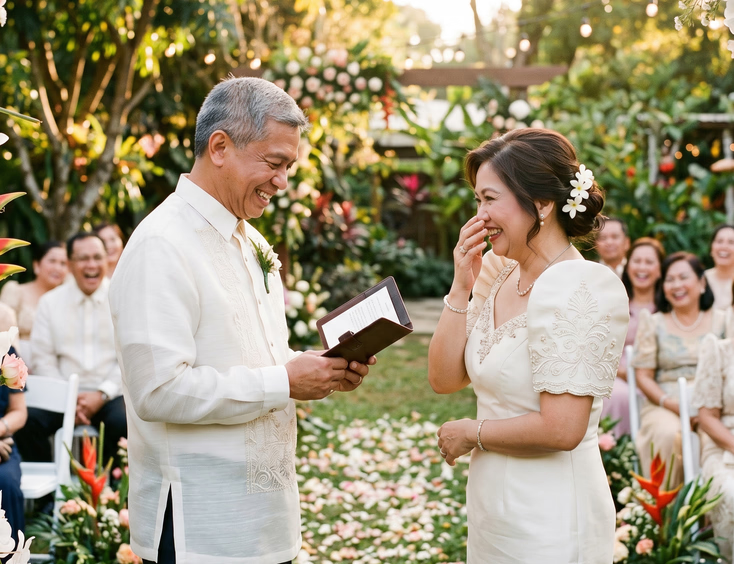
Filipino couples often want to weave humor into their vows. Done well, humor lands because it captures a specific truth about the marriage that only the couple knows. Done poorly, humor undermines the emotional weight of the moment.
The test: would the joke still work if the couple's eight-year-old grandchild repeated it back? If yes, the joke probably works. If the humor depends on adult innuendo, inside references guests will not catch, or making fun of the spouse in a way that lands as critical, cut it.
The strongest humorous moments come from specific habits or quirks that the couple shares. A wife noting that her husband still hides bibingka from her in the back of the fridge. A husband acknowledging that his wife has been right about every major decision and he has spent twenty years pretending otherwise.
For couples leaning into a lighter tone, the funny and lighthearted vow renewal vows for Pinoy couples covers more on how to keep humor working alongside the emotional weight.
Coordinating Vows Between Spouses
Some couples write their vows separately and surprise each other on the ceremony day. Others coordinate ahead of time to avoid mismatched lengths or tones.
The argument for separate writing: the vows feel authentic and unscripted. Neither partner knows what the other will say, which adds emotion to the moment.
The argument for coordinating: mismatched vows can feel jarring. A husband reads a three-minute vow that captures the years specifically. The wife reads a sixty-second vow that lists generic qualities. The mismatch makes both partners uncomfortable.
The middle ground that works: agree on the length and the general structure ahead of time, but keep the actual content secret. Both partners write vows of three minutes following the acknowledgment-recognition-promise structure, but neither shares the draft until the ceremony.
Practicing Without Memorizing
Memorizing vows usually backfires. Under emotional pressure, memorized lines disappear. Reading from a printed card or a small leather folder works better.
The practice goal is not memorization. The practice goal is familiarity. The writer should know the vows well enough to look up from the page during the most emotional lines, then look back down to find the next line without losing their place.
Print the vows in large, easy-to-read font. Use a small notebook or folder rather than loose paper that might shake in nervous hands.
Practice reading aloud at least three times before the ceremony. Read in front of a mirror or a trusted friend. The first read-through reveals which lines feel awkward when spoken. The second and third polish the delivery.
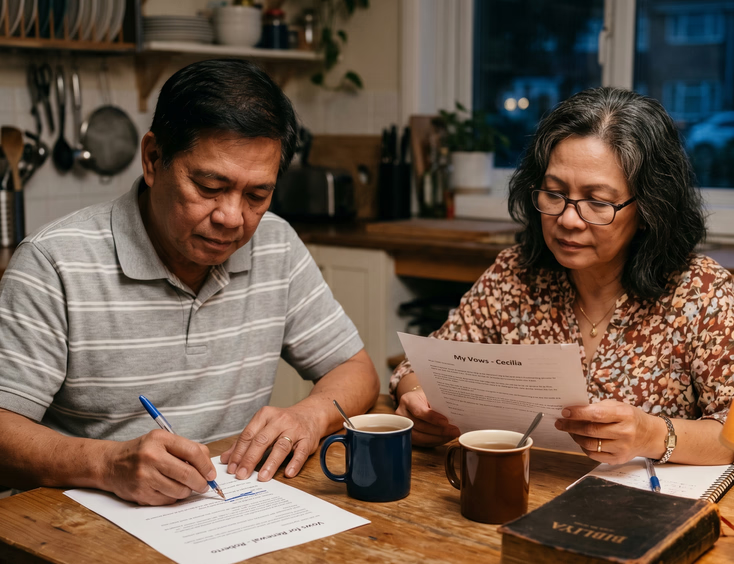
What to Avoid Reading at the Vow Exchange
Some content belongs in a private conversation rather than in the vows. Decide ahead of time what stays out.
Specific apologies for past hurts. The audience cannot follow the context, and the partner may not want the moment named publicly.
Critiques disguised as humor. Jokes about the spouse's flaws often land as quiet shots rather than warmth.
Long lists of children, grandchildren, and family members. These belong in the toasts and speeches at the reception, not in the vows between spouses.
Promises the speaker is not sure they can keep. Vows lose weight when both partners know the promise is performative.
References that exclude the family witnessing the ceremony. Inside jokes that need a paragraph of context defeat the purpose of speaking the vows aloud.
Final Polish Before the Ceremony
A week before the renewal, read the vows aloud one last time. Watch for:
Sentences that feel cluttered. Cut the extra words.
Sections that sound like they came from a generic template. Replace with something specific.
Lines that the writer cannot say without crying so hard the words become unintelligible. Either prepare to push through emotion or rewrite the line in plainer language.
References that have stopped meaning anything because they have been edited too many times. Remove or replace.
The wedding vow renewal order of ceremony shows where the vow exchange fits in the broader program, which helps the writer understand the moment they are preparing for.
The Vows Are a Gift to the Family
The vows are spoken to the spouse, but the entire family witnesses them. Children, grandchildren, parents, and siblings hear what one partner sees in the other. They learn something about the marriage they could not have learned from outside.
This is part of what makes a vow renewal different from a private conversation. The witnessing matters. Strong vows give the family a glimpse of the marriage from inside it, which most family members never get to see directly.
Write the vows for your spouse first. Trust that the family will receive what they need from listening in.
Years of marriage produce material no template can capture. The strongest renewal vows pull from that specific material and present it back. Sit down. Make the list. Write three drafts. Cut everything that does not earn its place. Then stand up and read it to the person who lived all of it with you.
Still Searching for a Right Match?
Find Your Perfect Wedding Supplier Today!
Discover trusted wedding suppliers across the Philippines in our complete directory. Compare services and connect with the ones that fit your dream celebration.
Browse Wedding SuppliersFeatured Blog Posts

Filipino Wedding Entourage - Roles, Order of March, and Modern Etiquette
6 mins readCivil Weddings in the Philippines - Requirements, Costs, and Step-by-Step Process
9 mins readCivil Wedding Requirements in the Philippines - Complete Checklist
6 mins readCost of Wedding in the Philippines - 5 Essential Things You Need to Know
7 mins readPrincipal Sponsors (Ninong/Ninang) - How Many, How to Ask, What They Really Do
4 mins readVeil, Cord, Candle & Coins - Roles, Options, and When They Happen
4 mins readEntourage for a Traditional Pinoy Wedding - Complete Roles and Guide
6 mins readComplete List of Civil Wedding Requirements in the Philippines
8 mins readHow to Choose Wedding Ninongs and Ninangs - Ask Yourself These 3 Important Questions
5 mins read