


Sample Tagalog Vow Renewal Vows for Filipino Husbands and Wives
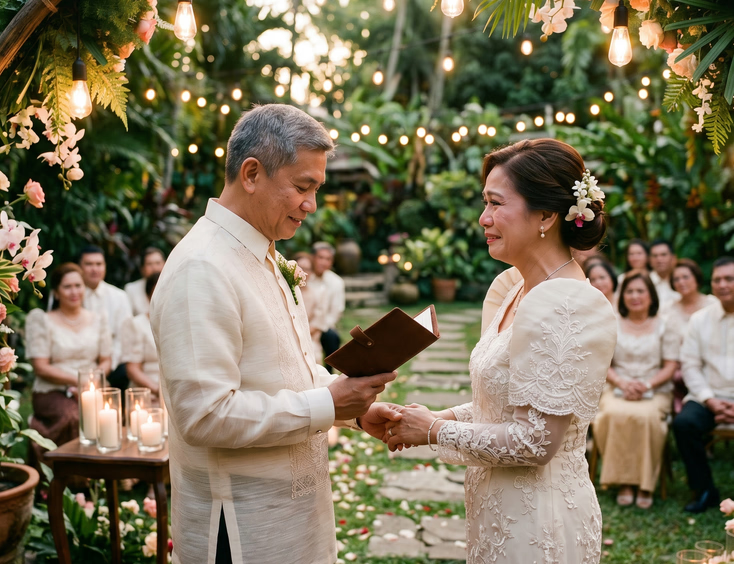
Tagalog carries weight English cannot match for many Filipino couples. You argued in it and made up in it. You whispered in it over children who had finally fallen asleep. Renew your vows in Tagalog and you ground the ceremony in the language your marriage was lived in.
Most couples draft in English first, since that is how the templates come, then notice partway through that the words feel borrowed. Switch to Tagalog and you hear your own marriage in the lines again.
A vow renewal in the Philippines turns on the vows more than any other part of the day. The samples below cover husbands and wives across anniversary milestones, religious and secular settings, and tones from formal to everyday, with notes on shaping each one to your own years.
Why Tagalog Vows Land Differently
Tagalog shapes feeling in a different way from English. Speakers carry affection through small particles, repeated words, and rhythms that flatten in literal translation.
"Mahal kita" holds weight "I love you" cannot match, because couples say it so rarely. Hold a phrase in reserve for years and it strikes hard the moment you finally speak it aloud.
The same holds for vows. You draw on phrases you have spoken sparingly across the marriage, so they register as significant rather than routine.
The choice usually comes down to three approaches, and reading them side by side helps you commit before you draft:
| Approach | Best for | What it gives you | Watch for |
|---|---|---|---|
| Full Tagalog | Couples who live the marriage in Tagalog | The deepest emotional weight and intimacy | Guests who speak little Tagalog may lose the meaning |
| Full English | Couples more fluent or at ease in English | Clear understanding for a mixed crowd | Lines that feel borrowed or distant |
| Bilingual | Mixed families and several home languages | A way to honor both sides of the room | Rough switch points that break the flow |
Before you settle on one, the guide to writing vow renewal vows that capture years of marriage covers the language choice in more depth.
Sample Tagalog Vows for Husbands
Each sample below runs two to four minutes aloud. Swap the years, names, and references for your own.
Sample 1: Conversational Tone for a Tenth Anniversary
"Mahal, sampung taon na pala. Hindi ko alam paano nakapasok ang panahon ng ganoong kabilis.
Noong kinasal tayo, akala ko alam ko na kung anong klaseng asawa ang magiging ako. Hindi pala. Tinuruan mo ako kung paano. Tinuruan mo akong magsabi ng sorry kahit mahirap. Tinuruan mo akong tumigil at makinig kahit gusto kong magtanggol ng sarili ko. Tinuruan mo akong magmahal nang hindi nagbibilang.
Maraming gabi noong unang taon natin na hindi kita maintindihan. Iniisip ko kung paano ka naging ganito, kung bakit umiiyak ka sa mga bagay na walang kuwenta sa akin. Ngayon, alam ko na. Hindi mo ako kinailangan na maintindihan ka noong umpisa. Kailangan mo lang ako na manatili. At nanatili ako, dahil sa iyo, dahil tinuruan mo ako.
Sa susunod na sampung taon, hindi ko maipangako na magiging perpekto ako. Mas magaling lang ang ipinangangako ko. Mas magaling sa pakikinig. Mas magaling sa pagmamahal. Mas magaling sa pagtanggap na hindi tama lahat ng iniisip ko. Pinipili kita ulit, ngayon, sa harap ng pamilya natin. Mahal kita, at salamat sa sampung taon."
Sample 2: Formal Tone for a Silver Anniversary
"Beloved, dalawampu't limang taon na tayong magkasama. Sa harap ng Diyos, sa harap ng mga anak natin, sa harap ng mga taong nagmamahal sa atin, gusto kong ipahayag ulit kung anong nasa puso ko para sa iyo.
Sa loob ng dalawampu't limang taon, nakita kita sa pinakamagandang sandali at sa pinakamabigat. Nakita kita habang ipinapanganak mo ang mga anak natin. Nakita kita habang inaalagaan mo ang nanay mo bago siya pumanaw. Nakita kita habang lumalaban sa sakit noong taong iyon na akala ko mawawala ka na. Sa lahat ng pinakamabigat na sandali, hindi ka umalis. Tinuruan mo akong magmahal sa paraan na hindi ko maituturo sa sarili ko.
Ang ipinangako ko sa iyo dalawampu't limang taon na ang nakakaraan ay totoo pa rin. Pinipili kita. Mahal kita. Mananatili ako. Hindi nagbabago ang pangako, ngunit ngayon, alam ko na kung anong ibig sabihin ng pangako. Hindi na ito teorya. Buhay na ito.
Sa Diyos na nagbigay sa iyo sa akin, nagpapasalamat ako. Sa iyo, mahal, pinipili kita ulit, ngayon at sa lahat ng natitirang araw natin."
Sample 3: Emotional Tone After Surviving Hardship
"Mahal ko, marami tayong pinagdaanan na hindi ko inaasahan. Hindi natin alam noong kinasal tayo na ganito kabigat ang ilang taon. Pero narito tayo, magkahawak pa rin ng kamay, pagkatapos ng lahat.
Noong nawala natin ang anak natin, akala ko hindi tayo babangon. Iniisip ko na masisira tayo ng pagdadalamhati. Pero hindi mo ako pinabayaan. Umiyak ka kasama ko, hindi ka umalis kahit nawala ako sa sarili ko. Hindi ko alam paano mo nagawa, pero ginawa mo.
Hindi ko mabibigyan ng salita ang kabuuan ng pagkakautang ko sa iyo. Hindi sapat ang salamat. Hindi sapat ang pagpapahalaga. Ang ipinangangako ko ay ang sarili ko, kung anong meron ako, para sa iyo, sa lahat ng natitirang panahon natin. Pinipili kita. Pinili ka sa unang araw, pinili kita sa pinakamadilim na araw, at pinipili kita ngayon. Mananatili ako."
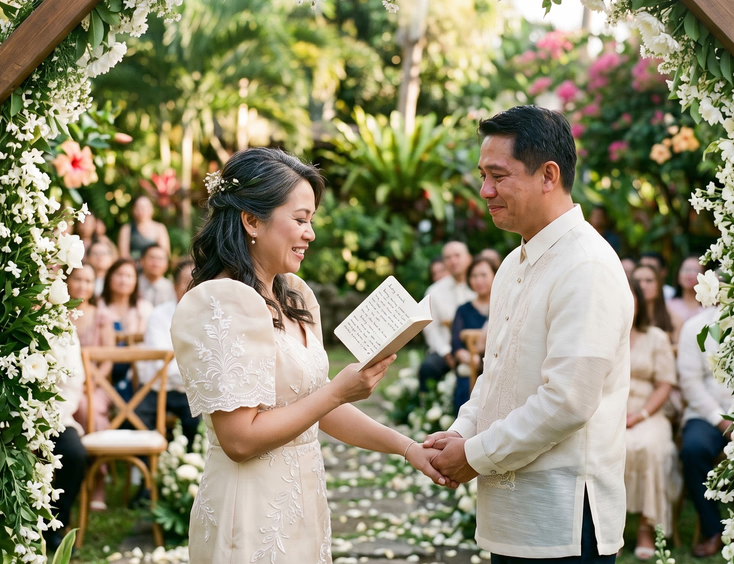
Sample Tagalog Vows for Wives
Sample 1: Warm and Personal Tone for a Tenth Anniversary
"Mahal, sampung taon. Hindi ko maintindihan paano nakaraos ang panahon, pero narito tayo.
Maraming bagay sa iyo ang natutunan kong mahalin sa loob ng sampung taon na hindi ko alam ipaglalaban sa unang araw natin. Ang tahimik mong tatag tuwing nahihirapan ang pamilya natin. Ang paraan mo ng paghawak sa mga anak natin tuwing tinatakot sila ng mundo. Ang paggising mo nang maaga para ihanda ang almusal ko kahit walang nagsasabi sa iyo.
Hindi ako perpektong asawa. Alam mo iyon mas mabuti kaysa kahit sino. Pero pinipili mo ako araw-araw, kahit galit ako, kahit pagod ako, kahit hindi ko alam kung anong gusto ko. Ang pagpiling iyon ang naging pundasyon ng buhay natin.
Ipinapangako ko ulit sa iyo, sa harap ng pamilya natin, ang sarili ko. Magmamahal ako. Mananatili ako. Susubukan kong maging mas mabuting asawa sa susunod na sampung taon kaysa sa nakaraan. Mahal kita, mahal kita, mahal kita."
Sample 2: Reflective Tone for a Pearl Anniversary
"Mahal, tatlumpung taon na pala. Sa harap ng pamilya natin, sa harap ng mga anak at apo natin, gusto kong sabihin ulit kung anong matagal nang nakatago sa puso ko para sa iyo.
Hindi ka pa rin ang lalaking pinakasalan ko tatlumpung taon na ang nakakaraan. Iba ka na. Mas matatag. Mas maingat. Mas mahabagin. Ang lalaking ngayon ay hindi nakikilala ng dalaga noong unang nakita ka. Pero hindi ko mapipigilan kung paano kita namahal sa pareho.
Naranasan natin ang lahat. Ang kasal ng mga anak natin. Ang pagsilang ng mga apo. Ang pagpanaw ng mga magulang natin. Ang mga sakit na akala natin hindi natin malalampasan. Sa lahat ng ito, kasama ka. Lagi kang kasama.
Ang sinasabi ko ngayon ay ang totoo lang. Pinili kita noong dalaga ako. Pinipili kita ngayon na lola na ako. Mananatili ako sa lahat ng natitirang taon. Mahal kita, at hindi mawawala ang pagmamahal kong iyan habambuhay."
Sample 3: Lighthearted Tone for a Couple with Adult Children
"Mahal, narito tayo. Pagkatapos ng lahat. Buhay pa rin. Magkasama pa rin. Naiinis pa rin minsan, pero magkasama pa rin.
Hindi ko alam noong dalawampung taong gulang ako kung anong sinasabi ko nang ipinangako ko sa iyo ang lahat. Akala ko alam ko. Hindi pala. Tinuruan mo ako kung paano mahalin nang may pasensya. Tinuruan mo akong matuto, lalo na kapag mali ako, na minsan, kahit hindi ko inaamin. Tinuruan mo ang mga anak natin kung paano maging mabubuting tao.
Mahal, hindi kita ipinapalit kahit sa kahit ano. Sa lahat ng pagod, sa lahat ng kalokohan, sa lahat ng beses na hindi mo hinahanap ang susi ng kotse na nasa bulsa mo na, pinipili kita. Pinili kita noong bata pa tayo, pinipili kita ngayon na mas matanda na tayo, at pipiliin kita hanggang sa huli. Mahal kita, mahal."
If this register fits you, the collection of funny and lighthearted vow renewal vows for Pinoy couples offers more in the same spirit.
Adapting the Samples to Your Marriage
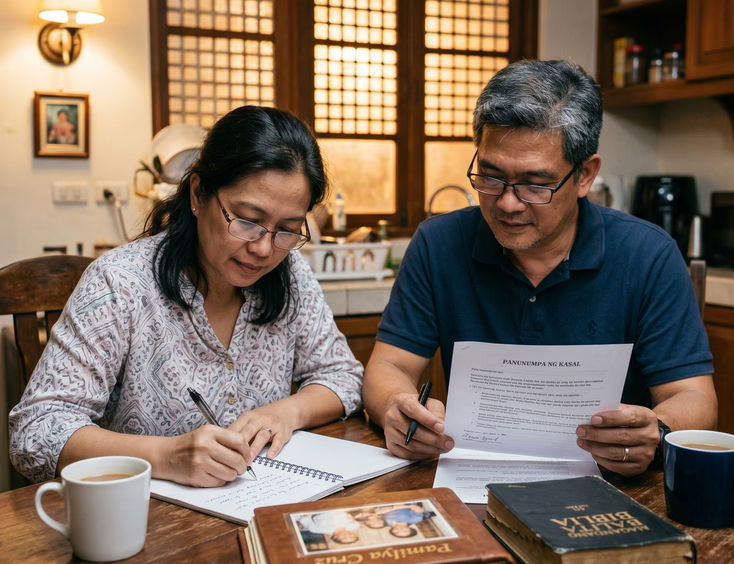
The samples give you structure and language. They cannot give you the content of your own marriage, so you build that part in. Work through it in order:
- Read one sample that matches your tone and milestone from start to finish.
- List the events only your marriage holds: the year you almost lost the house, the name of the baby who came late, the place you met.
- Cross out every generic line in the sample and write your own version beside it.
- Read the draft aloud and cut any line you rush past because you cannot sit in it.
The samples name unborn children, lost parents, illness, grandchildren. Yours holds a different set of events. Speak the ones that belong to you and the vows reach the listener in a way no template can. The guide to vow renewal vows for couples who survived hardship together shows how to bring a hard season into the vows without turning the whole ceremony into the wound.
Reading Tagalog Vows Aloud
Tagalog reads slower than English, with a more deliberate rhythm. Read your vows aloud at least three times before the ceremony, and watch for three things:
- Words that look formal on paper but turn stiff in your mouth. Swap them for how you would say it across the dinner table.
- Sentences too long for one breath. Cut them into shorter ones.
- Lines you cannot speak without your voice breaking. Practice through the feeling, or rewrite them in plainer words.
Read in front of a mirror first, then in front of one family member you trust. They can tell you which lines reach them and which feel forced.
Record yourself reading the full vows once on your phone. Play it back and you catch the stiff lines faster than the page ever shows them.
Bilingual Vows
Some couples mix the two, choosing the language each part of the vow needs. A common pattern: open in Tagalog with the years behind you, move to English for any descriptive or logistical lines, then close in Tagalog with the renewed promise.
Keep the switch points smooth. Switch without a clear bridge and your guests fall out of the moment, so read the vows aloud and listen for the seams. If your extended family includes non-Tagalog speakers, a bilingual vow lets you honor both sides of the room at once.

What to Avoid in Tagalog Vows
A few patterns weaken a Tagalog vow draft:
- Direct translations from English templates. The grammar rarely maps cleanly, and the result reads like software output.
- Deep, formal Tagalog you would never use at home. It sounds stiff. Use the Tagalog you speak inside the marriage.
- Too many English loanwords. Taglish flows in conversation, but vows read cleaner with fewer borrowed words, except where no Tagalog equivalent exists.
- Borrowed lines from OPM ballads. They land as cliché rather than as yours. Trust your own words.
Vows in Other Filipino Languages
Many couples speak Cebuano, Ilocano, Hiligaynon, Bikolano, or another Philippine language at home. The same approach holds. Write in the language you live the marriage in, and draw on the years only the two of you share.
If your extended family spreads across several Philippine languages, print a translation in the program so your guests can follow along.
Coordinating with the Ceremony Officiant
If you renew inside a Catholic Mass or blessing service, talk to the priest about the language of your personal vows first. Most welcome any language, as long as you speak it so the room can follow. The Catholic vow renewal ceremony script for Filipino couples shows where the personal vow exchange sits inside the larger ceremony.
For a non-religious ceremony, your officiant has full freedom on language. The guide to non religious vow renewal ceremony ideas in the Philippines lays out ceremony structures that take Tagalog or bilingual vows without strain.
The Vow Speaks for the Marriage
Tagalog vows work because they carry the language your marriage was lived in. The exact words matter less than whether they honor the texture of your years together.
Write in Tagalog if Tagalog is where the marriage lives. Use the samples for shape, then fill them with your own years and your own names. Let the language hold what English would leave unsaid.
The family in the seats hears something English could not give them. And the person standing across from you hears what they have heard for years, said aloud at last.
Still Searching for a Right Match?
Find Your Perfect Wedding Supplier Today!
Discover trusted wedding suppliers across the Philippines in our complete directory. Compare services and connect with the ones that fit your dream celebration.
Browse Wedding SuppliersFeatured Blog Posts

Filipino Wedding Entourage - Roles, Order of March, and Modern Etiquette
6 mins readCivil Weddings in the Philippines - Requirements, Costs, and Step-by-Step Process
9 mins readCivil Wedding Requirements in the Philippines - Complete Checklist
6 mins readCost of Wedding in the Philippines - 5 Essential Things You Need to Know
7 mins readPrincipal Sponsors (Ninong/Ninang) - How Many, How to Ask, What They Really Do
4 mins readVeil, Cord, Candle & Coins - Roles, Options, and When They Happen
4 mins readEntourage for a Traditional Pinoy Wedding - Complete Roles and Guide
6 mins readComplete List of Civil Wedding Requirements in the Philippines
8 mins readHow to Choose Wedding Ninongs and Ninangs - Ask Yourself These 3 Important Questions
5 mins read