


Vow Renewal Vows for Couples Who Survived Hardship Together
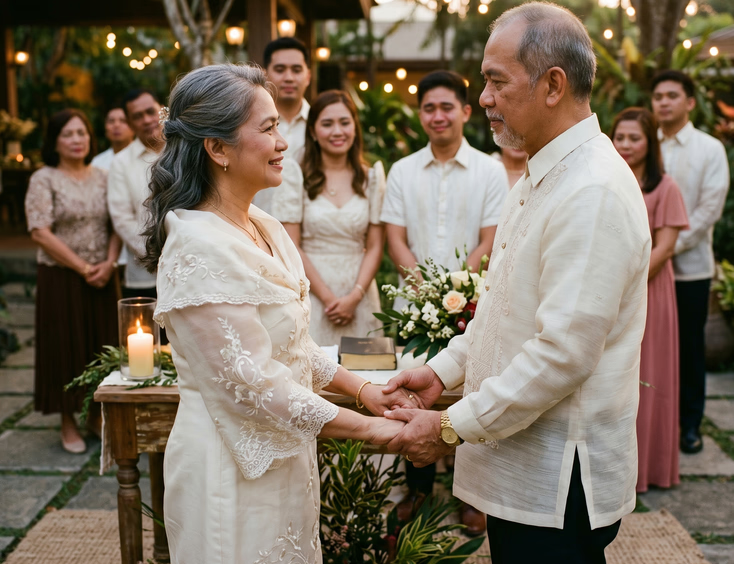
Some marriages get tested in ways the wedding day never saw coming. A child got sick and stayed sick. A business failed and took the house with it. A betrayal nearly ended things. An OFW assignment stretched the two of you across oceans for years. An illness put one of you in a hospital bed while the other kept the family running.
You walked through a season like that and you stayed, so you want your vow renewal to say so. You want the day to mean more than the anniversary count: that the marriage almost did not make it, and that you both kept choosing each other anyway.
Across every kind of vow renewal in the Philippines, the vows carry the most weight, and hardship vows carry the most of all. You can honor what you survived without turning the ceremony into a public airing of the wound. The vows hold the truth of what happened and keep the focus on the marriage that came out the other side.
The Tension Hardship Vows Carry
Vows after hardship sit in a tight spot. Leave the hardship out and the words ring hollow to everyone who knows the marriage. Let the hardship take over and the ceremony turns into a memorial to the wound instead of a celebration of the two of you.
The balance holds when you name the season in a sentence or two, then turn to what your partner did inside it. You keep the focus on their actions and their character. The hardship sits in the background and shows the room who your partner was when it counted most. You hand guests a portrait of your partner that only the hard years could reveal, instead of dragging them back through the pain.
The four hardship types this guide covers ask for slightly different handling:
| Hardship | Where the wound came from | What the vows emphasize |
|---|---|---|
| Serious illness | Outside the marriage | The fight one faced and the care the other gave |
| Financial collapse | Outside, for the most part | The partner who stayed and carried the weight |
| Loss of a child | Outside, a shared grief | The marriage that held while both wanted to come apart |
| Infidelity | Inside the marriage | The rebuilding and the choice to stay, not the breaking |
For the frame these hardship vows build on, the guide to writing wedding vow renewal vows that capture years of marriage lays out the standard structure.
What Hardship Vows Should Avoid
A few things stay out of hardship vows, even when the hardship sits at the center of the marriage:
- A detailed account of the wound. Your guests do not need a reconstruction of the affair, the months of treatment, or the bankruptcy filing. A brief reference carries it.
- Blame aimed at your partner. Even when one of you caused the hurt, the vows speak from the far side of it, not from inside the fight.
- Emotional purging from the speaker. Tears belong here. Sobs that stop you from finishing the vows tend to mean you are working through something in public that still needs private work.
- Promises shaped like guarantees. "You will never feel the way you felt that year" sets a bar neither of you controls. Promise your own commitment instead.
- Vague summaries that flatten the story. "We went through some hard times" loses the weight. A specific reference, kept short, holds what loose language drops.
A Working Structure for Hardship Vows
Strong vows after hardship move through four parts that adapt the standard renewal frame:
- Name the season. A few sentences locate the marriage in the specific year, without the full retelling.
- Recognize your partner. Testify to who they were when the marriage almost did not make it. This part carries the most weight.
- Say the gratitude. Acknowledge what they paid. The marriage asked something of them they did not owe you.
- Renew the promise. Close with your commitment, shaped by everything that came before it.
Picture a husband writing for his wife some years after they survived their daughter's illness.
The naming: "Six years ago, our daughter got sick. I do not need to tell anyone here what those eighteen months looked like. Most of you walked through it with us in some way."
The recognition: "What I want to say is what I saw in you. I saw you sleep in a hospital chair for weeks at a time. I saw you smile at our daughter when you wanted to scream at God. I saw you handle the school, the bills, and the other kids while you were dying inside. I did not know you could carry what you carried. I do not know if you knew either."
The gratitude: "I owe you something I cannot calculate. You held our family together when I could barely hold myself together. You did not let me fall apart, even when I wanted to. I do not know who I would be without those eighteen months and without you in them."
The renewed promise: "I am promising you the rest of what I have. Not perfection. The same kind of presence you gave me. Whatever years come next, I am here. I am choosing you again, the way you chose me when I could not choose myself."
The vow runs about two minutes aloud. It points at the hardship without dragging the room through it, holds the focus on his wife's character, and lets the renewed promise carry the weight of a man who has already seen what the promise costs.
Vows for Couples Who Survived Infidelity
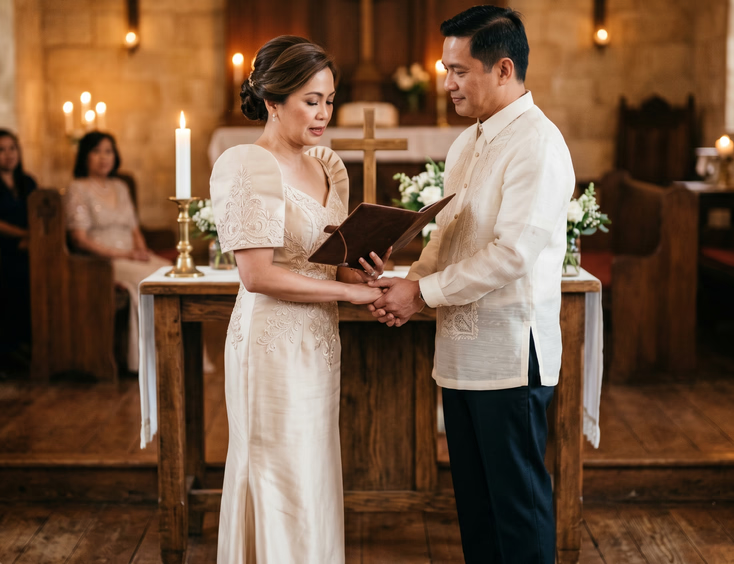
Infidelity makes the hardest terrain for a renewal. One of you hurt the other. The renewal says the marriage is being chosen again after a specific wound, and the public ceremony stays away from the details.
Couples who reach a renewal after infidelity got there through years of private work: counseling, prayer, and hard conversation. The day marks that work without exposing the wound to guests who may not know the full story. What works:
- Name a season that almost ended the marriage, without naming the specific hardship.
- Focus on what each of you chose during the rebuilding, not on what happened during the breaking.
- Speak from the far side of it, not from inside the wound.
Sample language for the partner who was hurt: "There was a season when staying was a choice I made every morning when I woke up. I chose. And then I chose again. I am still choosing. The choice carries the weight of what it cost to make. I am here because you have spent every year since then proving that the choice was worth making."
Sample language for the partner who caused the hurt: "I have lived inside the gift of being chosen again. I do not take it lightly. Every day since then has been an attempt to be worthy of what you gave me when you could have left. I am committing the rest of my life to that work, because you deserve it, and because the marriage we built afterward is worth more than I knew before."
Coordinate the two sets of vows before the ceremony so neither of you hears something new at the altar.
Vows for Couples Who Survived Serious Illness
Illness vows carry the cleanest structure for many couples, because the wound came from outside the marriage rather than from one of you. You faced it together, even when only one of you was sick. The vows tend to work best when the partner who was sick honors the caregiver, and the caregiver honors the strength of the one who fought.
From the partner who was sick: "When the diagnosis came, I did not know if I would still be here for a renewal. I am here because the doctors did their work, but I am also here because you did yours. You sat with me through every treatment. You did not leave the hospital when the doctors gave us bad news. You held my hand through the worst nights, and you made me believe I could keep going when I had stopped believing it myself."
From the caregiver: "Watching you fight changed me. I did not know what you were made of until I saw you refuse to give up when giving up would have been easier. You taught me what strength looks like. Every day since then has been a gift, and I have tried not to forget that. I am promising you everything I have, because you fought hard enough to still be here to receive it."
For a marriage shaped by an OFW spouse's long absence, the renewal of vows for OFW couples maps the contours of love tested by distance.
Vows for Couples Who Survived Financial Hardship
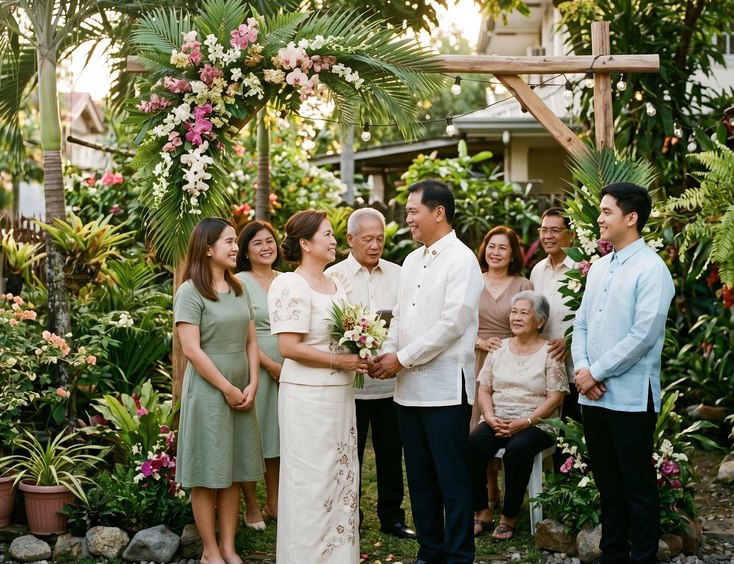
Financial collapse, a failed business, or long unemployment tests a marriage in ways hidden from most outsiders. The hardship plays out in private decisions: which bill to pay, which relative to ask, which dream to shelve. Vows after money trouble work when they name what your partner carried without turning the day into a ledger.
Sample language: "There were three years when we were not sure if we would keep the house. You did not blame me for the business failing. You did not leave when leaving would have made sense to most people. You took an extra job. You wore the same clothes for years so the kids could have what they needed. You let me come home angry and tired without making me feel like a failure.
What I am telling everyone here today is that you carried me through years I would not have survived alone. I am promising you everything I rebuild from here. The work, the home, the years we have left. All of it is for you, because you stayed when you did not have to."
Vows for Couples Who Survived the Loss of a Child
The hardest hardship vows carry the death of a child. The wound cannot be undone. The vows name the loss without reopening it in front of everyone. The principle that holds: speak from inside a marriage that kept living through the grief. Name the child, often by name, and keep the focus on the marriage that stayed whole when both of you wanted to come apart.
Sample language: "After we lost [name], I did not know if we would still be us at the end of it. I watched other couples lose children and not survive the loss together. We did. I am still not entirely sure how. What I know is that you did not let go of me when I could not hold on. You kept making coffee in the morning. You kept asking me how I was when you did not have the strength to ask. You stayed.
I am promising you the rest of my life because you gave me the rest of yours when you did not have to. I will carry [name] with us. I will carry you with me. I am choosing you again, the way you chose me in the worst year either of us will ever see."
Working the Vows Around Family Who Lived Through the Hardship
Some of the people in the seats lived the hardship with you. Children who watched a parent get sick. A sibling who took on family bills during a lean year. A parent who carried part of the caregiving. A short line in the vows lets them know you saw what they carried.
Sample addition: "I also want to say to our kids, who watched all of this happen, that you were the reason both of us kept going. You were children at the time. You should not have had to carry what you carried. We see what you did. We are still here partly because of you."
For the bigger picture of bringing relatives into the day, the involving your children and family in your vow renewal ceremony goes deeper, and for the family members who want to speak, the vow renewal toasts and speeches guide on what to say as a child, sibling, or best friend covers how to find the words.
Practicing Hardship Vows Aloud
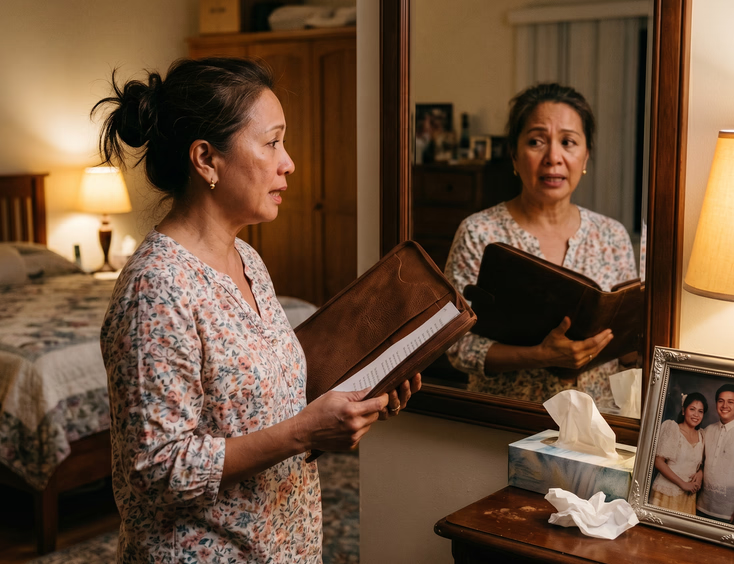
Hardship vows hit the writer harder out loud than on the screen. Saying the words triggers the feeling you kept in check while typing. Read your vows aloud at least five times before the ceremony, more than you would for lighter vows. The repetition builds a tolerance that lets you deliver the lines with feeling instead of drowning in it.
One or two lines will bring tears every time you read them. Those lines often hold the most weight. Practice through the feeling, or rewrite them in plainer words that land without breaking you.
Decide ahead of time what happens if you cannot go on. Agree that your partner will take your hand and say "take your time," or plan a short pause to breathe. A plan in place keeps panic out of the moment.
Record the full vows on your phone a week out and play them back on a walk. Hearing your own voice in the lines wears down the rawest spots, so the ceremony is not the first time the words land in your throat.
What the Listening Spouse Should Know
The partner listening knows what is coming in most cases, since couples coordinate these vows. Even with that warning, hearing them in front of family lands harder than the writer expects.
You do not have to respond in the moment. Tears, silence, or a quiet squeeze of the hand. Any of those is enough. The vows are a gift, and the gift asks nothing back.
When you read your own vows after, resist the pull to answer your partner's directly. Each set stands on its own. Neither needs to reference the other for the ceremony to land.
The Vows as Marker, Not Conclusion
Many renewals after hardship arrive years after the hardship itself. The marriage has steadied. The wound has scarred over. The day marks the path you walked rather than a claim that the hard part is fully behind you.
The framing matters. The vows do not have to say everything healed, the loss resolved, the wound gone. Vows that claim full resolution ring hollow to anyone who has lived inside a long marriage. The strongest hardship vows hold both truths at once: the marriage still carries what it survived, and you keep walking forward anyway. The renewal is one more step in a long walk, not the end of the road.
For why couples reach for a renewal after a hard season in particular, the signs it is time to renew your wedding vows covers the moments that send people back toward the altar.
Final Notes for Writers
Hardship vows ask you to put hard truth into spoken language. The work runs harder than standard vows, so give it more time. Three to four weeks of drafting and revision suits vows that cross this kind of terrain.
Read the drafts aloud to one person who knows the marriage. A close relative, a counselor, or a friend can tell you which lines reach them and which feel forced. Cut what does not earn its place. Keep what holds the truth of the marriage. Then stand up and speak the words to the person who lived all of it with you.
If Tagalog is the language your marriage was lived in, the sample Tagalog vow renewal vows for Filipino husbands and wives include a hardship sample you can adapt to your own years.
The people watching hear something they could not have heard another way. The marriage gets to say, in front of everyone who loves you both, that it survived because you both kept choosing it. The vows mark the choice. Then you keep going.
Still Searching for a Right Match?
Find Your Perfect Wedding Supplier Today!
Discover trusted wedding suppliers across the Philippines in our complete directory. Compare services and connect with the ones that fit your dream celebration.
Browse Wedding SuppliersFeatured Blog Posts

Filipino Wedding Entourage - Roles, Order of March, and Modern Etiquette
6 mins readCivil Weddings in the Philippines - Requirements, Costs, and Step-by-Step Process
9 mins readCivil Wedding Requirements in the Philippines - Complete Checklist
6 mins readCost of Wedding in the Philippines - 5 Essential Things You Need to Know
7 mins readPrincipal Sponsors (Ninong/Ninang) - How Many, How to Ask, What They Really Do
4 mins readVeil, Cord, Candle & Coins - Roles, Options, and When They Happen
4 mins readEntourage for a Traditional Pinoy Wedding - Complete Roles and Guide
6 mins readComplete List of Civil Wedding Requirements in the Philippines
8 mins readHow to Choose Wedding Ninongs and Ninangs - Ask Yourself These 3 Important Questions
5 mins read