


Vow Renewal Toasts and Speeches: What to Say as a Child, Sibling, or Best Friend
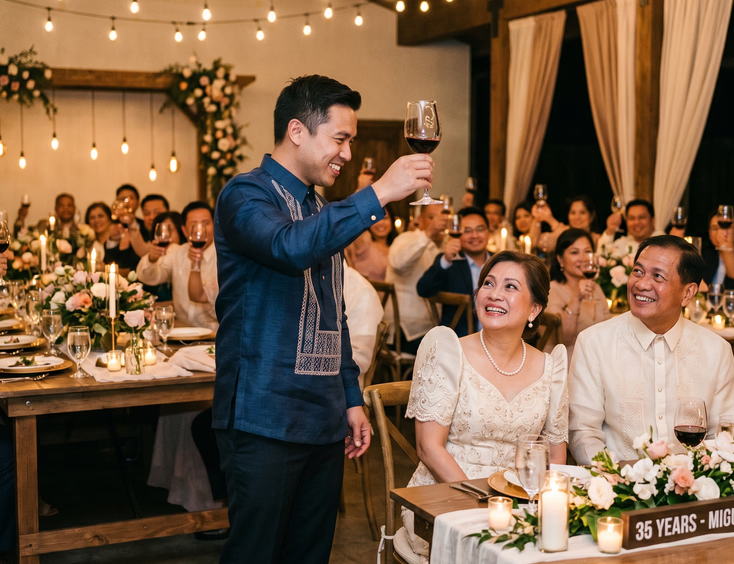
The ceremony ends, dinner begins, and someone slides the microphone toward you. You are the adult child, the sibling who stood up at the original wedding, or the friend who knew one of them before the two of them were ever a couple. The toast falls to you, and right before you stand, the same question lands on everyone who has stood there: what do you say?
A vow renewal toast asks for something a wedding toast does not. The marriage has a history now. The couple promises nothing new. You speak to what the marriage became rather than what it might be, and that one shift changes what works. The toasts close one of the most personal stretches of a vow renewal in the Philippines, and the words you pick carry more weight than they would at a first wedding, since everyone in the room watched the years go by.
What Makes a Vow Renewal Toast Different
A wedding toast leans on hope and an unknown future. At a renewal, the future has partly arrived. The marriage already produced its years, its children, its milestones, and the strongest toasts pull straight from that record. You draw on what you watched the couple do and what you learned from sitting close to the marriage.
A toast that would have worked at the original wedding falls flat at a renewal. Ground it in the years that came after, and it lands. For where the speeches sit in the reception flow, the wedding vow renewal order of ceremony maps the program around them.
How Long the Toast Should Run
Most vow renewal toasts run three to five minutes. Past five, the room drifts and the couple starts feeling the weight of the wait. Your role sets the length and the kind of material that fits, and reading the three side by side helps you find your lane before you draft:
| Role | Suggested length | What only you saw | Strongest material |
|---|---|---|---|
| Adult child | About 3 minutes | The marriage from inside the family | A specific childhood moment that shows who the parents were to each other |
| Sibling | About 2 minutes | One spouse before the marriage began | The contrast between who they were then and who they became |
| Best friend | About 2 minutes | The longest unbroken view of one spouse | The arc of the friendship running beside the arc of the marriage |
When several people speak at the same reception, each one aims at the shorter end. Keep the total speaking time across all toasts under twenty minutes, or the room loses the thread no matter how good each speech is.
Toasts from Adult Children
You watched the marriage from a seat no one else had. You saw the hard seasons and the days when choosing each other took effort. That inside view gives you your best material, so build the toast from moments only you could have witnessed:
- Open with one specific childhood memory, not a general one, that captures something true about your parents' marriage.
- Move to what that moment taught you about love and family.
- Name how their marriage shaped the adult you became.
- Close by speaking straight to them, most often in gratitude.
Picture an adult son toasting his parents at their thirtieth-anniversary renewal.
The opening memory: "When I was nine, my dad came home from a business trip and walked in the door with two grocery bags. My mom had been sick for a week. He had been traveling for ten days. The first thing he did when he walked in was put down his bags, walk to the bedroom where she was lying down, kiss her on the forehead, and ask what she needed. He did not unpack. He did not eat. He just sat next to her bed and asked her how she was."
The lesson: "I did not understand what I was watching then. I do now. I learned more about how to love someone from that single moment than from anything anyone ever taught me out loud. My dad taught me that love is the thing you do before you take care of yourself."
The acknowledgment: "Everything I know about being a husband I learned from watching the two of you. Every time I have wanted to give up on my own marriage and chose not to, you were the reason. The marriage you built has shaped four lives, mine and my siblings'."
The closing word: "Mom, Dad, thank you. I cannot pay back what you gave us. I can only pass it forward. To thirty more years, and to the family you built. Cheers."
The toast runs about three minutes. It carries weight because the moment came first and the lesson grew out of it. For the other roles an adult child can take in the ceremony itself, the involving your children and family in your vow renewal ceremony covers what to take on beyond the toast.
Toasts from Siblings
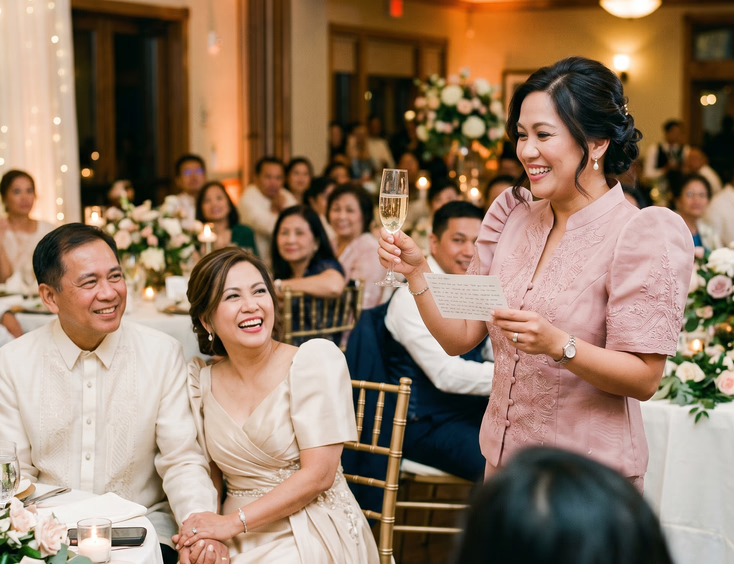
You bring what the children cannot: you knew one half of the couple before the marriage existed, and you watched your brother or sister turn into a different person across the years. Open with a memory of that sibling before the marriage, something specific and often funny. Bridge to who they are now and name the change. Hand the credit for that change to their spouse. Then close with a word straight to the couple.
Picture a younger sister toasting her older brother and sister-in-law at their twenty-fifth anniversary.
The opening memory: "I want to tell everyone here about who my brother was before he met Carol. He was twenty-three years old, he lived in a studio apartment with three friends, and he ate cereal out of a mixing bowl because he had run out of regular bowls and was too lazy to wash one. He could not boil water. He thought ironing was optional. The day he brought Carol home to meet the family, my mom pulled me aside and said, 'Lord help that woman.'"
The bridge: "Twenty-five years later, my brother is a different man. He cooks. He irons. He remembers birthdays. He knows the names of all his nieces and nephews, in birth order. He has opinions about thread count. The person standing here today is not the same person who used to eat cereal out of a mixing bowl."
The acknowledgment: "Carol, my family owes you something we cannot pay back. You turned a man who could not boil water into a husband, a father, and a grandfather. We watched you do it. We were patient with the process. So were you. Thank you."
The closing: "To Carol and my brother. Twenty-five years. May the next twenty-five be just as transformative, because we all know there is still room for improvement. Cheers."
The toast runs about two and a half minutes. The humor lands because it is specific, and the credit to the sister-in-law lands because the before-picture set it up.
Toasts from Best Friends
You hold the longest unbroken view of one half of the couple. You knew them in school, watched the relationship start, stood at the wedding, and kept showing up for the years since. Trace the friendship beside the marriage. You can speak with closeness without carrying the family weight a sibling or child carries.
Picture a best friend toasting his college roommate and the roommate's wife at their fifteenth anniversary.
The opening: "I met Mike when we were both freshmen at university. We were assigned to be roommates by random lottery. The first time I walked into our dorm room, he was lying on the bed listening to OPM ballads on repeat, eating chicharon out of a bag, and trying to convince himself that calculus was going to make sense by morning. I remember thinking, 'I am stuck with this guy for a year.' Twenty-five years later, here we are."
The bridge: "Two years after college, Mike called me. He had met a girl. He told me about her for an hour. I had never heard him talk about anyone the way he talked about Donna. I knew before they finished their first month of dating that he was going to marry her. He proposed within a year. He has not stopped talking about her since."
The arc: "I have been on the inside of this marriage for fifteen years. I have watched them build a life. I have watched them raise three kids. I have watched them survive a few seasons that would have broken people I admire less. The Mike I roomed with in college was a kid. The Mike I see now is a man, and Donna is the reason. He knows it. Anyone who has spent time with them knows it."
The closing: "Mike and Donna, you have given me a model for what marriage can be. I am better at my own marriage because of what I have watched in yours. To fifteen years. To many more. Cheers."
The toast runs about three minutes. The friendship arc holds it together because it belongs to your actual history with the couple, not to anyone else's.
Common Mistakes Across All Toasts
A few patterns weaken a toast no matter who holds the microphone:
- Roasting the couple. Light teasing works. A sustained roast does not, because the room came to honor the marriage, not to laugh at it. Save the heavy material for a lower-stakes night.
- Bringing up old wounds. Even as a joke, a reference to a past fight, separation, or hard season can curdle in a public setting. Nobody wants their worst year reduced to a punchline in front of family.
- Reading vows that belong to the couple. Some toasts drift into something that sounds like a vow to the couple. Stay on the side of acknowledgment, not commitment.
- Quoting famous people with nothing personal attached. "As Shakespeare said, love is..." reads as filler. The room came to hear what you know about this couple, not what a playwright thought about love in general.
- Making the toast about you. A long detour into your own marriage or career loses the people in front of you. Keep the couple at the center.
- Going long. Anything past five minutes loses the room. Time the toast in practice and cut whatever pushes you over.
For humor that suits a Filipino crowd, the funny and lighthearted vow renewal vows for Pinoy couples shows the kind of teasing that lands warm rather than sharp.
Writing the Toast
Most strong toasts take three passes. On the first, write without editing: dump the memories, the observations, and the feelings onto the page, and forget structure and length for now. On the second, revise by cutting. Strike anything generic, anything that does not point at a specific moment, anything you could have said about a different couple. On the third, polish by reading aloud. Find the natural pauses, mark them on the page, and cut the sentences that read fine but trip your tongue.
The same instinct that shapes a couple's own vows shapes a toast about them. The guide to writing wedding vow renewal vows that capture years of marriage covers how specificity beats sentiment, and the principle holds whether you stand at the altar or behind a dinner table.
Delivering the Toast
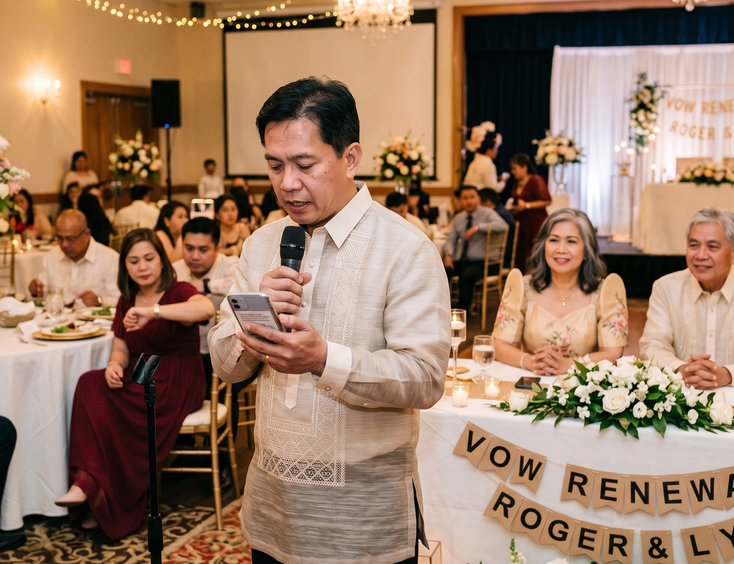
Read from a printed card or your phone. Memorizing tends to collapse under emotional pressure, so keep the words in front of you and lift your eyes for the lines that matter most, so the couple sees your face when those words land. Stand. Walk to where you can see them clearly. Wait for the room to settle before your first line, since that pause does the work of quieting the table for you.
Take it at a slower pace than ordinary conversation. Most speakers rush on nerves, and the room needs a beat to absorb each line. Hold a short silence after the lines that carry weight. Look straight at the couple on your closing line, then raise your glass and let them raise theirs back.
Print the toast in a large font on a single card and highlight the two or three lines where you plan to look up. Under nerves you find your place faster on paper than on a phone that dims, buzzes, or locks mid-sentence.
Handling Emotion During the Toast
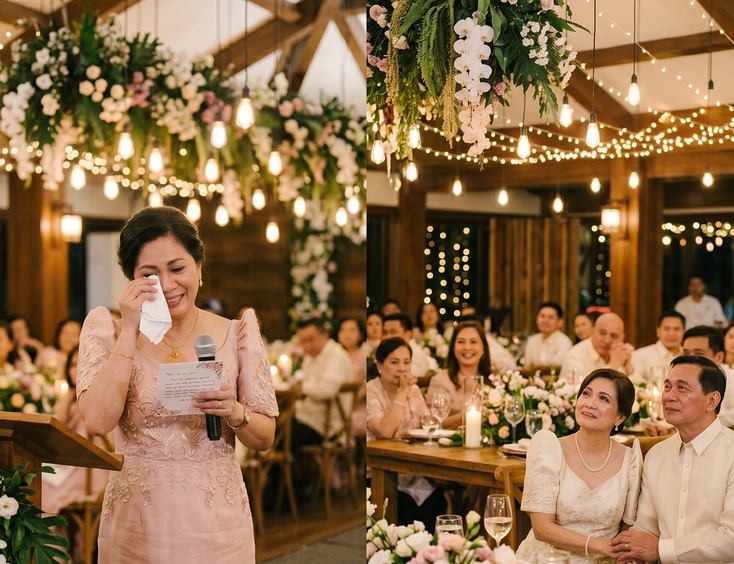
Many speakers underestimate how much the toast will hit once they stand up to give it. The memories that read calm on paper turn raw the moment you say them in front of the couple and the family. Practice the toast at least five times before the day, including once aloud in front of one person you trust. The repetition builds tolerance for the feeling.
If tears come, pause and take a sip of water. The couple and the room will not mind, and most family crowds take the emotion as part of what the moment is for. If you fear the speech might become impossible to finish, set a backup plan. Ask another family member to stand near you, ready to pick up the reading if your voice gives out. Knowing the net is there keeps the panic from spiraling.
Coordinating with Other Speakers
When several toasts are planned, sort it out ahead of time. One coordinating call or a single family group chat handles it, and one person should manage the logistics so no speaker gets blindsided by what came before. Cover three things:
- Order. Adult children first, then siblings, then best friends, then any other family or close friends.
- Length. Trim the plan if the running total stretches too long.
- Ground covered. Without this, three speakers tell the same story. With it, each toast brings something the others did not.
When the Couple Cannot Handle the Speeches
Some couples ask the family to skip the toasts and keep the reception quiet. Respect that. Others want a single toast, from an eldest child or eldest sibling, which carries more weight than a string of them and keeps the emotional intensity in check. Before you write anything, check with the couple or the family coordinator on whether toasts are happening and which speakers they expect. Showing up with a prepared speech that does not fit the program puts everyone in an awkward spot.
A Note on Filipino Reception Culture
Filipino renewal receptions tend to open the floor wide, with several relatives offering brief words. It works when each one stays under two minutes. It breaks the moment one cousin treats the open mic as a full keynote. If the reception runs on many short toasts, cut your own material to match: a tight two-minute contribution lands warm, a six-minute one drains the room. For where the reception sits inside the larger day, the vow renewal planning checklist for Filipino couples lays out the planning timeline that holds it all together.
The Toast Is a Gift
The toast is a gift you hand the couple in front of the people who love them. The strongest ones honor this specific marriage, draw on your real relationship with these two people, and name what you watched, learned, or received from standing close to them. The same honesty carries the vows of couples who weathered real storms together, and the vow renewal vows for couples who survived hardship together shows how a few specific, well-chosen lines outweigh a page of sentiment.
Sit down and write what you know. Cut what does not earn its place. Then stand up and give the gift. The couple will remember the toast. The family will remember the toast. And years from now you will remember standing at the reception and saying out loud what you had carried in private for years. That is the whole point of the moment.
Still Searching for a Right Match?
Find Your Perfect Wedding Supplier Today!
Discover trusted wedding suppliers across the Philippines in our complete directory. Compare services and connect with the ones that fit your dream celebration.
Browse Wedding SuppliersFeatured Blog Posts


Filipino Wedding Entourage - Roles, Order of March, and Modern Etiquette
6 mins readCivil Weddings in the Philippines - Requirements, Costs, and Step-by-Step Process
9 mins readCivil Wedding Requirements in the Philippines - Complete Checklist
6 mins readCost of Wedding in the Philippines - 5 Essential Things You Need to Know
7 mins readPrincipal Sponsors (Ninong/Ninang) - How Many, How to Ask, What They Really Do
4 mins readVeil, Cord, Candle & Coins - Roles, Options, and When They Happen
4 mins readEntourage for a Traditional Pinoy Wedding - Complete Roles and Guide
6 mins readComplete List of Civil Wedding Requirements in the Philippines
8 mins readHow to Choose Wedding Ninongs and Ninangs - Ask Yourself These 3 Important Questions
5 mins read