

Who to Invite to a Filipino Wedding: A Guide to Building Your Guest List Without the Drama

Filipino weddings don't come with a small guest list by default. Family expectations, social obligations, and the sheer size of most Filipino families push the numbers up fast. The drama rarely comes from the wedding itself. It comes from the list.
Building a guest list you can defend, afford, and actually seat requires a system. This guide gives you one.
Start With Your Venue, Not Your Family
Your venue capacity is the only number that matters at the start. Work backward from there.
If your venue holds 150 people, you have 150 seats. That number includes the wedding party, immediate family, and every plus-one. Write that number at the top of your planning document before you write a single name.
Couples who build the list first and find a venue second almost always end up over capacity or over budget. Lock the ceiling first.
The Four-Ring Method
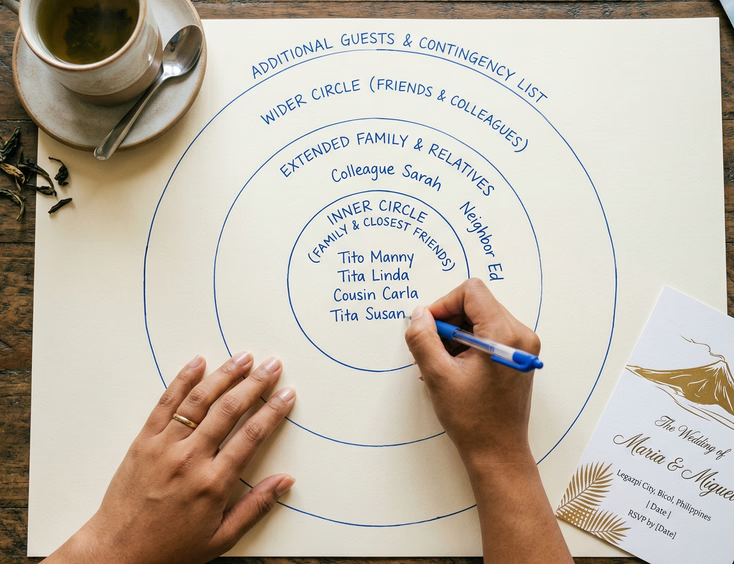
Think of your guest list in four rings, moving outward from the center.
Ring 1: Non-negotiables. Both sets of parents, siblings, and your wedding party. These people attend regardless of venue size or budget. If you're having a civil wedding with ten guests, these are your ten.
Ring 2: Close family. Grandparents, aunts, uncles, and first cousins you actually see at family gatherings. Not every cousin you have on Facebook. The ones who show up at Noche Buena.
Ring 3: Close friends and colleagues. Friends you call when something goes wrong. Colleagues you eat lunch with, not the entire office floor.
Ring 4: Extended network. Neighbors your parents are close to, distant relatives, work acquaintances. This ring opens only if your venue and budget allow it.
Fill Ring 1 completely. Fill Ring 2 next. Then assess what space and budget remain before moving to Ring 3.
The Parent Problem
Most Filipino couples face the same situation: both sets of parents want to add names. Sometimes those additions are reasonable. Sometimes the list grows by forty people before you've approved a single one.
Set the expectation early. Tell both sets of parents their allocation before they start compiling names. A specific number is easier to enforce than a vague guideline. "You each have fifteen slots" works better than "we'll see what fits."
When parents push back, go back to the venue capacity. The limit isn't your preference. The limit is the room.
For guidance on the social side of leaving people out, read Is It Rude to Not Invite Someone to a Filipino Wedding? Understanding Filipino Social Etiquette.
Count Households, Not Heads
One invitation per household. A couple living together gets one card. A family of four at the same address gets one card. This keeps your print order manageable and your budget in check.
The exception: adult children living at home who you want to invite individually. Give them their own invitation. It signals that you see them as adults, not an extension of their parents.

The Plus-One Question
Plus-ones cost money and take seats. Be intentional about who gets one.
A reasonable framework:
- Married or engaged guests receive an automatic plus-one
- Long-term partners (together a year or more) receive a plus-one
- Single guests at a small intimate wedding may not receive one, and that is acceptable
- Single guests at a large celebration where they know few people deserve a plus-one so they're not stranded at a table of strangers
State your plus-one policy on the inner envelope or RSVP card. Addressing the invitation to specific names removes ambiguity. "Mr. Ramon Santos" means one seat. "Mr. Ramon Santos and Guest" means two.
Children at the Wedding
Filipino weddings traditionally include children. Aunts and uncles rarely leave their kids at home, and parents seldom ask before bringing them.
If you want an adults-only reception, communicate it early and directly. A line on the invitation insert works. A personal conversation with family members who have young children works better.
If children are welcome, count them in your catering numbers and consider whether your venue has space for a kids' table or activity corner. Caterers charge per head regardless of age.
The Ninong and Ninang List
Principal sponsors occupy a specific place in Filipino weddings. They're not just guests. They're named on the invitation, seated prominently, and expected to contribute financially or symbolically to the marriage.
The sponsor list can grow as large as the families allow. Some couples list thirty or forty sponsors. Keep it to the people who genuinely matter to your relationship, not just names added to secure an envelope at the reception.
Each sponsor counts as a guest, and if they're married, their spouse typically attends as well. Factor this into your total count early.
Colleagues and Work Relationships
Office invitations carry their own politics. Inviting your direct team but not your manager creates tension. Inviting your manager but not your team creates a different kind.
The cleanest approach: invite nobody from work, or invite the people you genuinely consider friends regardless of their job title. Using the office as a social unit for your guest list makes the decision harder than it needs to be.
If your workplace is small and close-knit, an invitation to everyone avoids the appearance of favoritism. If you work in a large company, nobody expects an invitation.
When the List Grows Too Long
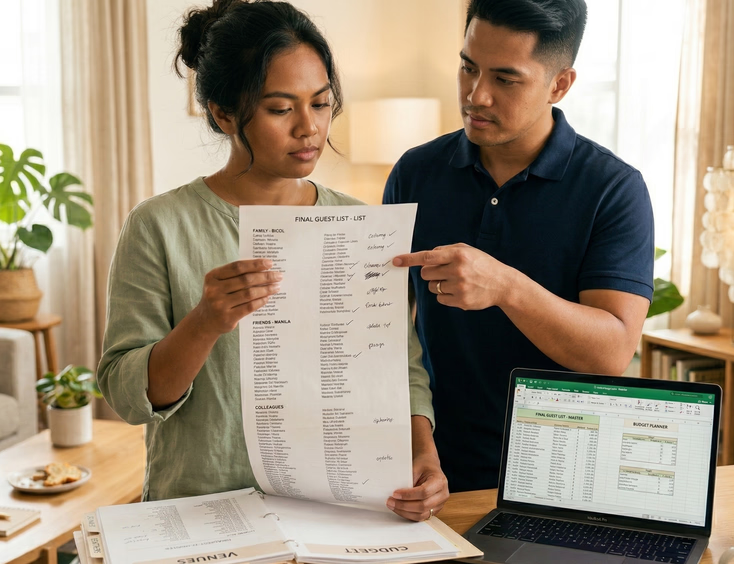
You've applied the four-ring method, given parents their allocations, settled the plus-one policy, and the list still runs over capacity. At that point, you have three real options.
Move some guests to an evening reception only, separate from the church ceremony and sit-down dinner. This is common in larger Filipino weddings and carries no social stigma when handled graciously.
Cut Ring 4 entirely. Extended network guests understand. They may feel the absence, but they won't carry it the way close family would.
Upgrade your venue. If the people on your list matter more than the savings, a larger space resolves the conflict directly.
The List Is a Budget Document
Every name on the guest list has a cost attached to it. Catering per head in the Philippines ranges from ₱800 to ₱3,000 or more depending on the package. Invitations, seats, favors, and table flowers multiply by headcount.
Before you finalize the list, run the math. Take your per-head catering cost and multiply it by your total guest count. That number tells you whether your list fits your budget or whether something needs to give.
For a full picture of invitation costs specifically, read How Much Do Wedding Invitations Cost in the Philippines? A Budget Breakdown.
Once you know your final count, How Many Wedding Invitations Should You Order in the Philippines? helps you calculate your print quantity without over-ordering or running short.
After the List Is Final
Lock it. Resist late additions unless a seat genuinely opens up. Every addition after the final count affects catering, seating charts, and invitation quantities.
When an uninvited guest shows up anyway, and in Filipino weddings someone usually does, your coordinator handles it. Brief them in advance so the situation doesn't reach you on the day.
How to Handle Uninvited Guests After Sending Wedding Invitations in the Philippines covers the most common scenarios.
When you're ready to send, The Filipino Wedding Invitation Timeline: When to Order, Print, and Send keeps you on schedule from print order to delivery.
If you're looking for designers and printers to handle your invitations once the list is confirmed, browse stationery and invitation suppliers in the Philippines for options across every budget and style.
For the broader picture of everything your invitations need to cover, the complete guide to Filipino wedding invitations is the place to start.
Still Searching for a Right Match?
Find Your Perfect Wedding Supplier Today!
Discover trusted wedding suppliers across the Philippines in our complete directory. Compare services and connect with the ones that fit your dream celebration.
Browse Wedding SuppliersFeatured Posts



The Complete Filipino Couple's Guide to Wedding Rings & Bands in the Philippines: Traditions, Styles, Budgets & Where to Buy
22 mins readWedding Reception Ideas that Honor Tradition and Wow Your Guests
4 mins readFilipino Wedding Dress Guide for Style Traditions and Smart Shopping
6 mins readFilipino Wedding Cost Guide - Realistic Budgets, Percentages, and Price Drivers by Region
9 mins readPhilippines Honeymoon Guide - Best Islands, Resorts, Costs & 7–14 Day Itineraries
9 mins readFilipino Wedding Games - Traditions, Modern Twists, and Crowd-Pleasers for Every Reception
8 mins read