

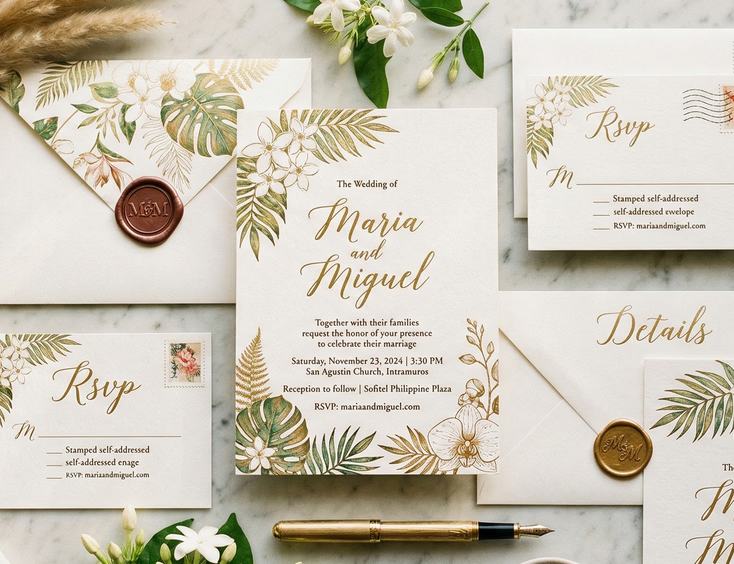
The Filipino Wedding Invitation Timeline: When to Order, Print, and Send
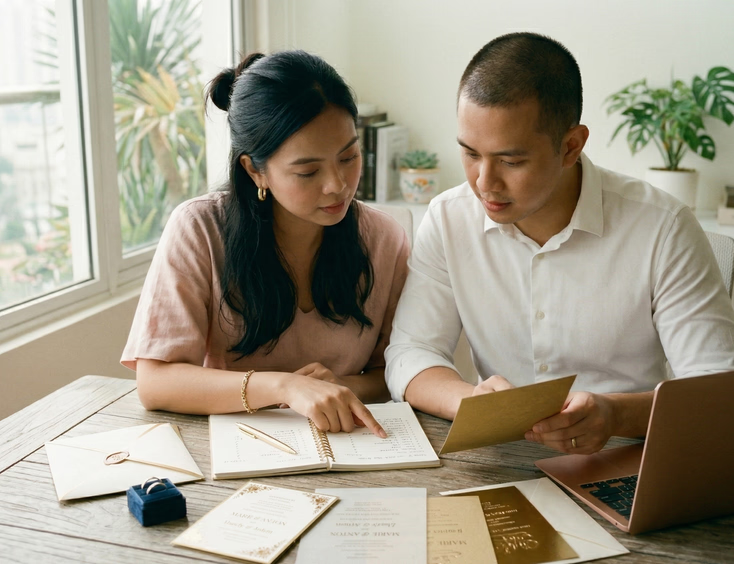
Most Filipino couples underestimate how much time the invitation process takes. Design revisions, supplier lead times, addressing envelopes, and coordinating with family all eat into the schedule faster than expected. If your wedding is in twelve months, your invitation timeline starts now. If it's in six months, you are already working with less buffer than ideal.
The general rule for Philippine weddings: invitations should reach guests eight to ten weeks before the wedding date. Work backward from that date and every deadline falls into place.
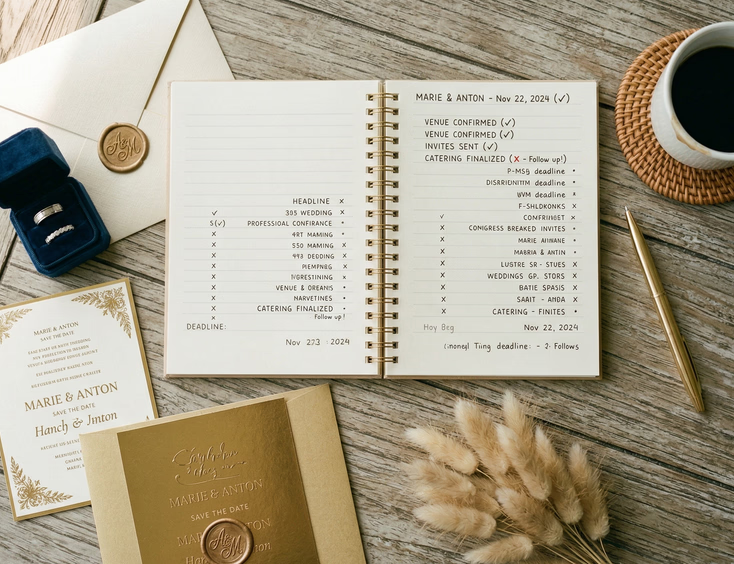
The Full Timeline at a Glance
Here is how the process maps out across a twelve-month engagement. Shorter engagements compress the middle stages, but the sequence stays the same.
12 months out: Finalize your guest list Everything else depends on headcount. You cannot order invitations without a number, and you cannot get an accurate quote without a number. Sit down with both sets of parents and lock in the list before any design work begins. Filipino guest lists expand during this conversation. Budget for 10 to 15 percent more invitations than your current headcount to cover last-minute additions.
For help navigating that conversation without it turning into a negotiation, the guide to building your Filipino wedding guest list covers how to set boundaries while keeping family relations intact.
10 to 11 months out: Set your invitation budget Your budget determines your format, your materials, and your supplier options. Foil stamping, letterpress, and thick cotton paper cost significantly more than digital offset printing on standard card stock. Decide early whether you are prioritizing aesthetics or volume. A detailed look at what drives pricing in the Philippines is in the Filipino wedding invitation cost breakdown.
9 to 10 months out: Research and book your stationer Reputable Philippine invitation suppliers book up fast, particularly for peak wedding season from November to February. Contact at least three suppliers, compare their portfolios, ask for sample kits, and confirm their production lead times before committing. Some high-demand studios have waitlists.
Browse wedding invitation and stationery suppliers in the Philippines to find suppliers who handle full suites, including insert cards, envelopes, and coordinating digital assets.
8 to 9 months out: Begin the design process Design takes longer than most couples expect. Your first proof comes back, you request changes, a second proof follows, then a third. Plan for three to four rounds of revisions minimum. If your design incorporates custom illustrations, calligraphy addressing, or specialty printing techniques, add two to three additional weeks to this stage.
During design, finalize all the text that goes on the invitation. Ceremony time, venue name, full address, dress code, and the names of principal sponsors if you are listing them. Changes to text after printing begins cost money and delay production.
6 to 7 months out: Approve final proof and place your order Once you approve the final proof, production begins. Standard production runs in the Philippines take two to four weeks depending on the supplier's current workload and your chosen printing method. Rush orders cost more and are not always possible during peak season.
Order 10 to 15 percent above your confirmed headcount. Invitations get damaged in transit, addresses change, and family members you forgot about appear. Reprinting a small quantity later costs far more per piece than ordering extras upfront.
5 months out: Receive and review your order Check every piece before the supplier closes out your order. Count the quantity. Check for printing errors, color inconsistencies, and damage to envelopes. Addressing errors caught at this stage are fixable. Addressing errors discovered the week before mailing are a problem.
4 to 5 months out: Address and assemble Addressing takes longer than assembling. If you are hand-addressing envelopes, budget several evenings for it. Calligraphy addressing by a professional adds cost but removes the time burden. If you are using printed address labels, prepare your spreadsheet early and proofread every entry before printing.
Assemble all inserts in a consistent order. Main invitation card, RSVP card, accommodation insert, reception card, and any additional inserts your stationer produced. Brief whoever is helping you assemble so the contents are identical across all envelopes.
3 to 4 months out: Mail invitations Send invitations to guests outside Metro Manila and international guests first. Provincial and international delivery adds one to two weeks to arrival time. Metro Manila guests can receive their invitations slightly later, but aim to have everything sent within the same two-week window.
Hand-deliver invitations to principal sponsors. This is standard practice in Filipino weddings and carries social significance. A ninong or ninang who receives their invitation by courier rather than in person notices. If distance makes personal delivery impossible for some sponsors, a phone call before the invitation arrives acknowledges the relationship.
2 to 3 months out: Follow up on RSVPs Your RSVP deadline should fall six weeks before the wedding. That gives your caterer enough time to adjust final numbers and gives you a week or two to chase non-responses. Filipino guests notoriously delay RSVPs, so build the deadline with that reality in mind.
The Filipino wedding RSVP etiquette guide covers what response rates to realistically expect and how to follow up without damaging relationships.

Where Digital Invitations Change the Timeline
Digital invitations remove the production and mailing stages but introduce their own timing considerations.
You can design and send a digital invitation in days rather than months. That flexibility helps couples with short engagements or tight budgets. The tradeoff is retention. A printed invitation sits on a desk for weeks. A digital one disappears into a Viber thread within hours of being sent.
If you send digital invitations, send them eight weeks before the wedding, the same window as print. Follow up with a reminder at the two-week mark before your RSVP deadline, then again one week before the wedding itself.
For couples considering a hybrid approach, where printed invitations go to family and senior guests and digital invitations go to younger guests, the timeline for the printed portion stays exactly as outlined above. Start the digital design in parallel with your print design so both are ready to send at the same time.
The paperless vs. printed wedding invitations guide walks through the full comparison so you can decide which format, or which combination, fits your guest list.

Common Mistakes That Throw the Timeline Off
Waiting until the guest list is settled to start supplier research. The list takes months to finalize. Start talking to suppliers while the list is still in progress. You can confirm quantities later.
Underestimating design revision rounds. One couple approves on the first proof. Most take three or four. Do not plan your production start date around a single-round approval.
Forgetting provincial and international guests in the mailing schedule. Sending all invitations on the same day means Metro Manila guests receive theirs two weeks before guests in Mindanao or abroad. Stagger your mailings.
Ordering exactly the number you need. Damaged pieces, address changes, and late additions to the guest list happen on every wedding. Order extras.
Hand-delivering sponsor invitations at the last minute. Principal sponsor deliveries require scheduling. Some sponsors are busy professionals or live outside your city. Give yourself a three-week window to complete all personal deliveries.
A Shorter Engagement Doesn't Mean Skipping Steps
Couples with six months or less between engagement and wedding date compress the timeline but cannot skip stages. The sequence remains the same. What changes is how much buffer you have between each step.
With six months: book your stationer within the first two weeks, begin design immediately, and plan for a shorter revision window. Accept that some premium printing techniques with long lead times may not be available to you. Focus on suppliers who confirm they can meet your production deadline before you commit.
With four months: seriously evaluate whether digital invitations for a portion of your guest list reduce the pressure on your print timeline. A hybrid approach lets you send something to guests immediately while the printed suite goes through production.
The complete guide to Filipino wedding invitations covers how all the components of the invitation process connect, from design choices to guest list decisions, so you can make informed calls at each stage regardless of your timeline.
Still Searching for a Right Match?
Find Your Perfect Wedding Supplier Today!
Discover trusted wedding suppliers across the Philippines in our complete directory. Compare services and connect with the ones that fit your dream celebration.
Browse Wedding SuppliersFeatured Posts




The Complete Filipino Couple's Guide to Wedding Rings & Bands in the Philippines: Traditions, Styles, Budgets & Where to Buy
22 mins readWedding Reception Ideas that Honor Tradition and Wow Your Guests
4 mins readFilipino Wedding Dress Guide for Style Traditions and Smart Shopping
6 mins readFilipino Wedding Cost Guide - Realistic Budgets, Percentages, and Price Drivers by Region
9 mins readPhilippines Honeymoon Guide - Best Islands, Resorts, Costs & 7–14 Day Itineraries
9 mins readFilipino Wedding Games - Traditions, Modern Twists, and Crowd-Pleasers for Every Reception
8 mins read